Katsha Ahmed, Wang Lihong, Arras Janet, Omar Omar M, Ecsedy Jeffrey, Belkhiri Abbes, El-Rifai Wael
Department of Surgery, Vanderbilt University Medical Center, Nashville, Tennessee.
Department of Science and Engineering, Raritan Valley Community College, Branchburg, New Jersey.
Clin Cancer Res. 2017 Jul 15;23(14):3756-3768. doi: 10.1158/1078-0432.CCR-16-2141. Epub 2017 Jan 10.
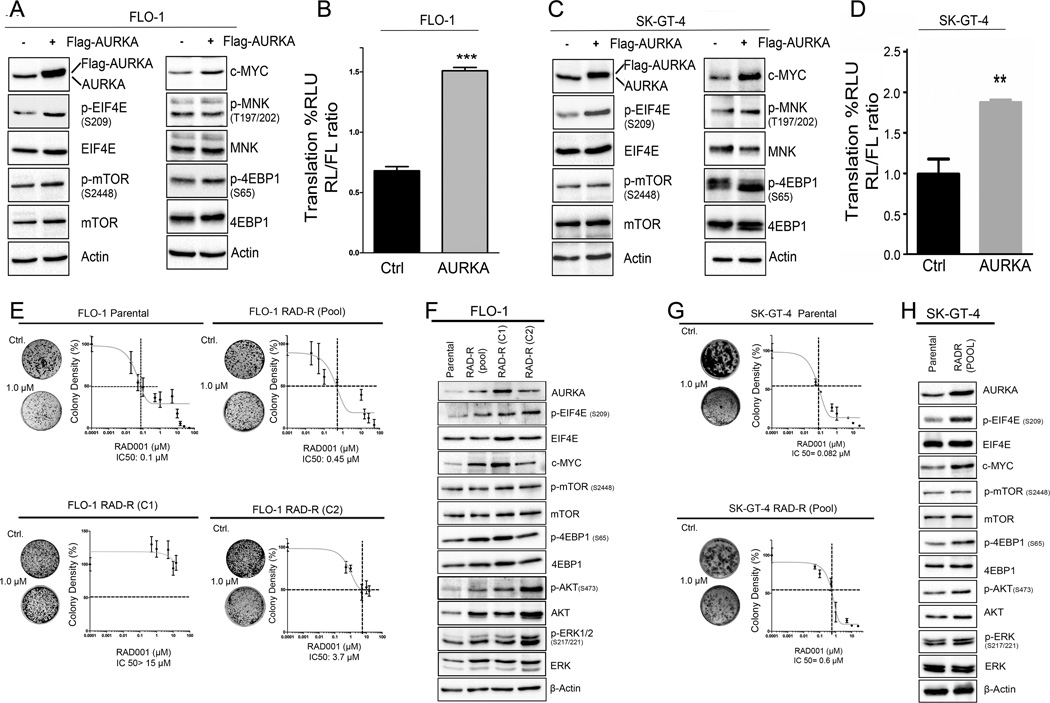
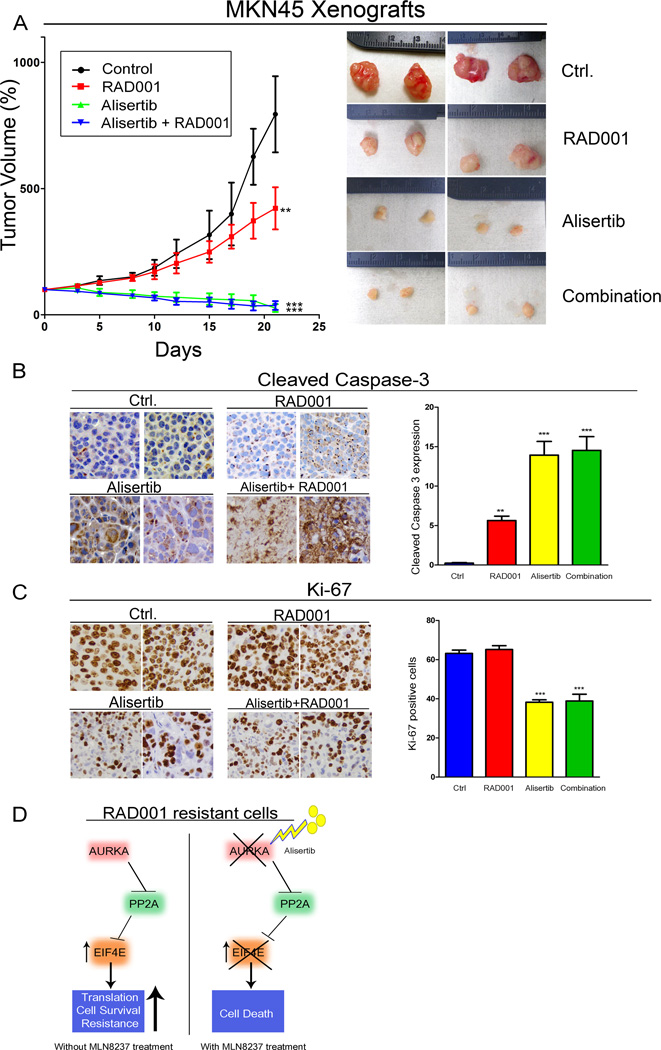
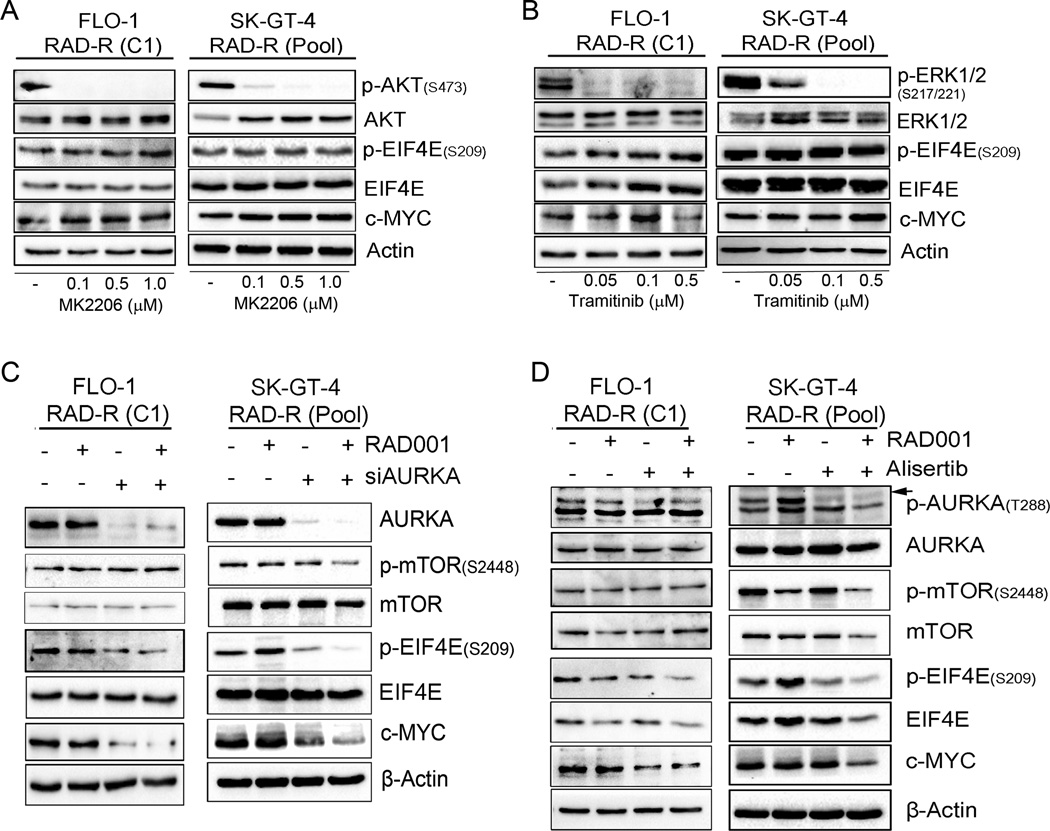
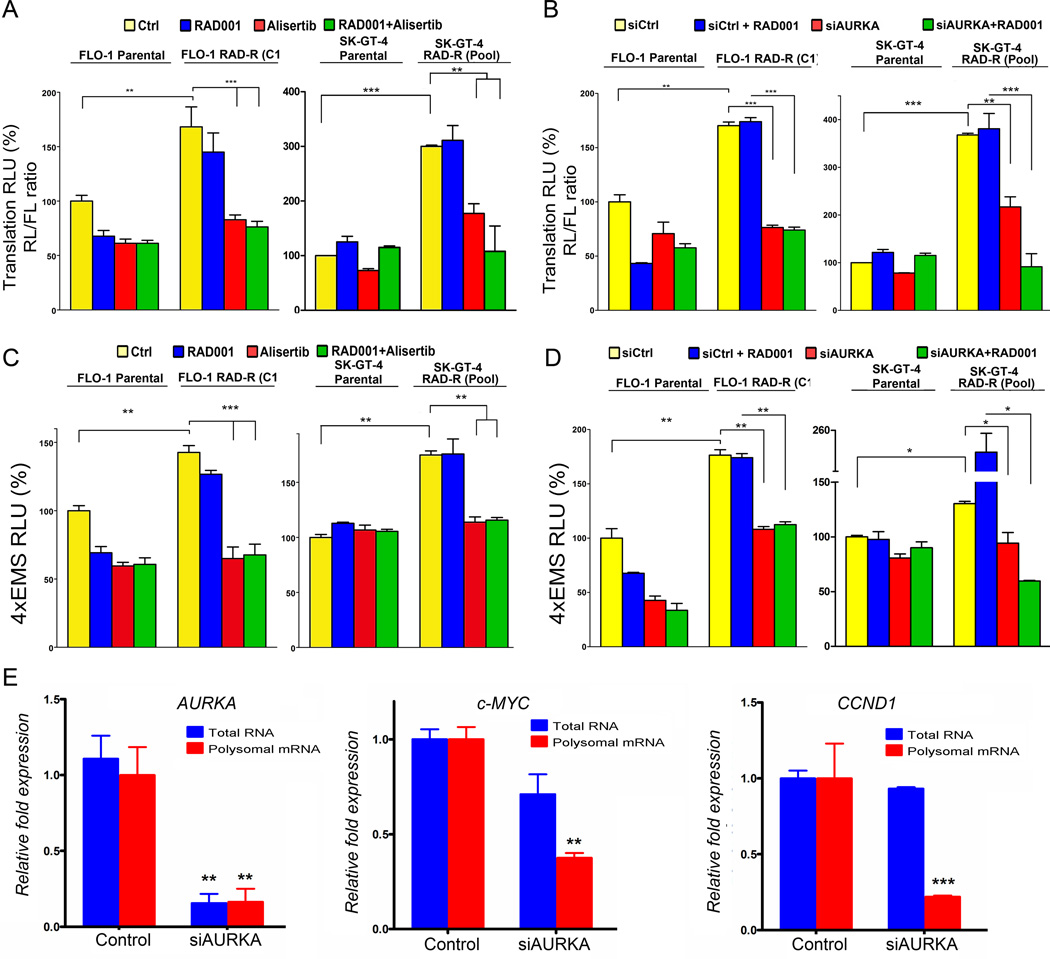
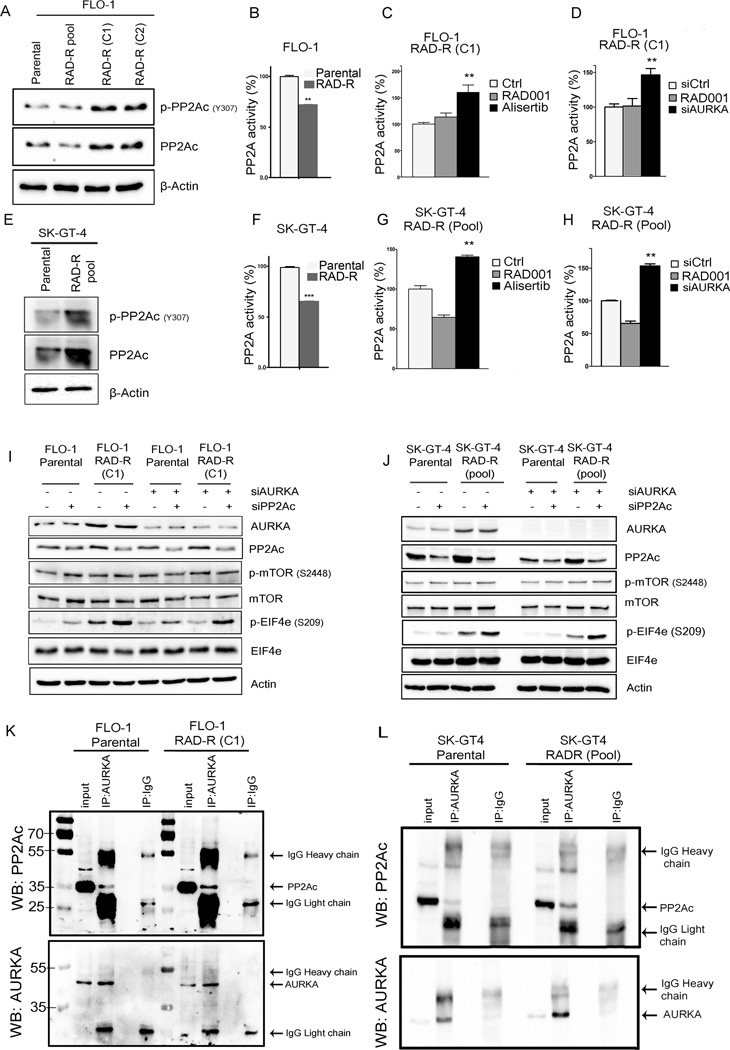
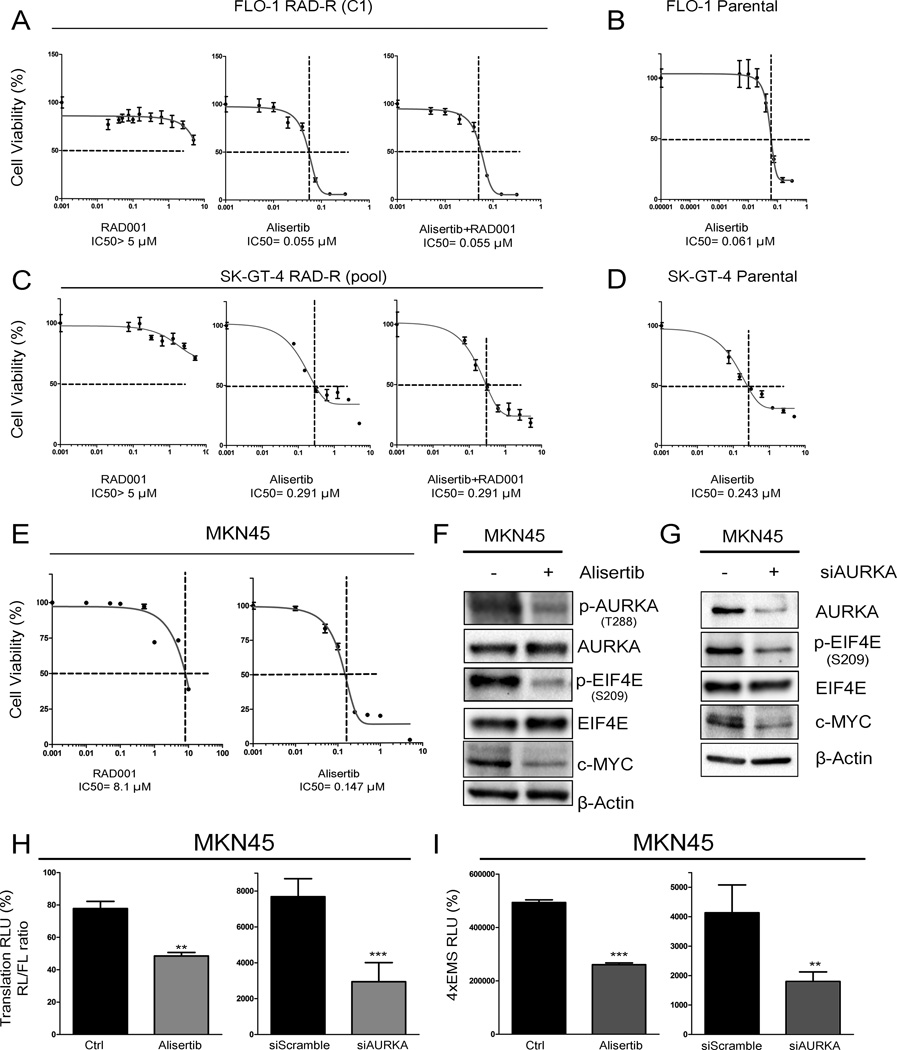
Aurora kinase A (AURKA) is overexpressed in several cancer types, making it an attractive druggable target in clinical trials. In this study, we investigated the role of AURKA in regulating EIF4E, cap-dependent translation, and resistance to mTOR inhibitor, RAD001 (everolimus). Tumor xenografts and cell models of upper gastrointestinal adenocarcinomas (UGC) were used to determine the role of AURKA in the activation of EIF4E and cap-dependent translation. Overexpression, knockdown, and pharmacologic inhibition of AURKA were used and Using cell models, we found that high protein levels of AURKA mediate phosphorylation of EIF4E and upregulation of c-MYC. Notably, we detected overexpression of endogenous AURKA in everolimus-resistant UGC cell models. AURKA mediated phosphorylation of EIF4E, activation of cap-dependent translation, and an increase in c-MYC protein levels. Targeting AURKA using genetic knockdown or a small-molecule inhibitor, alisertib, reversed these molecular events, leading to a decrease in cancer cell survival in acquired and intrinsic resistant cell models. Mechanistic studies demonstrated that AURKA binds to and inactivates protein phosphatase 2A, a negative regulator of EIF4E, leading to phosphorylation and activation of EIF4E in an AKT-, ERK1/2-, and mTOR-independent manner. Data from tumor xenograft mouse models confirmed that everolimus-resistant cancer cells are sensitive to alisertib. Our results indicate that AURKA plays an important role in the activation of EIF4E and cap-dependent translation. Targeting the AURKA-EIF4E-c-MYC axis using alisertib is a novel therapeutic strategy that can be applicable for everolimus-resistant tumors and/or subgroups of cancers that show overexpression of AURKA and activation of EIF4E and c-MYC. .
极光激酶A(AURKA)在多种癌症类型中过表达,这使其成为临床试验中一个有吸引力的可成药靶点。在本研究中,我们调查了AURKA在调节真核翻译起始因子4E(EIF4E)、帽依赖性翻译以及对mTOR抑制剂RAD001(依维莫司)的耐药性方面的作用。采用上消化道腺癌(UGC)的肿瘤异种移植模型和细胞模型来确定AURKA在EIF4E激活和帽依赖性翻译中的作用。我们使用了AURKA的过表达、敲低和药理学抑制方法,通过细胞模型发现,AURKA的高蛋白水平介导EIF4E的磷酸化和c-MYC的上调。值得注意的是,我们在依维莫司耐药的UGC细胞模型中检测到内源性AURKA的过表达。AURKA介导EIF4E的磷酸化、帽依赖性翻译的激活以及c-MYC蛋白水平的增加。使用基因敲低或小分子抑制剂阿利西替尼靶向AURKA可逆转这些分子事件,导致获得性和固有耐药细胞模型中癌细胞存活率降低。机制研究表明,AURKA与EIF4E的负调节因子蛋白磷酸酶2A结合并使其失活,从而以不依赖AKT、ERK1/2和mTOR的方式导致EIF4E的磷酸化和激活。肿瘤异种移植小鼠模型的数据证实,依维莫司耐药的癌细胞对阿利西替尼敏感。我们的结果表明,AURKA在EIF4E激活和帽依赖性翻译中起重要作用。使用阿利西替尼靶向AURKA-EIF4E-c-MYC轴是一种新的治疗策略,可应用于依维莫司耐药肿瘤和/或显示AURKA过表达以及EIF4E和c-MYC激活的癌症亚组。