Li Yi, Li Huayin, Wang Fengde, Li Jingjuan, Zhang Yihui, Wang Liangju, Gao Jianwei
Institute of Vegetables and Flowers, Shandong Academy of Agricultural Sciences and Shandong Key Laboratory of Greenhouse Vegetable Biology and Shandong Branch of National Vegetable Improvement Center, Jinan 250100, China; College of Horticulture, Nanjing Agricultural University, Nanjing 210095, China.
Institute of Vegetables and Flowers, Shandong Academy of Agricultural Sciences and Shandong Key Laboratory of Greenhouse Vegetable Biology and Shandong Branch of National Vegetable Improvement Center, Jinan 250100, China.
Int J Genomics. 2016;2016:6762731. doi: 10.1155/2016/6762731. Epub 2016 Dec 15.
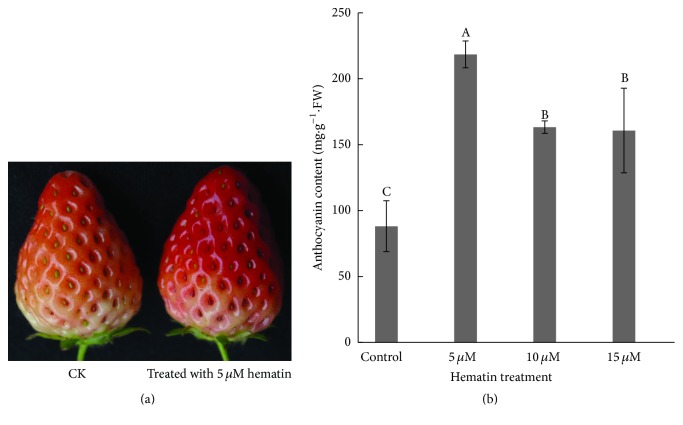
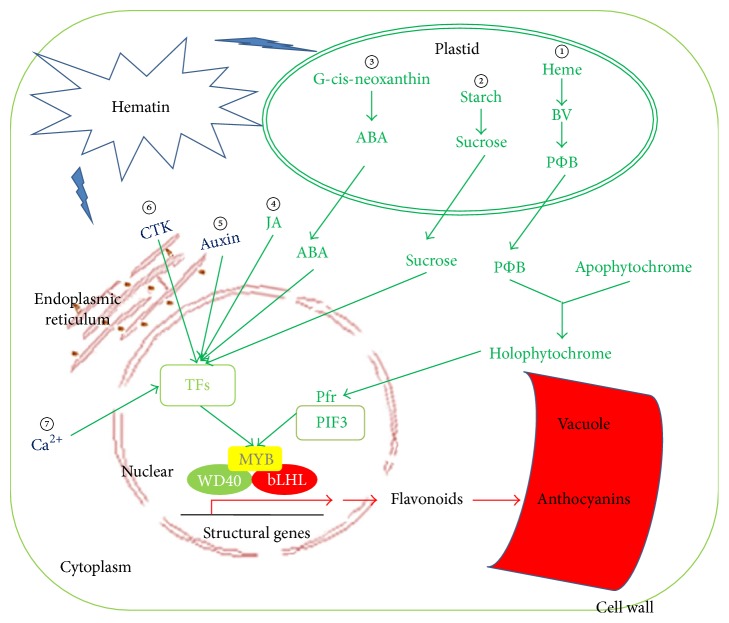
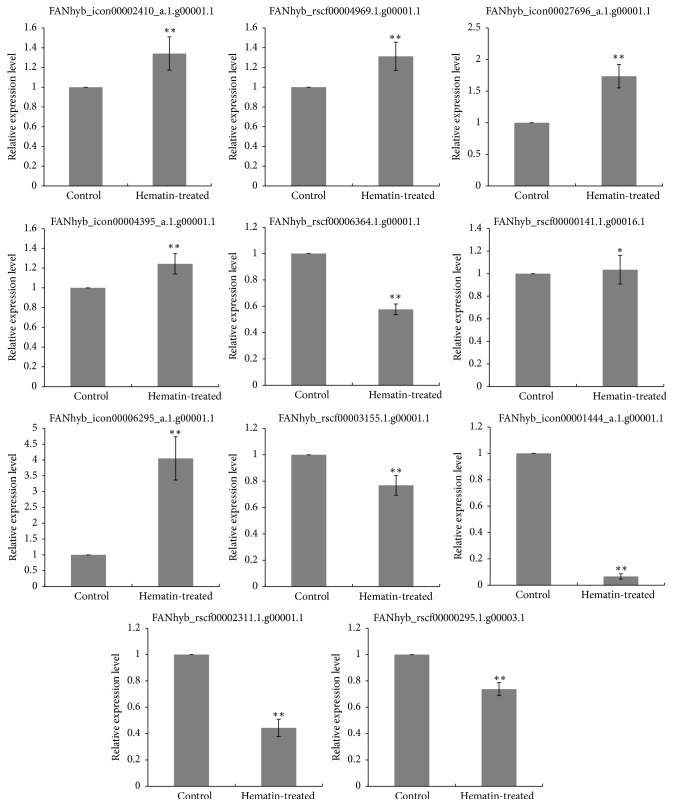
Anthocyanin in strawberries has a positive effect on fruit coloration. In this study, the role of exogenous hematin on anthocyanin biosynthesis was investigated. Our result showed that the white stage of strawberries treated with exogenous hematin had higher anthocyanin content, compared to the control group. Among all treatments, 5 M of hematin was the optimal condition to promote color development. In order to explore the molecular mechanism of fruit coloring regulated by hematin, transcriptomes in the hematin- and non-hematin-treated fruit were analyzed. A large number of differentially expressed genes (DEGs) were identified in regulating anthocyanin synthesis, including the DEGs involved in anthocyanin biosynthesis, hormone signaling transduction, phytochrome signaling, starch and sucrose degradation, and transcriptional pathways. These regulatory networks may play an important role in regulating the color process of strawberries treated with hematin. In summary, exogenous hematin could promote fruit coloring by increasing anthocyanin content in the white stage of strawberries. Furthermore, transcriptome analysis suggests that hematin-promoted fruit coloring occurs through multiple related metabolic pathways, which provides valuable information for regulating fruit color via anthocyanin biosynthesis in strawberries.
草莓中的花青素对果实着色有积极作用。在本研究中,研究了外源血红素对花青素生物合成的作用。我们的结果表明,与对照组相比,用外源血红素处理的草莓白色阶段花青素含量更高。在所有处理中,5 M血红素是促进颜色发育的最佳条件。为了探究血红素调控果实着色的分子机制,分析了血红素处理和未处理果实的转录组。在调控花青素合成过程中鉴定出大量差异表达基因(DEG),包括参与花青素生物合成、激素信号转导、光敏色素信号、淀粉和蔗糖降解以及转录途径的DEG。这些调控网络可能在调控血红素处理草莓的颜色过程中发挥重要作用。总之,外源血红素可通过增加草莓白色阶段的花青素含量来促进果实着色。此外,转录组分析表明,血红素促进的果实着色是通过多个相关代谢途径发生的,这为通过草莓花青素生物合成调控果实颜色提供了有价值的信息。