Guarneri Claudio, Bevelacqua Valentina, Polesel Jerry, Falzone Luca, Cannavò Patrizia S, Spandidos Demetrios A, Malaponte Grazia, Libra Massimo
Department of Clinical and Experimental Medicine, Section of Dermatology, University of Messina, I‑98125 Messina, Italy.
Department of Biomedical and Biotechnological Sciences, Section of General and Clinical Pathology and Oncology, University of Catania, I‑95124 Catania, Italy.
Oncol Rep. 2017 Feb;37(2):737-746. doi: 10.3892/or.2017.5362. Epub 2017 Jan 10.
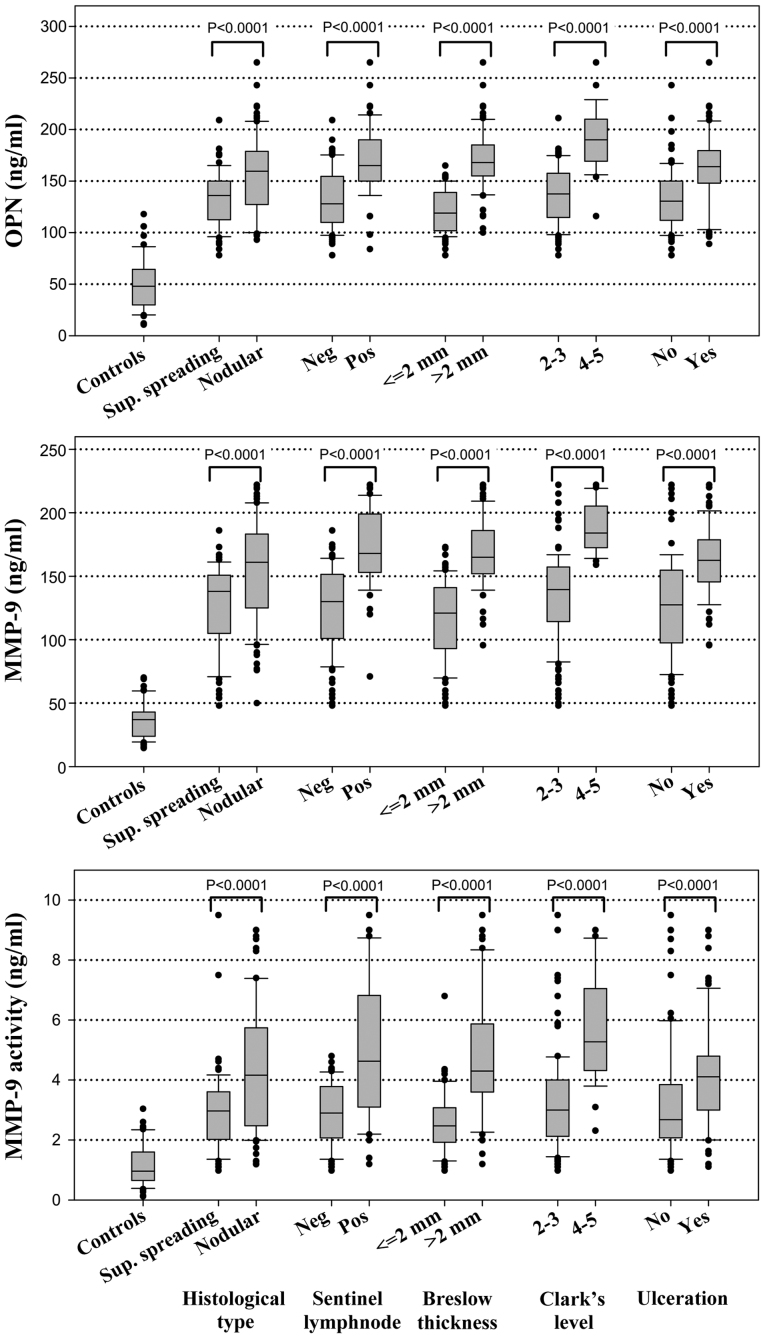
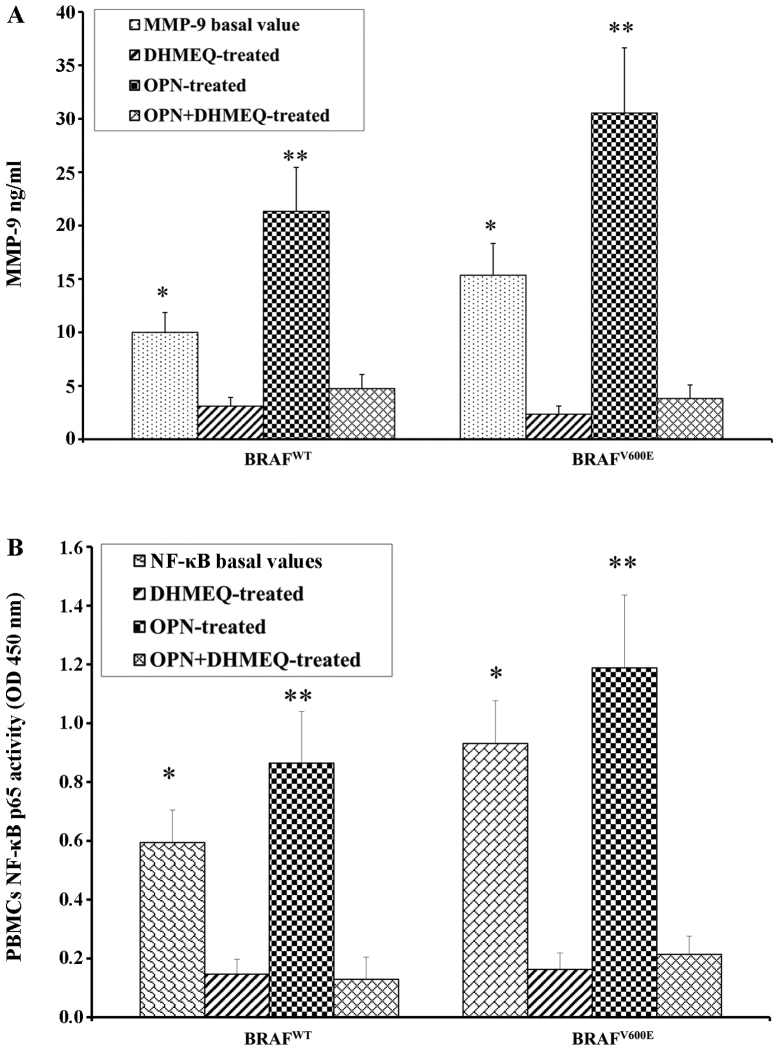
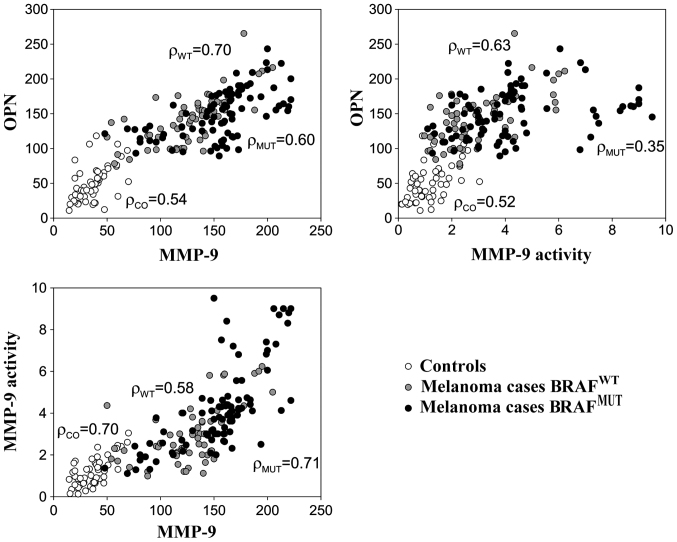
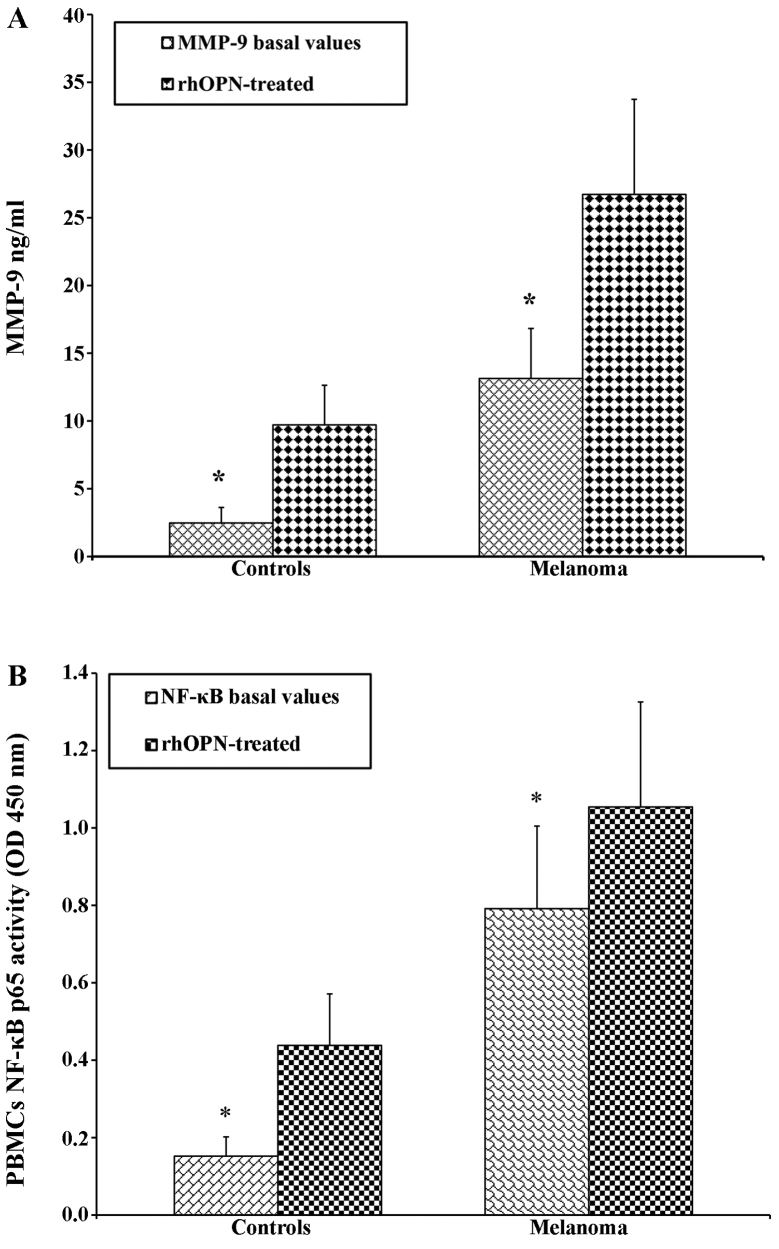
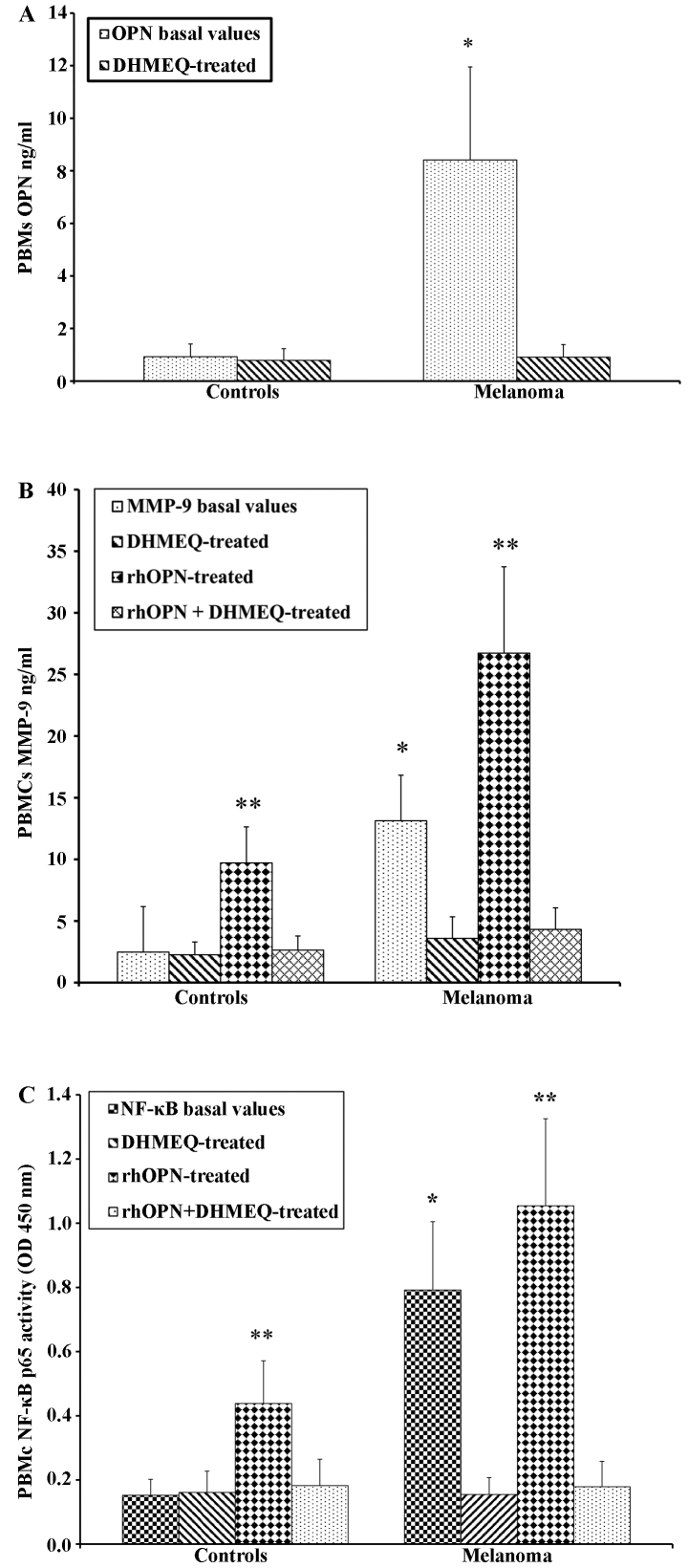
The development of cutaneous melanoma is influenced by genetic factors, including BRAF mutations and environmental factors, such as ultraviolet exposure. Its progression has been also associated with the involvement of several tumour microenvironmental molecules. Among these, nuclear factor‑κB (NF‑κB) has been indicated as a key player of osteopontin (OPN) and matrix metalloproteinase‑9 (MMP‑9) activation. However, whether NF‑κB plays a role in the development and progression of melanoma in association with the OPN/MMP‑9 axis according to the BRAFV600E mutation status has not been investigated in detail to date. Thus, in the present study, in order to shed light on this matter, 148 patients with melanoma and 53 healthy donors were recruited for the analysis of OPN, MMP‑9 and NF‑κB. Significantly higher circulating levels of OPN and MMP‑9 were observed in the patients with melanoma when compared to the healthy donors. Similar data were obtained for NF‑κB p65 activity. The OPN levels did not differ significantly between melanomas with or without BRAFV600E mutation. However, as regards NF‑κB and MMP‑9, significant differences were observed between the melanomas with or without BRAFV600E mutation. To determine whether NF‑κB inhibition is associated with a decrease in the levels of OPN and MMP‑9, peripheral blood mononuclear cells from 29 patients with melanoma were treated with the NF‑κB inhibitor, dehydroxymethylepoxyquinomycin (DHMEQ), with or without OPN. As expected, the inhibition of NF‑κB induced a marked decrease in both the OPN and MMP‑9 levels. Furthermore, the decrease in MMP‑9 levels was higher among melanomas harbouring the BRAFV600E mutation. Overall, our data suggest that the activation of MMP‑9 is associated with the BRAFV600E mutation status. Furthermore, such an activation is mediated by NF‑κB, suggesting its role as therapeutic target in patients with melanoma.
皮肤黑色素瘤的发生发展受遗传因素影响,包括BRAF突变,也受环境因素影响,如紫外线照射。其进展还与多种肿瘤微环境分子的参与有关。其中,核因子-κB(NF-κB)被认为是骨桥蛋白(OPN)和基质金属蛋白酶-9(MMP-9)激活的关键因素。然而,迄今为止,尚未详细研究NF-κB是否根据BRAFV600E突变状态在黑色素瘤的发生发展中与OPN/MMP-9轴相关联发挥作用。因此,在本研究中,为了阐明这一问题,招募了148例黑色素瘤患者和53名健康供者来分析OPN、MMP-9和NF-κB。与健康供者相比,黑色素瘤患者中OPN和MMP-9的循环水平显著更高。NF-κB p65活性也获得了类似数据。有或无BRAFV600E突变的黑色素瘤之间OPN水平无显著差异。然而,就NF-κB和MMP-9而言,有或无BRAFV600E突变的黑色素瘤之间存在显著差异。为了确定NF-κB抑制是否与OPN和MMP-9水平降低相关,对29例黑色素瘤患者的外周血单个核细胞用NF-κB抑制剂去羟甲基环氧喹霉素(DHMEQ)进行处理,处理时加或不加OPN。正如预期的那样,NF-κB的抑制导致OPN和MMP-9水平均显著降低。此外,在携带BRAFV600E突变的黑色素瘤中,MMP-9水平的降低幅度更大。总体而言,我们的数据表明MMP-9的激活与BRAFV600E突变状态相关。此外,这种激活由NF-κB介导,表明其在黑色素瘤患者中作为治疗靶点的作用。