Dick Taylor J M, Clemente Christofer J
Department of Biomedical Physiology and Kinesiology, Simon Fraser University, Burnaby, British Columbia, Canada.
School of Science and Engineering, University of the Sunshine Coast, Sippy Downs, Queensland, Australia.
PLoS Biol. 2017 Jan 11;15(1):e2000473. doi: 10.1371/journal.pbio.2000473. eCollection 2017 Jan.
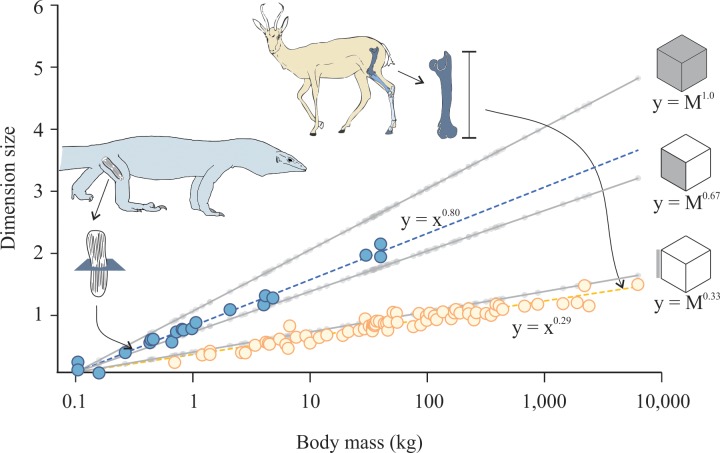
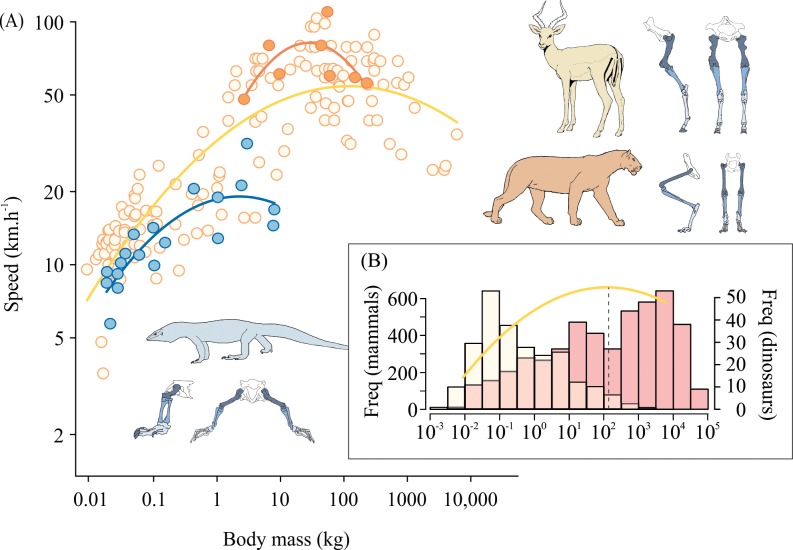
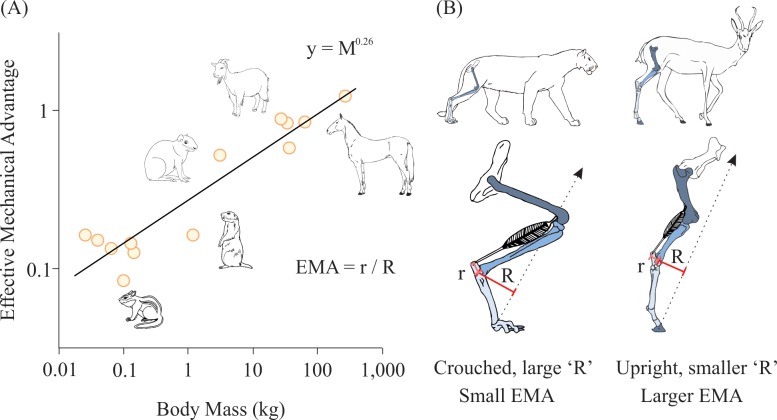
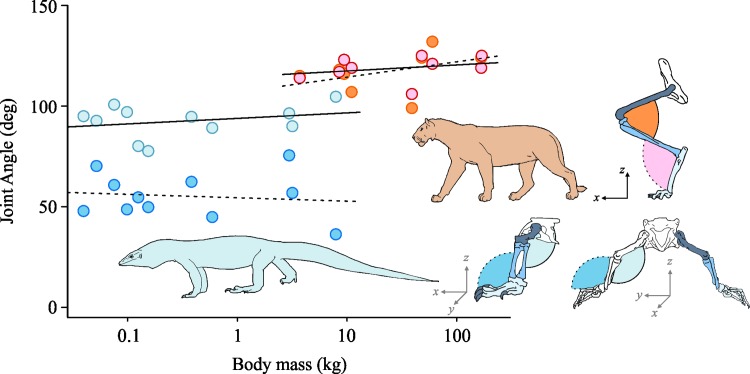
The survival of both the hunter and the hunted often comes down to speed. Yet how fast an animal can run is intricately linked to its size, such that the fastest animals are not the biggest nor the smallest. The ability to maintain high speeds is dependent on the body's capacity to withstand the high stresses involved with locomotion. Yet even when standing still, scaling principles would suggest that the mechanical stress an animal feels will increase in greater demand than its body can support. So if big animals want to be fast, they must find solutions to overcome these high stresses. This article explores the ways in which extant animals mitigate size-related increases in musculoskeletal stress in an effort to help understand where all the giants have gone.
捕猎者和猎物的生存往往都取决于速度。然而,动物的奔跑速度与其体型有着复杂的联系,以至于跑得最快的动物既不是最大的,也不是最小的。维持高速奔跑的能力取决于身体承受运动中所涉及的高压力的能力。然而,即使在静止站立时,根据比例原则,动物所感受到的机械压力的增加幅度也会超过其身体的承受能力。所以,如果大型动物想要跑得快,它们就必须找到克服这些高压力的方法。本文探讨了现存动物减轻与体型相关的肌肉骨骼压力增加的方式,以期有助于理解所有巨型动物都已灭绝的原因。