Myers Cheryl E, Hoelzinger Dominique B, Truong Tiffany N, Chew Lindsey A, Myles Arpita, Chaudhuri Leena, Egan Jan B, Liu Jun, Gendler Sandra J, Cohen Peter A
Department of Biochemistry and Molecular Biology, Mayo Clinic, Scottsdale, AZ, USA.
Department of Immunology, Mayo Clinic, Scottsdale, AZ, USA.
Oncotarget. 2017 Jan 17;8(3):5426-5438. doi: 10.18632/oncotarget.14576.
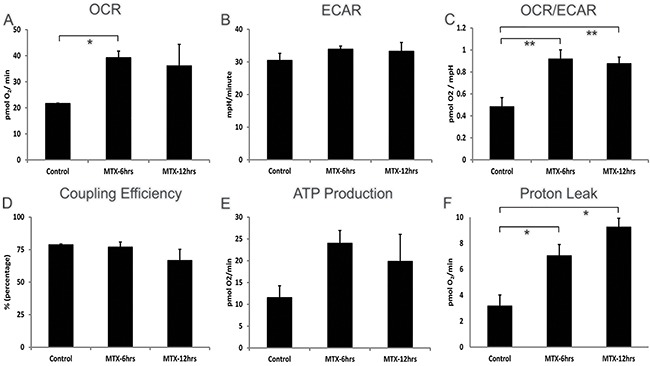
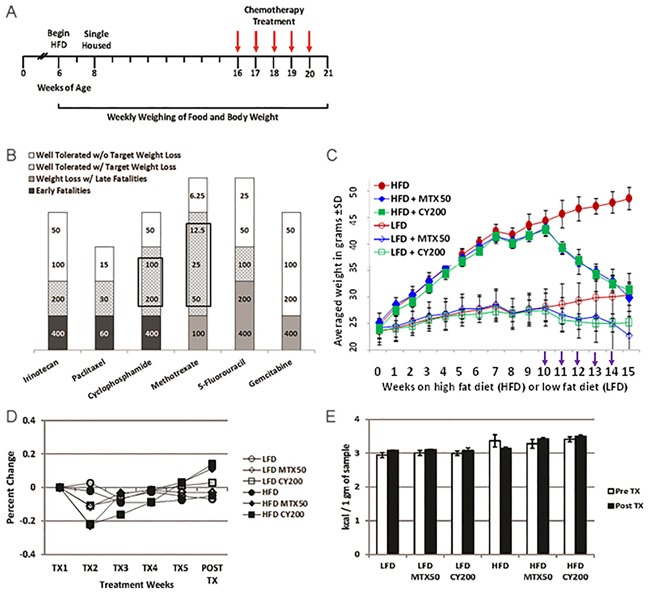
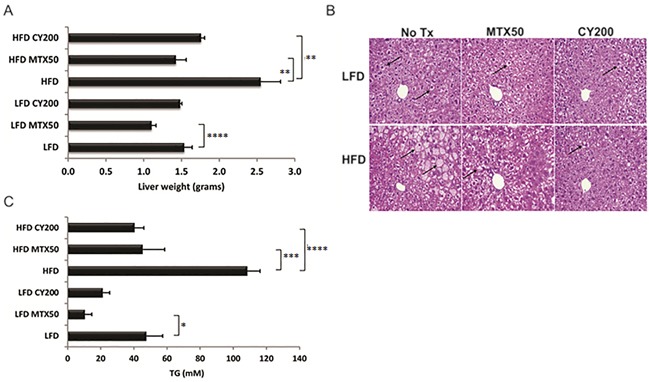
Morbidly obese patients who accomplish substantial weight loss often display a long-term decline in their resting metabolism, causing even relatively restrained caloric intake to trigger a relapse to the obese state. Paradoxically, we observed that morbidly obese mice receiving chemotherapy for cancer experienced spontaneous weight reduction despite unabated ingestion of their high fat diet (HFD). This response to chemotherapy could also be achieved in morbidly obese mice without cancer. Optimally dosed methotrexate (MTX) or cyclophosphamide (CY) enabled the mice to completely and safely normalize their body weight despite continued consumption of obesogenic quantities of HFD. Weight reduction was not attributable to decreased HFD intake, enhanced energy expenditure or malabsorption. MTX or CY dosing significantly depleted both adipose tissue and preadipocyte progenitors. Remarkably, however, despite continued high fat feeding, a compensatory increase in hepatocyte lipid storage was not observed, but rather the opposite. Gene microarray liver analyses demonstrated that HFD mice receiving MTX or CY experienced significantly inhibited lipogenesis and lipid storage, whereas Enho (energy homeostasis) gene expression was significantly upregulated. Further metabolic studies employing a human hepatocellular line revealed that MTX treatment preserved robust oxidative phosphorylation, but also promoted mitochondrial uncoupling with a surge in proton leak. This is the first report that certain optimally dosed chemotherapeutic agents can induce weight loss in morbidly obese mice without reduced dietary intake, apparently by depleting stores of adipocytes and their progenitors, curtailment of lipogenesis, and inconspicuous disposal of incoming dietary lipid via a steady state partial uncoupling of mitochondrial oxidative phosphorylation.
实现显著体重减轻的病态肥胖患者,其静息代谢往往会长期下降,这使得即使相对受限的热量摄入也会引发体重反弹至肥胖状态。矛盾的是,我们观察到接受癌症化疗的病态肥胖小鼠,尽管持续摄入高脂饮食(HFD),体重却自发减轻。这种对化疗的反应在无癌症的病态肥胖小鼠中也能实现。最佳剂量的甲氨蝶呤(MTX)或环磷酰胺(CY)能使小鼠体重完全且安全地恢复正常,尽管它们持续摄入致肥胖量的HFD。体重减轻并非归因于HFD摄入量减少、能量消耗增加或吸收不良。MTX或CY给药显著减少了脂肪组织和前脂肪细胞祖细胞。然而,值得注意的是,尽管持续高脂喂养,并未观察到肝细胞脂质储存的代偿性增加,反而出现了相反的情况。肝脏基因微阵列分析表明,接受MTX或CY的HFD小鼠的脂肪生成和脂质储存受到显著抑制,而Enho(能量稳态)基因表达显著上调。进一步用人肝细胞系进行的代谢研究表明,MTX治疗既能维持强大的氧化磷酸化,又能促进线粒体解偶联,导致质子泄漏激增。这是首份报告指出,某些最佳剂量的化疗药物可在病态肥胖小鼠中诱导体重减轻,且不减少饮食摄入量,显然是通过消耗脂肪细胞及其祖细胞储存、减少脂肪生成以及通过线粒体氧化磷酸化的稳态部分解偶联来不显眼地处理摄入的饮食脂质。