Wight Thomas N, Frevert Charles W, Debley Jason S, Reeves Stephen R, Parks William C, Ziegler Steven F
Matrix Biology Program, Benaroya Research Institute at Virginia Mason, Seattle, WA, USA.
Department of Comparative Medicine, University of Washington, Seattle, WA, USA.
Cell Immunol. 2017 Feb;312:1-14. doi: 10.1016/j.cellimm.2016.12.003. Epub 2016 Dec 23.
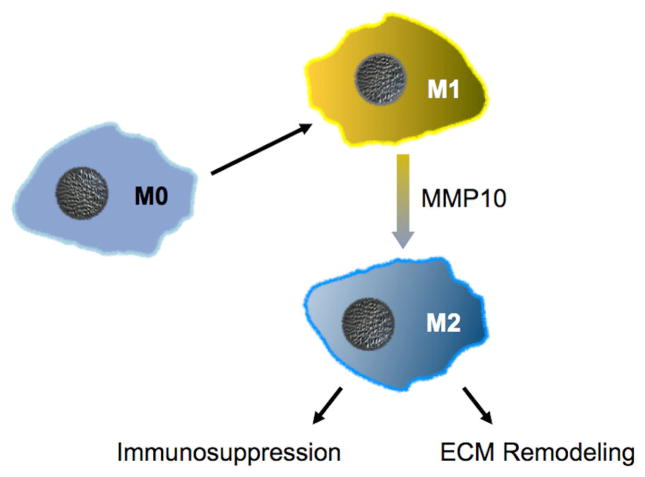
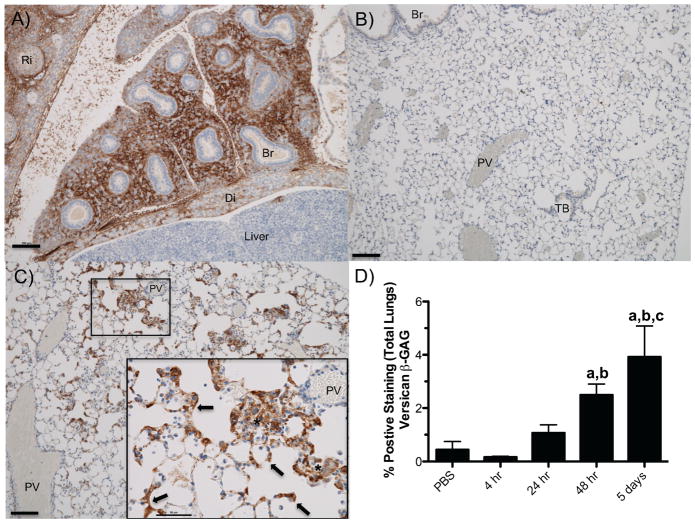
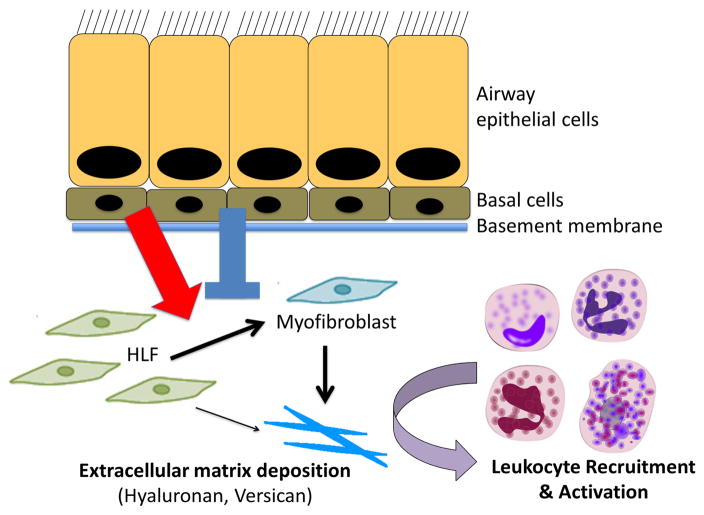
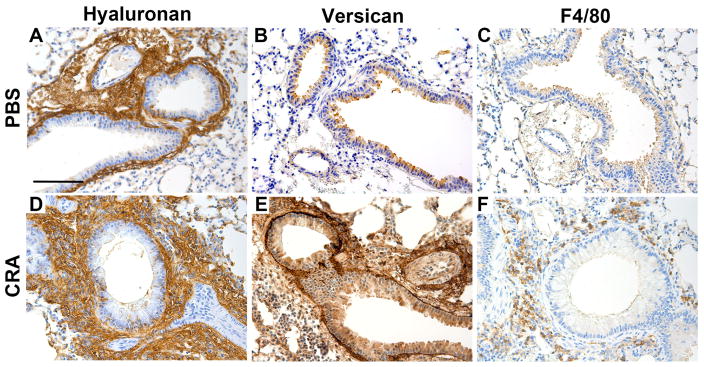
During inflammation, leukocytes influx into lung compartments and interact with extracellular matrix (ECM). Two ECM components, versican and hyaluronan, increase in a range of lung diseases. The interaction of leukocytes with these ECM components controls leukocyte retention and accumulation, proliferation, migration, differentiation, and activation as part of the inflammatory phase of lung disease. In addition, bronchial epithelial cells from asthmatic children co-cultured with human lung fibroblasts generate an ECM that is adherent for monocytes/macrophages. Macrophages are present in both early and late lung inflammation. Matrix metalloproteinase 10 (MMP10) is induced in alveolar macrophages with injury and infection and modulates macrophage phenotype and their ability to degrade collagenous ECM components. Collectively, studies outlined in this review highlight the importance of specific ECM components in the regulation of inflammatory events in lung disease. The widespread involvement of these ECM components in the pathogenesis of lung inflammation make them attractive candidates for therapeutic intervention.
在炎症过程中,白细胞流入肺腔并与细胞外基质(ECM)相互作用。两种ECM成分,多功能蛋白聚糖和透明质酸,在一系列肺部疾病中会增加。白细胞与这些ECM成分的相互作用控制着白细胞的滞留和积累、增殖、迁移、分化以及激活,这是肺部疾病炎症阶段的一部分。此外,与人类肺成纤维细胞共培养的哮喘儿童支气管上皮细胞会产生一种对单核细胞/巨噬细胞有粘附性的ECM。巨噬细胞存在于肺部炎症的早期和晚期。基质金属蛋白酶10(MMP10)在肺泡巨噬细胞受到损伤和感染时被诱导,并调节巨噬细胞表型及其降解胶原ECM成分的能力。总的来说,本综述中概述的研究突出了特定ECM成分在肺部疾病炎症事件调节中的重要性。这些ECM成分在肺部炎症发病机制中的广泛参与使其成为治疗干预的有吸引力的候选对象。