Blanco-Míguez Aitor, Gutiérrez-Jácome Alberto, Fdez-Riverola Florentino, Lourenço Anália, Sánchez Borja
ESEI - Department of Computer Science, University of Vigo, Edificio Politécnico, Campus Universitario As Lagoas s/n 32004, Ourense, Spain.
Department of Microbiology and Biochemistry of Dairy Products, Instituto de Productos Lácteos de Asturias (IPLA), Consejo Superior de Investigaciones Científicas (CSIC), Villaviciosa, Asturias, Spain.
Database (Oxford). 2017 Jan 10;2017. doi: 10.1093/database/baw157. Print 2017.
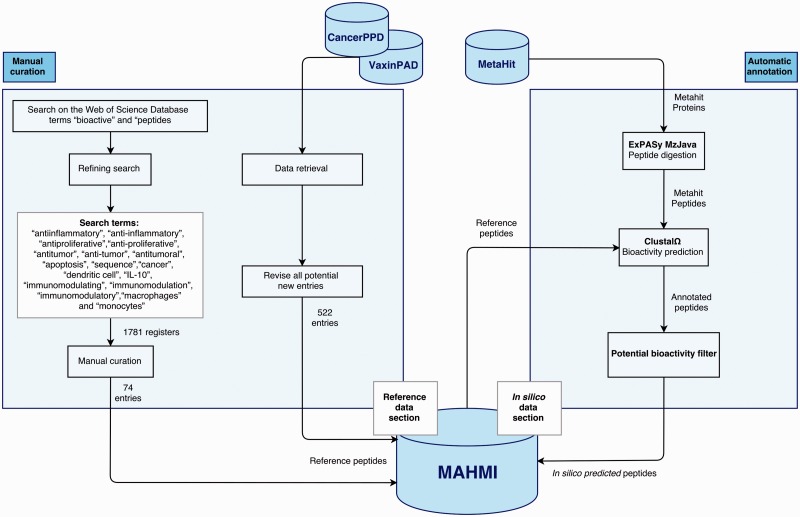
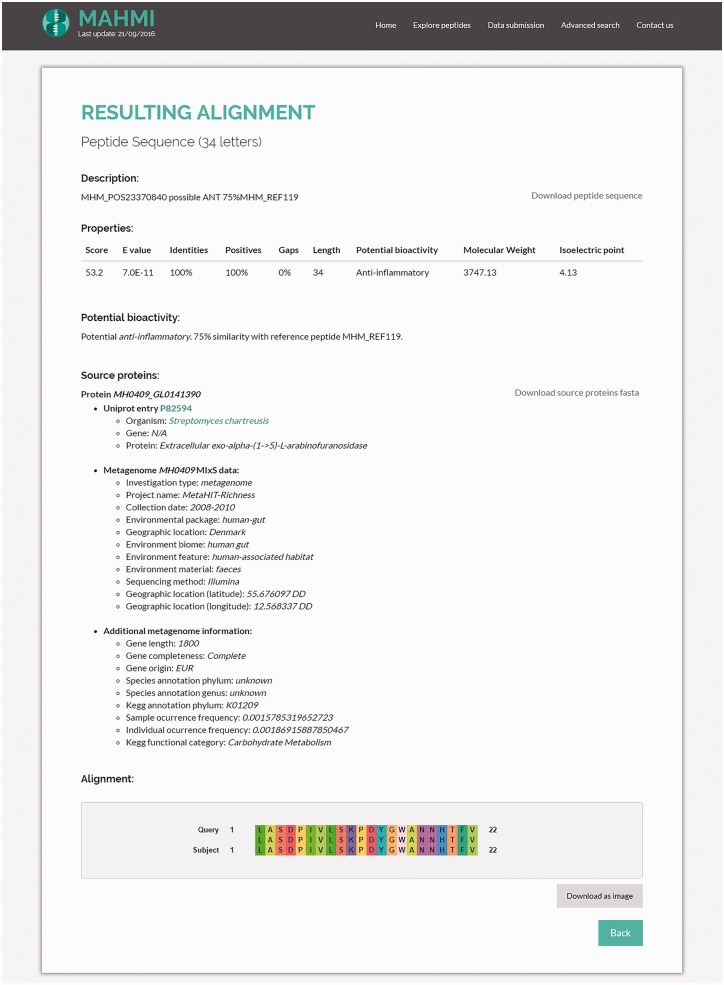
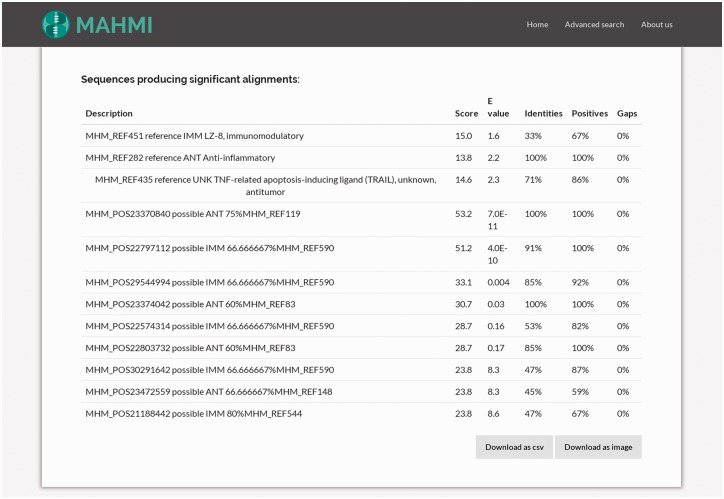
The Mechanism of Action of the Human Microbiome (MAHMI) database is a unique resource that provides comprehensive information about the sequence of potential immunomodulatory and antiproliferative peptides encrypted in the proteins produced by the human gut microbiota. Currently, MAHMI database contains over 300 hundred million peptide entries, with detailed information about peptide sequence, sources and potential bioactivity. The reference peptide data section is curated manually by domain experts. The in silico peptide data section is populated automatically through the systematic processing of publicly available exoproteomes of the human microbiome. Bioactivity prediction is based on the global alignment of the automatically processed peptides with experimentally validated immunomodulatory and antiproliferative peptides, in the reference section. MAHMI provides researchers with a comparative tool for inspecting the potential immunomodulatory or antiproliferative bioactivity of new amino acidic sequences and identifying promising peptides to be further investigated. Moreover, researchers are welcome to submit new experimental evidence on peptide bioactivity, namely, empiric and structural data, as a proactive, expert means to keep the database updated and improve the implemented bioactivity prediction method. Bioactive peptides identified by MAHMI have a huge biotechnological potential, including the manipulation of aberrant immune responses and the design of new functional ingredients/foods based on the genetic sequences of the human microbiome. Hopefully, the resources provided by MAHMI will be useful to those researching gastrointestinal disorders of autoimmune and inflammatory nature, such as Inflammatory Bowel Diseases. MAHMI database is routinely updated and is available free of charge. Database URL: http://mahmi.org/.
人类微生物组作用机制(MAHMI)数据库是一个独特的资源,它提供了关于人类肠道微生物群产生的蛋白质中加密的潜在免疫调节和抗增殖肽序列的全面信息。目前,MAHMI数据库包含超过3亿条肽条目,以及关于肽序列、来源和潜在生物活性的详细信息。参考肽数据部分由领域专家手动策划。计算机模拟肽数据部分通过对人类微生物组公开可用的外蛋白质组进行系统处理自动填充。生物活性预测基于自动处理的肽与参考部分中经过实验验证的免疫调节和抗增殖肽的全局比对。MAHMI为研究人员提供了一个比较工具,用于检查新氨基酸序列的潜在免疫调节或抗增殖生物活性,并识别有前景的肽以便进一步研究。此外,欢迎研究人员提交关于肽生物活性的新实验证据,即经验数据和结构数据,作为一种主动的、专家级的方式来保持数据库更新并改进所实施的生物活性预测方法。MAHMI鉴定出的生物活性肽具有巨大的生物技术潜力,包括操纵异常免疫反应以及基于人类微生物组的基因序列设计新的功能成分/食品。希望MAHMI提供的资源对那些研究自身免疫性和炎症性胃肠道疾病(如炎症性肠病)的研究人员有用。MAHMI数据库会定期更新且免费提供。数据库网址:http://mahmi.org/