Ha Sha, Li Fengsheng, Troutman Matthew C, Freed Daniel C, Tang Aimin, Loughney John W, Wang Dai, Wang I-Ming, Vlasak Josef, Nickle David C, Rustandi Richard R, Hamm Melissa, DePhillips Pete A, Zhang Ningyan, McLellan Jason S, Zhu Hua, Adler Stuart P, McVoy Michael A, An Zhiqiang, Fu Tong-Ming
Merck Research Laboratories, Merck and Co., Inc., Kenilworth, New Jersey, USA.
Texas Therapeutics Institute, the Brown Foundation Institute of Molecular Medicine, University of Texas Health Science Center at Houston, Houston, Texas, USA.
J Virol. 2017 Mar 13;91(7). doi: 10.1128/JVI.02033-16. Print 2017 Apr 1.
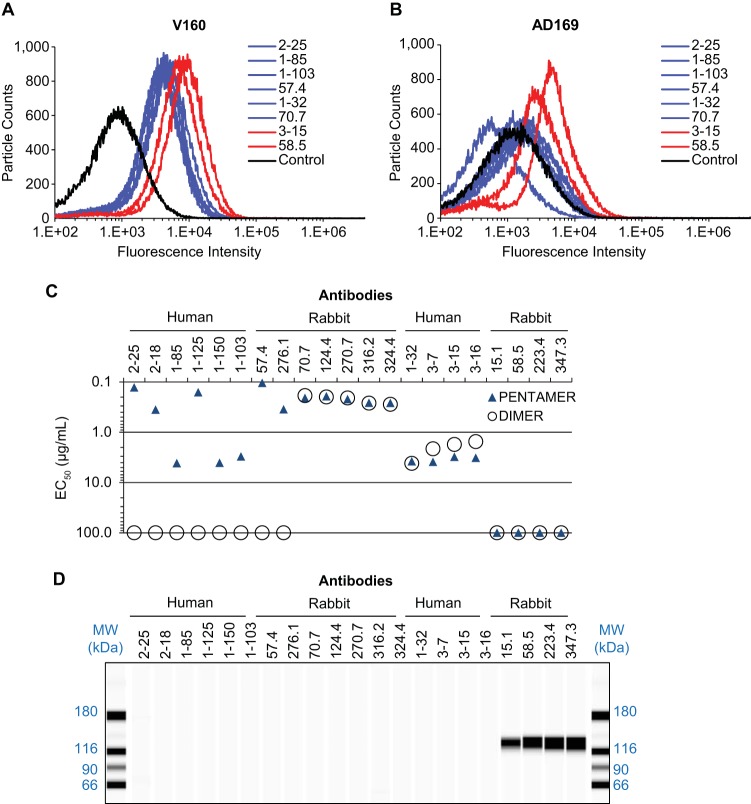
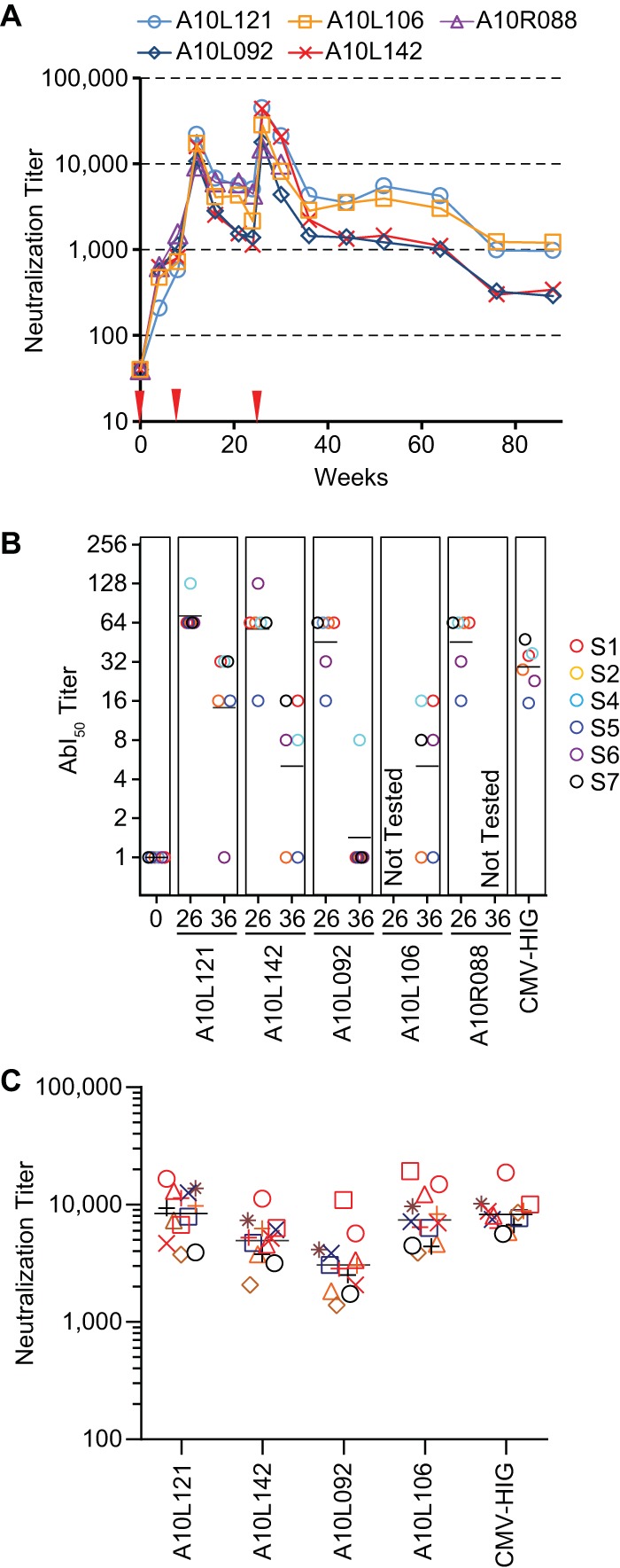
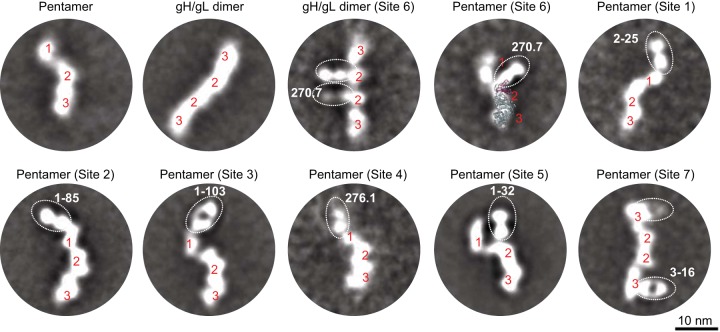
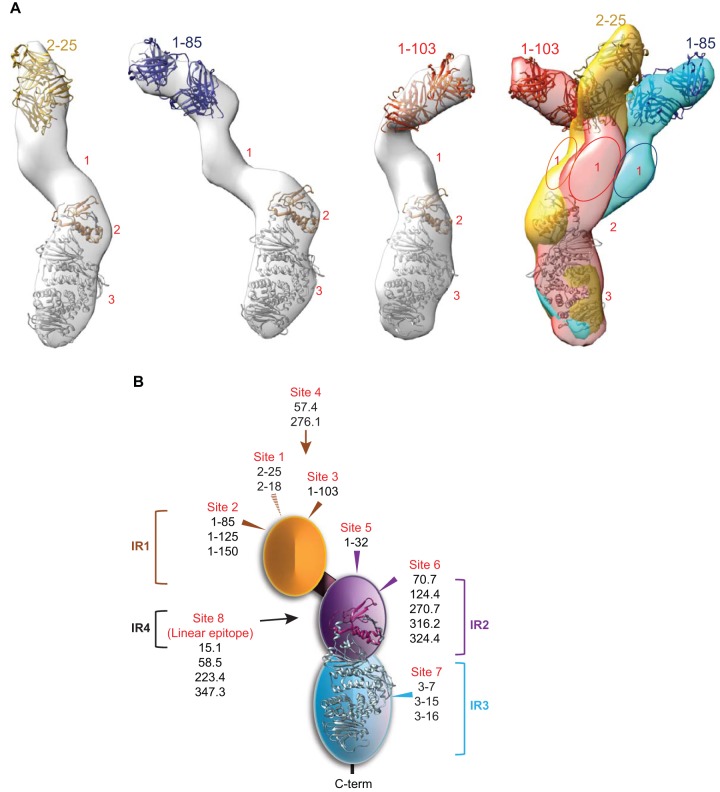
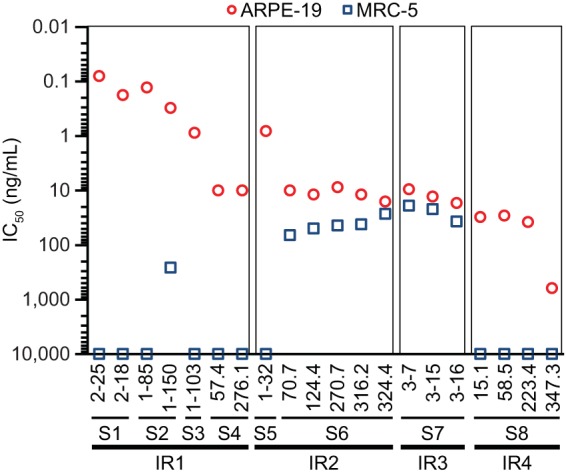
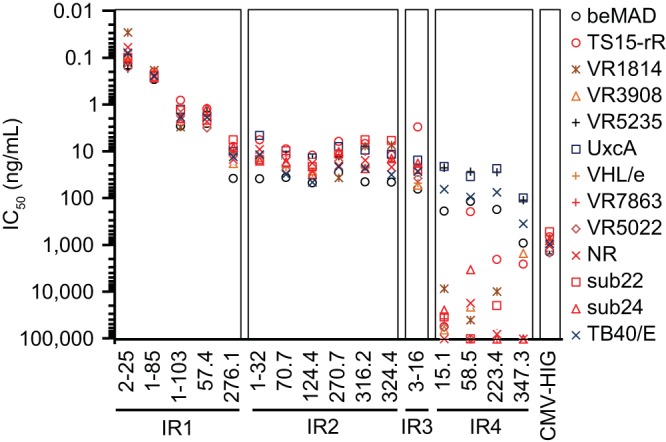
Human cytomegalovirus (HCMV) is the leading cause of congenital viral infection, and developing a prophylactic vaccine is of high priority to public health. We recently reported a replication-defective human cytomegalovirus with restored pentameric complex glycoprotein H (gH)/gL/pUL128-131 for prevention of congenital HCMV infection. While the quantity of vaccine-induced antibody responses can be measured in a viral neutralization assay, assessing the quality of such responses, including the ability of vaccine-induced antibodies to cross-neutralize the field strains of HCMV, remains a challenge. In this study, with a panel of neutralizing antibodies from three healthy human donors with natural HCMV infection or a vaccinated animal, we mapped eight sites on the dominant virus-neutralizing antigen-the pentameric complex of glycoprotein H (gH), gL, and pUL128, pUL130, and pUL131. By evaluating the site-specific antibodies in vaccine immune sera, we demonstrated that vaccination elicited functional antiviral antibodies to multiple neutralizing sites in rhesus macaques, with quality attributes comparable to those of CMV hyperimmune globulin. Furthermore, these immune sera showed antiviral activities against a panel of genetically distinct HCMV clinical isolates. These results highlighted the importance of understanding the quality of vaccine-induced antibody responses, which includes not only the neutralizing potency in key cell types but also the ability to protect against the genetically diverse field strains. HCMV is the leading cause of congenital viral infection, and development of a preventive vaccine is a high public health priority. To understand the strain coverage of vaccine-induced immune responses in comparison with natural immunity, we used a panel of broadly neutralizing antibodies to identify the immunogenic sites of a dominant viral antigen-the pentameric complex. We further demonstrated that following vaccination of a replication-defective virus with the restored pentameric complex, rhesus macaques can develop broadly neutralizing antibodies targeting multiple immunogenic sites of the pentameric complex. Such analyses of site-specific antibody responses are imperative to our assessment of the quality of vaccine-induced immunity in clinical studies.
人巨细胞病毒(HCMV)是先天性病毒感染的主要原因,开发预防性疫苗对公共卫生至关重要。我们最近报道了一种复制缺陷型人巨细胞病毒,其五聚体复合糖蛋白H(gH)/gL/pUL128 - 131得以恢复,用于预防先天性HCMV感染。虽然疫苗诱导的抗体反应量可通过病毒中和试验来测量,但评估此类反应的质量,包括疫苗诱导抗体交叉中和HCMV野生株的能力,仍然是一项挑战。在本研究中,我们利用来自三名自然感染HCMV的健康人类供体或一只接种疫苗动物的一组中和抗体,在主要的病毒中和抗原——糖蛋白H(gH)、gL以及pUL128、pUL130和pUL131的五聚体复合物上定位了八个位点。通过评估疫苗免疫血清中的位点特异性抗体,我们证明接种疫苗能在恒河猴体内引发针对多个中和位点的功能性抗病毒抗体,其质量属性与CMV高效价免疫球蛋白相当。此外,这些免疫血清对一组基因不同的HCMV临床分离株显示出抗病毒活性。这些结果突出了了解疫苗诱导抗体反应质量的重要性,这不仅包括在关键细胞类型中的中和效力,还包括抵御基因多样的野生株的能力。HCMV是先天性病毒感染的主要原因,开发预防性疫苗是公共卫生的高度优先事项。为了了解与自然免疫相比疫苗诱导免疫反应的毒株覆盖范围,我们使用一组广泛中和抗体来确定一种主要病毒抗原——五聚体复合物的免疫原性位点。我们进一步证明,在用恢复五聚体复合物的复制缺陷型病毒接种后,恒河猴可产生靶向五聚体复合物多个免疫原性位点的广泛中和抗体。这种位点特异性抗体反应分析对于我们在临床研究中评估疫苗诱导免疫的质量至关重要。