Sendoel Ataman, Dunn Joshua G, Rodriguez Edwin H, Naik Shruti, Gomez Nicholas C, Hurwitz Brian, Levorse John, Dill Brian D, Schramek Daniel, Molina Henrik, Weissman Jonathan S, Fuchs Elaine
Robin Chemers Neustein Laboratory of Mammalian Development and Cell Biology, Howard Hughes Medical Institute, The Rockefeller University, New York, New York 10065, USA.
Department of Cellular and Molecular Pharmacology, Howard Hughes Medical Institute, University of California, San Francisco, California 94158, USA.
Nature. 2017 Jan 26;541(7638):494-499. doi: 10.1038/nature21036. Epub 2017 Jan 11.
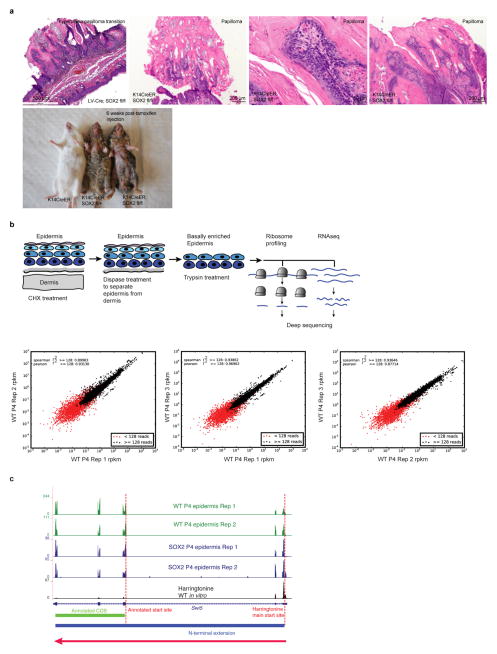
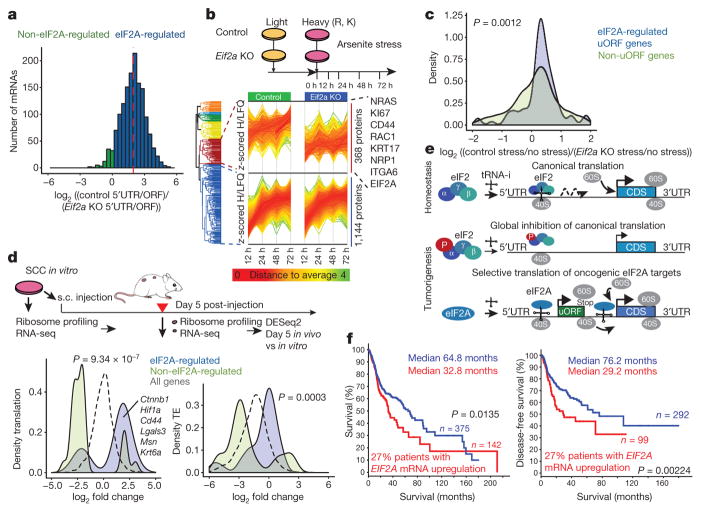
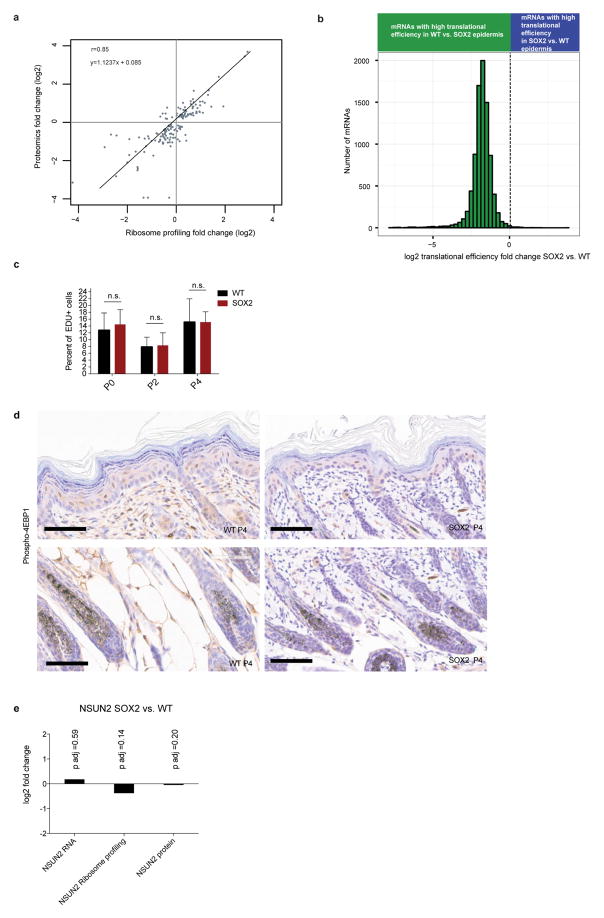
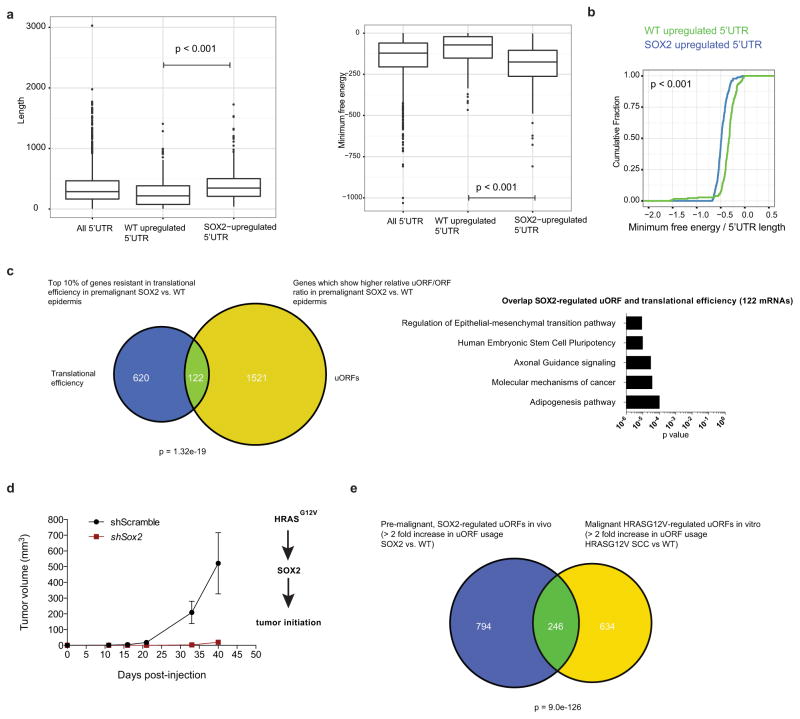
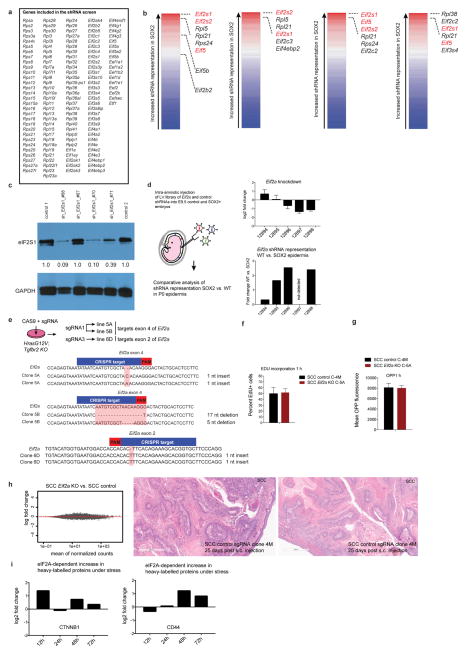
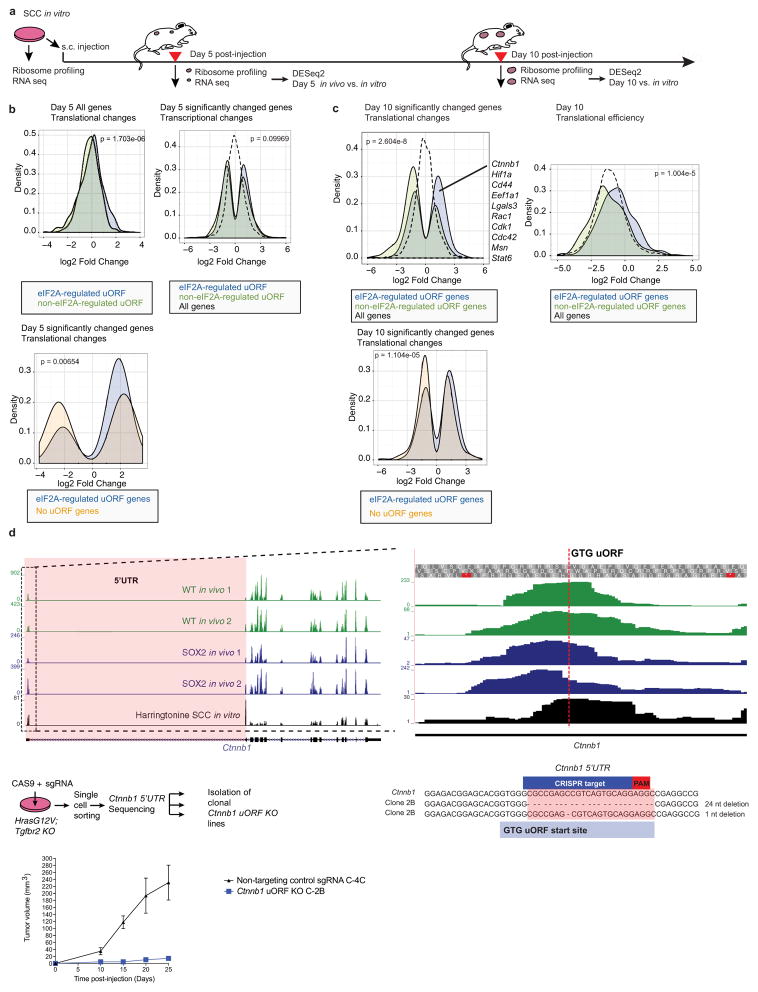
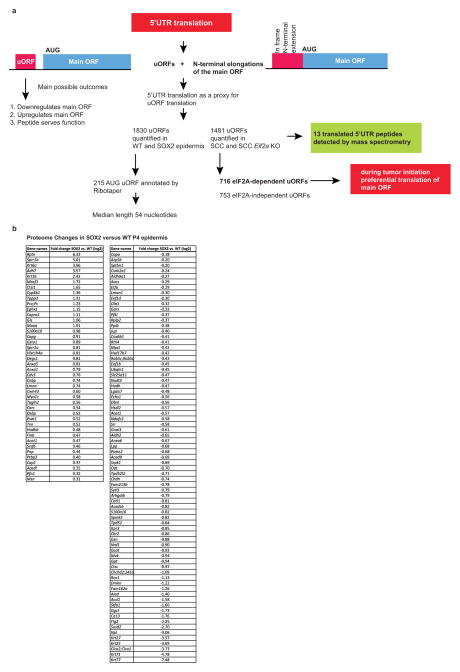
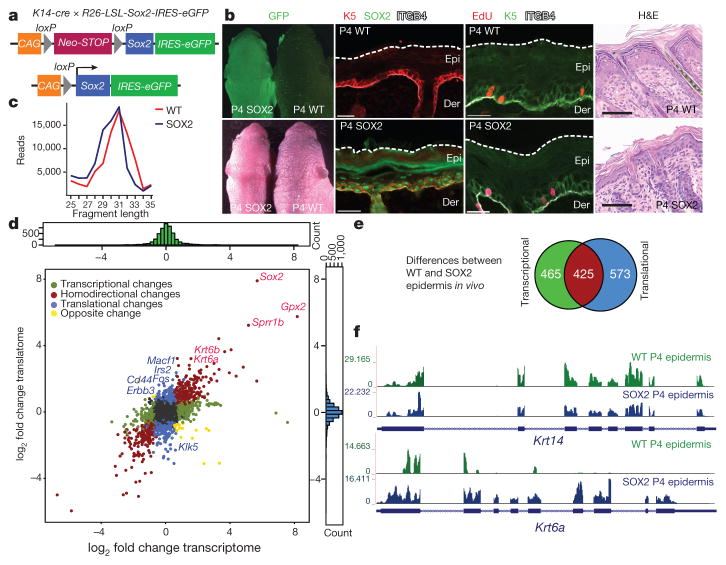
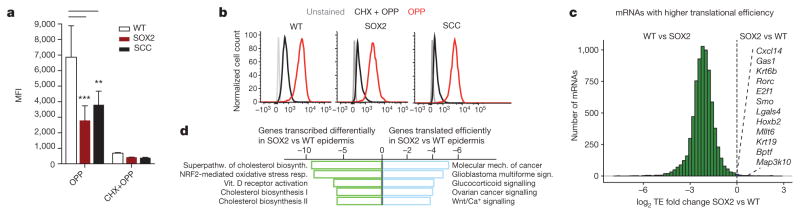
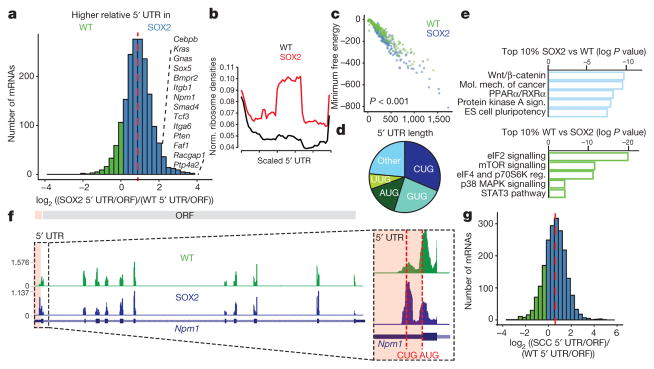
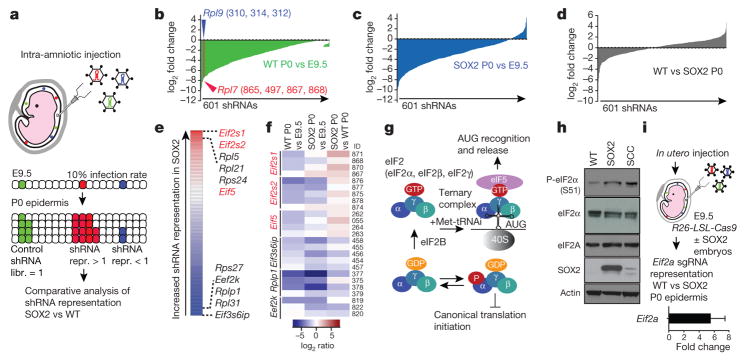
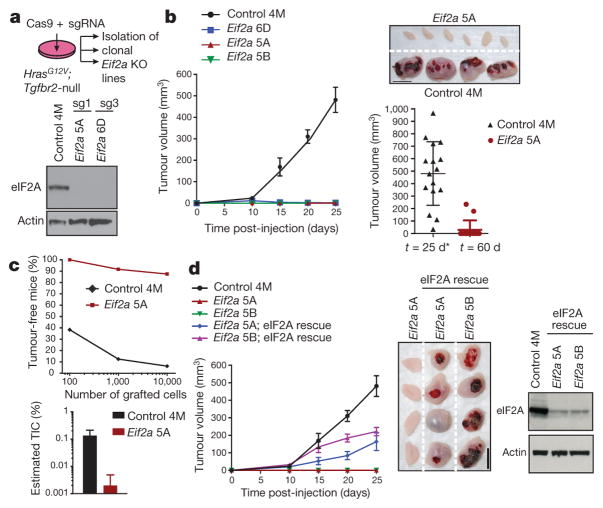
We are just beginning to understand how translational control affects tumour initiation and malignancy. Here we use an epidermis-specific, in vivo ribosome profiling strategy to investigate the translational landscape during the transition from normal homeostasis to malignancy. Using a mouse model of inducible SOX2, which is broadly expressed in oncogenic RAS-associated cancers, we show that despite widespread reductions in translation and protein synthesis, certain oncogenic mRNAs are spared. During tumour initiation, the translational apparatus is redirected towards unconventional upstream initiation sites, enhancing the translational efficiency of oncogenic mRNAs. An in vivo RNA interference screen of translational regulators revealed that depletion of conventional eIF2 complexes has adverse effects on normal but not oncogenic growth. Conversely, the alternative initiation factor eIF2A is essential for cancer progression, during which it mediates initiation at these upstream sites, differentially skewing translation and protein expression. Our findings unveil a role for the translation of 5' untranslated regions in cancer, and expose new targets for therapeutic intervention.
我们才刚刚开始了解翻译控制如何影响肿瘤的起始和恶性程度。在此,我们采用一种表皮特异性的体内核糖体分析策略,来研究从正常稳态向恶性状态转变过程中的翻译全景。利用一种在致癌RAS相关癌症中广泛表达的可诱导SOX2小鼠模型,我们发现尽管翻译和蛋白质合成普遍减少,但某些致癌mRNA却未受影响。在肿瘤起始过程中,翻译机器被重新导向非常规的上游起始位点,从而提高了致癌mRNA的翻译效率。一项对翻译调节因子的体内RNA干扰筛选显示,传统eIF2复合物的缺失对正常生长有不利影响,但对致癌生长没有影响。相反,替代起始因子eIF2A对癌症进展至关重要,在此过程中它介导这些上游位点的起始,使翻译和蛋白质表达发生不同程度的偏向。我们的研究结果揭示了5'非翻译区在癌症中的翻译作用,并揭示了新的治疗干预靶点。