Kinsler V A, O'Hare P, Bulstrode N, Calonje J E, Chong W K, Hargrave D, Jacques T, Lomas D, Sebire N J, Slater O
Paediatric Dermatology, Great Ormond Street Hospital for Children NHS Foundation Trust, London, U.K.
Genetics and Genomic Medicine, UCL Institute of Child Health, London, U.K.
Br J Dermatol. 2017 May;176(5):1131-1143. doi: 10.1111/bjd.15301. Epub 2017 Apr 4.
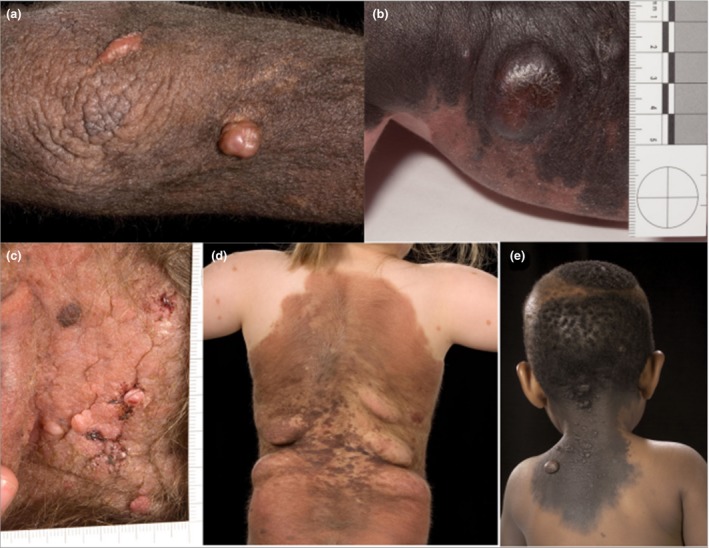
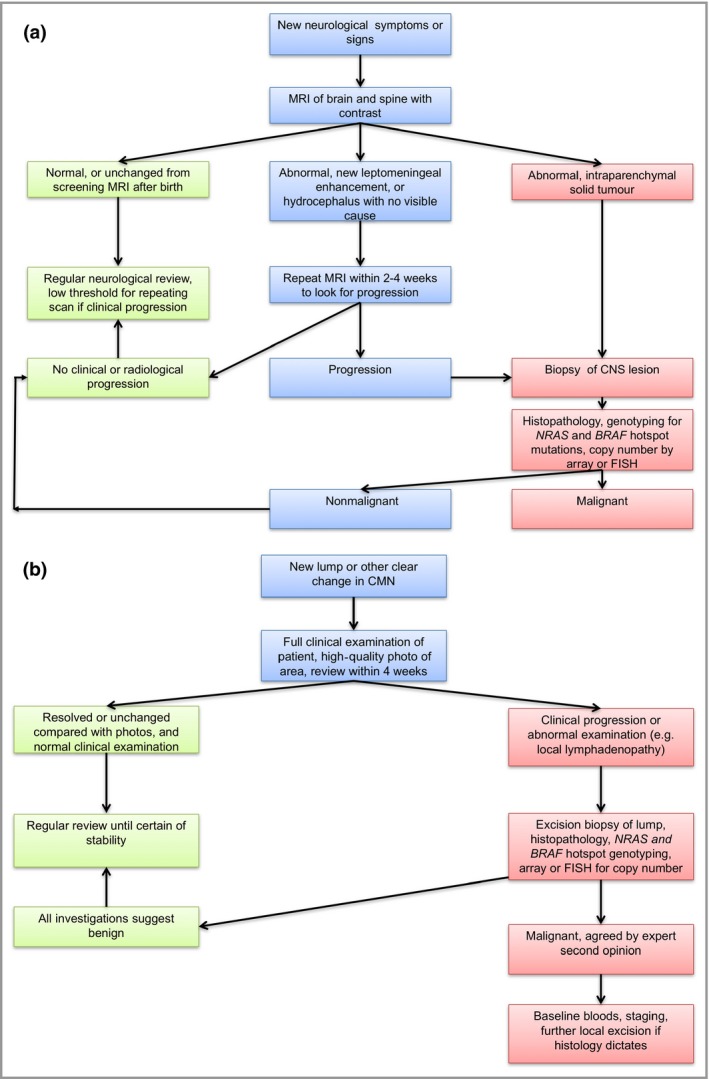
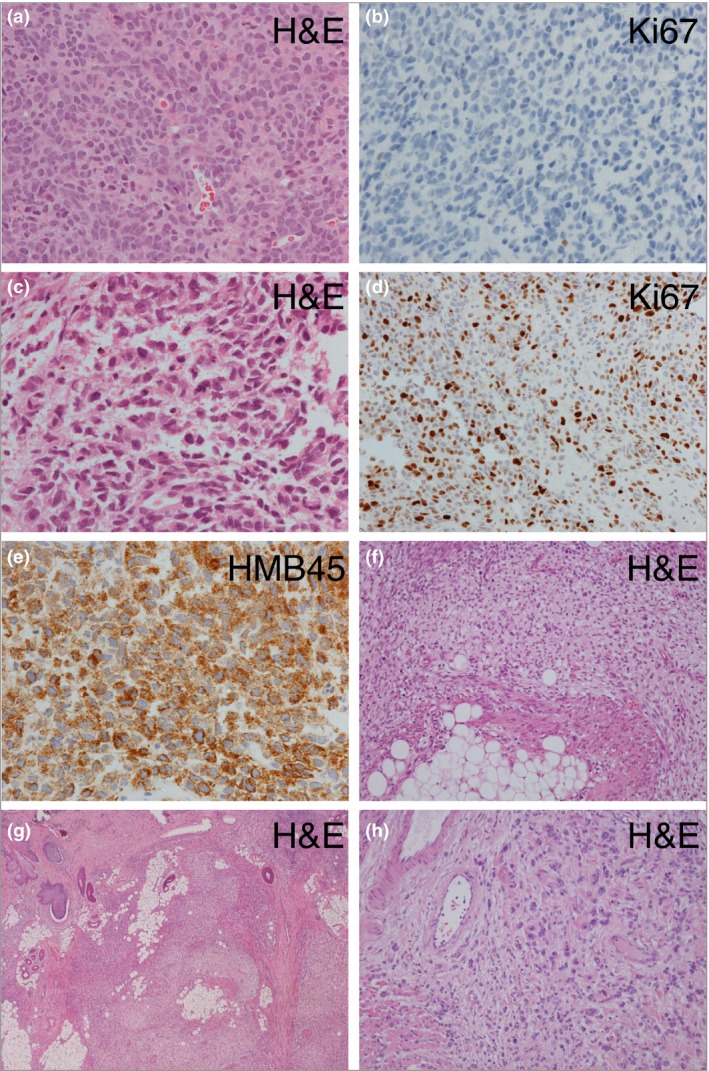
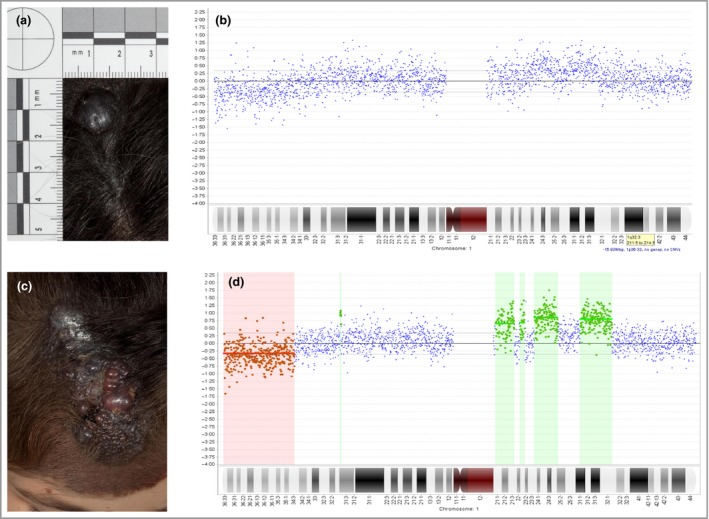
Congenital melanocytic naevi (CMN) are a known risk factor for melanoma, with the greatest risk currently thought to be in childhood. There has been controversy over the years about the incidence of melanoma, and therefore over the clinical management of CMN, due partly to the difficulties of histological diagnosis and partly to publishing bias towards cases of malignancy. Large cohort studies have demonstrated that melanoma risk in childhood is related to the severity of the congenital phenotype. New understanding of the genetics of CMN offers the possibility of improvement in diagnosis of melanoma, identification of those at highest risk, and new treatment options. We review the world literature and our centre's experience over the last 25 years, including the molecular characteristics of melanoma in these patients and new melanoma incidence and outcome data from our prospective cohort. Management strategies are proposed for presentation of suspected melanoma of the skin and the central nervous system in patients with CMN, including use of oral mitogen-activated protein kinase kinase inhibitors in NRAS-mutated tumours.
先天性黑素细胞痣(CMN)是黑色素瘤的已知危险因素,目前认为最大风险期在儿童期。多年来,黑色素瘤的发病率一直存在争议,因此CMN的临床管理也存在争议,部分原因是组织学诊断困难,部分原因是对恶性病例存在发表偏倚。大型队列研究表明,儿童期黑色素瘤风险与先天性表型的严重程度有关。对CMN遗传学的新认识为改善黑色素瘤诊断、识别高危人群以及提供新的治疗选择提供了可能性。我们回顾了世界文献以及我们中心过去25年的经验,包括这些患者中黑色素瘤的分子特征以及我们前瞻性队列的新黑色素瘤发病率和结局数据。针对CMN患者皮肤和中枢神经系统疑似黑色素瘤的表现,提出了管理策略,包括在NRAS突变肿瘤中使用口服丝裂原活化蛋白激酶激酶抑制剂。