Department of Pharmaceutical Sciences, University of New Mexico Health Sciences Center, Albuquerque, NM 87131, USA.
Department of Rehabilitation, Huashan Hospital, Fudan University, Shanghai, 200040, China.
Sci Rep. 2017 Jan 12;7:40331. doi: 10.1038/srep40331.
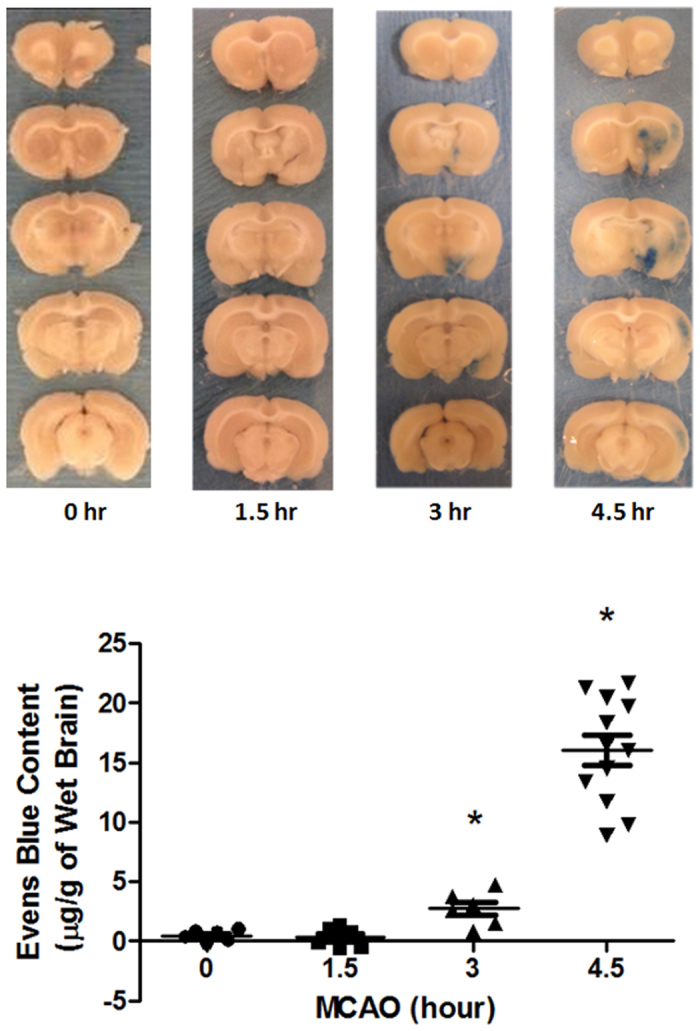
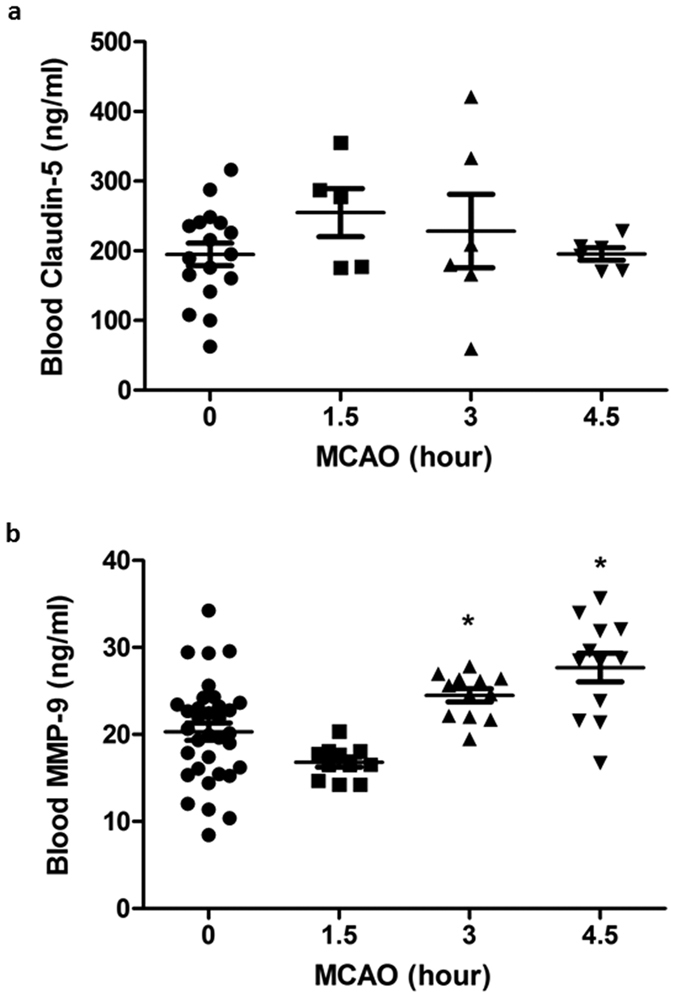
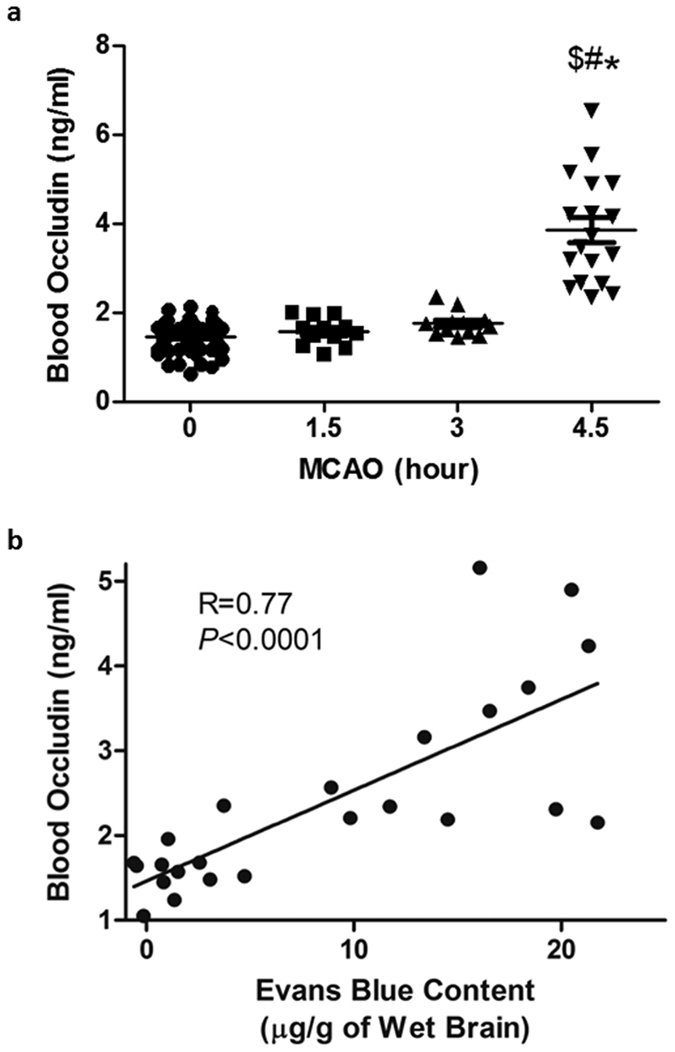
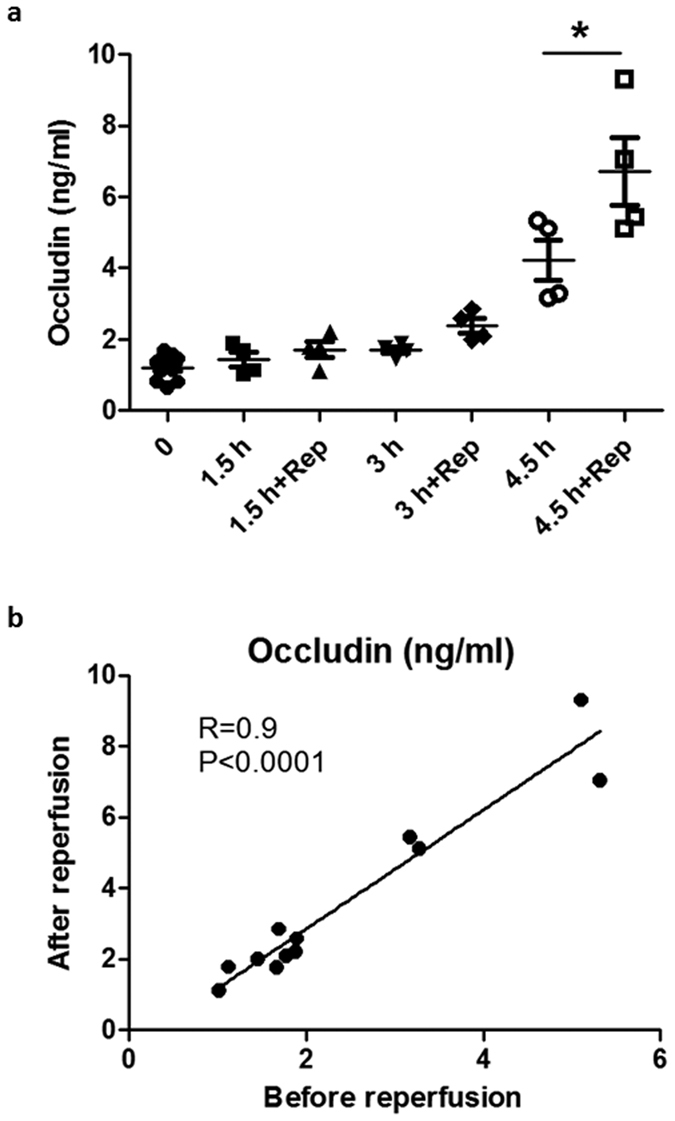
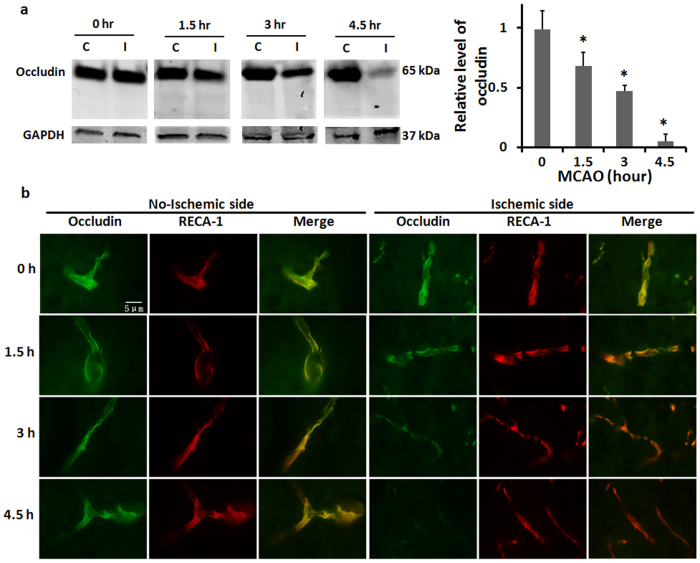
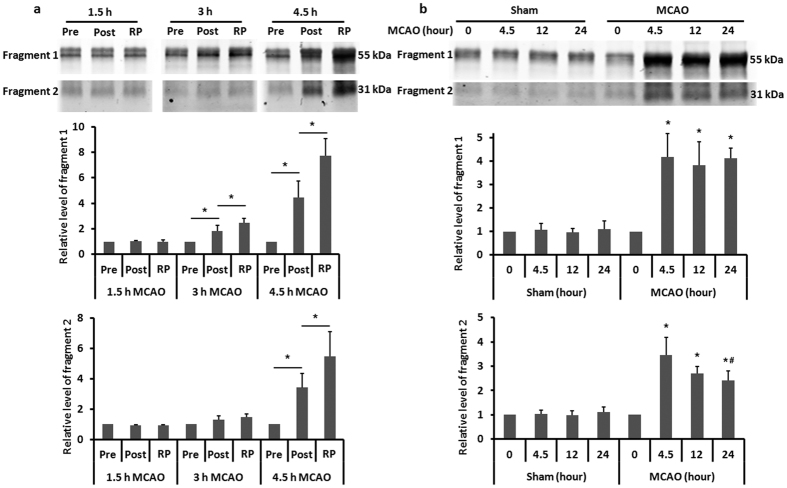
Concern about intracerebral hemorrhage (ICH) is the primary reason for withholding tPA therapy from patients with ischemic stroke. Early blood brain barrier (BBB) damage is the major risk factor for fatal post-thrombolysis ICH, but rapidly assessing BBB damage before tPA administration is highly challenging. We recently reported that ischemia induced rapid degradation of tight junction protein occludin in cerebromicrovessels. The present study investigates whether the cleaved occludin is released into the blood stream and how blood occludin levels correlate to the extent of BBB damage using a rat model of ischemic stroke. Cerebral ischemia induced a time-dependent increase of blood occludin with a sharp increase at 4.5-hour post-ischemia onset, which concurrently occurred with the loss of occludin from ischemic cerebral microvessels and a massive BBB leakage at 4.5-hour post-ischemia. Two major occludin fragments were identified in the blood during cerebral ischemia. Furthermore, blood occludin levels remained significantly higher than its basal level within the first 24 hours after ischemia onset. Our findings demonstrate that blood occludin levels correlate well with the extent of BBB damage and thus may serve as a clinically relevant biomarker for evaluating the risk of ICH before tPA administration.
人们担心脑出血(ICH),这是导致缺血性脑卒中患者不接受 tPA 治疗的主要原因。早期血脑屏障(BBB)损伤是溶栓后致命性 ICH 的主要危险因素,但在 tPA 给药前快速评估 BBB 损伤极具挑战性。我们最近报道,缺血诱导脑微血管紧密连接蛋白 occludin 的快速降解。本研究使用缺血性脑卒中大鼠模型,探讨缺血是否会导致 occludin 被释放到血液中,以及血液 occludin 水平与 BBB 损伤程度的相关性。脑缺血诱导血液 occludin 呈时间依赖性增加,在缺血后 4.5 小时急剧增加,同时伴有缺血性脑微血管 occludin 的丢失和 4.5 小时后 BBB 大量渗漏。在脑缺血期间,血液中鉴定出两种主要的 occludin 片段。此外,在缺血后 24 小时内,血液 occludin 水平仍明显高于基础水平。我们的研究结果表明,血液 occludin 水平与 BBB 损伤程度密切相关,因此可能成为评估 tPA 给药前 ICH 风险的临床相关生物标志物。