Mao Xiaona, Li Pingping, Wang Yaochun, Liang Zheyong, Liu Jie, Li Juan, Jiang Yina, Bao Gang, Li Lei, Zhu Bofeng, Ren Yu, Zhao Xinhan, Zhang Jianmin, Liu Yu, Yang Jin, Liu Peijun
Center for Translational Medicine, The First Affiliated Hospital of Xi'an Jiaotong University, Xi'an, Shaanxi 710061, P.R. China.
Key Laboratory for Tumor Precision Medicine of Shaanxi Province, The First Affiliated Hospital of Xi'an Jiaotong University, Xi'an, Shaanxi 710061, P.R. China.
Cell Death Dis. 2017 Jan 12;8(1):e2546. doi: 10.1038/cddis.2016.478.
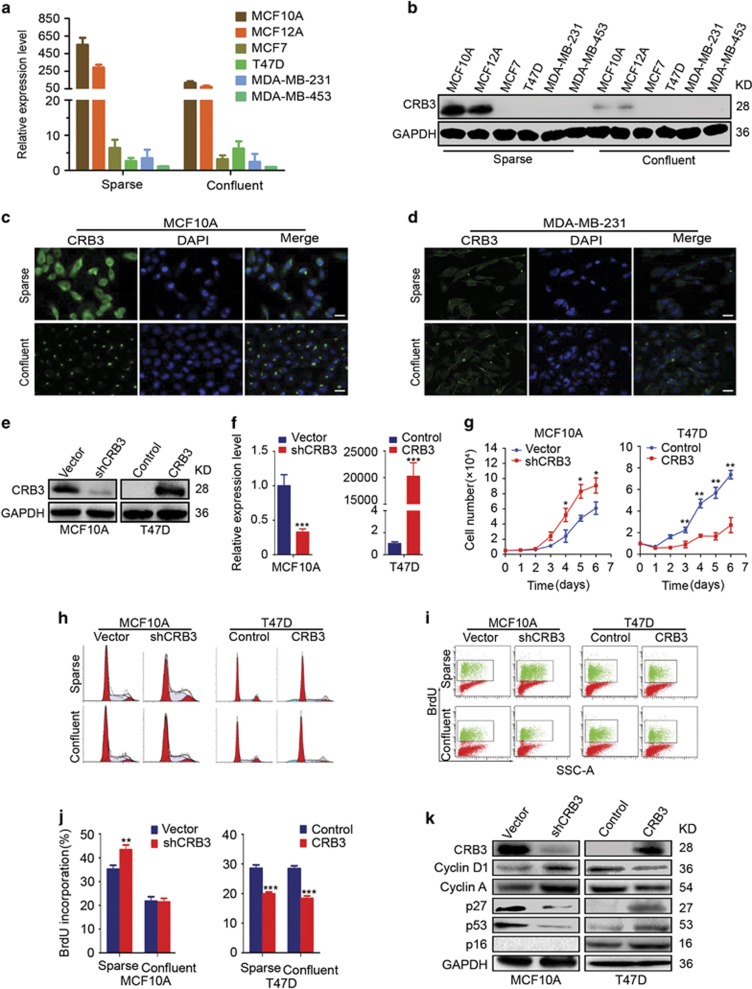
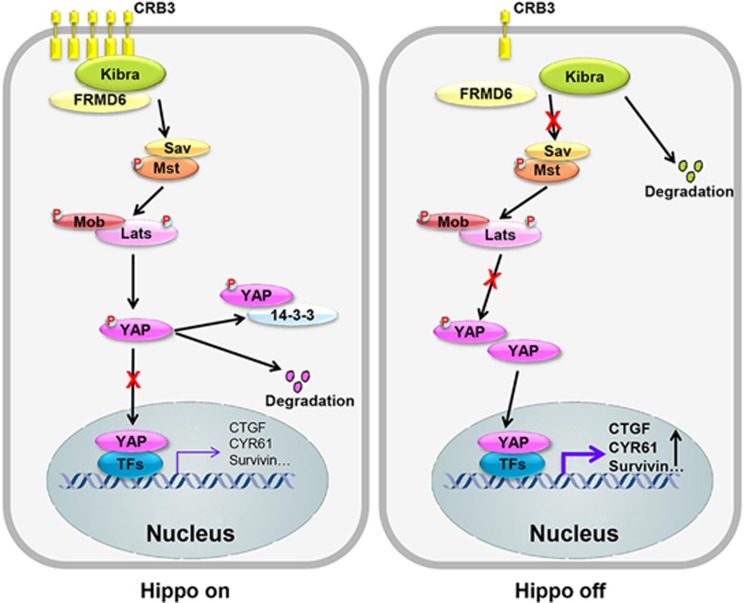
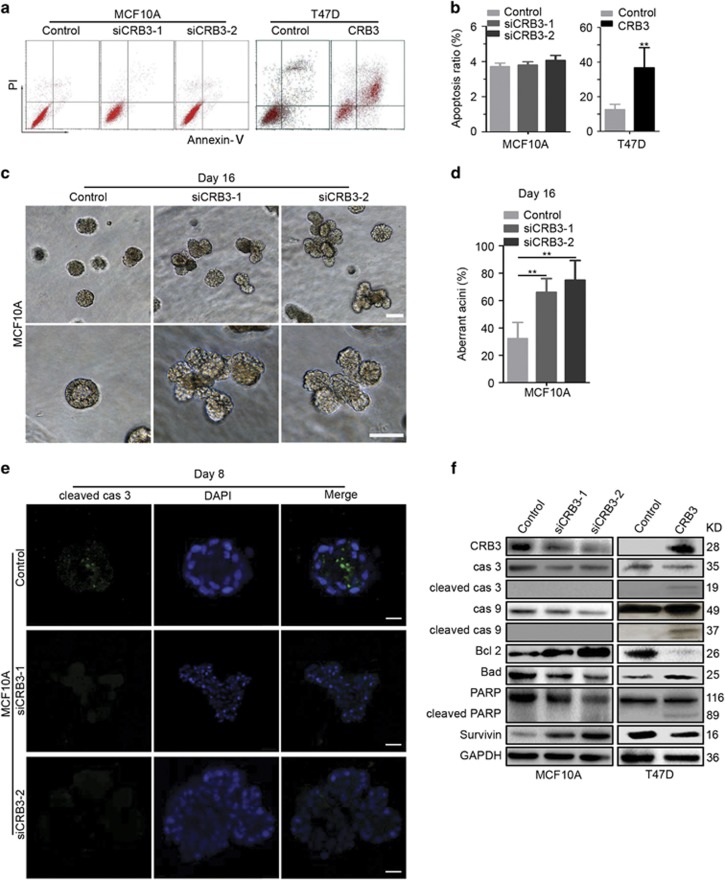
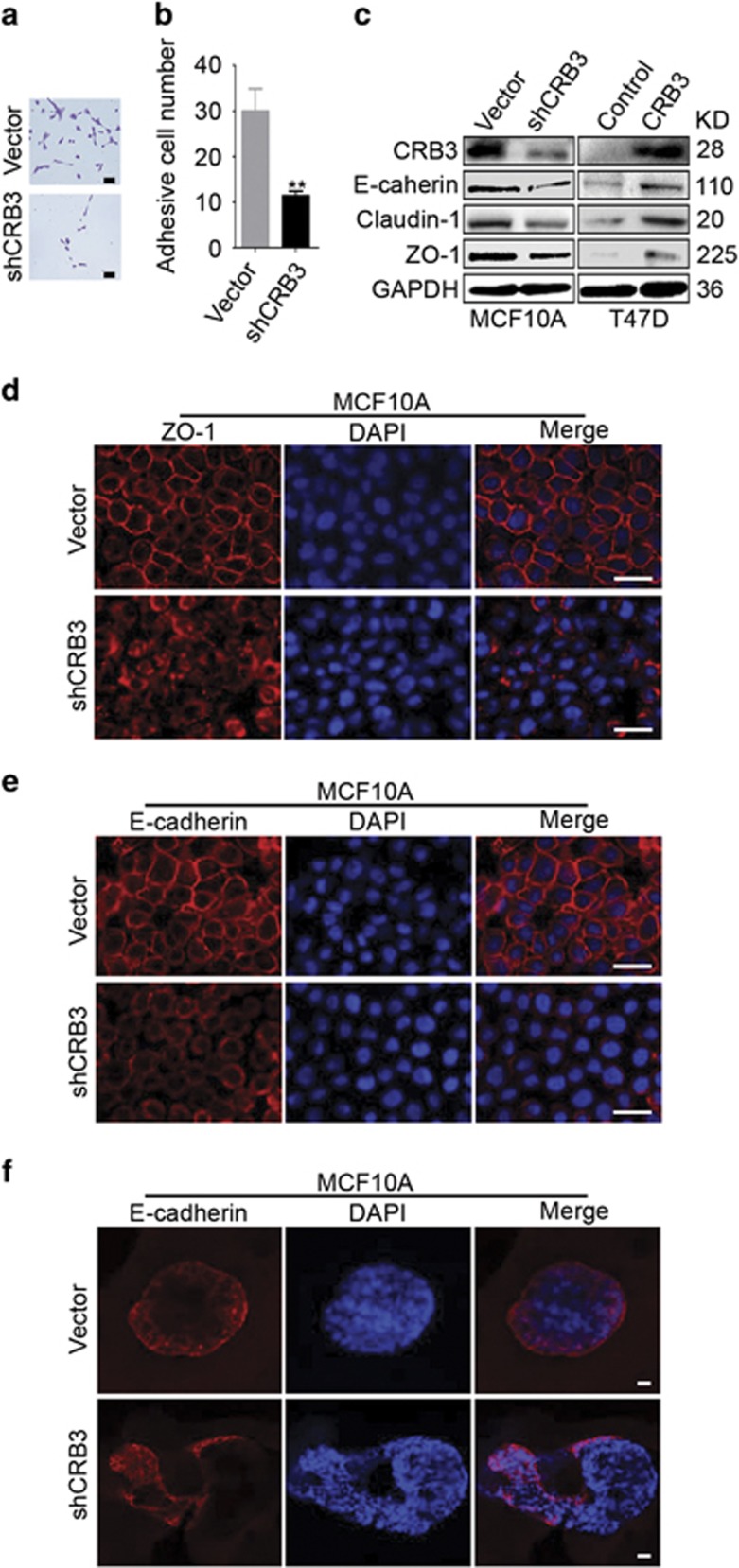
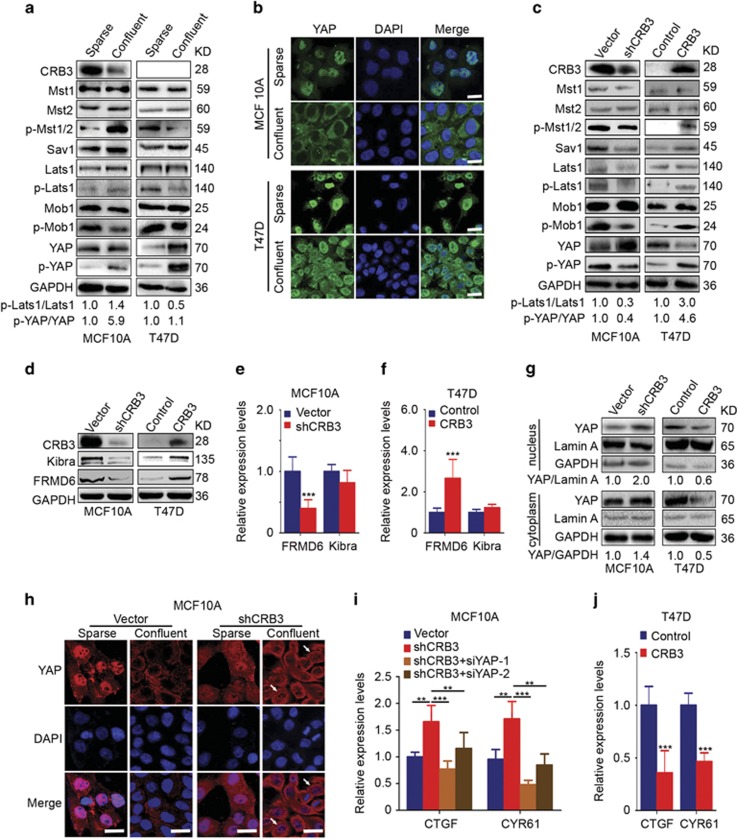
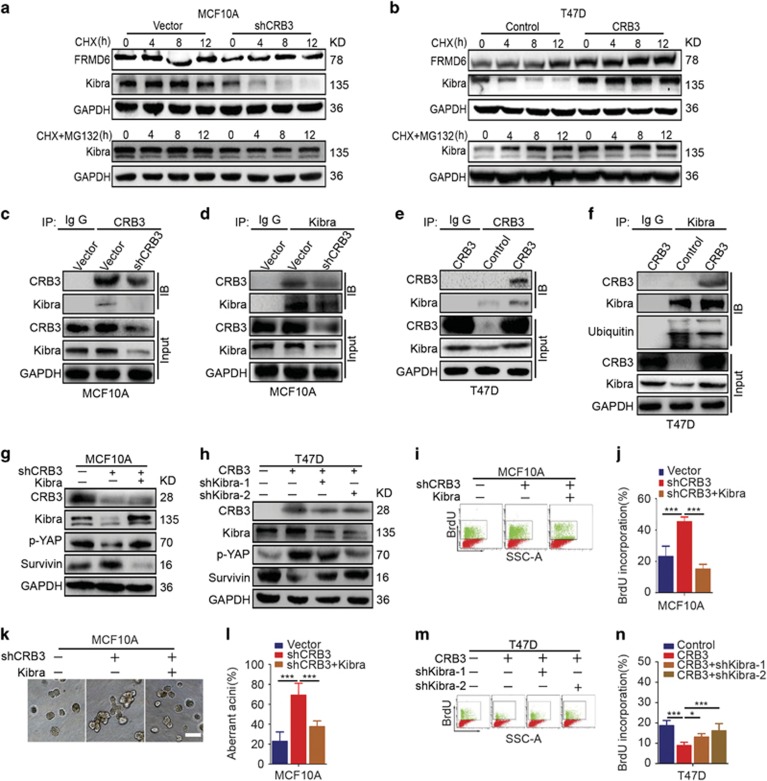
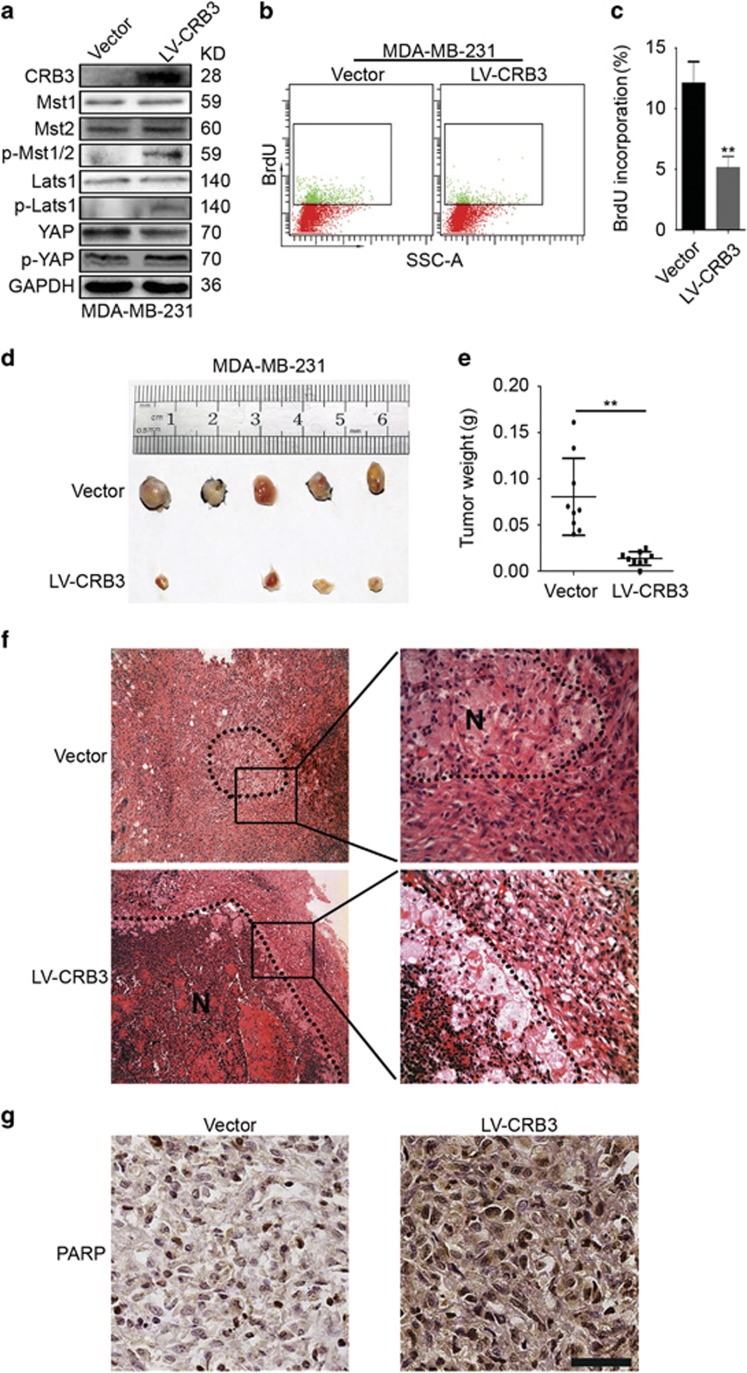
The loss of contact inhibition is a hallmark of cancer cells. The Hippo pathway has recently been shown to be an important regulator of contact inhibition, and the cell apical polarity determinant protein CRB3 has been suggested to be involved in Hippo signalling. However, whether CRB3 regulates contact inhibition in mammary cells remains unclear, and the underlying mechanisms have not been elucidated. As shown in the present study, CRB3 decreases cell proliferation, promotes apoptosis, and enhances the formation of tight and adherens junctions. Furthermore, we report for the first time that CRB3 acts as an upstream regulator of the Hippo pathway to regulate contact inhibition by recruiting other Hippo molecules, such as Kibra and/or FRMD6, in mammary epithelial cells. In addition, CRB3 inhibits tumour growth in vivo. Collectively, the present study increases our understanding of the Hippo pathway and provides an important theoretical basis for exploring new avenues for breast cancer treatment.
失去接触抑制是癌细胞的一个标志。最近研究表明,Hippo信号通路是接触抑制的重要调节因子,并且细胞顶端极性决定蛋白CRB3被认为参与Hippo信号传导。然而,CRB3是否调节乳腺细胞的接触抑制仍不清楚,其潜在机制也尚未阐明。如本研究所示,CRB3可降低细胞增殖、促进细胞凋亡,并增强紧密连接和黏附连接的形成。此外,我们首次报道,在乳腺上皮细胞中,CRB3作为Hippo信号通路的上游调节因子,通过招募其他Hippo分子(如Kibra和/或FRMD6)来调节接触抑制。此外,CRB3在体内可抑制肿瘤生长。总的来说,本研究增进了我们对Hippo信号通路的理解,并为探索乳腺癌治疗新途径提供了重要的理论基础。