Lange Christian, Lehr Matthias, Zerulla Karolin, Ludwig Petra, Schweitzer Jens, Polen Tino, Wendisch Volker F, Soppa Jörg
Goethe University, Biocentre, Institute for Molecular Biosciences, Frankfurt, Germany.
University of Bielefeld, Faculty of Biology, University of Bielefeld, Bielefeld, Germany.
PLoS One. 2017 Jan 12;12(1):e0168143. doi: 10.1371/journal.pone.0168143. eCollection 2017.
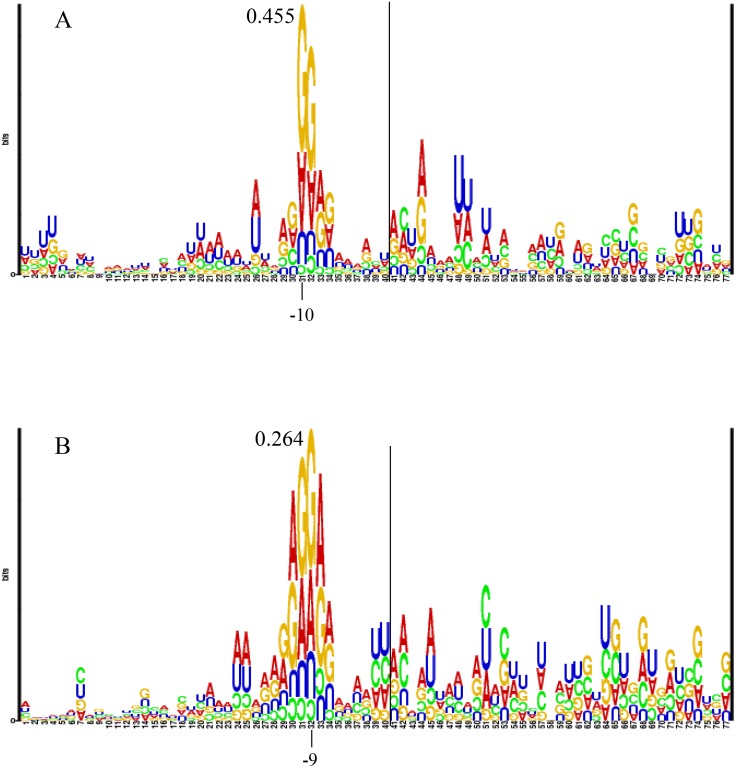
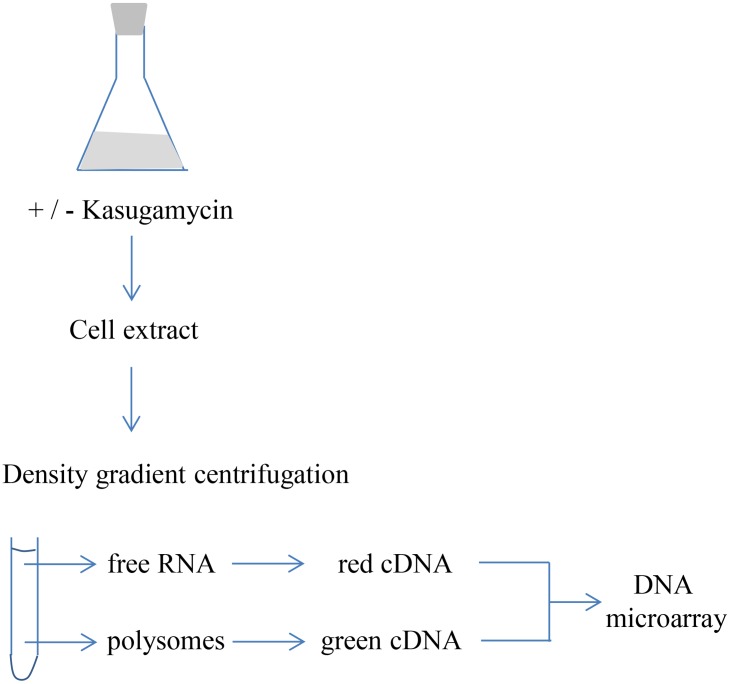
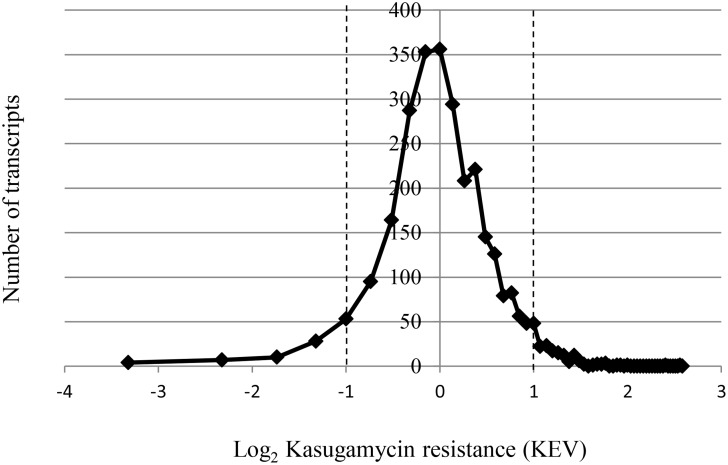
It is long known that Kasugamycin inhibits translation of canonical transcripts containing a 5'-UTR with a Shine Dalgarno (SD) motif, but not that of leaderless transcripts. To gain a global overview of the influence of Kasugamycin on translation efficiencies, the changes of the translatome of Escherichia coli induced by a 10 minutes Kasugamycin treatment were quantified. The effect of Kasugamycin differed widely, 102 transcripts were at least twofold more sensitive to Kasugamycin than average, and 137 transcripts were at least twofold more resistant, and there was a more than 100-fold difference between the most resistant and the most sensitive transcript. The 5'-ends of 19 transcripts were determined from treated and untreated cultures, but Kasugamycin resistance did neither correlate with the presence or absence of a SD motif, nor with differences in 5'-UTR lengths or GC content. RNA Structure Logos were generated for the 102 Kasugamycin-sensitive and for the 137 resistant transcripts. For both groups a short Shine Dalgarno (SD) motif was retrieved, but no specific motifs associated with resistance or sensitivity could be found. Notably, this was also true for the region -3 to -1 upstream of the start codon and the presence of an extended SD motif, which had been proposed to result in Kasugamycin resistance. Comparison of the translatome results with the database RegulonDB showed that the transcript with the highest resistance was leaderless, but no further leaderless transcripts were among the resistant transcripts. Unexpectedly, it was found that translational coupling might be a novel feature that is associated with Kasugamycin resistance. Taken together, Kasugamycin has a profound effect on translational efficiencies of E. coli transcripts, but the mechanism of action is different than previously described.
长期以来已知春日霉素抑制含有具有夏因-达尔加诺(SD)基序的5'-非翻译区(UTR)的典型转录本的翻译,但不抑制无先导序列转录本的翻译。为了全面了解春日霉素对翻译效率的影响,对经10分钟春日霉素处理诱导的大肠杆菌翻译组的变化进行了定量分析。春日霉素的影响差异很大,102个转录本对春日霉素的敏感性至少是平均值的两倍,137个转录本的抗性至少是平均值的两倍,最抗性和最敏感的转录本之间存在超过100倍的差异。从处理过和未处理过的培养物中确定了19个转录本的5'-末端,但春日霉素抗性既不与SD基序的存在与否相关,也不与5'-UTR长度或GC含量的差异相关。为102个对春日霉素敏感的转录本和137个抗性转录本生成了RNA结构标识。对于这两组,都检索到了一个短的夏因-达尔加诺(SD)基序,但未发现与抗性或敏感性相关的特定基序。值得注意的是,起始密码子上游-3至-1区域以及曾被认为会导致春日霉素抗性的扩展SD基序的情况也是如此。将翻译组结果与RegulonDB数据库进行比较表明,抗性最高的转录本是无先导序列的,但抗性转录本中没有其他无先导序列的转录本。出乎意料的是,发现翻译偶联可能是与春日霉素抗性相关的一个新特征。综上所述,春日霉素对大肠杆菌转录本的翻译效率有深远影响,但其作用机制与先前描述的不同。