Chen Yanlong, Cui Juan, Tian Xiaohong, Zhao Aiqing, Li Meng, Wang Shaoxia, Li Xiushaung, Jia Zhou, Liu Ke
College of Natural Resources and Environment, Northwest A&F University, Key Lab of Plant Nutrition and the Agri-environment in Northwest China, Ministry of Agriculture, Yangling, Shaanxi, China.
PLoS One. 2017 Jan 12;12(1):e0169776. doi: 10.1371/journal.pone.0169776. eCollection 2017.
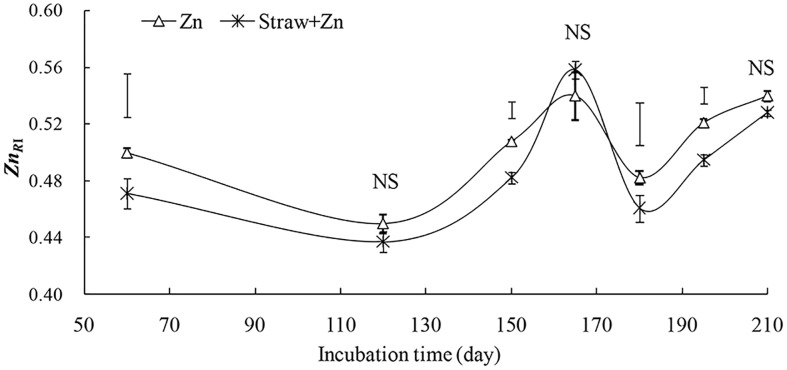
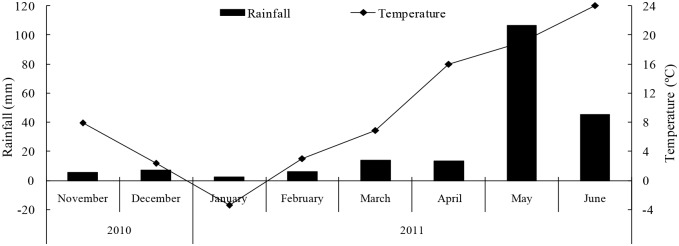
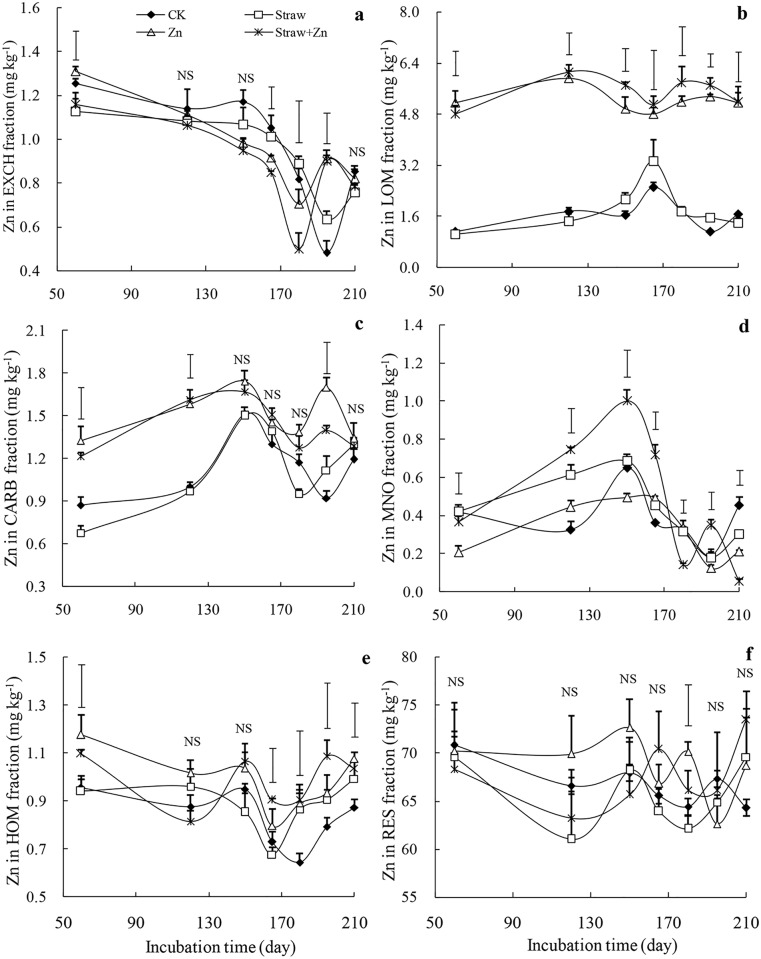
Organic matter plays a key role in availability and transformation of soil Zn (zinc), which greatly controls Zn concentrations in cereal grains and human Zn nutrition level. Accordingly, soils homogenized with the wheat straw (0, 12 g straw kg-1) and Zn fertilizer (0, 7 mg Zn kg-1) were buried and incubated in the field over 210 days to explore the response of soil Zn availability and the ageing of exogenous Zn to straw addition. Results indicated that adding straw alone scarcely affected soil DTPA-Zn concentration and Zn fractions because of the low Zn concentration of wheat straw and the high soil pH, and large clay and calcium carbonate contents. However, adding exogenous Zn plus straw increased the DTPA-Zn abundance by about 5-fold and had the similar results to adding exogenous Zn alone, corresponding to the increased Zn fraction loosely bounded to organic matter, which had a more dominant presence in Zn reaction than soil other constituents such as carbonate and minerals in calcareous soil. The higher relative amount of ineffective Zn (~50%) after water soluble Zn addition also occurred, and at the days of 120-165 and 180-210when the natural temperature and rainfall changed mildly, the ageing process of exogenous Zn over time was well evaluated by the diffusion equation, respectively. Consequently, combining crop residues with exogenous water soluble Zn application is promising strategy to maximize the availability of Zn in calcareous soil, but the higher ageing rate of Zn caused by the higher Zn mobility should be considered.
有机质在土壤锌(Zn)的有效性和转化过程中起着关键作用,这极大地控制了谷物中的锌浓度以及人体的锌营养水平。因此,将添加了小麦秸秆(0、12克秸秆/千克)和锌肥(0、7毫克锌/千克)的均质土壤埋于田间并培养210天,以探究土壤锌有效性对外源锌老化的响应以及秸秆添加的影响。结果表明,由于小麦秸秆的锌浓度较低、土壤pH值较高、粘土和碳酸钙含量较大,单独添加秸秆几乎不会影响土壤DTPA - Zn浓度和锌形态。然而,添加外源锌和秸秆使DTPA - Zn含量增加了约5倍,与单独添加外源锌的结果相似,这对应于与有机质松散结合的锌形态增加,在石灰性土壤中,这种形态在锌反应中比碳酸盐和矿物质等其他土壤成分更为显著。添加水溶性锌后也出现了较高比例(约50%)的无效锌,并且在120 - 165天和180 - 210天期间,当自然温度和降雨量变化较小时,外源锌随时间的老化过程分别通过扩散方程得到了很好的评估。因此,将作物残茬与外源水溶性锌结合施用是提高石灰性土壤中锌有效性的一种有前景的策略,但应考虑到较高的锌迁移率会导致锌的老化速率加快。