Kim Hyeryeong, Sung Jee Young, Park Eun-Kyung, Kho Seongho, Koo Kyung Hee, Park Seog-Yun, Goh Sung-Ho, Jeon Yoon Kyung, Oh Sekyung, Park Byung-Kiu, Jung Yong-Keun, Kim Yong-Nyun
Comparative Biomedicine Research Branch, Division of Cancer Biology, National Cancer Center, 323 Ilsan-ro, Ilsandong-gu, Goyang-si 410-769, Korea.
Pediatric Oncology Branch, Division of Translational and Clinical Research II, National Cancer Center, 323 Ilsan-ro, Ilsandong-gu, Goyang-si 410-769, Korea.
Br J Cancer. 2017 Jan;116(3):370-381. doi: 10.1038/bjc.2016.440. Epub 2017 Jan 12.
Normal cells are sensitive to anoikis, which is a cell detachment-induced apoptosis. However, cancer cells acquire anoikis resistance that is essential for successful metastasis. This study aimed to demonstrate the function and potential mechanism of NADPH oxidase 4 (NOX4) and EGFR activation in regulating anoikis resistance in lung cancer.
Cells were cultured either in the attached or suspended condition. Cell viability was measured by cell counting and live and dead cell staining. Expression levels of NOX4 and EGFR were measured by PCR and immunoblotting. Reactive oxygen species (ROS) levels were measured by flow cytometry. Effects of NOX4 overexpression or NOX4 knockdown by si-NOX4 on anoikis sensitivity were explored. Levels of NOX4 and EGFR in lung cancer tissues were evaluated by IHC staining.
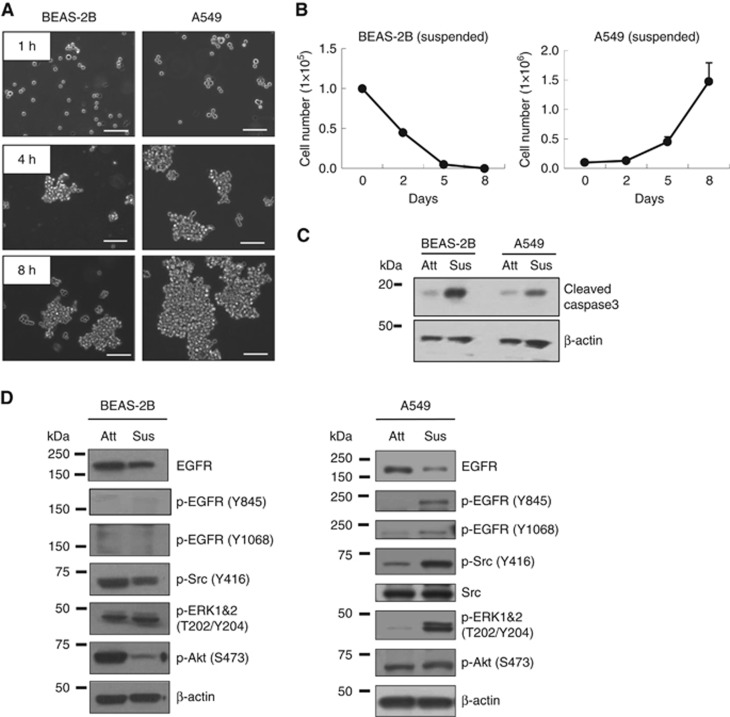
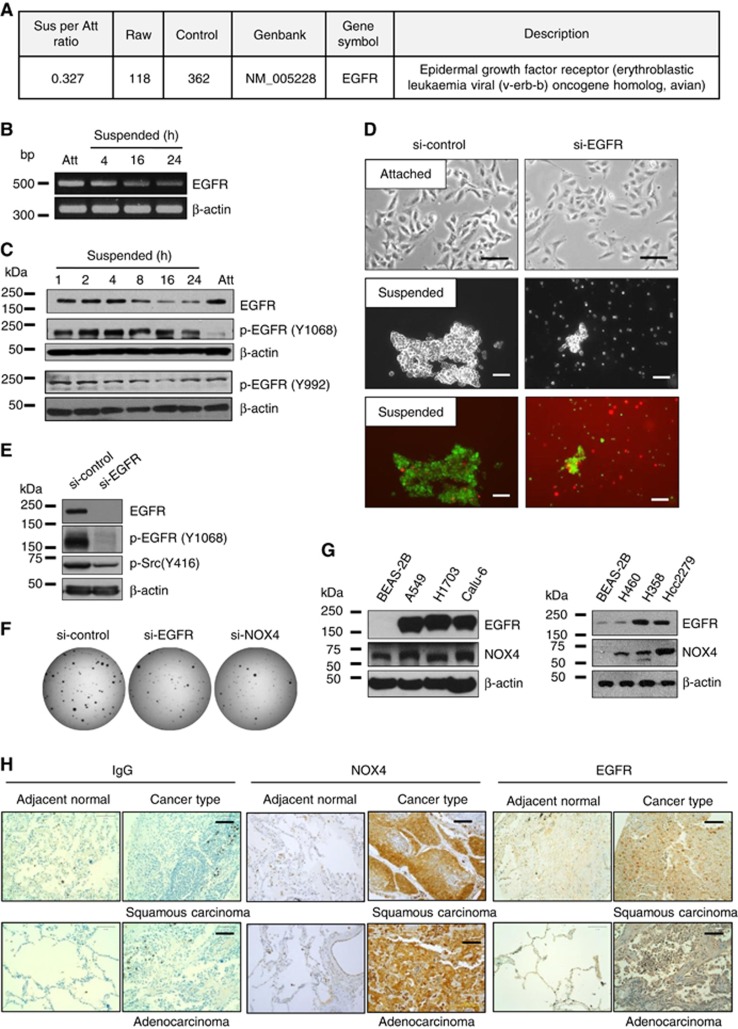
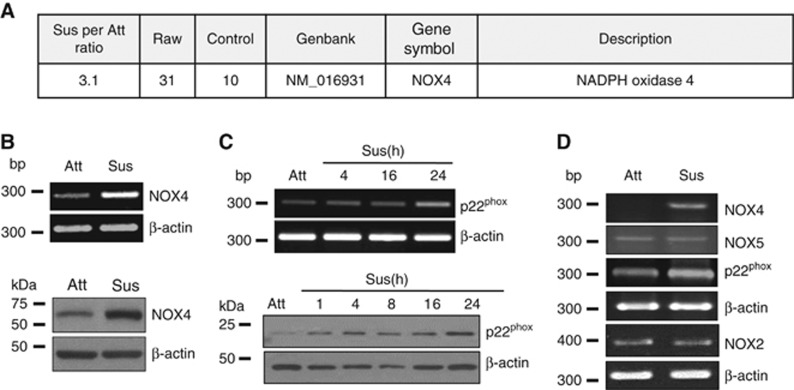
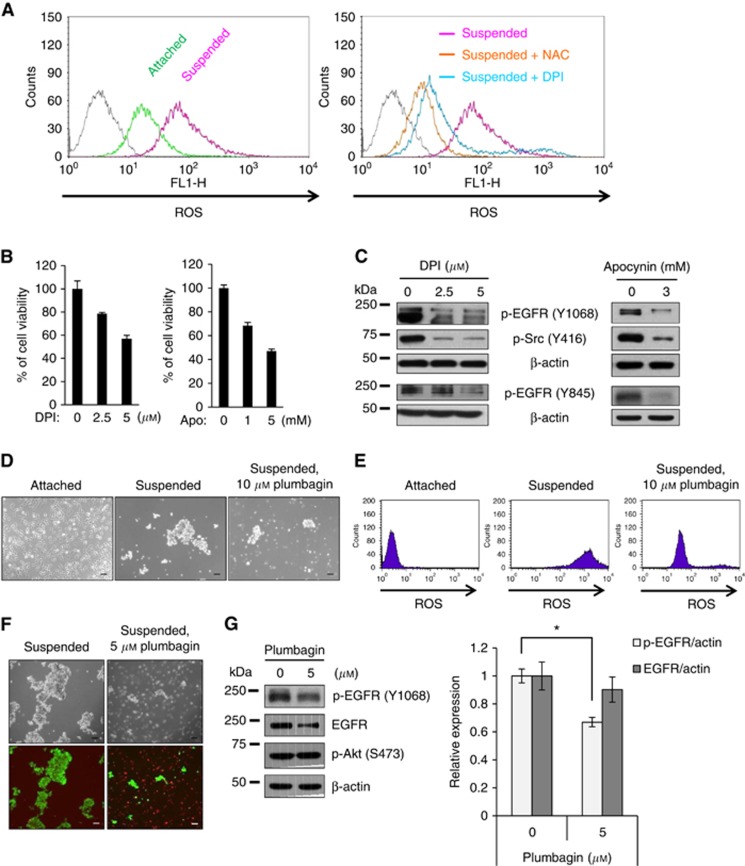
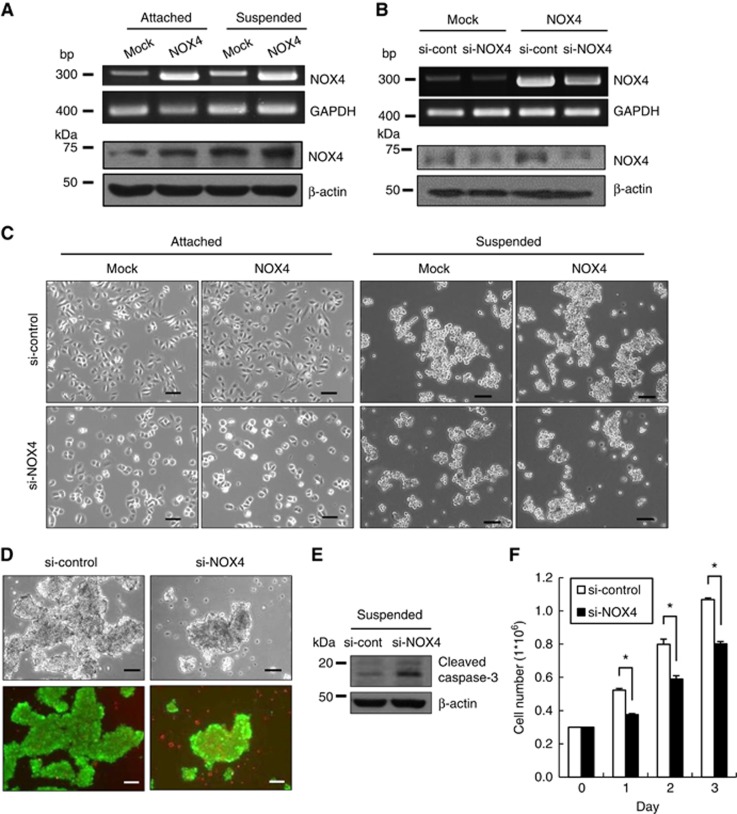
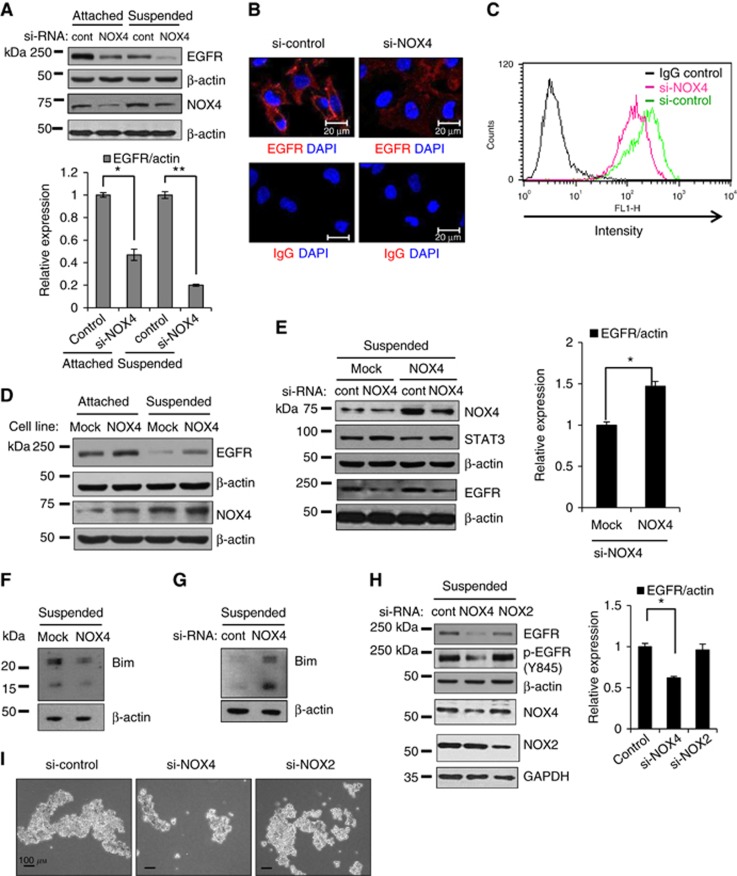
NOX4 was upregulated but EGFR decreased in suspended cells compared with attached cells. Accordingly, ROS levels were increased in suspended cells, resulting in the activation of Src and EGFR. NOX4 knockdown decreased activation of Src and EGFR, and thus sensitised cells to anoikis. NOX4 overexpression increased EGFR levels and attenuated anoikis. NOX4 expression is upregulated and is positively correlated with EGFR levels in the lung cancer patient tissues.
NOX4 upregulation confers anoikis resistance by ROS-mediated activation of EGFR and Src, and by maintaining EGFR levels, which is critical for cell survival.
正常细胞对失巢凋亡敏感,失巢凋亡是一种细胞脱离诱导的凋亡。然而,癌细胞获得了失巢凋亡抗性,这对成功转移至关重要。本研究旨在证明NADPH氧化酶4(NOX4)和表皮生长因子受体(EGFR)激活在调节肺癌失巢凋亡抗性中的作用及潜在机制。
细胞分别在贴壁或悬浮条件下培养。通过细胞计数及活细胞和死细胞染色检测细胞活力。通过聚合酶链反应(PCR)和免疫印迹法检测NOX4和EGFR的表达水平。通过流式细胞术检测活性氧(ROS)水平。探讨NOX4过表达或si-NOX4敲低NOX4对失巢凋亡敏感性的影响。通过免疫组化染色评估肺癌组织中NOX4和EGFR的水平。
与贴壁细胞相比,悬浮细胞中NOX4上调而EGFR下降。相应地,悬浮细胞中ROS水平升高,导致Src和EGFR激活。敲低NOX4可降低Src和EGFR的激活,从而使细胞对失巢凋亡敏感。NOX4过表达可增加EGFR水平并减弱失巢凋亡。在肺癌患者组织中,NOX4表达上调且与EGFR水平呈正相关。
NOX4上调通过ROS介导的EGFR和Src激活以及维持EGFR水平赋予失巢凋亡抗性,这对细胞存活至关重要。