Interdisciplinary Graduate Program in Human Toxicology, The University of Iowa, Iowa City, IA, USA; Department of Pathology, The University of Iowa, Iowa City, IA, USA.
Toxicol Appl Pharmacol. 2013 Nov 1;272(3):736-45. doi: 10.1016/j.taap.2013.07.013. Epub 2013 Jul 31.
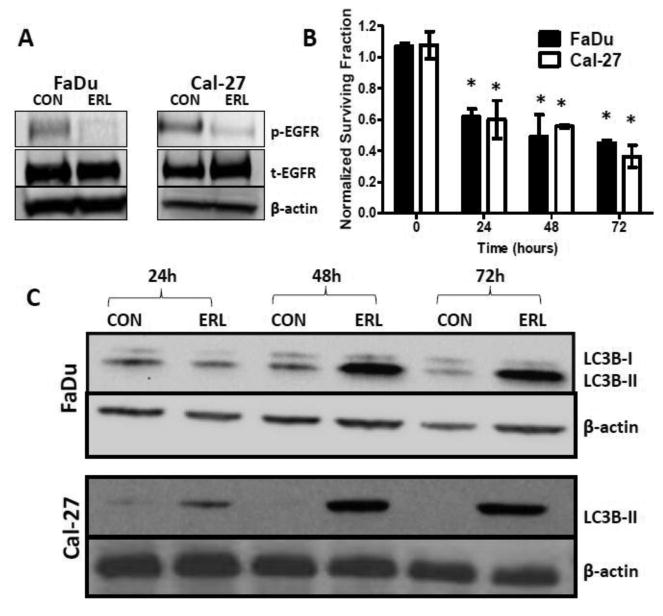
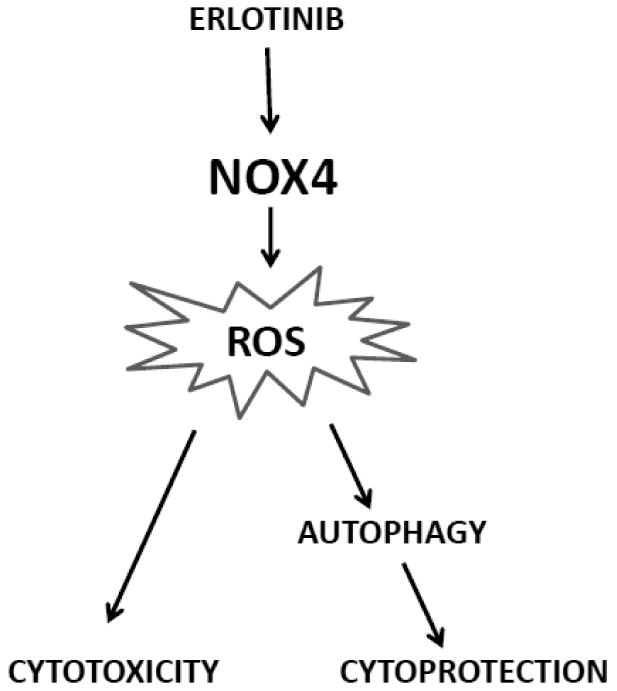
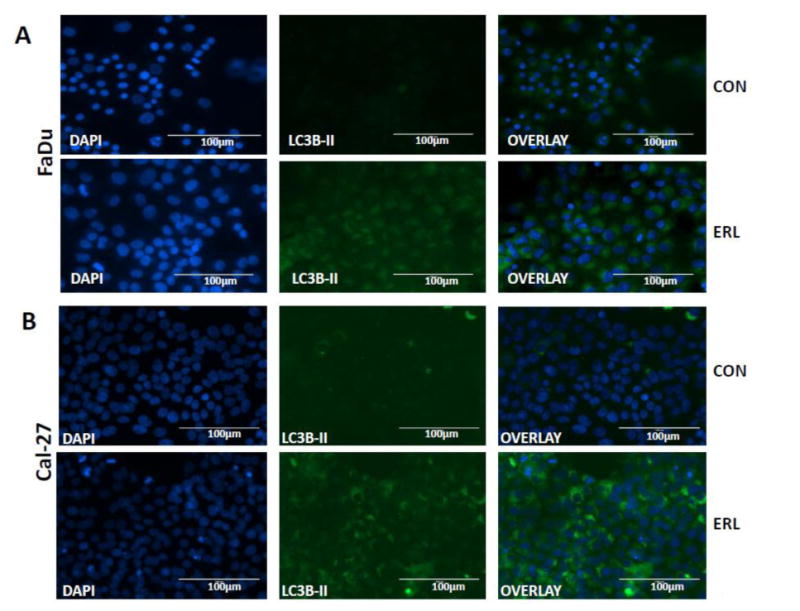
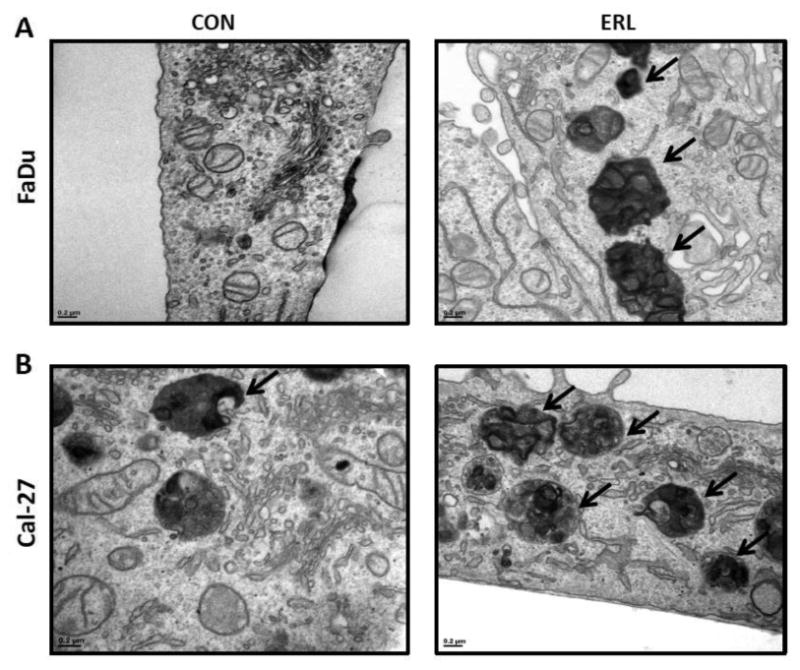
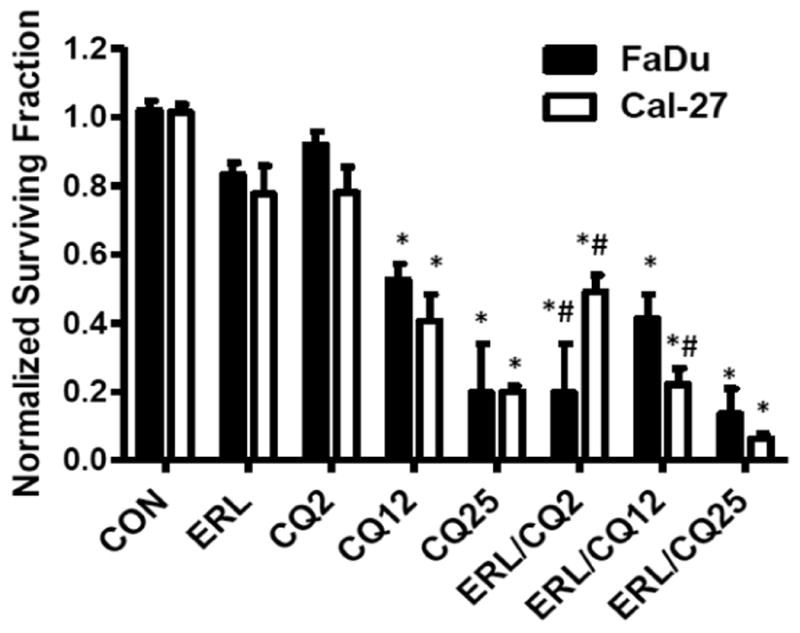
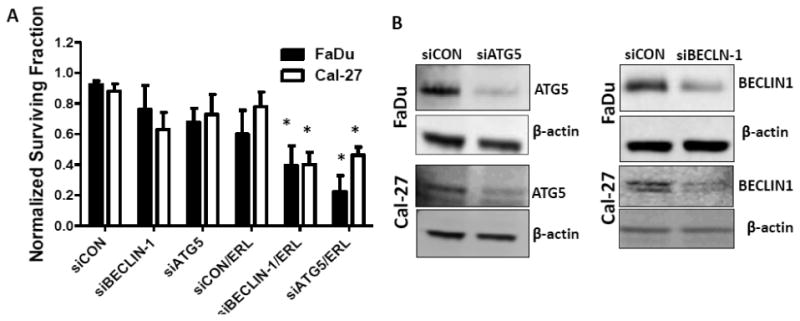
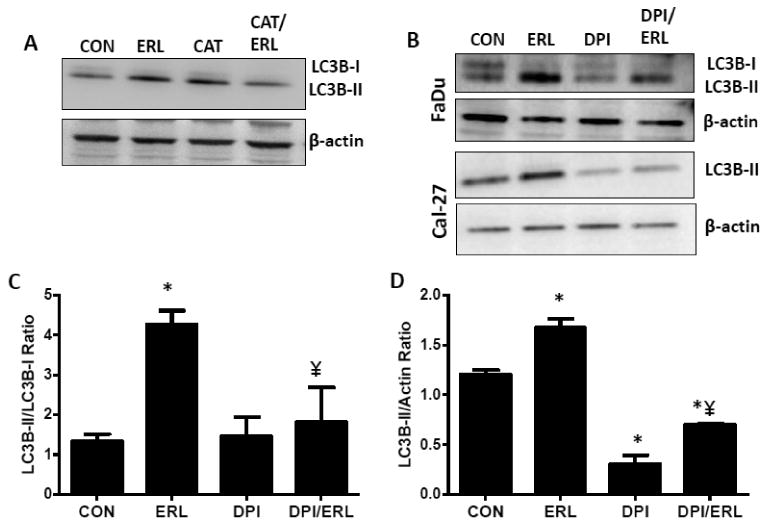
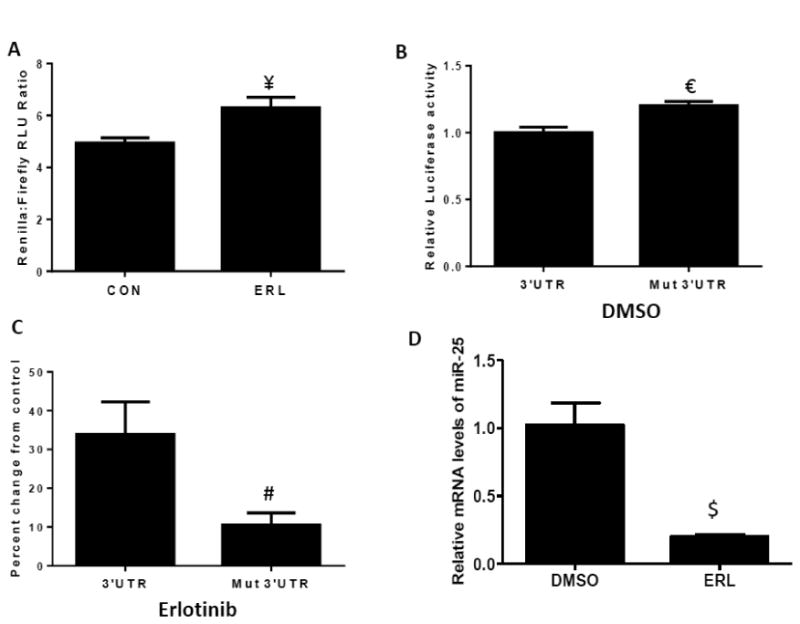
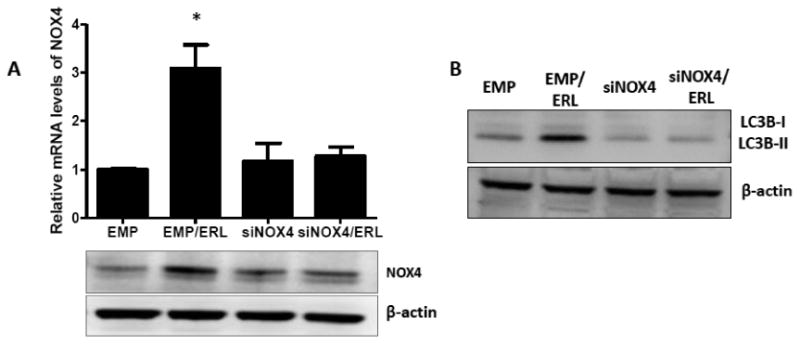
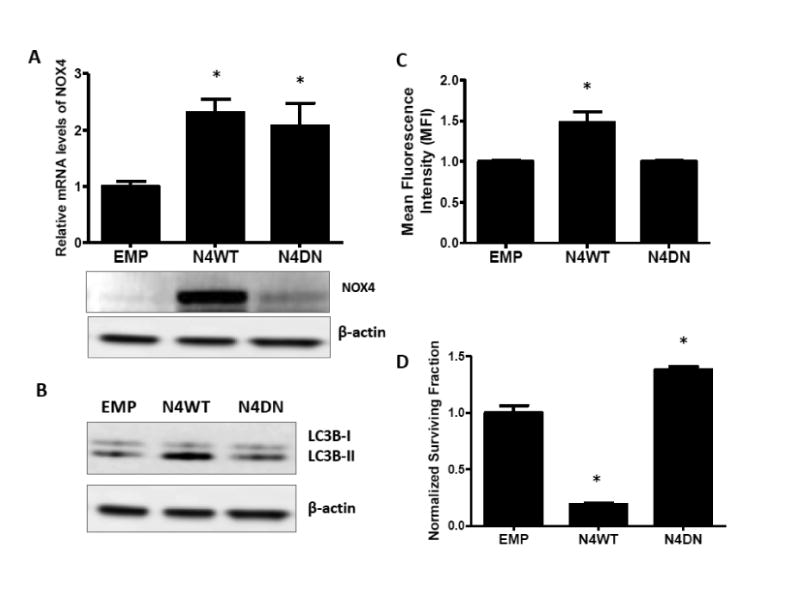
Most head and neck squamous cell carcinomas (HNSCCs) overexpress epidermal growth factor receptor (EGFR) and EGFR inhibitors are routinely used in the treatment of HNSCC. However, many HNSCC tumors do not respond or become refractory to EGFR inhibitors. Autophagy, which is a stress-induced cellular self-degradation process, has been reported to reduce the efficacy of chemotherapy in various disease models. The purpose of this study is to determine if the efficacy of the EGFR inhibitor erlotinib is reduced by activation of autophagy via NOX4-mediated oxidative stress in HNSCC cells. Erlotinib induced the expression of the autophagy marker LC3B-II and autophagosome formation in FaDu and Cal-27 cells. Inhibition of autophagy by chloroquine and knockdown of autophagy pathway genes Beclin-1 and Atg5 sensitized both cell lines to erlotinib-induced cytotoxicity, suggesting that autophagy may serve as a protective mechanism. Treatment with catalase (CAT) and diphenylene iodonium (DPI) in the presence of erlotinib suppressed the increase in LC3B-II expression in FaDu and Cal-27 cells. Erlotinib increased NOX4 mRNA and protein expression by increasing its promoter activity and mRNA stability in FaDu cells. Knockdown of NOX4 using adenoviral siNOX4 partially suppressed erlotinib-induced LC3B-II expression, while overexpression of NOX4 increased expression of LC3B-II. These studies suggest that erlotinib may activate autophagy in HNSCC cells as a pro-survival mechanism, and NOX4 may play a role in mediating this effect.
大多数头颈部鳞状细胞癌(HNSCC)过度表达表皮生长因子受体(EGFR),EGFR 抑制剂被常规用于 HNSCC 的治疗。然而,许多 HNSCC 肿瘤对 EGFR 抑制剂没有反应或产生耐药性。自噬是一种应激诱导的细胞自我降解过程,已被报道在各种疾病模型中降低化疗的疗效。本研究的目的是确定通过 NOX4 介导的氧化应激激活自噬是否会降低 HNSCC 细胞中 EGFR 抑制剂厄洛替尼的疗效。厄洛替尼诱导 FaDu 和 Cal-27 细胞中自噬标志物 LC3B-II 的表达和自噬体形成。氯喹抑制自噬和 Beclin-1 和 Atg5 自噬途径基因的敲低使这两种细胞系对厄洛替尼诱导的细胞毒性敏感,表明自噬可能作为一种保护机制。在厄洛替尼存在下用 CAT 和 DPI 处理抑制 FaDu 和 Cal-27 细胞中 LC3B-II 表达的增加。厄洛替尼通过增加其启动子活性和 mRNA 稳定性增加 FaDu 细胞中 NOX4 mRNA 和蛋白表达。用腺病毒 siNOX4 敲低 NOX4 部分抑制厄洛替尼诱导的 LC3B-II 表达,而过表达 NOX4 增加 LC3B-II 的表达。这些研究表明,厄洛替尼可能通过作为一种生存机制激活 HNSCC 细胞中的自噬,而 NOX4 可能在介导这种作用中发挥作用。