Aslam Usman, Cheema Hafiza M N, Ahmad Sheraz, Khan Iqrar A, Malik Waqas, Khan Asif A
Plant Genetic Resources Lab, Department of Plant Breeding and Genetics, University of Agriculture Faisalabad, Pakistan.
Genomics Lab, Department of Plant Breeding and Genetics, Bahauddin Zakariya University Multan, Pakistan.
Front Plant Sci. 2016 Dec 26;7:1863. doi: 10.3389/fpls.2016.01863. eCollection 2016.
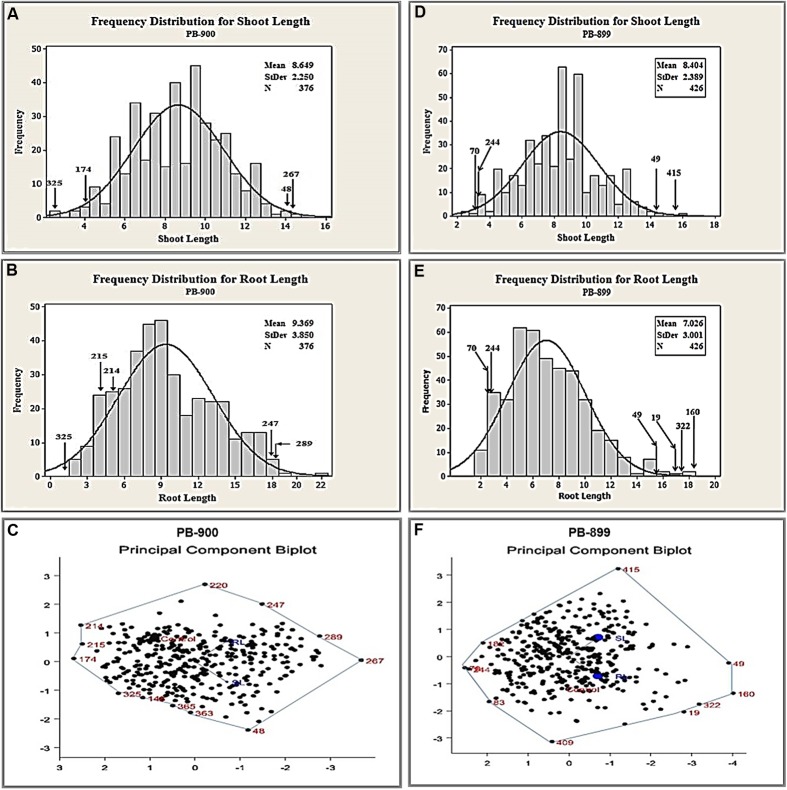
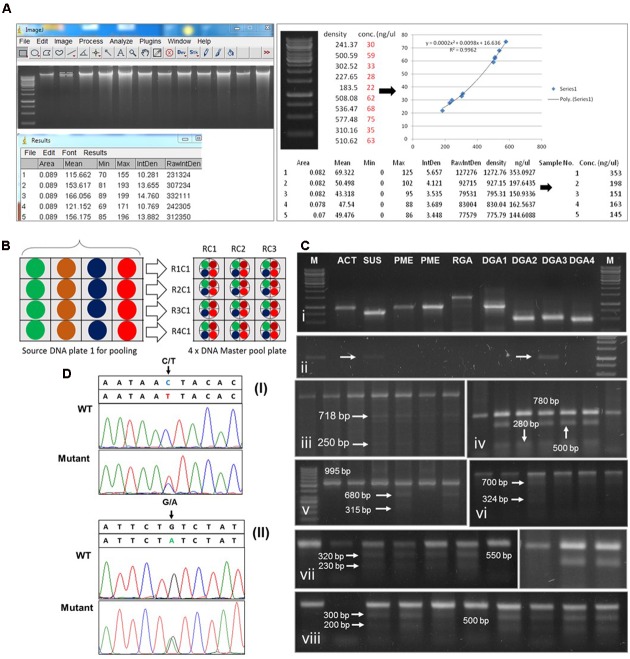
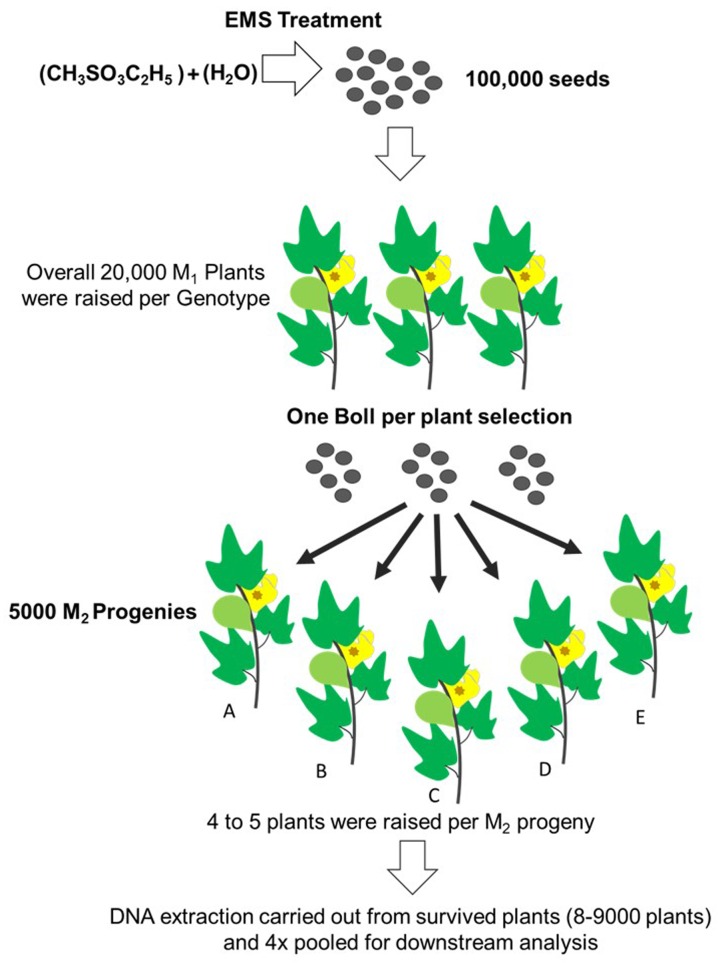
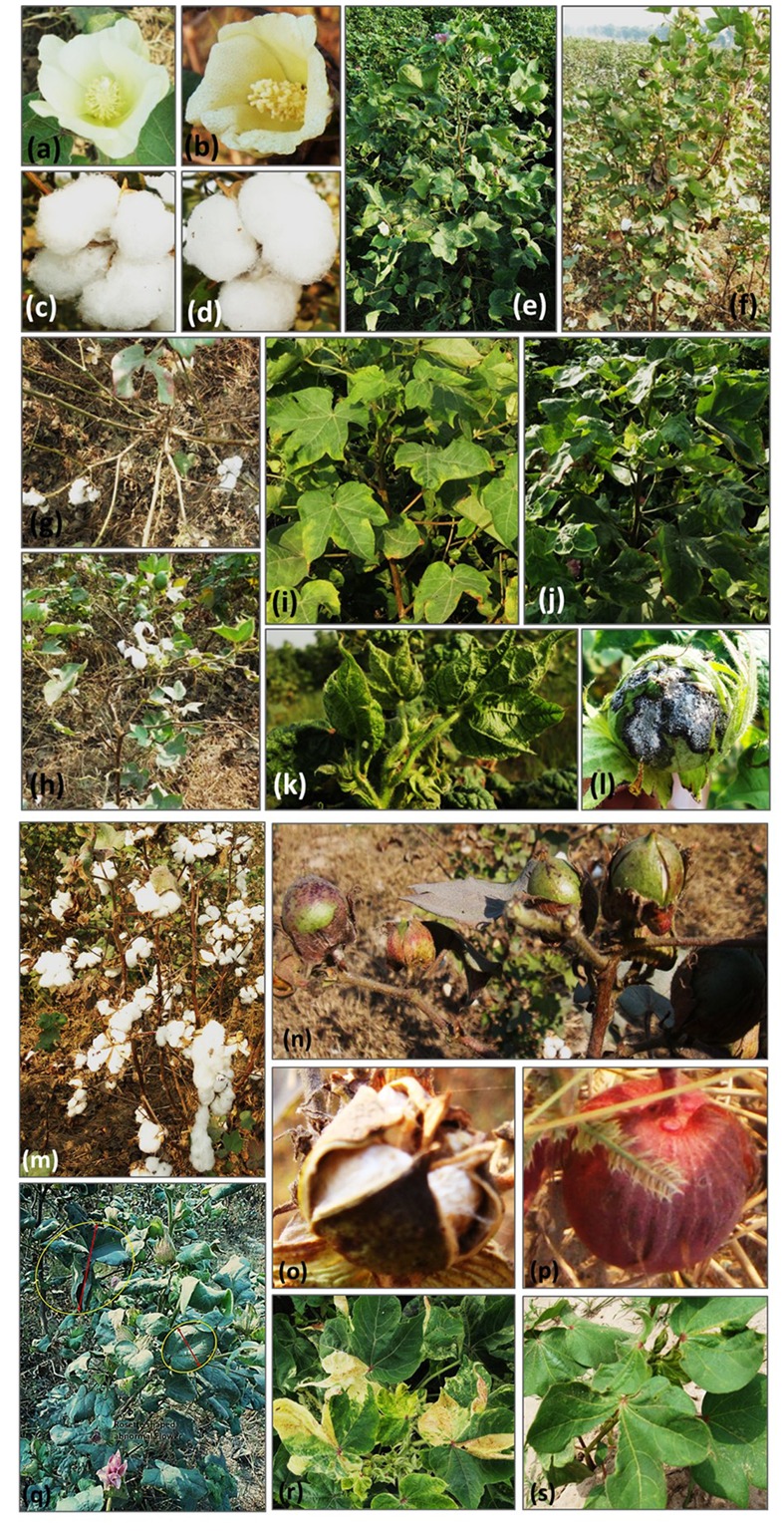
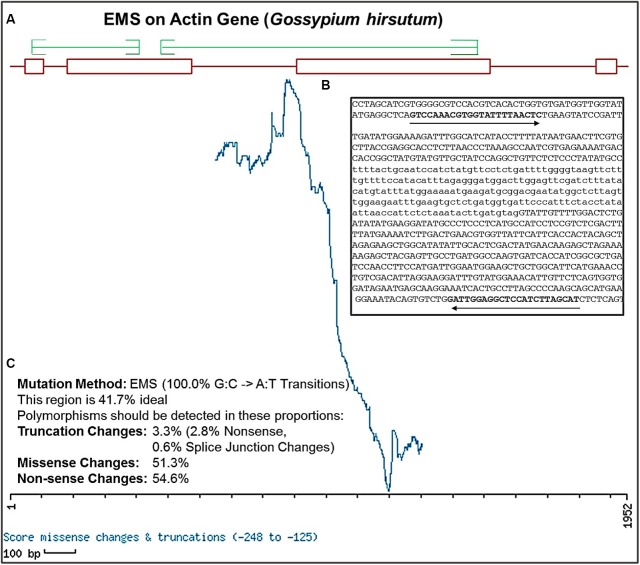
Cotton is cultivated worldwide for its white fiber, of which around 90% is tetraploid upland cotton ( L.) carrying both A and D genome. Since centuries, yield increasing efforts for the cotton crop by conventional breeding approaches have caused an extensive erosion of natural genetic variability. Mutation based improvement strategies provide an effective way of creating new allelic variations. Targeting Induced Local Lesions IN Genomes (TILLING) provides a mutation based reverse genetic strategy to create and evaluate induced genetic variability at DNA level. Here, we report development and testing of TILLING populations of allotetraploid cotton () for functional genomic studies and mutation based enrichment of cotton genetic resources. Seed of two cotton cultivars "PB-899 and PB-900" were mutagenized with 0.3 and 0.2% (v/v) ethyl methanesulfonate, respectively. The phenotyping of M and M populations presented numerous mutants regarding the branching pattern, leaf morphology, disease resistance, photosynthetic lesions and flower sterility. Molecular screening for point mutations was performed by TILLING PCR aided CEL1 mismatch cleavage. To estimate the mutation frequency in the mutant genomes, five gene classes were TILLed in 8000 M plants of each var. "PB-899" and "PB-900." These include actin (), Pectin Methyl Esterase (), sucrose synthase (), resistance gene analog, and defense response gene (). The var. PB-899 was harboring 47% higher mutation induction rate than PB-900. The highest rate of mutation frequency was identified for NAC-TF5 (EU706348) of DRGs class, ranging from 1/58 kb in PB-899 to 1/105 kb in PB-900. The mutation screening assay revealed the presence of significant proportion of induced mutations in cotton TILLING populations such as 1/153 kb and 1/326 kb in var. "PB-899" and "PB-900," respectively. The establishment of a cotton TILLING platform (COTIP) and data obtained from the resource TILLING population suggest its effectiveness in widening the genetic bases of cotton for improvement and utilizing it for subsequent reverse genetic studies of various genes.
棉花因其白色纤维而在全球范围内种植,其中约90%是携带A和D基因组的四倍体陆地棉(L.)。几个世纪以来,通过传统育种方法提高棉花产量的努力导致了自然遗传变异性的广泛丧失。基于突变的改良策略提供了一种创造新等位基因变异的有效方法。基因组靶向诱导局部损伤技术(TILLING)提供了一种基于突变的反向遗传策略,用于在DNA水平上创造和评估诱导的遗传变异性。在此,我们报告了异源四倍体棉花()TILLING群体的开发和测试,用于功能基因组研究以及基于突变的棉花遗传资源富集。两个棉花品种“PB - 899”和“PB - 900”的种子分别用0.3%和0.2%(v/v)的甲基磺酸乙酯诱变。M1和M2群体的表型分析显示出许多关于分枝模式、叶片形态、抗病性、光合损伤和花不育的突变体。通过TILLING PCR辅助CEL1错配切割进行点突变的分子筛选。为了估计突变体基因组中的突变频率,在每个品种“PB - 899”和“PB - 900”的8000株M2植株中对五类基因进行了TILLING分析。这些基因包括肌动蛋白()、果胶甲基酯酶()、蔗糖合酶()、抗病基因类似物和防御反应基因()。品种PB - 899的突变诱导率比PB - 900高47%。在DRGs类的NAC - TF5(EU706348)中鉴定出最高的突变频率,范围从PB - 899中的1/58 kb到PB - 900中的1/105 kb。突变筛选分析表明,在棉花TILLING群体中存在相当比例的诱导突变,例如在品种“PB - 899”和“PB - 900”中分别为1/153 kb和1/326 kb。棉花TILLING平台(COTIP)的建立以及从资源TILLING群体获得的数据表明,它在拓宽棉花遗传基础以进行改良以及用于后续各种基因的反向遗传研究方面是有效的。