State Key Laboratory of Crop Stress Biology in Arid Areas and College of Agronomy, Northwest Agricultural and Forestry University, Yangling, Shaanxi, China.
PLoS One. 2012;7(7):e41570. doi: 10.1371/journal.pone.0041570. Epub 2012 Jul 23.
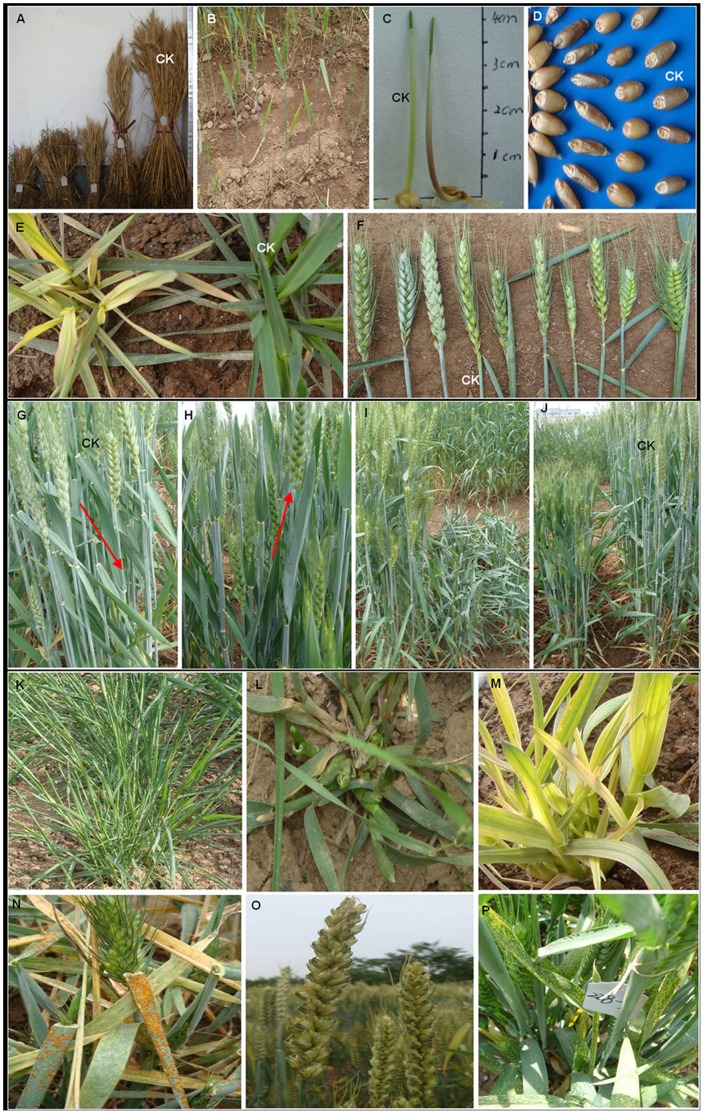
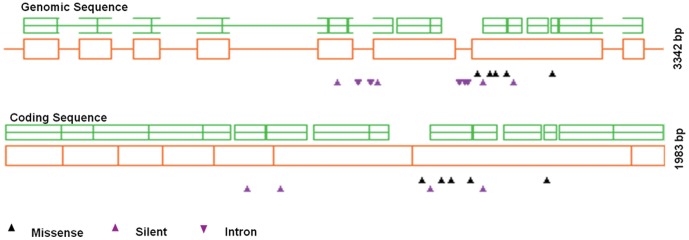
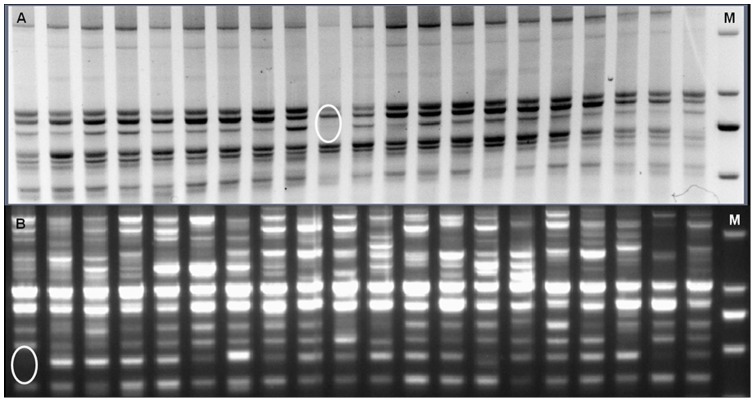
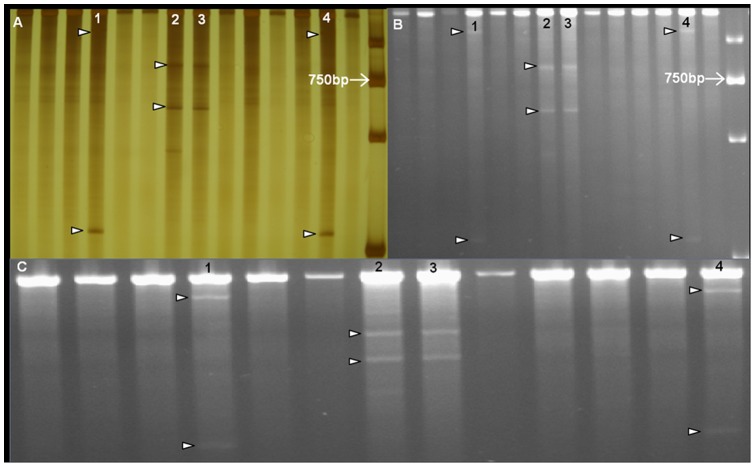
Mutagenesis is an important tool in crop improvement. However, the hexaploid genome of wheat (Triticum aestivum L.) presents problems in identifying desirable genetic changes based on phenotypic screening due to gene redundancy. TILLING (Targeting Induced Local Lesions IN Genomes), a powerful reverse genetic strategy that allows the detection of induced point mutations in individuals of the mutagenized populations, can address the major challenge of linking sequence information to the biological function of genes and can also identify novel variation for crop breeding. Wheat is especially well-suited for TILLING due to the high mutation densities tolerated by polyploids. However, only a few wheat TILLING populations are currently available in the world, which is far from satisfying the requirement of researchers and breeders in different growing environments. In addition, current TILLING screening protocols require costly fluorescence detection systems, limiting their use, especially in developing countries. We developed a new TILLING resource comprising 2610 M(2) mutants in a common wheat cultivar 'Jinmai 47'. Numerous phenotypes with altered morphological and agronomic traits were observed from the M(2) and M(3) lines in the field. To simplify the procedure and decrease costs, we use unlabeled primers and either non-denaturing polyacrylamide gels or agarose gels for mutation detection. The value of this new resource was tested using PCR with RAPD and Intron-spliced junction (ISJ) primers, and also TILLING in three selected candidate genes, in 300 and 512 mutant lines, revealing high mutation densities of 1/34 kb by RAPD/ISJ analysis and 1/47 kb by TILLING. In total, 31 novel alleles were identified in the 3 targeted genes and confirmed by sequencing. The results indicate that this mutant population represents a useful resource for the wheat research community. We hope that the use of this reverse genetics resource will provide novel allelic diversity for wheat improvement and functional genomics.
诱变是作物改良的重要工具。然而,由于基因冗余,六倍体小麦(Triticum aestivum L.)的基因组在基于表型筛选鉴定理想遗传变化方面存在问题。TILLING(靶向诱导基因组局部突变)是一种强大的反向遗传学策略,可在诱变群体的个体中检测到诱导的点突变,可解决将序列信息与基因的生物学功能联系起来的主要挑战,也可以为作物育种鉴定新的变异。由于多倍体容忍的突变密度高,因此小麦特别适合 TILLING。然而,目前世界上只有少数几个小麦 TILLING 群体,远远不能满足不同生长环境下研究人员和培育者的需求。此外,目前的 TILLING 筛选方案需要昂贵的荧光检测系统,限制了其使用,尤其是在发展中国家。我们开发了一个新的 TILLING 资源,包括在普通小麦品种“金麦 47”中 2610 M2 突变体。在田间观察到 M2 和 M3 系中具有改变的形态和农艺性状的许多表型。为了简化程序和降低成本,我们使用未标记的引物,并用非变性聚丙烯酰胺凝胶或琼脂糖凝胶进行突变检测。使用 RAPD 和内含子拼接接头(ISJ)引物的 PCR 以及在三个选定候选基因中的 TILLING 对该新资源进行了测试,在 300 和 512 个突变系中,RAPD/ISJ 分析的突变密度为 1/34 kb,TILLING 的突变密度为 1/47 kb。总共在 3 个靶向基因中鉴定了 31 个新等位基因,并通过测序进行了验证。结果表明,该突变群体代表了小麦研究界的有用资源。我们希望该反向遗传学资源的使用将为小麦改良和功能基因组学提供新的等位基因多样性。