Department of Psychological and Brain Sciences, Johns Hopkins University, Baltimore, Maryland 21218; Department of Psychology, University of Maryland, College Park, College Park, Maryland 20742.
GIGA-Neurosciences, University of Liege , 4000 Liege, Belgium.
eNeuro. 2017 Jan 9;3(6). doi: 10.1523/ENEURO.0283-16.2016. eCollection 2016 Nov-Dec.
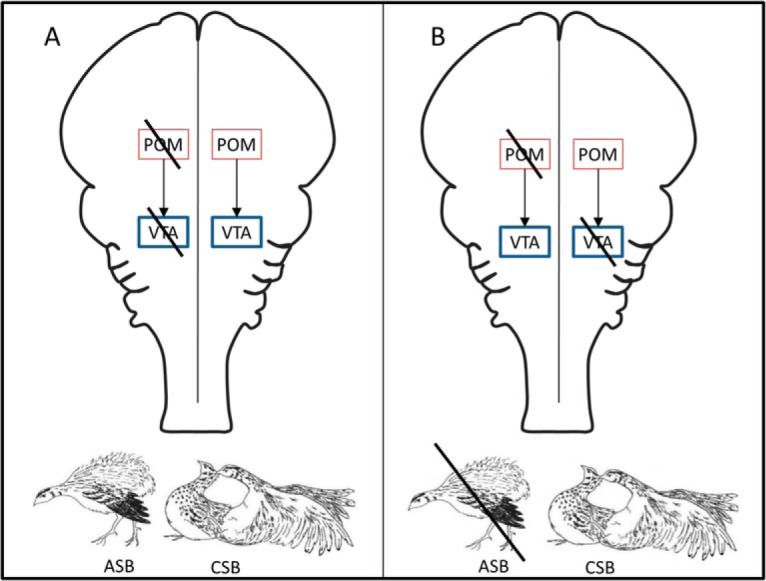
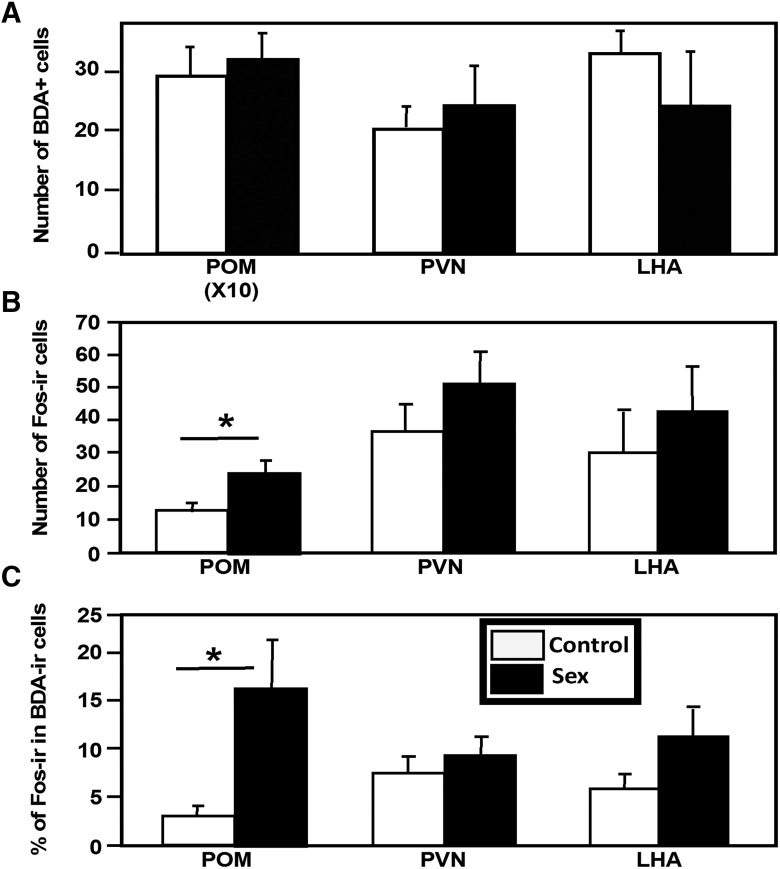
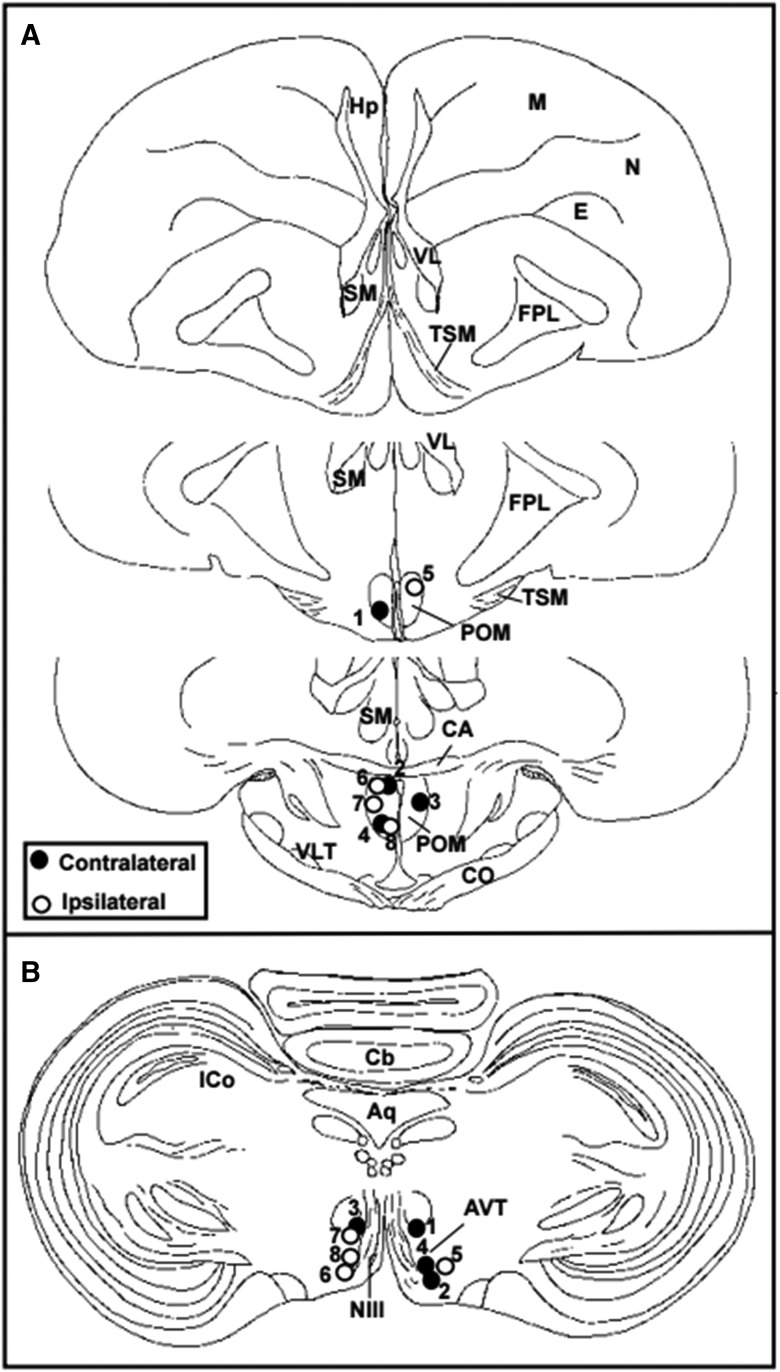
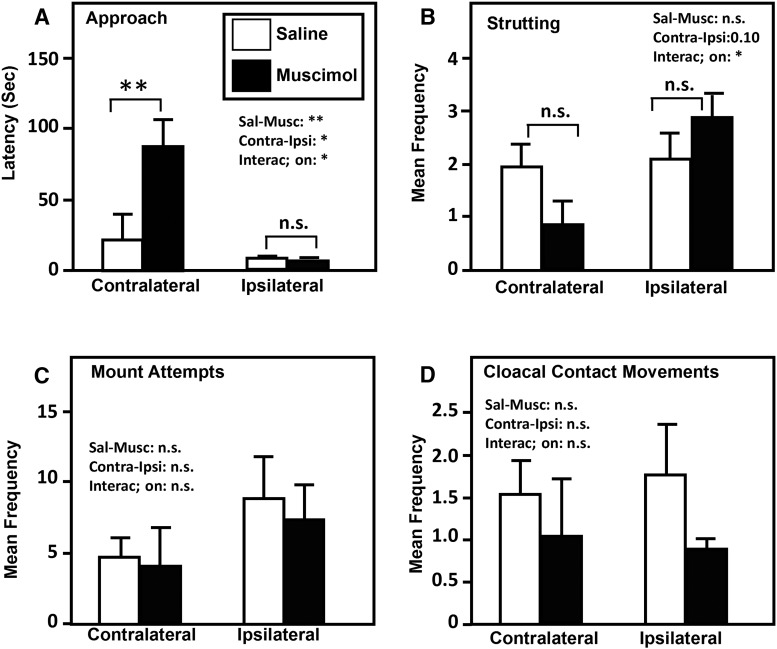
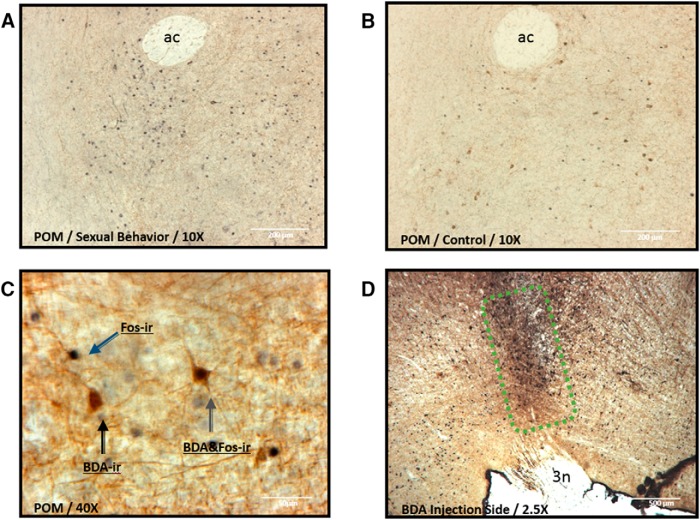
During sociosexual encounters, different brain mechanisms interact to orchestrate information about the salience of external stimuli along with the current physiological and environmental conditions in order to process these in an optimal manner. One candidate neural system involves the potential interplay between the medial preoptic nucleus (POM) and mesolimbic reward circuitry. We present here evidence indicating that projections originating from the POM play a modulatory role on the mesolimbic reward circuitry related to male sexual behavior in Japanese quail (). First, we used an asymmetrical inactivation strategy where POM and ventral tegmental area (VTA) were unilaterally inactivated via the GABA agonist muscimol, either in an ipsilateral or contralateral fashion. Ipsilateral injections of muscimol had negligible effects on both appetitive and consummatory sexual behaviors. In contrast, contralateral injections significantly impaired appetitive sexual behaviors but had no clear effect on consummatory sexual behaviors. Next, we labeled cells projecting from the POM to the VTA by stereotaxic injection into VTA of the retrograde tracer biotinylated dextran amine (BDA). Two weeks later, brains from males who had been allowed to interact freely with a female (15 min) or kept as controls were collected and fixed for double immunohistochemical labeling of BDA and the immediate early gene Fos. More retrogradely labeled BDA cells in POM expressed Fos after sociosexual interactions than in control conditions. Overall, these findings provide novel evidence for the interplay between POM and VTA in the modulation of appetitive but not consummatory sexual behaviors. Schematic representation of the putative role of the projection from the medial POM to the VTA in the regulation of appetitive and consummatory sexual behaviors. Unilateral inactivation of POM and VTA on (1) ipsilateral sides has negligible effects on both aspects of sexual behaviors, whereas (2) contralateral inactivation disrupts appetitive sexual behaviors.
在社交性接触中,不同的大脑机制相互作用,以协调有关外部刺激的显著性以及当前生理和环境条件的信息,以便以最佳方式处理这些信息。一个候选的神经系统涉及中脑视前核(POM)和中脑边缘奖赏回路之间的潜在相互作用。我们在这里提供的证据表明,源自 POM 的投射在与雄性性行为相关的中脑边缘奖赏回路中发挥调制作用()。首先,我们使用了不对称失活策略,通过 GABA 激动剂 muscimol 单侧失活 POM 和腹侧被盖区(VTA),无论是同侧还是对侧。同侧注射 muscimol 对食欲和性行为都没有影响。相比之下,对侧注射显著损害了食欲性行为,但对性行为没有明显影响。接下来,我们通过立体定向注射到 VTA 的逆行示踪剂生物素化葡聚糖胺(BDA)来标记源自 POM 投射到 VTA 的细胞。两周后,从允许与雌性自由互动(15 分钟)或保持对照的雄性中收集和固定大脑,进行 BDA 和即刻早期基因 Fos 的双重免疫组织化学标记。与对照条件相比,在社交性接触后,POM 中更多的逆行标记 BDA 细胞表达了 Fos。总体而言,这些发现为 POM 和 VTA 之间的相互作用在调节食欲而不是性行为方面提供了新的证据。源自中脑视前核(POM)到 VTA 的投射在调节食欲和性行为方面的假定作用示意图。POM 和 VTA 的单侧失活(1)同侧对性行为的两个方面几乎没有影响,而(2)对侧失活则破坏了食欲性行为。