CSIR-Institute of Microbial Technology, Chandigarh, 160036, India.
CSIR-Centre for Cellular and Molecular Biology, Hyderabad, 500007, India.
Sci Rep. 2017 Jan 13;7:40694. doi: 10.1038/srep40694.
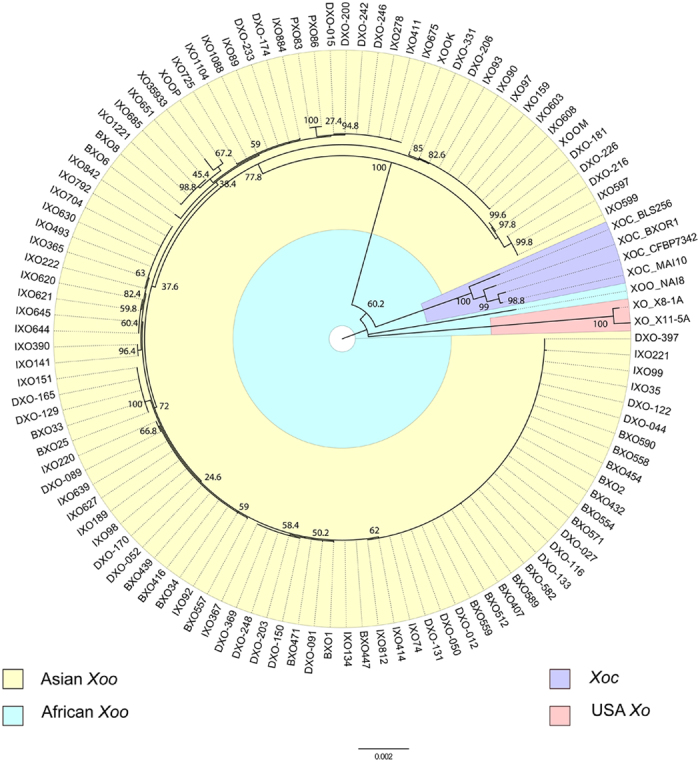
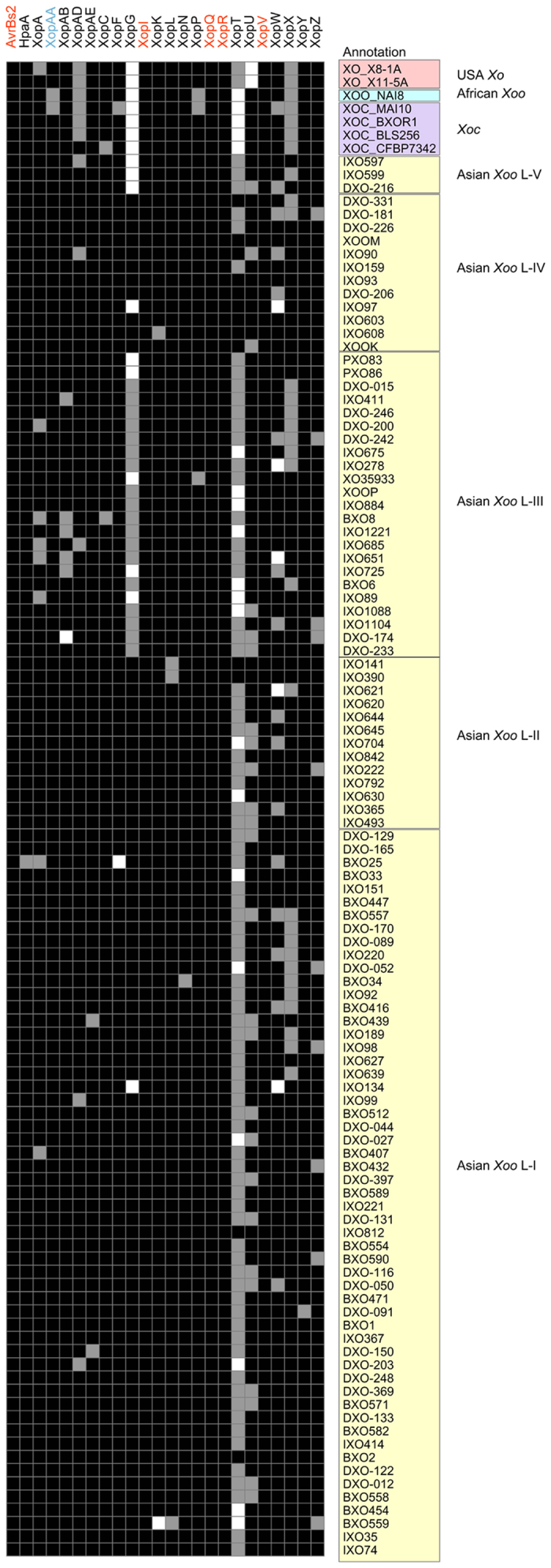
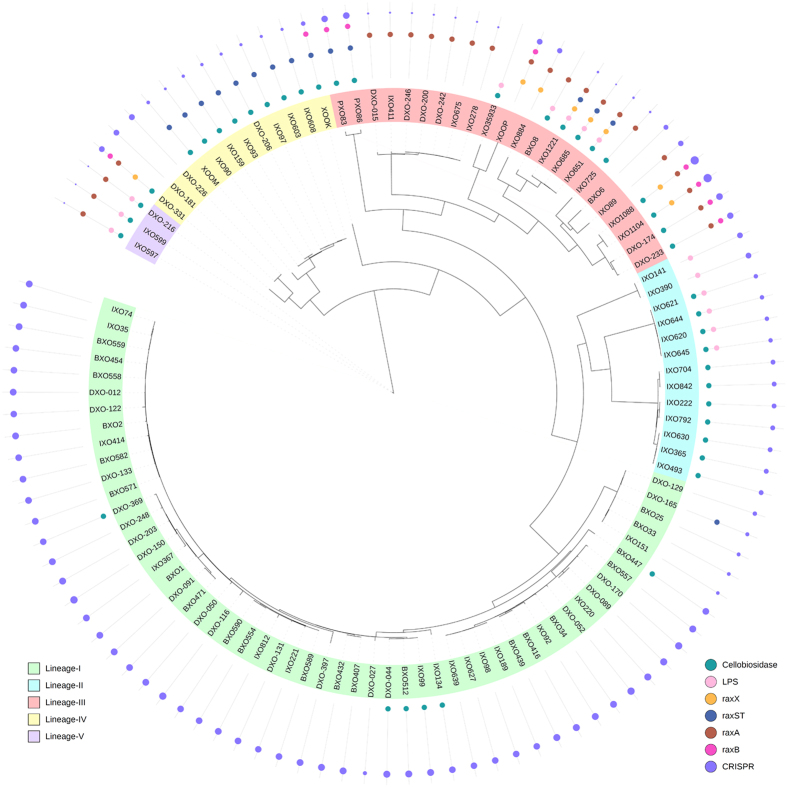
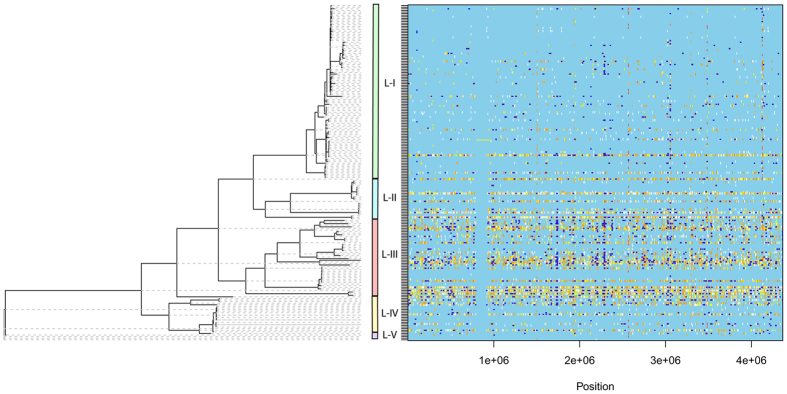
Xanthomonas oryzae pv. oryzae ( Xoo) is a serious pathogen of rice causing bacterial leaf blight disease. Resistant varieties and breeding programs are being hampered by the emergence of highly virulent strains. Herein we report population based whole genome sequencing and analysis of 100 Xoo strains from India. Phylogenomic analysis revealed the clustering of Xoo strains from India along with other Asian strains, distinct from African and US Xo strains. The Indian Xoo population consists of a major clonal lineage and four minor but highly diverse lineages. Interestingly, the variant alleles, gene clusters and highly pathogenic strains are primarily restricted to minor lineages L-II to L-V and in particularly to lineage L-III. We could also find the association of an expanded CRISPR cassette and a highly variant LPS gene cluster with the dominant lineage. Molecular dating revealed that the major lineage, L-I is youngest and of recent origin compared to remaining minor lineages that seems to have originated much earlier in the past. Further, we were also able to identify core effector genes that may be helpful in efforts towards building durable resistance against this pathogen.
稻黄单胞菌(Xanthomonas oryzae pv. oryzae,Xoo)是一种严重危害水稻的病原菌,可引发细菌性条斑病。由于高毒力菌株的出现,抗病品种和培育计划受到阻碍。本研究对来自印度的 100 株 Xoo 菌株进行了基于群体的全基因组测序和分析。系统发育基因组分析表明,印度的 Xoo 菌株与其他亚洲菌株聚类,与非洲和美国的 Xo 菌株不同。印度的 Xoo 种群由一个主要的克隆谱系和四个次要但高度多样的谱系组成。有趣的是,变异等位基因、基因簇和高致病性菌株主要局限于次要谱系 L-II 到 L-V,特别是谱系 L-III。我们还发现,扩展的 CRISPR 盒和高度变异的 LPS 基因簇与优势谱系相关联。分子年代测定表明,与其他起源更早的次要谱系相比,主要谱系 L-I 是最新出现的。此外,我们还能够鉴定出核心效应基因,这可能有助于为对抗这种病原体建立持久的抗性。