Key Laboratory of Crop Physi-ecology and Tillage Science in Northwestern Loess Plateau, Ministry of Agriculture/College of Agronomy, Northwest A&F University, Yangling, Shaanxi 712100, China.
The Chinese Institute of Water-saving Agriculture, Northwest A&F University, Yangling, Shaanxi 712100, China.
Sci Rep. 2017 Jan 13;7:39601. doi: 10.1038/srep39601.
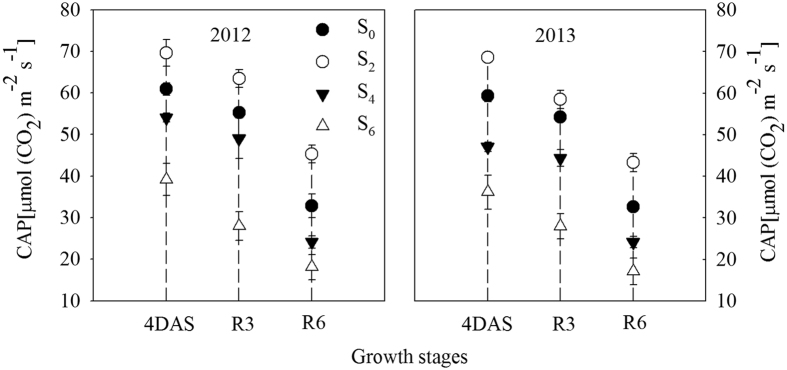
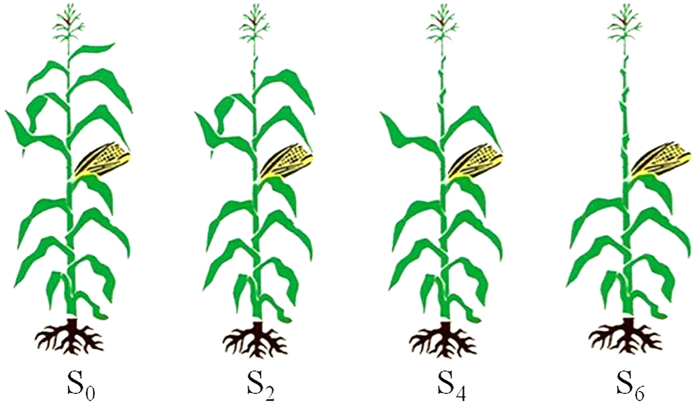
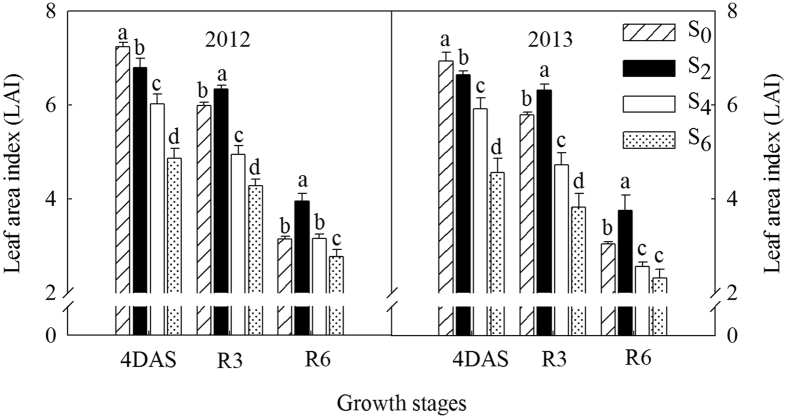
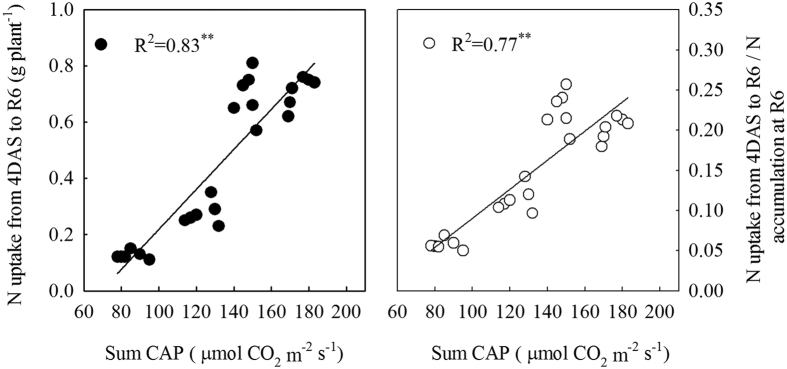
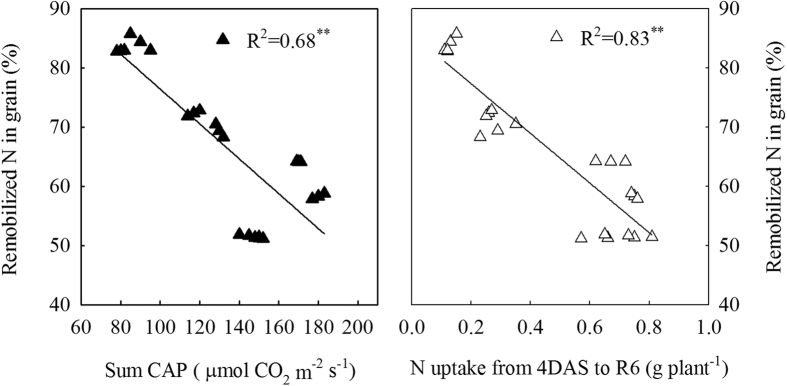
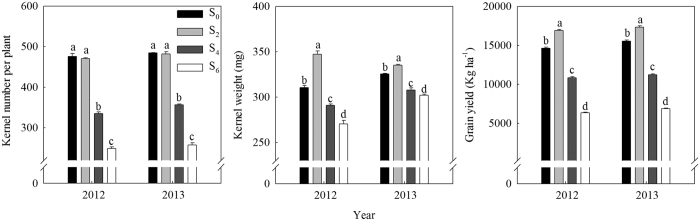
Increasing plant density is one of the main approaches of achieving higher yields for modern maize crop. However, there exists leaf redundancy for high-density maize, and leaves of the upper canopy shade more competent leaves at the middle strata. In a two-year field experiments, Jinhai5, a semi-compact corn cultivar, was grown at a density of 105,000 plants ha grown until 3 days after silking (3DAS), when plants were subjected to removal of the uppermost two leaves (S), four leaves (S) or six leaves (S), with no leaf removal as control (S). We evaluated the effects of leaf removal on N remobilization, photosynthetic capacity of the remaining leaves for N uptake, and N accumulation in kernels. Our present results concluded that, under high plant density, excising the uppermost two leaves promoted N remobilization from vegetative organs to kernels and enhanced photosynthetic capacity for N uptake, leading to an increased N accumulation in kernels (19.6% higher than control). However, four or six uppermost leaves removal reduced N remobilization from stem and photosynthesis for poor N uptake, resulting in 37.5 and 50.2% significantly reduced N accumulation in kernels, respectively.
增加种植密度是现代玉米作物获得更高产量的主要方法之一。然而,高密度玉米存在叶片冗余现象,上层冠层的叶片会遮蔽中层更有竞争力的叶片。在两年的田间试验中,半紧凑型玉米品种金海 5 在种植密度为 105000 株/公顷的条件下生长,直到抽丝后 3 天(3DAS)时,对植株进行了最上面的两片叶(S)、四片叶(S)或六片叶(S)的去除处理,以不进行叶片去除作为对照(S)。我们评估了叶片去除对氮再利用、剩余叶片对氮吸收的光合能力以及氮在穗粒中的积累的影响。我们的研究结果表明,在高密度条件下,去除最上面的两片叶可以促进氮从营养器官向穗粒转移,并增强氮吸收的光合能力,导致穗粒中的氮积累增加(比对照高 19.6%)。然而,去除四片或六片最上面的叶会减少茎中的氮再利用和光合作用,从而导致氮吸收不良,导致穗粒中的氮积累分别显著减少 37.5%和 50.2%。