Havas Kathryn, Douglas Clint, Bonner Ann
School of Nursing, Queensland University of Technology, Victoria Park Rd, 4059, Kelvin Grove, Brisbane, QLD, Australia.
Chronic Kidney Disease Centre for Research Excellence, University of Queensland, Brisbane, Australia.
BMC Nephrol. 2017 Jan 13;18(1):17. doi: 10.1186/s12882-016-0416-2.
People with chronic kidney disease (CKD) must self-manage their illness to assist with slowing disease-progression, but this is a complex task requiring support from healthcare professionals. Despite the established importance of person-centred care, people with CKD are rarely consulted regarding their desires for self-management support (SMS).
A cross-sectional survey was conducted face-to-face in a Queensland primary care clinic and distributed Australia-wide via an online interface promoted by Kidney Health Australia during 2015. Participants were ≥18 years old and had a self-reported doctor's diagnosis of CKD (any stage; N = 97). The survey was based upon existent literature which identified 10 areas that those with CKD believe require additional support. Descriptive data were generated and Mann-Whitney U tests were performed to compare the desires of different groups of participants.
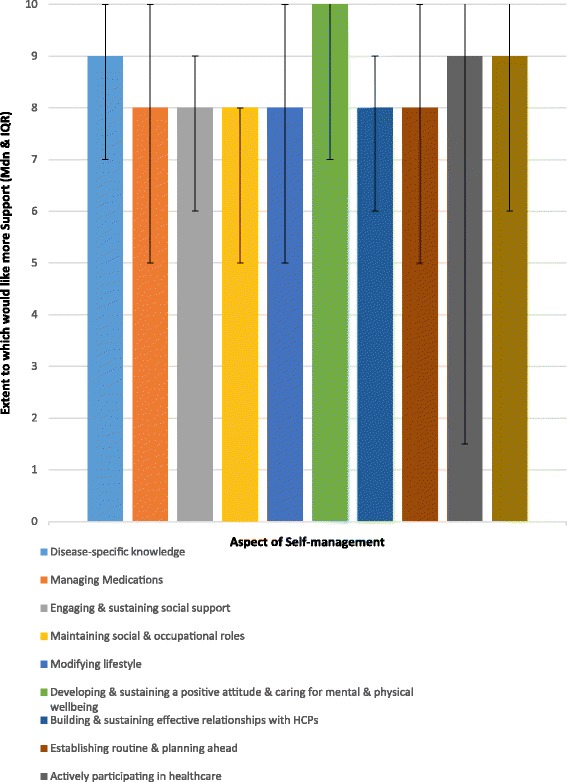
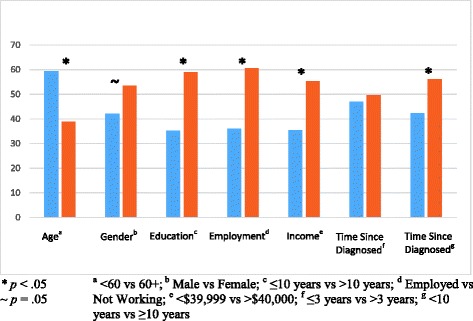
Of the 97 participants, 36 completed a hardcopy survey in clinic, and 61 completed the online version. Just over half (60.8%) were female, age ranged from 16-89 (M = 56.44), and time since diagnosis ranged from just diagnosed to 60 years (Mdn = 8.08 years). Strong interest in receiving additional support across all 10 areas was reported (Mdns = 8.00-10.00), with "keeping a positive attitude and taking care of mental and physical health" receiving the highest rating. Those who were: younger (p < .001); more highly educated (p < .001); working (p < .001); diagnosed longer ago (p = .015); and women (p = .050) expressed stronger overall desire for additional support.
In addition to information about CKD and medications, everyday strategies ought to be prioritised in patient education. Varying levels of engagement and eagerness to learn more about self-management highlight the need for a person-centred approach to SMS.
慢性肾脏病(CKD)患者必须自我管理疾病,以帮助减缓疾病进展,但这是一项复杂的任务,需要医疗保健专业人员的支持。尽管以患者为中心的护理的重要性已得到确立,但很少就CKD患者对自我管理支持(SMS)的需求征求他们的意见。
2015年,在昆士兰州的一家初级保健诊所进行了一项横断面调查,并通过澳大利亚肾脏健康组织推广的在线界面在全澳大利亚范围内进行了分发。参与者年龄≥18岁,且自我报告医生诊断为CKD(任何阶段;N = 97)。该调查基于现有文献,这些文献确定了CKD患者认为需要额外支持的10个领域。生成了描述性数据,并进行了曼-惠特尼U检验,以比较不同组参与者的需求。
97名参与者中,36人在诊所完成了纸质版调查,61人完成了在线版调查。略超过一半(60.8%)为女性,年龄在16 - 89岁之间(M = 56.44),确诊时间从刚确诊到60年不等(中位数 = 8.08年)。报告显示,对所有10个领域获得额外支持都有浓厚兴趣(中位数 = 8.00 - 10.00),其中“保持积极态度并照顾身心健康”的评分最高。年龄较小(p <.001)、受教育程度较高(p <.001)、有工作(p <.001)、确诊时间较早(p =.015)以及女性(p =.050)对额外支持的总体需求更强。
除了关于CKD和药物的信息外,日常策略应在患者教育中优先考虑。不同程度的参与度和对了解更多自我管理知识的渴望凸显了采用以患者为中心的SMS方法的必要性。