Pascoal Livia B, Bombassaro Bruna, Ramalho Albina F, Coope Andressa, Moura Rodrigo F, Correa-da-Silva Felipe, Ignacio-Souza Leticia, Razolli Daniela, de Oliveira Diogo, Catharino Rodrigo, Velloso Licio A
Obesity and Comorbidities Research Center, Laboratory of Cell Signaling, University of Campinas, Campinas, SP, 13084-761, Brazil.
Faculty of Pharmaceutical Sciences, University of Campinas, Campinas, Brazil.
J Neuroinflammation. 2017 Jan 5;14(1):5. doi: 10.1186/s12974-016-0777-2.
Diet-induced hypothalamic inflammation is an important mechanism leading to dysfunction of neurons involved in controlling body mass. Studies have shown that polyunsaturated fats can reduce hypothalamic inflammation. Here, we evaluated the presence and function of RvD2, a resolvin produced from docosahexaenoic acid, in the hypothalamus of mice.
Male Swiss mice were fed either chow or a high-fat diet. RvD2 receptor and synthetic enzymes were evaluated by real-time PCR and immunofluorescence. RvD2 was determined by mass spectrometry. Dietary and pharmacological approaches were used to modulate the RvD2 system in the hypothalamus, and metabolic phenotype consequences were determined.
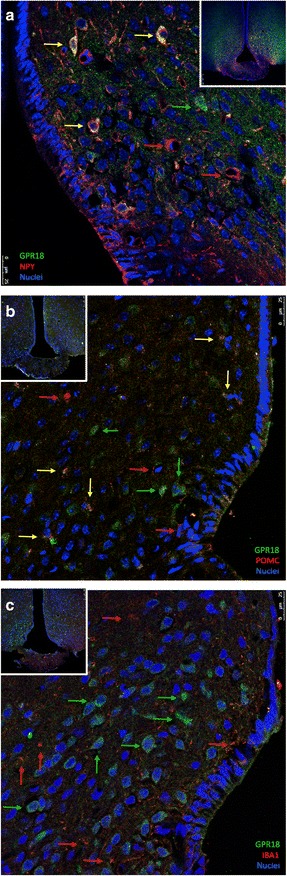
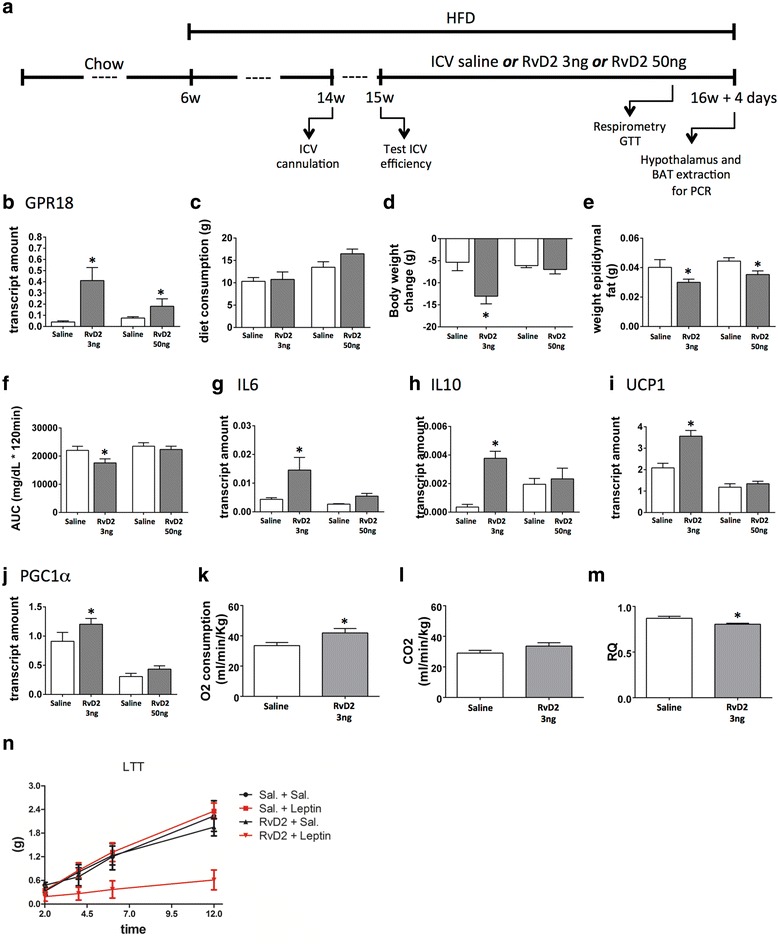
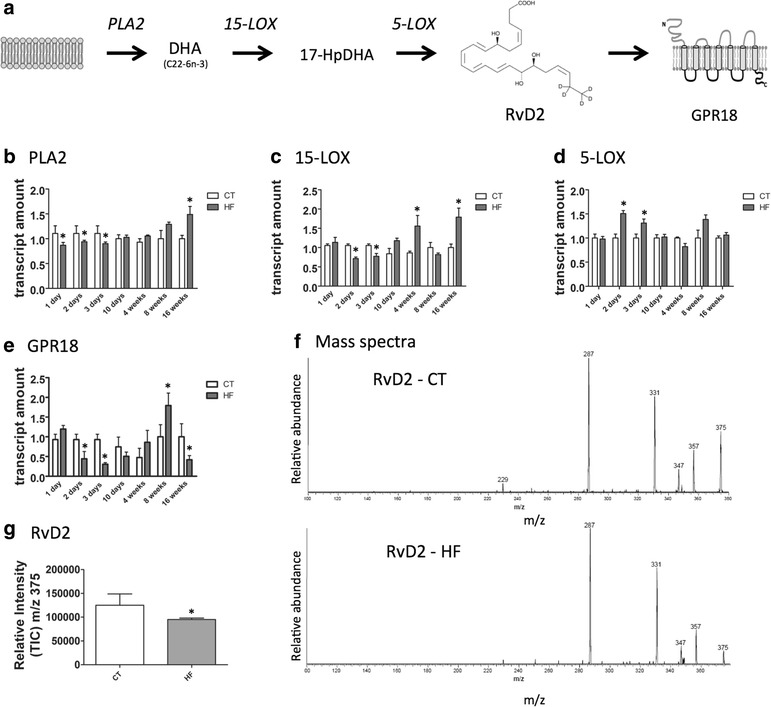
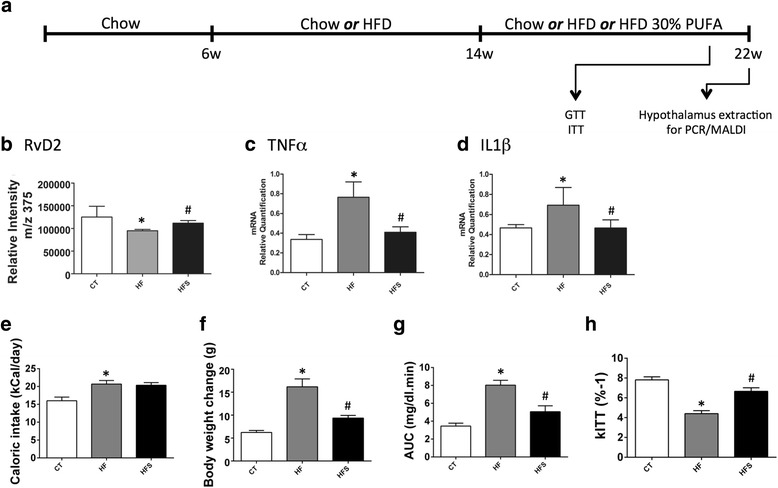
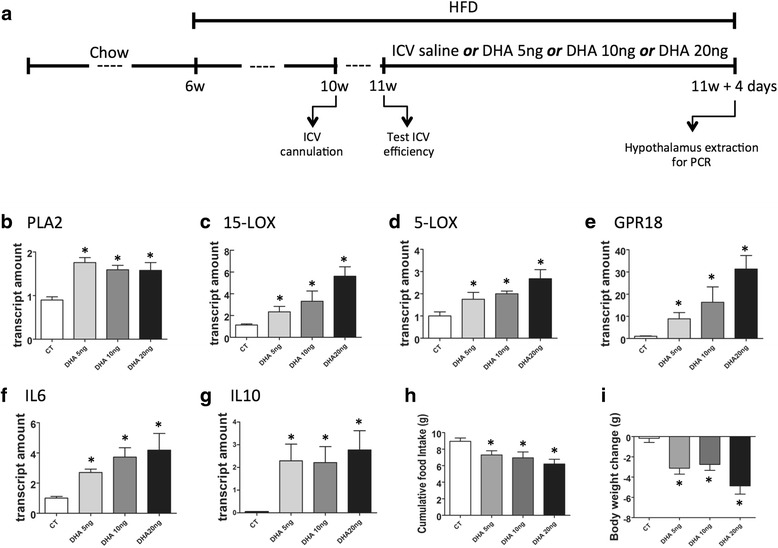
All enzymes involved in the synthesis of RvD2 were detected in the hypothalamus and were modulated in response to the consumption of dietary saturated fats, leading to a reduction of hypothalamic RvD2. GPR18, the receptor for RvD2, which was detected in POMC and NPY neurons, was also modulated by dietary fats. The substitution of saturated by polyunsaturated fats in the diet resulted in increased hypothalamic RvD2, which was accompanied by reduced body mass and improved glucose tolerance. The intracerebroventricular treatment with docosahexaenoic acid resulted in increased expression of the RvD2 synthetic enzymes, increased expression of anti-inflammatory cytokines and improved metabolic phenotype. Finally, intracerebroventricular treatment with RvD2 resulted in reduced adiposity, improved glucose tolerance and increased hypothalamic expression of anti-inflammatory cytokines.
Thus, RvD2 is produced in the hypothalamus, and its receptor and synthetic enzymes are modulated by dietary fats. The improved metabolic outcomes of RvD2 make this substance an attractive approach to treat obesity.
饮食诱导的下丘脑炎症是导致参与控制体重的神经元功能障碍的重要机制。研究表明,多不饱和脂肪可减轻下丘脑炎症。在此,我们评估了二十二碳六烯酸产生的消退素RvD2在小鼠下丘脑中的存在及功能。
给雄性瑞士小鼠喂食普通饲料或高脂饮食。通过实时聚合酶链反应和免疫荧光评估RvD2受体及合成酶。采用质谱法测定RvD2。运用饮食和药理学方法调节下丘脑的RvD2系统,并确定代谢表型后果。
在下丘脑中检测到了参与RvD2合成的所有酶,且这些酶会因饮食中饱和脂肪的摄入而受到调节,导致下丘脑RvD2减少。在促黑素细胞激素原(POMC)和神经肽Y(NPY)神经元中检测到的RvD2受体GPR18也受到饮食脂肪的调节。饮食中用多不饱和脂肪替代饱和脂肪会导致下丘脑RvD2增加,同时体重减轻且糖耐量改善。经脑室注射二十二碳六烯酸会导致RvD2合成酶表达增加、抗炎细胞因子表达增加以及代谢表型改善。最后,经脑室注射RvD2会导致肥胖减轻、糖耐量改善以及下丘脑抗炎细胞因子表达增加。
因此,RvD2在下丘脑中产生,其受体和合成酶受饮食脂肪调节。RvD2改善代谢的结果使其成为治疗肥胖的一种有吸引力的方法。