Wu William K K, Li Xiangchun, Wang Xiansong, Dai Rudin Z W, Cheng Alfred S L, Wang Maggie H T, Kwong Thomas, Chow Tai C, Yu Jun, Chan Matthew T V, Wong Sunny H
Institute of Digestive Diseases and Department of Medicine & Therapeutics, State Key Laboratory of Digestive Diseases, LKS Institute of Health Sciences, CUHK Shenzhen Research Institute, The Chinese University of Hong Kong, Hong Kong.
Department of Anaesthesia and Intensive Care, The Chinese University of Hong Kong, Hong Kong.
Mol Biol Evol. 2017 Apr 1;34(4):903-907. doi: 10.1093/molbev/msw295.
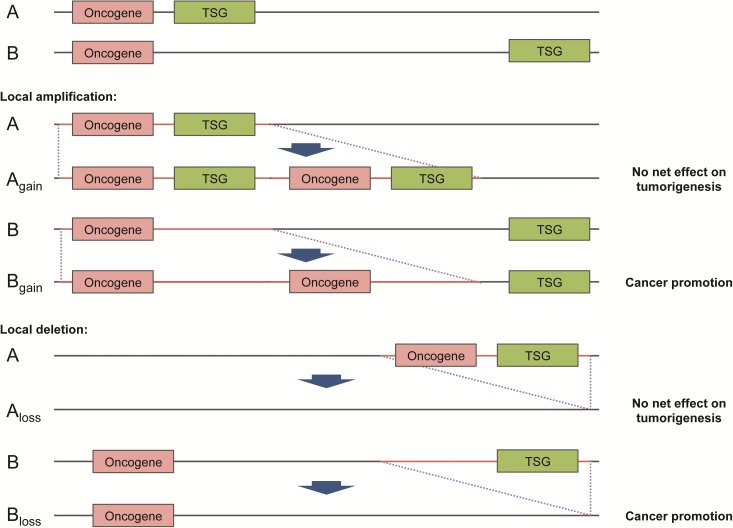
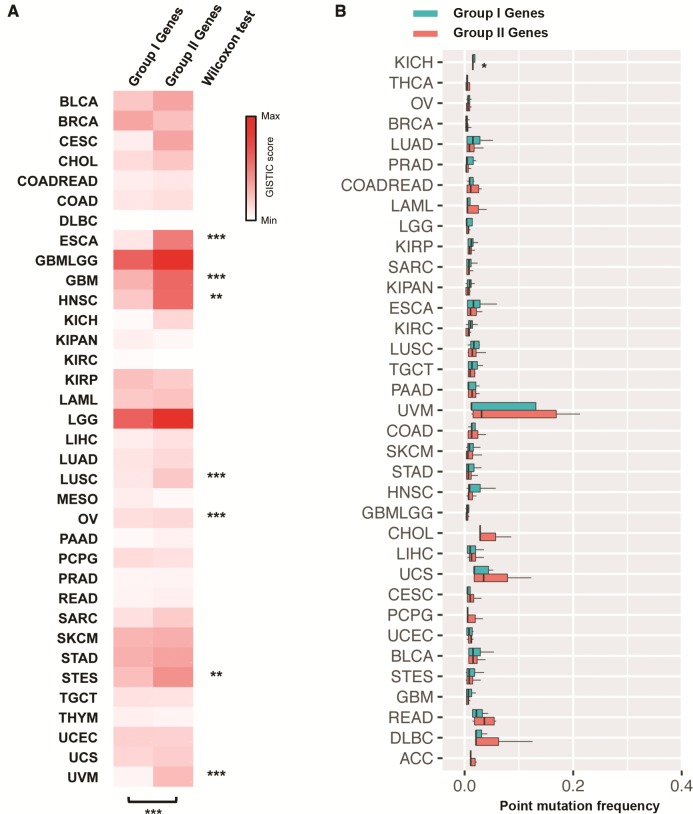
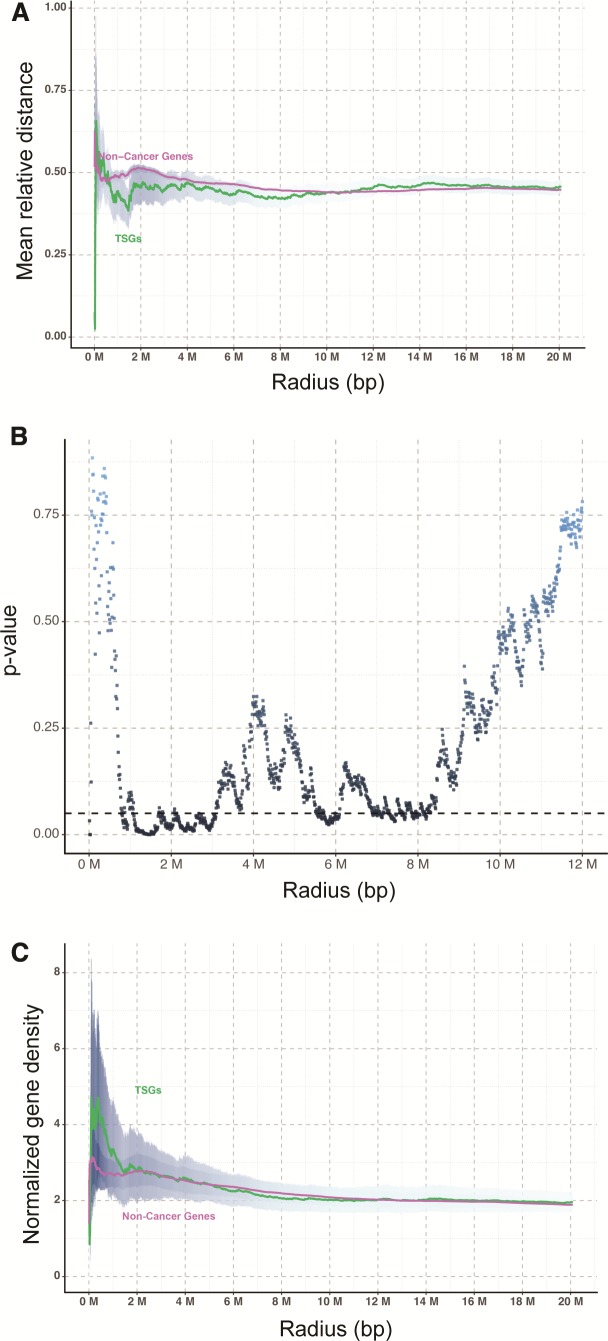
Focal copy number gains or losses are important genomic hallmarks of cancer. The genomic distribution of oncogenes and tumor-suppressor genes (TSG) in relation to focal copy number aberrations is unclear. Our analysis revealed that the mean distance of TSGs from oncogenes was significantly shorter than that of noncancer genes, suggesting that oncogenes and TSGs tend to be in close physical proximity in the human genome. Such relationship was conserved in mouse and drosophila. Pan-cancer analysis using data from The Cancer Genome Atlas indicated that oncogenes without a nearby TSG are more prone to amplification. In conclusion, our study provides evidence for the nonrandom distribution of oncogenes and TSGs across different species. Our data also support that the existence of a neighboring TSG can suppress amplification of an oncogene, shedding new light on a previously unappreciated protective mechanism of TSGs.
局灶性拷贝数增加或减少是癌症重要的基因组特征。癌基因和肿瘤抑制基因(TSG)相对于局灶性拷贝数畸变的基因组分布尚不清楚。我们的分析表明,肿瘤抑制基因与癌基因之间的平均距离明显短于非癌基因,这表明癌基因和肿瘤抑制基因在人类基因组中往往在物理位置上紧密相邻。这种关系在小鼠和果蝇中也保守存在。使用来自癌症基因组图谱(The Cancer Genome Atlas)的数据进行的泛癌分析表明,附近没有肿瘤抑制基因的癌基因更容易发生扩增。总之,我们的研究为癌基因和肿瘤抑制基因在不同物种间的非随机分布提供了证据。我们的数据还支持相邻肿瘤抑制基因的存在可以抑制癌基因的扩增,这为肿瘤抑制基因以前未被认识的保护机制提供了新线索。