School of Informatics, Computing, and Cyber Systems, Northern Arizona University, Flagstaff, AZ.
Arizona Cancer Evolution Center, Arizona State University, Tempe, AZ.
Mol Biol Evol. 2020 Oct 1;37(10):2875-2886. doi: 10.1093/molbev/msaa125.
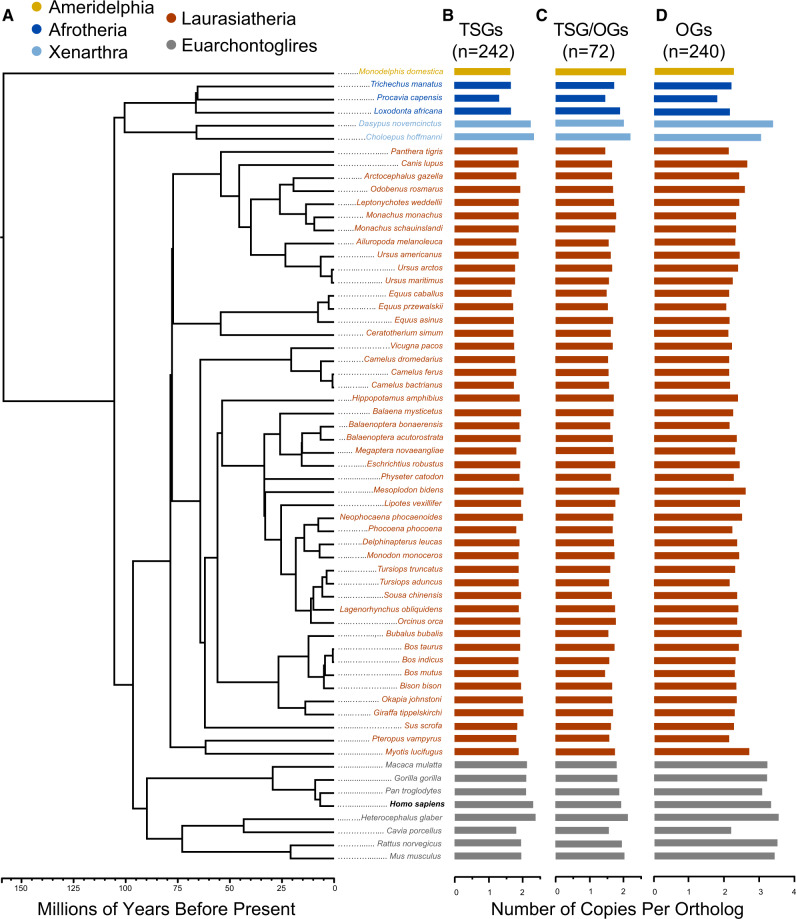
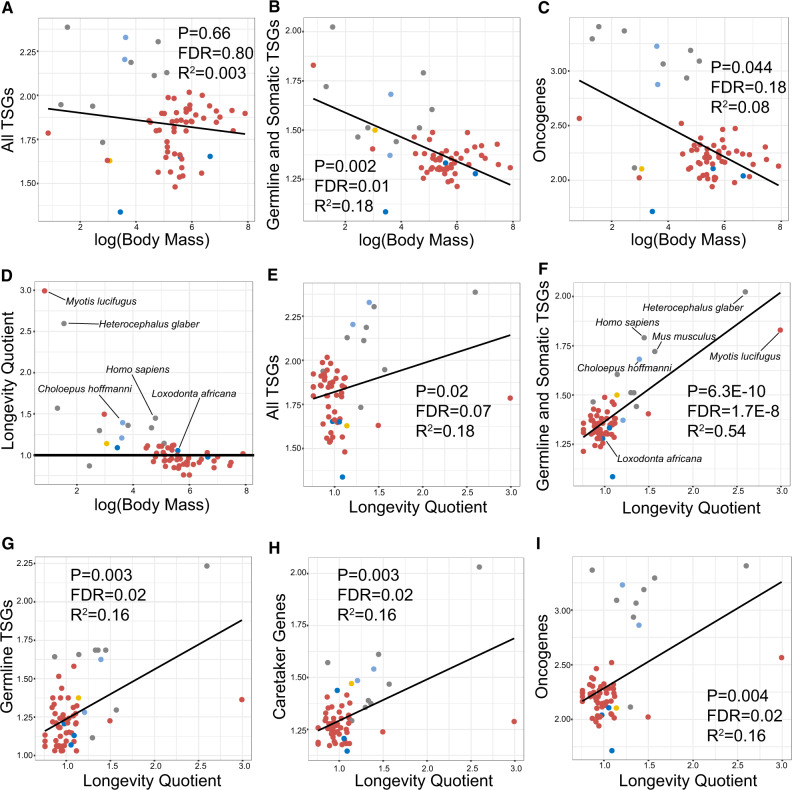
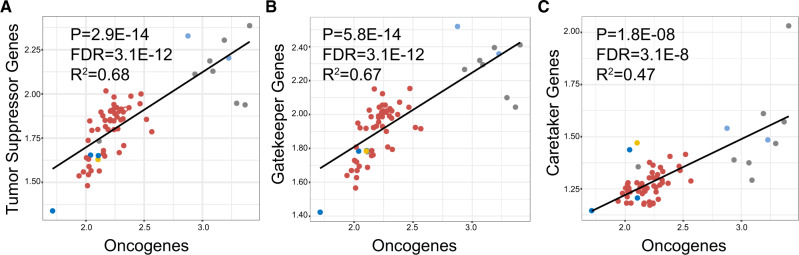
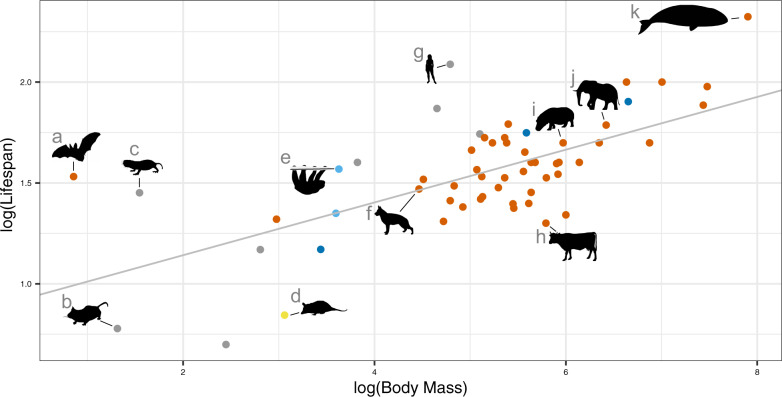
Cancer is caused by genetic alterations that affect cellular fitness, and multicellular organisms have evolved mechanisms to suppress cancer such as cell cycle checkpoints and apoptosis. These pathways may be enhanced by the addition of tumor suppressor gene paralogs or deletion of oncogenes. To provide insights to the evolution of cancer suppression across the mammalian radiation, we estimated copy numbers for 548 human tumor suppressor gene and oncogene homologs in 63 mammalian genome assemblies. The naked mole rat contained the most cancer gene copies, consistent with the extremely low rates of cancer found in this species. We found a positive correlation between a species' cancer gene copy number and its longevity, but not body size, contrary to predictions from Peto's Paradox. Extremely long-lived mammals also contained more copies of caretaker genes in their genomes, suggesting that the maintenance of genome integrity is an essential form of cancer prevention in long-lived species. We found the strongest association between longevity and copy numbers of genes that are both germline and somatic tumor suppressor genes, suggesting that selection has acted to suppress both hereditary and sporadic cancers. We also found a strong relationship between the number of tumor suppressor genes and the number of oncogenes in mammalian genomes, suggesting that complex regulatory networks mediate the balance between cell proliferation and checks on tumor progression. This study is the first to investigate cancer gene expansions across the mammalian radiation and provides a springboard for potential human therapies based on evolutionary medicine.
癌症是由影响细胞适应性的遗传改变引起的,多细胞生物已经进化出抑制癌症的机制,如细胞周期检查点和细胞凋亡。这些途径可以通过添加肿瘤抑制基因的旁系同源物或删除癌基因来增强。为了深入了解哺乳动物辐射范围内的癌症抑制的进化,我们在 63 个哺乳动物基因组组装中估计了 548 个人类肿瘤抑制基因和癌基因同源物的拷贝数。裸鼹鼠的癌症基因拷贝数最多,这与该物种极低的癌症发生率一致。我们发现,物种的癌症基因拷贝数与其寿命呈正相关,而与体型大小无关,这与佩托悖论的预测相反。极长寿命的哺乳动物在其基因组中也含有更多的管家基因拷贝,这表明维持基因组完整性是长寿物种预防癌症的一种重要形式。我们发现,寿命与种系和体细胞肿瘤抑制基因的拷贝数之间的关联最强,这表明选择已经作用于抑制遗传性和散发性癌症。我们还发现,哺乳动物基因组中肿瘤抑制基因的数量与癌基因的数量之间存在很强的关系,这表明复杂的调控网络介导了细胞增殖与肿瘤进展之间的平衡。这项研究是首次对哺乳动物辐射范围内的癌症基因扩增进行调查,并为基于进化医学的潜在人类疗法提供了一个跳板。