Zhao Wenwen, Feng Haitao, Sun Wen, Liu Kang, Lu Jin-Jian, Chen Xiuping
State Key Laboratory of Quality Research in Chinese Medicine, Institute of Chinese Medical Sciences, University of Macau, Macao, China.
Department of Pharmacology of Chinese Materia Medica, China Pharmaceutical University, Nanjing, PR China.
Redox Biol. 2017 Apr;11:524-534. doi: 10.1016/j.redox.2016.12.036. Epub 2017 Jan 5.
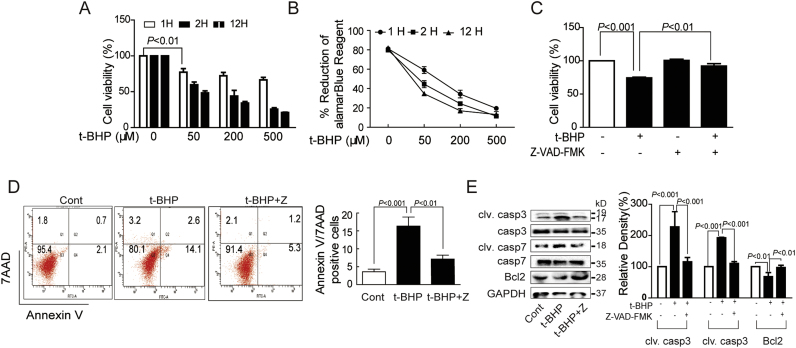
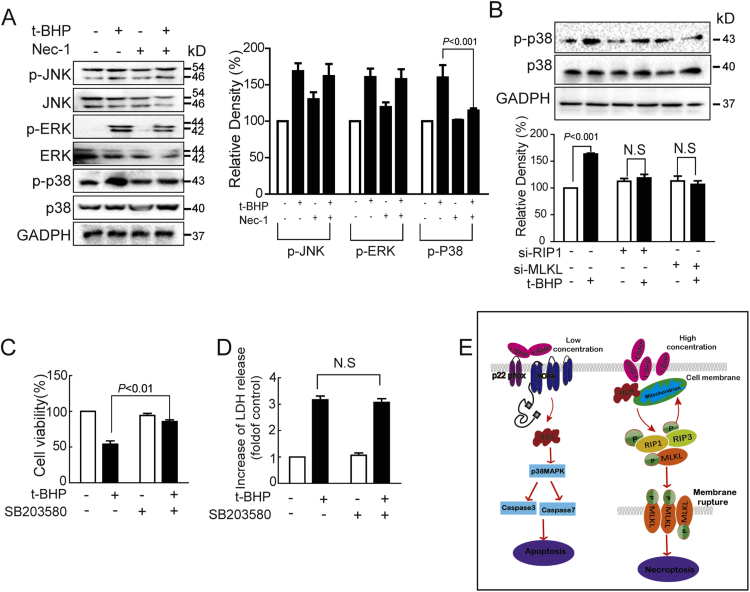
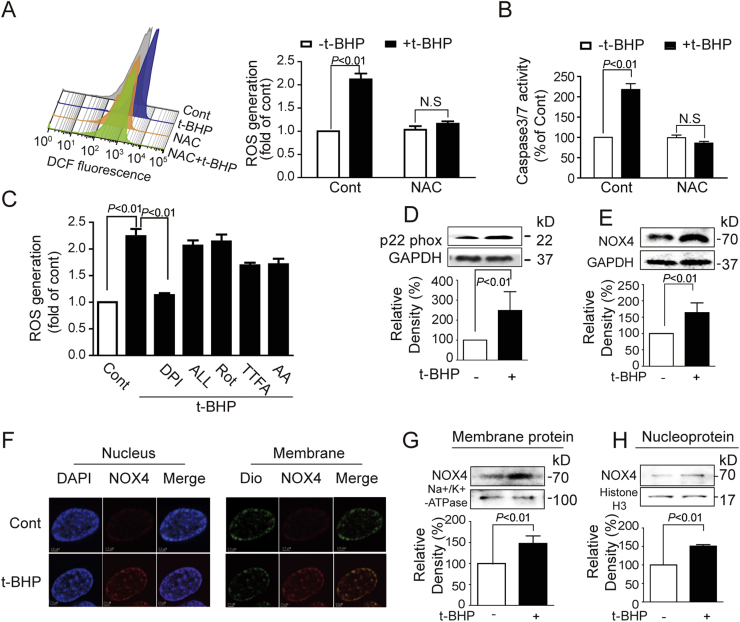
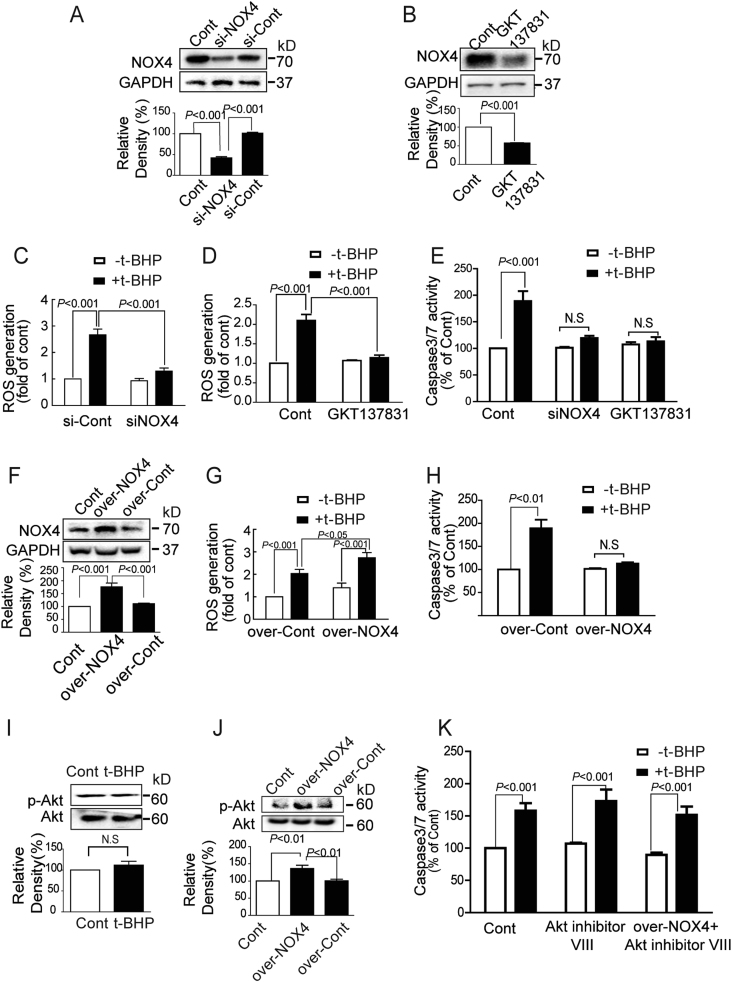
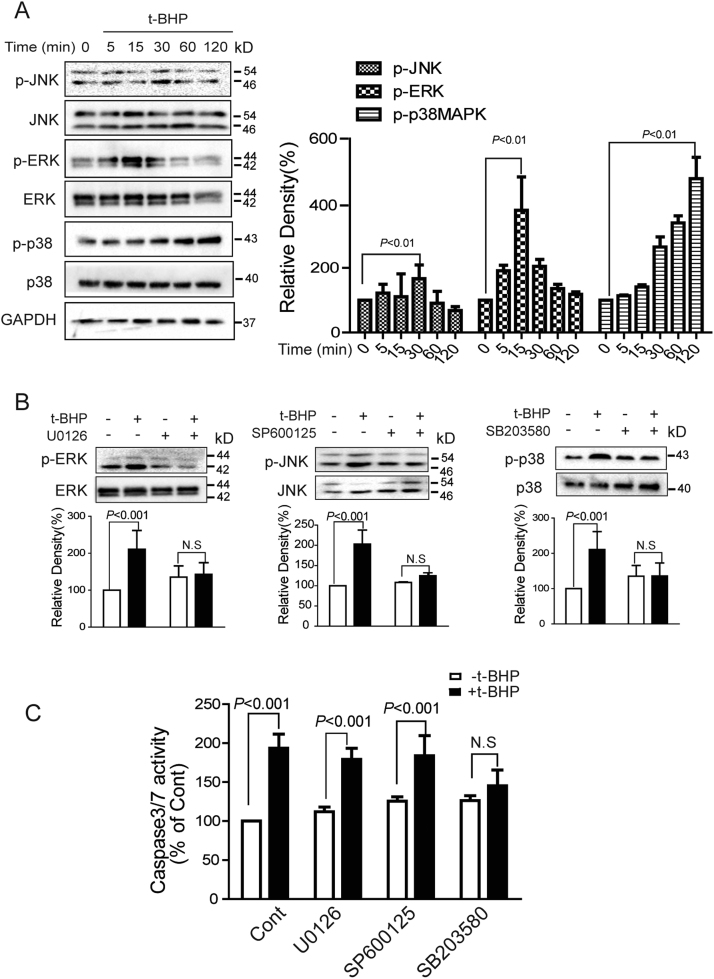
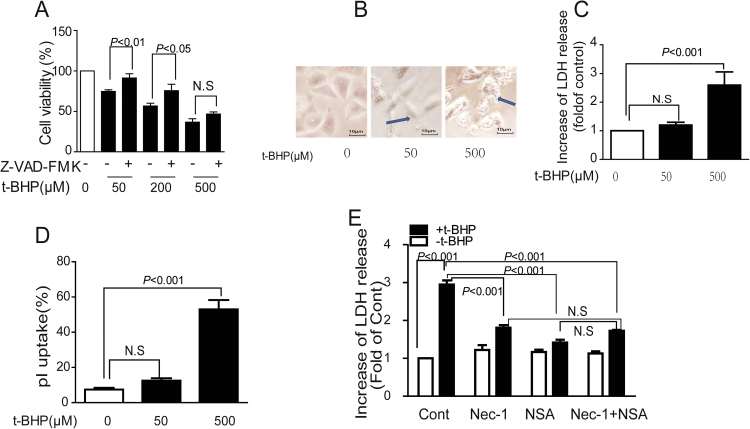
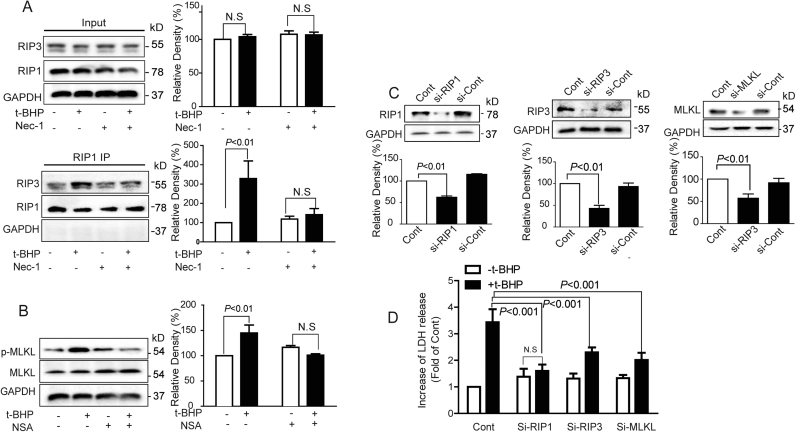
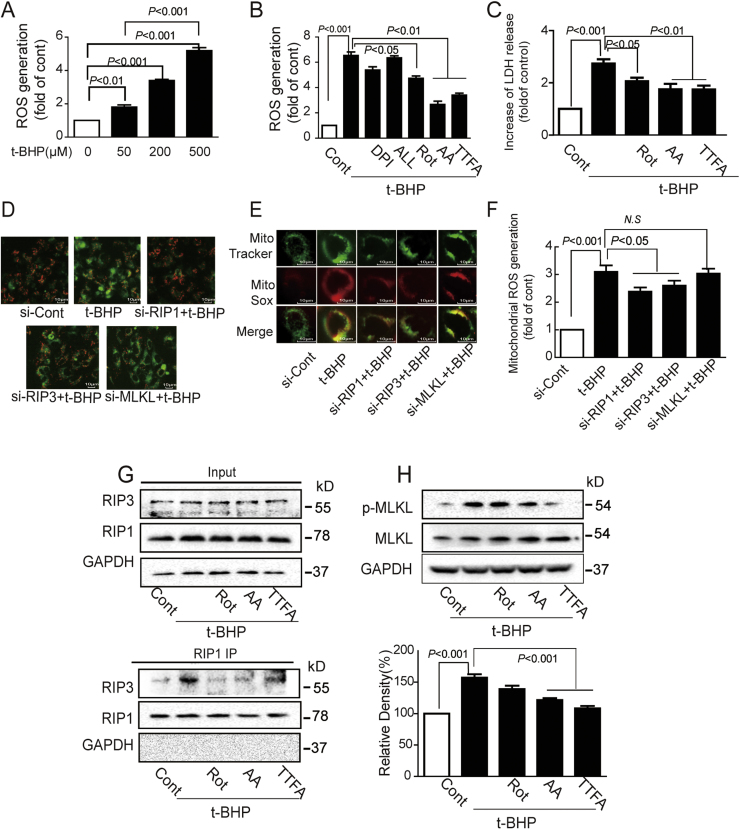
Oxidative stress causes endothelial death while underlying mechanisms remain elusive. Herein, the pro-death effect of tert-butyl hydroperoxide (t-BHP) was investigated with low concentration (50μM) of t-BHP (t-BHP) and high concentration (500μM) of t-BHP (t-BHP). Both t-BHP and t-BHP induced endothelial cell death was determined. T-BHP induced caspase-dependent apoptosis and reactive oxygen species (ROS) generation, which was inhibited by N-acetyl-L-cysteine (NAC). Furthermore, NADPH oxidase inhibitor diphenyleneiodonium (DPI), NOX4 siRNA, and NOX4 inhibitor GKT137831 reduced t-BHP-induced ROS generation while mitochondrial respiratory chain inhibitors rotenone (Rot), 2-thenoyltrifluoroacetone (TTFA), and antimycin A (AA) failed to do so. NOX4 overexpression resulted in increased ROS generation and Akt expression but decreased sensitivity to t-BHP. In contrast, T-BHP induced LDH release, PI uptake, and cell translucent cytoplasm. RIP1 inhibitor necrostatin-1 (Nec-1), MLKL inhibitor necrosulfonamide (NSA) and silencing RIP1, RIP3, and MLKL inhibited t-BHP-induced cell death while pan-caspase inhibitor Z-VAD-FMK showed no effect. T-BHP-induced ROS production was inhibited by TTFA, AA and Rot while DPI showed no effect. T-BHP induced RIP1/RIP3 interaction, which was decreased by Rot, TTFA, and AA. Silence RIP1 and RIP3 but not MLKL inhibited t-BHP-induced mitochondrial membrane potential (MMP) decrease and ROS production. Moreover, P38MAPK inhibitor SB203580 reversed both t-BHP and t-BHP-induced cell death while inhibitors for ERKs and JNKs showed no obvious effect. These data suggested that t-BHP induced both apoptosis and necroptosis in endothelial cells which was mediated by ROS and p38MAPK. ROS derived from NADPH oxidase and mitochondria contributed to t-BHP and t-BHP-induced apoptosis and necroptosis, respectively.
氧化应激导致内皮细胞死亡,但其潜在机制仍不清楚。在此,使用低浓度(50μM)叔丁基过氧化氢(t-BHP)和高浓度(500μM)叔丁基过氧化氢(t-BHP)研究了其促死亡作用。测定了t-BHP和t-BHP诱导的内皮细胞死亡情况。t-BHP诱导半胱天冬酶依赖性凋亡和活性氧(ROS)生成,这被N-乙酰-L-半胱氨酸(NAC)抑制。此外,NADPH氧化酶抑制剂二苯基碘鎓(DPI)、NOX4小干扰RNA(siRNA)和NOX4抑制剂GKT137831减少了t-BHP诱导的ROS生成,而线粒体呼吸链抑制剂鱼藤酮(Rot)、2-噻吩甲酰三氟丙酮(TTFA)和抗霉素A(AA)则没有此作用。NOX4过表达导致ROS生成增加和Akt表达增加,但对t-BHP的敏感性降低。相反,t-BHP诱导乳酸脱氢酶(LDH)释放、碘化丙啶(PI)摄取和细胞胞质透明。受体相互作用蛋白1(RIP1)抑制剂坏死素-1(Nec-1)、混合谱系激酶结构域样蛋白(MLKL)抑制剂坏死磺酰胺(NSA)以及沉默RIP1、RIP3和MLKL可抑制t-BHP诱导的细胞死亡,而泛半胱天冬酶抑制剂Z-VAD-FMK则无作用。TTFA、AA和Rot抑制t-BHP诱导的ROS产生,而DPI则无作用。t-BHP诱导RIP1/RIP3相互作用,Rot、TTFA和AA可使其降低。沉默RIP1和RIP3而非MLKL可抑制t-BHP诱导的线粒体膜电位(MMP)降低和ROS产生。此外,p38丝裂原活化蛋白激酶(MAPK)抑制剂SB203580可逆转t-BHP和t-BHP诱导的细胞死亡,而细胞外信号调节激酶(ERK)和c-Jun氨基末端激酶(JNK)抑制剂则无明显作用。这些数据表明,t-BHP在内皮细胞中诱导凋亡和坏死性凋亡,这由ROS和p38MAPK介导。分别来自NADPH氧化酶和线粒体的ROS促成了t-BHP和t-BHP诱导的凋亡和坏死性凋亡。