Ihira Kei, Dong Peixin, Xiong Ying, Watari Hidemichi, Konno Yosuke, Hanley Sharon J B, Noguchi Masayuki, Hirata Noriyuki, Suizu Futoshi, Yamada Takahiro, Kudo Masataka, Sakuragi Noriaki
Department of Gynecology, Hokkaido University School of Medicine, Hokkaido University, Sapporo 0608638, Japan.
Department of Women's Health Educational System, Hokkaido University School of Medicine, Hokkaido University, Sapporo 0608638, Japan.
Oncotarget. 2017 Feb 21;8(8):13509-13520. doi: 10.18632/oncotarget.14586.
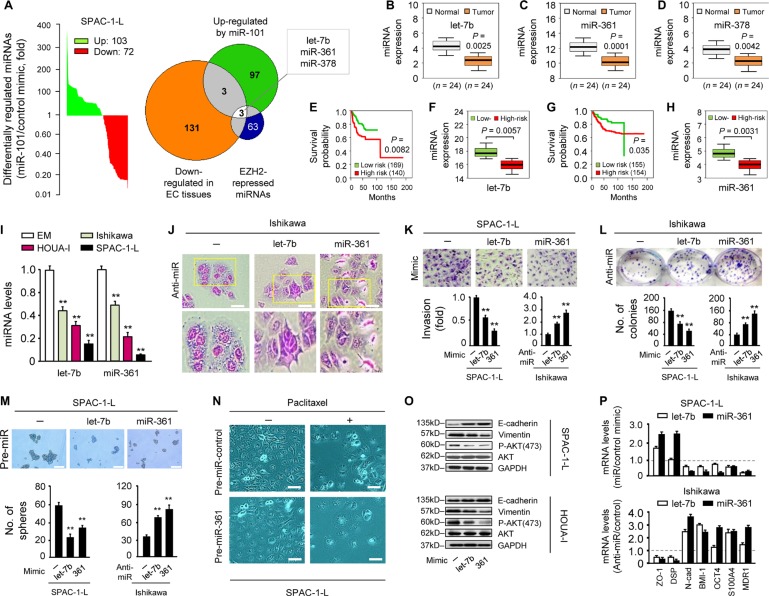
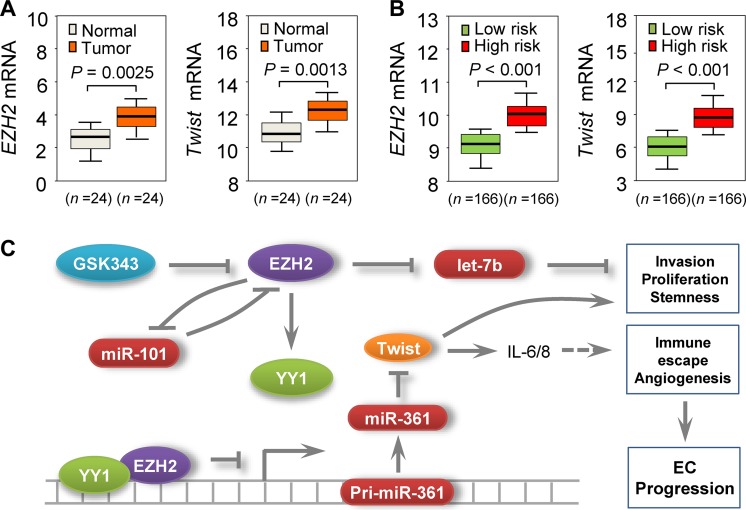
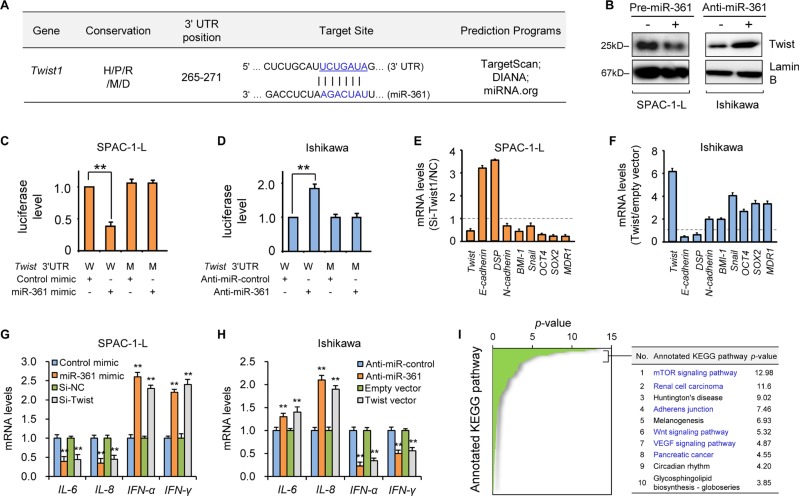
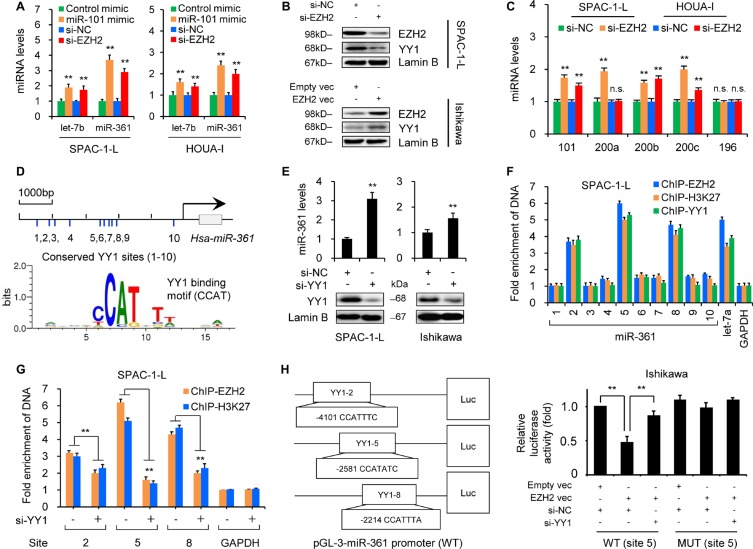
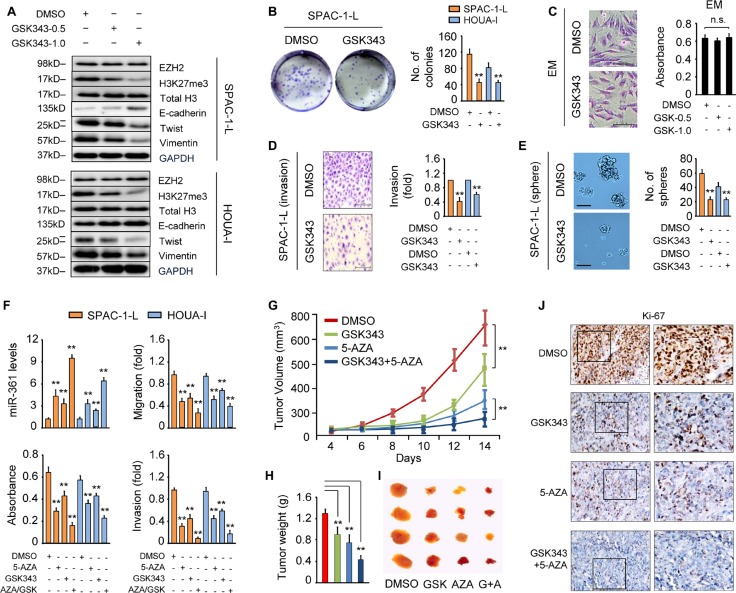
EZH2 inhibition and reactivation of tumor suppressor microRNAs (miRNAs) represent attractive anti-cancer therapeutic strategies. We found that EZH2-suppressed let 7b and miR-361, two likely tumor suppressors, inhibited endometrial cancer (EC) cell proliferation and invasion, and abrogated cancer stem cell-like properties. In EC cells, EZH2 induced and functioned together with YY1 to epigenetically suppress miR-361, which upregulated Twist, a direct target of miR-361. Treating EC cells with GSK343, a specific EZH2 inhibitor, mimicked the effects of siRNA-mediated EZH2 knockdown, upregulating miR-361 and downregulating Twist expression. Combining GSK343 with 5 AZA-2'-deoxycytidine synergistically suppressed cell proliferation and invasion in vitro, and decreased tumor size and weight in EC cell xenografted mice. Quantitative real-time PCR analysis of 24 primary EC tissues showed that lower let-7b and miR-361 levels were associated with worse patient outcomes. These results were validated in a larger EC patient dataset from The Cancer Genome Atlas. Our findings suggest that EZH2 drives EC progression by regulating miR-361/Twist signaling, and support EZH2 inhibition as a promising anti-EC therapeutic strategy.
抑制EZH2并重新激活肿瘤抑制性微小RNA(miRNA)是颇具吸引力的抗癌治疗策略。我们发现,EZH2抑制的let-7b和miR-361这两种可能的肿瘤抑制因子可抑制子宫内膜癌(EC)细胞的增殖和侵袭,并消除癌症干细胞样特性。在EC细胞中,EZH2诱导YY1并与其共同发挥作用,通过表观遗传方式抑制miR-361,而miR-361上调了Twist(miR-361的直接靶点)。用特异性EZH2抑制剂GSK343处理EC细胞,可模拟siRNA介导的EZH2敲低效应,上调miR-361并下调Twist表达。将GSK343与5-氮杂-2'-脱氧胞苷联合使用,可在体外协同抑制细胞增殖和侵袭,并减小EC细胞异种移植小鼠的肿瘤大小和重量。对24个原发性EC组织进行的定量实时PCR分析表明,let-7b和miR-361水平较低与患者预后较差相关。这些结果在来自癌症基因组图谱的更大的EC患者数据集中得到了验证。我们的研究结果表明,EZH2通过调节miR-361/Twist信号通路驱动EC进展,并支持将抑制EZH2作为一种有前景的抗EC治疗策略。