Yang Shuai, Jin Huijuan, Zhu Yiyi, Wan Yan, Opoku Elvis Nana, Zhu Lingqiang, Hu Bo
Department of Neurology, Union Hospital, Tongji Medical College, Huazhong University of Science and Technology, Wuhan, 430022, China.
Department of Pathophysiology, Tongji Medical College, Huazhong University of Science and Technology, Wuhan, China.
Curr Neuropharmacol. 2017;15(6):892-905. doi: 10.2174/1570159X15666170112170226.
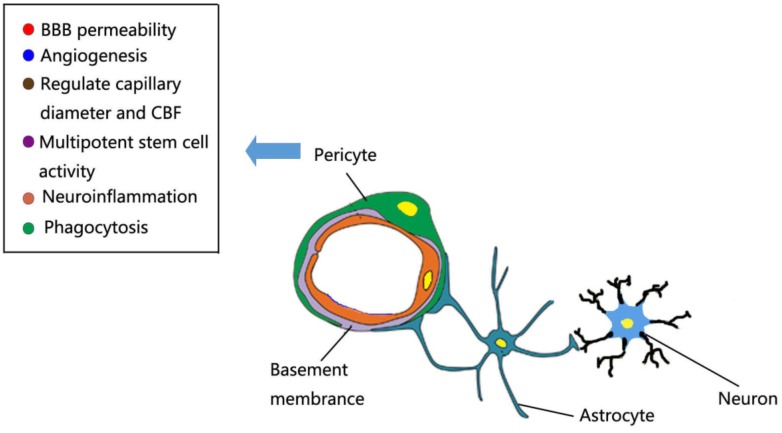
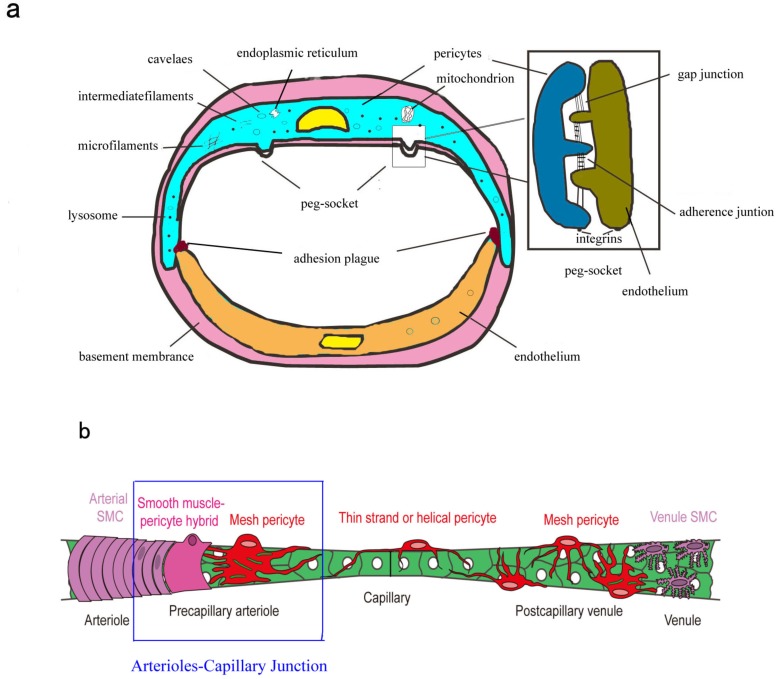
Every year, strokes take millions of lives and leave millions of individuals living with permanent disabilities. Recently more researchers embrace the concept of the neurovascular unit (NVU), which encompasses neurons, endothelial cells (ECs), pericytes, astrocyte, microglia, and the extracellular matrix. It has been well-documented that NVU emerged as a new paradigm for the exploration of mechanisms and therapies in ischemic stroke. To better understand the complex NVU and broaden therapeutic targets, we must probe the roles of multiple cell types in ischemic stroke. The aims of this paper are to introduce the biological characteristics of brain pericytes and the available evidence on the diverse functions and mechanisms involving the pericytes in the context of ischemic stroke.
Research and online content related to the biological characteristics and pathophysiological roles of pericytes is review. The new research direction on the Pericytes in ischemic stroke, and the potential therapeutic targets are provided.
During the different stages of ischemic stroke, pericytes play different roles: 1) On the hyperacute phase of stroke, pericytes constriction and death may be a cause of the no-reflow phenomenon in brain capillaries; 2) During the acute phase, pericytes detach from microvessels and participate in inflammatory-immunological response, resulting in the BBB damage and brain edema. Pericytes also provide benefit for neuroprotection by protecting endothelium, stabilizing BBB and releasing neurotrophins; 3) Similarly, during the later recovery phase of stroke, pericytes also contribute to angiogenesis, neurogenesis, and thereby promote neurological recovery.
This emphasis on the NVU concept has shifted the focus of ischemic stroke research from neuro-centric views to the complex interactions within NVU. With this new perspective, pericytes that are centrally positioned in the NVU have been widely studied in ischemic stroke. More work is needed to elucidate the beneficial and detrimental roles of brain pericytes in ischemic stroke that may serve as a basis for potential therapeutic targets.
每年,中风夺走数百万人的生命,并使数百万人终身残疾。最近,越来越多的研究人员接受了神经血管单元(NVU)的概念,该单元包括神经元、内皮细胞(ECs)、周细胞、星形胶质细胞、小胶质细胞和细胞外基质。有充分的文献记载,NVU已成为探索缺血性中风机制和治疗方法的新范式。为了更好地理解复杂的NVU并拓宽治疗靶点,我们必须探究多种细胞类型在缺血性中风中的作用。本文的目的是介绍脑周细胞的生物学特性,以及在缺血性中风背景下有关周细胞多种功能和机制的现有证据。
综述了与周细胞生物学特性和病理生理作用相关的研究及在线内容。提供了缺血性中风中周细胞的新研究方向和潜在治疗靶点。
在缺血性中风的不同阶段,周细胞发挥着不同的作用:1)在中风的超急性期,周细胞收缩和死亡可能是脑毛细血管无复流现象的一个原因;2)在急性期,周细胞从微血管脱离并参与炎症免疫反应,导致血脑屏障(BBB)损伤和脑水肿。周细胞还通过保护内皮、稳定血脑屏障和释放神经营养因子来提供神经保护作用;3)同样,在中风后期恢复阶段,周细胞也有助于血管生成、神经发生,从而促进神经功能恢复。
对NVU概念的这种强调已将缺血性中风研究的重点从以神经为中心的观点转移到NVU内的复杂相互作用上。从这个新角度来看,位于NVU中心位置的周细胞在缺血性中风中得到了广泛研究。需要更多的工作来阐明脑周细胞在缺血性中风中的有益和有害作用,这可能为潜在治疗靶点提供依据。