Institute of Endocrinology, Federal Almazov North-West Medical Research Centre, Saint Petersburg, Russia; Department for Pathophysiology, Pavlov First Saint Petersburg State Medical University, Saint Petersburg, Russia.
Institute of Endocrinology, Federal Almazov North-West Medical Research Centre, Saint Petersburg, Russia.
J Diabetes Res. 2016;2016:8317850. doi: 10.1155/2016/8317850. Epub 2016 Dec 20.
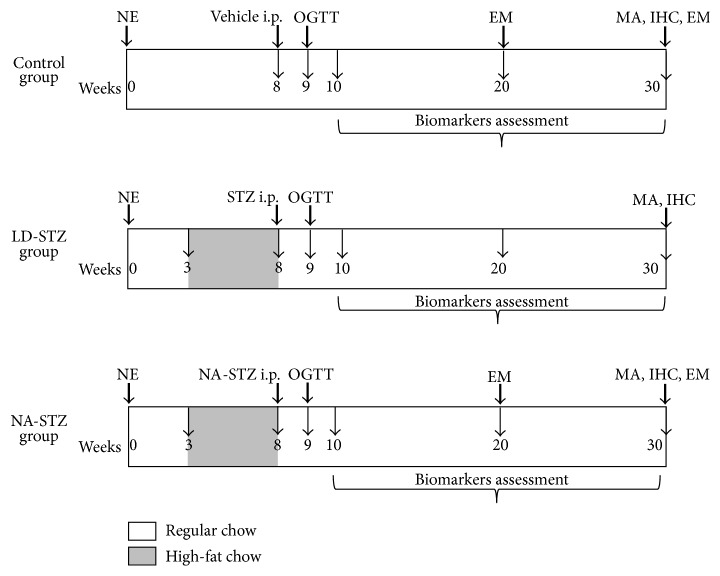
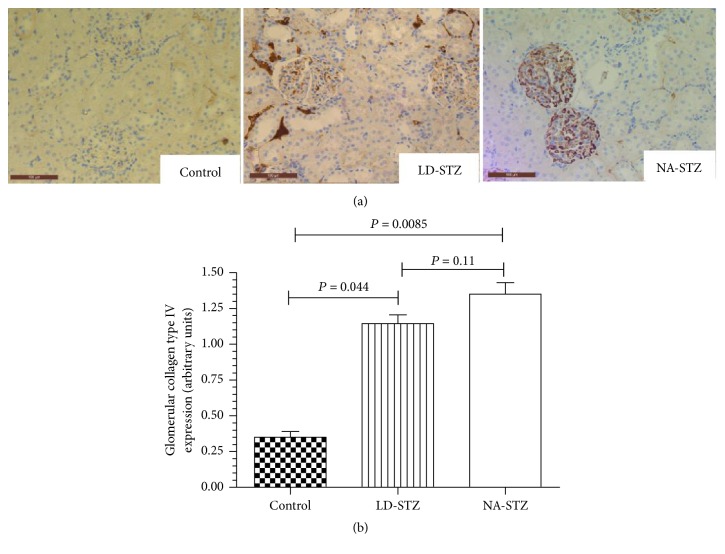
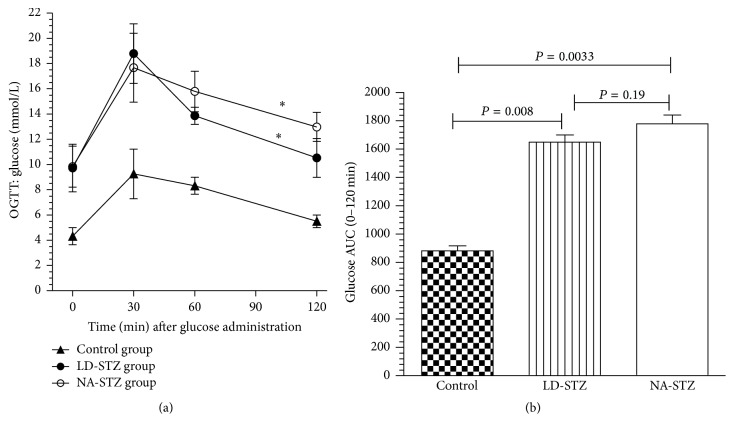
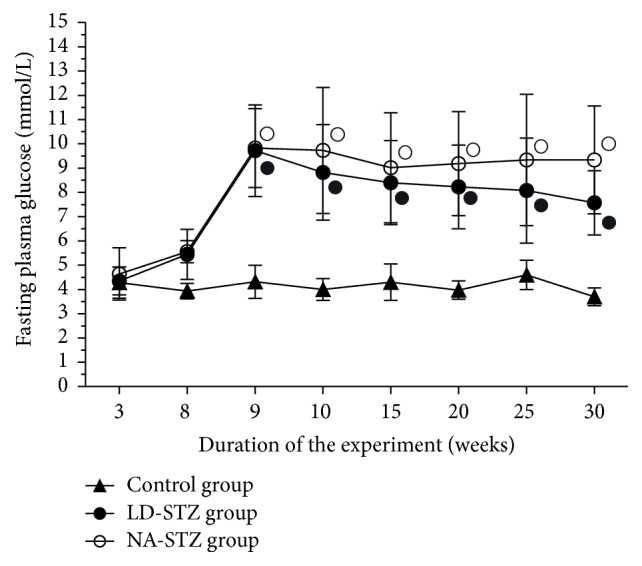
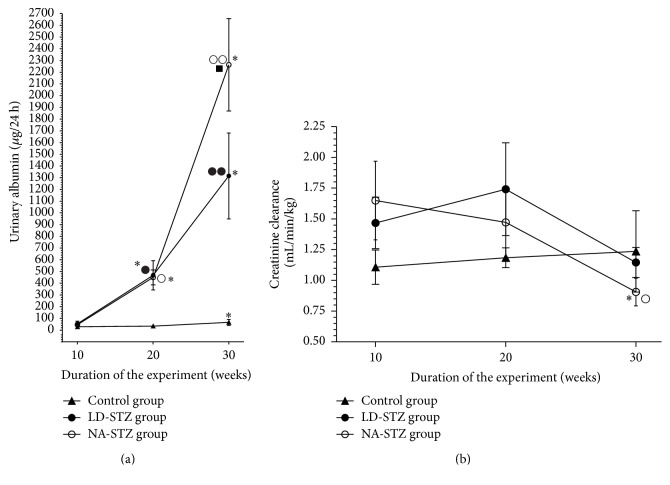
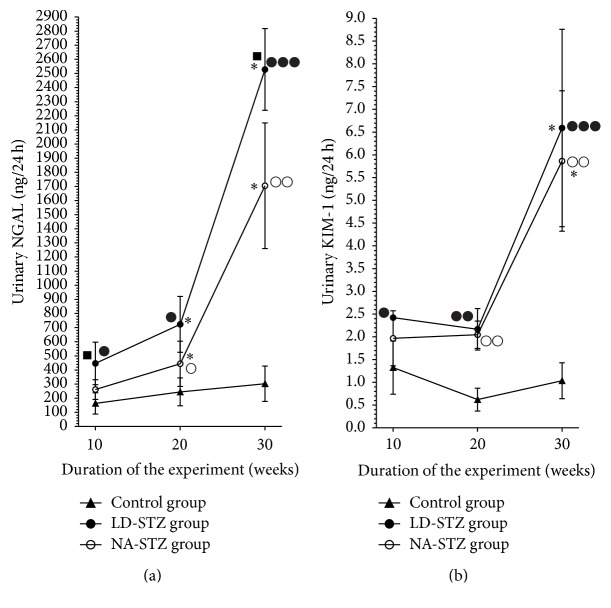
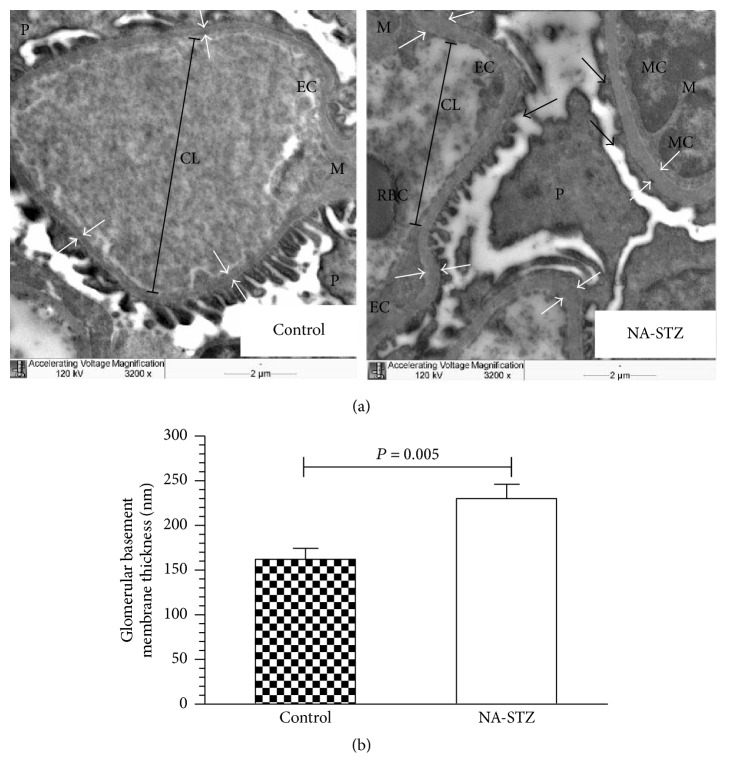
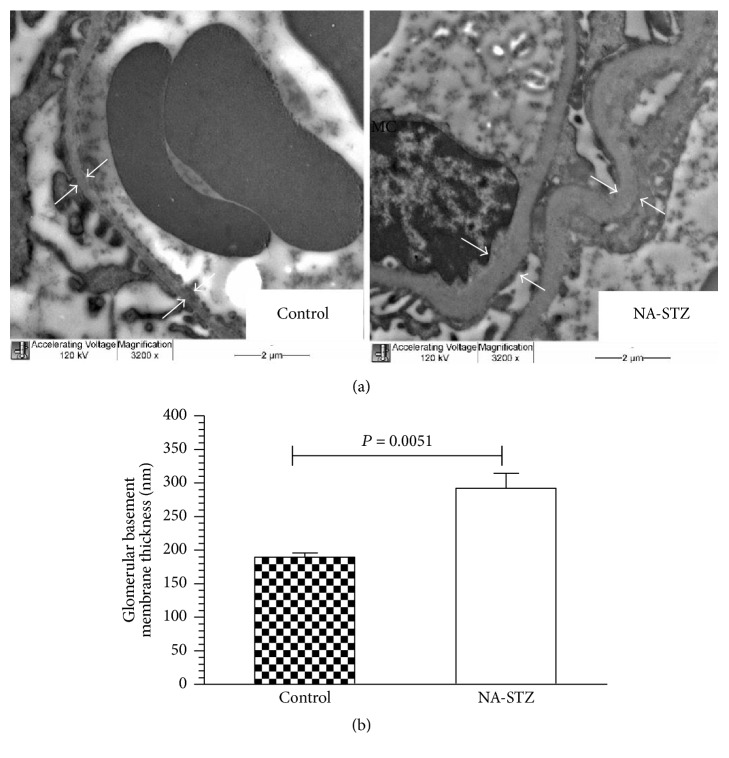
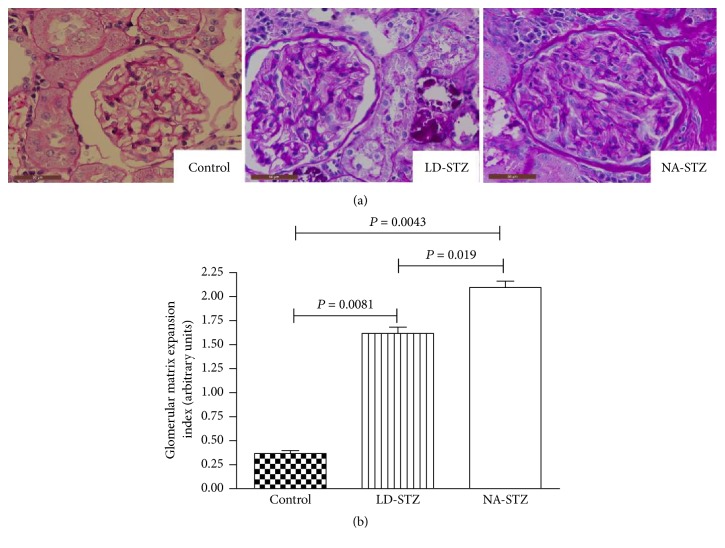
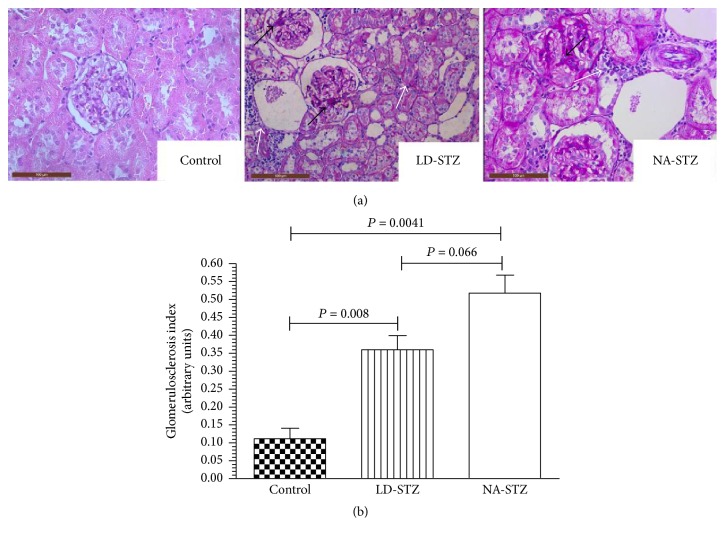
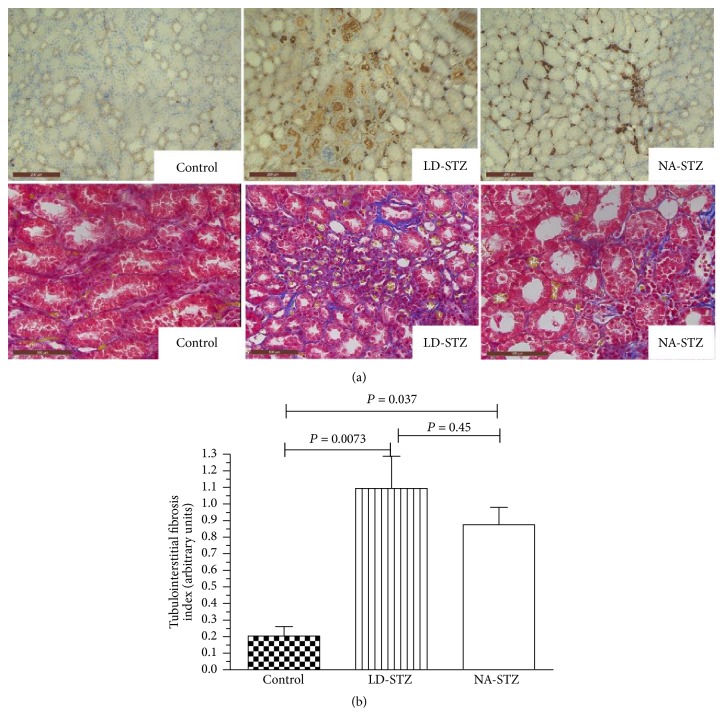
Type 2 diabetes (DM2) could be reproduced in rats with alimentary obesity by using low doses of streptozotocin (LD-STZ) as well as STZ in high doses with preliminary nicotinamide (NA) administration. However, STZ could induce tubulotoxicity. . To develop rat model of DN in NA-STZ-induced DM2 and compare it with LD-STZ-model in order to choose the most relevant approach for reproducing renal glomerular and tubular morphofunctional diabetic changes. Starting at 3 weeks after uninephrectomy, adult male Wistar rats were fed five-week high-fat diet and then received intraperitoneally either LD-STZ (40 mg/kg) or NA (230 mg/kg) followed by STZ (65 mg/kg). Control uninephrectomized vehicle-injected rats received normal chow. At weeks 10, 20, and 30 (the end of the study), metabolic parameters, creatinine clearance, albuminuria, and urinary tubular injury markers (NGAL, KIM-1) were evaluated as well as renal ultrastructural and light microscopic changes at weeks 20 and 30. NA-STZ-group showed higher reproducibility and stability of metabolic parameters. By week 10, in NA-STZ-group NGAL level was significantly lower compared to LD-STZ-group. By week 30, diabetic groups showed early features of DN. However, morphofunctional changes in NA-STZ-group appeared to be more pronounced than those in STZ-group despite lower levels of KIM-1 and NGAL. We proposed a new rat model of DM2 with DN characterized by stable metabolic disorders, typical renal lesions, and lower levels of tubular injury markers as compared to LD-STZ-induced diabetes.
2 型糖尿病(DM2)可通过使用低剂量链脲佐菌素(LD-STZ)以及先给予烟酰胺(NA)后给予高剂量 STZ 使饮食性肥胖大鼠重现,然而 STZ 可诱导肾小管毒性。。为了在 NA-STZ 诱导的 DM2 中建立大鼠糖尿病肾病(DN)模型,并与 LD-STZ 模型进行比较,从而选择最相关的方法来重现肾脏肾小球和肾小管形态功能的糖尿病变化。从单侧肾切除后 3 周开始,成年雄性 Wistar 大鼠给予 5 周高脂肪饮食,然后分别经腹腔给予 LD-STZ(40mg/kg)或 NA(230mg/kg),随后给予 STZ(65mg/kg)。对照组单侧肾切除 vehicle 注射大鼠给予正常饲料。在第 10、20 和 30 周(研究结束时)评估代谢参数、肌酐清除率、蛋白尿和尿肾小管损伤标志物(NGAL、KIM-1),并在第 20 和 30 周评估肾脏超微结构和光镜变化。NA-STZ 组显示出代谢参数更高的重现性和稳定性。在第 10 周时,NA-STZ 组的 NGAL 水平明显低于 LD-STZ 组。在第 30 周时,糖尿病组出现了早期的 DN 特征。然而,尽管 KIM-1 和 NGAL 水平较低,NA-STZ 组的形态功能变化似乎比 STZ 组更为明显。我们提出了一种新的 DM2 伴 DN 大鼠模型,其特点是代谢紊乱稳定、典型的肾脏病变和肾小管损伤标志物水平较低,与 LD-STZ 诱导的糖尿病相比。