Yang Jian, Samsel Paulina A, Narov Kalin, Jones Ashley, Gallacher Daniel, Gallacher John, Sampson Julian R, Shen Ming Hong
Institute of Medical Genetics, Division of Cancer and Genetics, School of Medicine, Cardiff University, Heath Park, Cardiff CF14 4XN, UK.
Warwick CTU, Warwick Medical School, University of Warwick, Coventry CV4 7AL, UK.
Neoplasia. 2017 Feb;19(2):112-120. doi: 10.1016/j.neo.2016.12.008. Epub 2017 Jan 13.
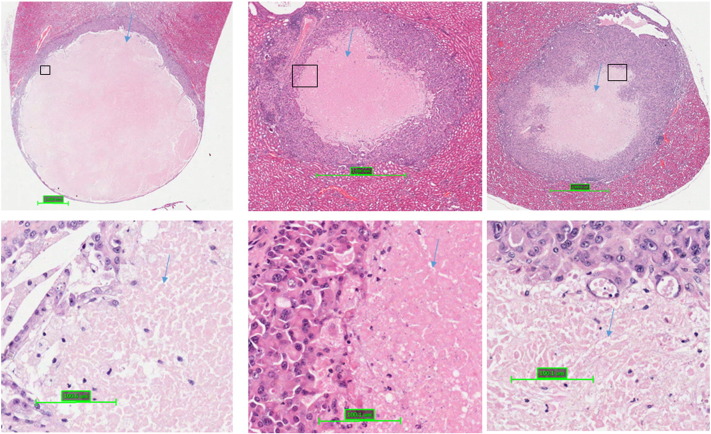
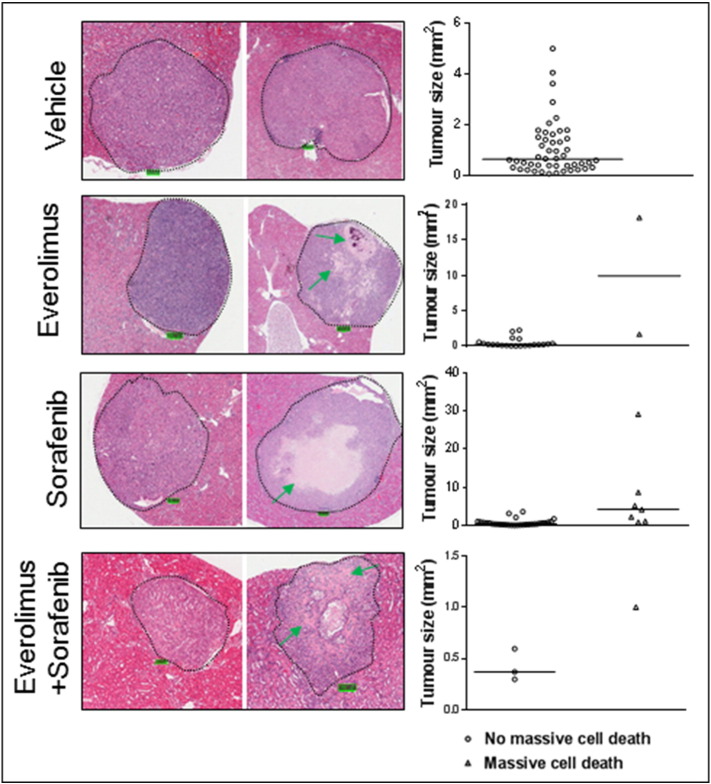
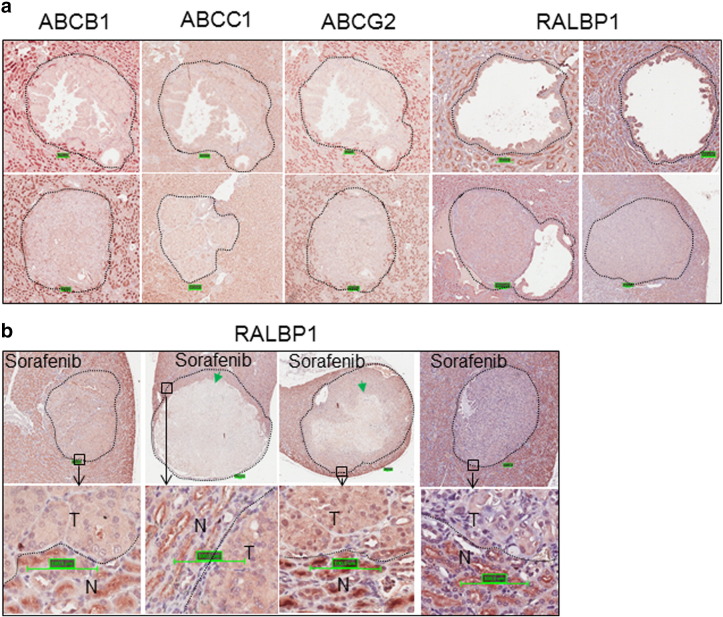
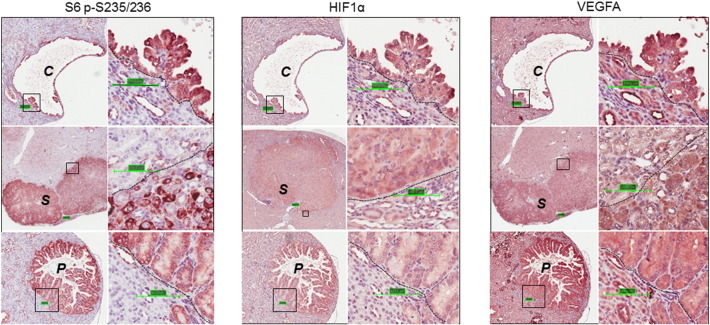
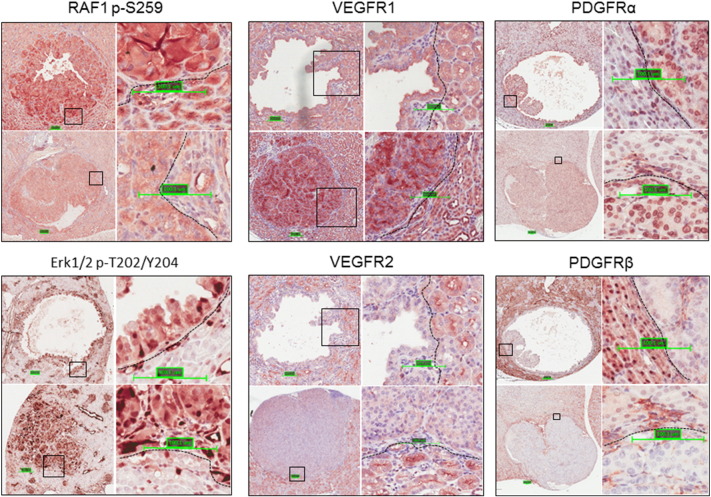
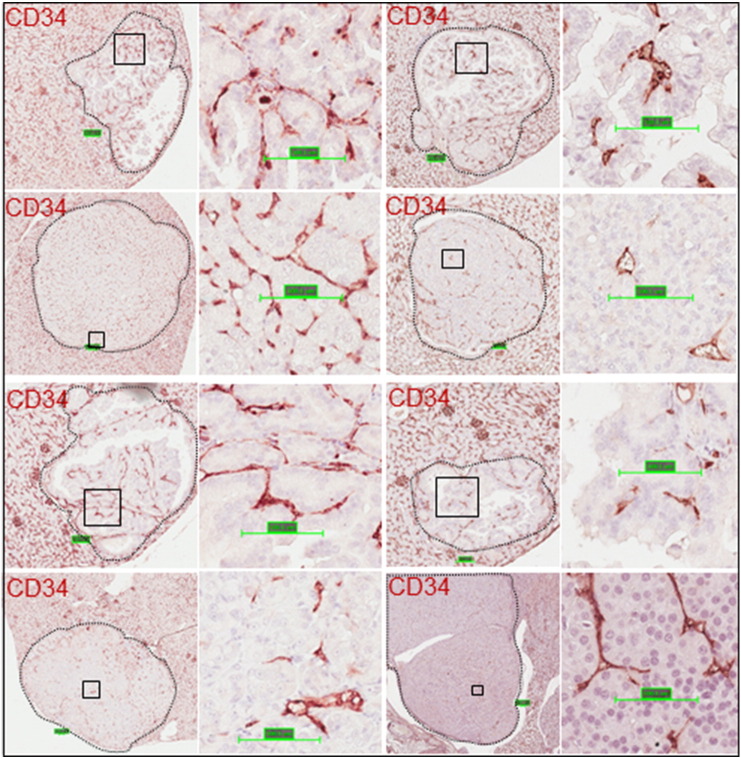
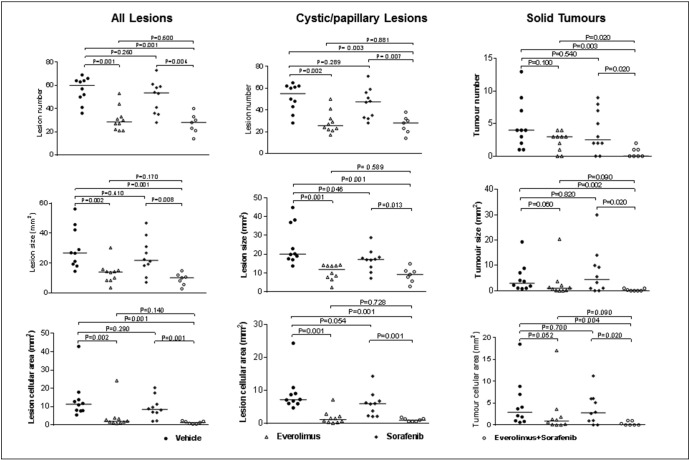
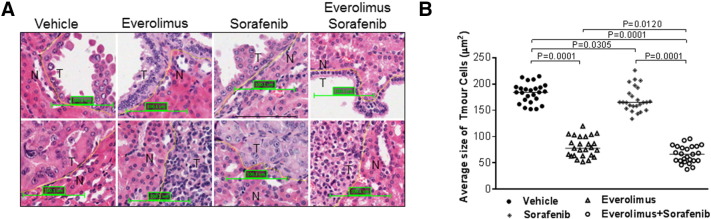
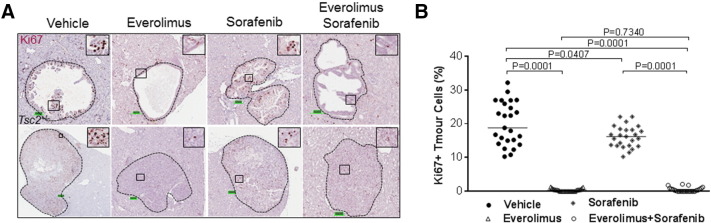
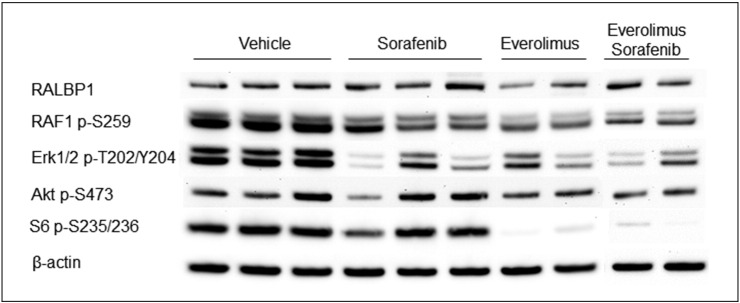
Tuberous sclerosis (TSC) is an inherited tumor syndrome caused by mutations in TSC1 or TSC2 that lead to aberrant activation of mTOR and development of tumors in multiple organs including the kidneys. The mTOR inhibitors rapamycin and everolimus (rapalogs) have demonstrated clinical efficacy in treating TSC-associated tumors including renal angiomyolipomas. However, tumor responses are usually only partial, and regrowth occurs after drug withdrawal. TSC-associated tumors are highly vascular, and TSC patients with renal angiomyolipomas have elevated levels of circulating vascular endothelial growth factor (VEGF) A and VEGFD. Sorafenib inhibits multiple kinases including VEGF receptors and has been used to treat metastatic epithelioid angiomyolipoma in one case, but formal trials have not been undertaken. In this study, we investigated tumor angiogenesis and the therapeutic efficacy of everolimus in combination with sorafenib for renal tumors in Tsc2 mice. We found that these tumors exhibited remarkably variable angiogenesis despite consistent aberrant activation of mTOR and increased expression of HIF1α and VEGFA. Treatment of 11-month-old Tsc2 mice for 2 months with a combination of everolimus and sorafenib significantly reduced the number and size of solid renal tumors, whereas everolimus or sorafenib alone did not. These results suggest that inhibition of mTOR and multiple kinases including VEGF receptors using combination therapy could hold promise for the treatment of TSC-associated tumors that have responded inadequately to a rapalog alone.
结节性硬化症(TSC)是一种遗传性肿瘤综合征,由TSC1或TSC2基因突变引起,这些突变导致mTOR异常激活,并在包括肾脏在内的多个器官中发生肿瘤。mTOR抑制剂雷帕霉素和依维莫司(雷帕霉素类似物)已在治疗包括肾血管平滑肌脂肪瘤在内的TSC相关肿瘤方面显示出临床疗效。然而,肿瘤反应通常只是部分性的,停药后会出现肿瘤复发。TSC相关肿瘤血管丰富,患有肾血管平滑肌脂肪瘤的TSC患者循环血管内皮生长因子(VEGF)A和VEGFD水平升高。索拉非尼可抑制多种激酶,包括VEGF受体,曾有一例用于治疗转移性上皮样血管平滑肌脂肪瘤,但尚未进行正式试验。在本研究中,我们调查了依维莫司联合索拉非尼对Tsc2小鼠肾肿瘤的血管生成及治疗效果。我们发现,尽管mTOR持续异常激活且缺氧诱导因子1α(HIF1α)和VEGFA表达增加,但这些肿瘤的血管生成表现出显著差异。用依维莫司和索拉非尼联合治疗11月龄Tsc2小鼠2个月,可显著减少实性肾肿瘤的数量和大小,而单独使用依维莫司或索拉非尼则无此效果。这些结果表明,联合使用mTOR抑制剂和包括VEGF受体在内的多种激酶抑制剂治疗对单独使用雷帕霉素类似物反应不佳的TSC相关肿瘤可能具有前景。