Hacisuleyman Aysima, Erman Burak
Department of Chemical and Biological Engineering, Koç University, Sariyer, Istanbul, Turkey.
PLoS Comput Biol. 2017 Jan 17;13(1):e1005319. doi: 10.1371/journal.pcbi.1005319. eCollection 2017 Jan.
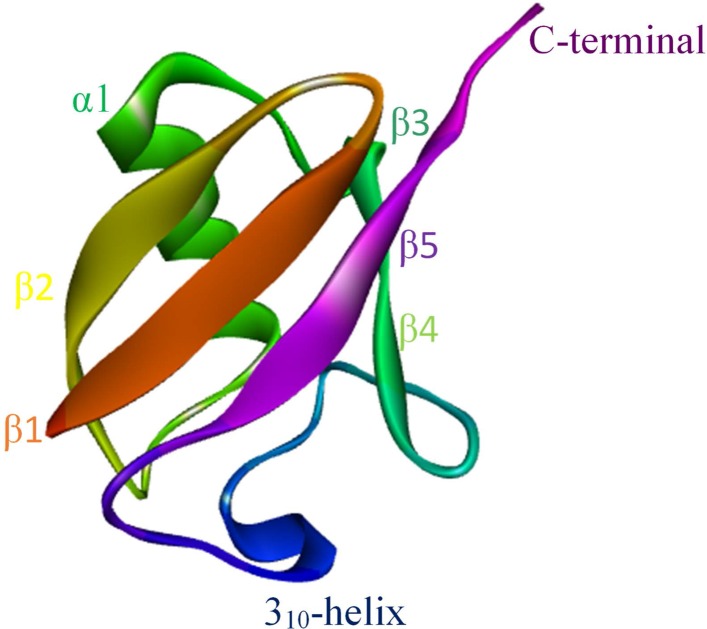
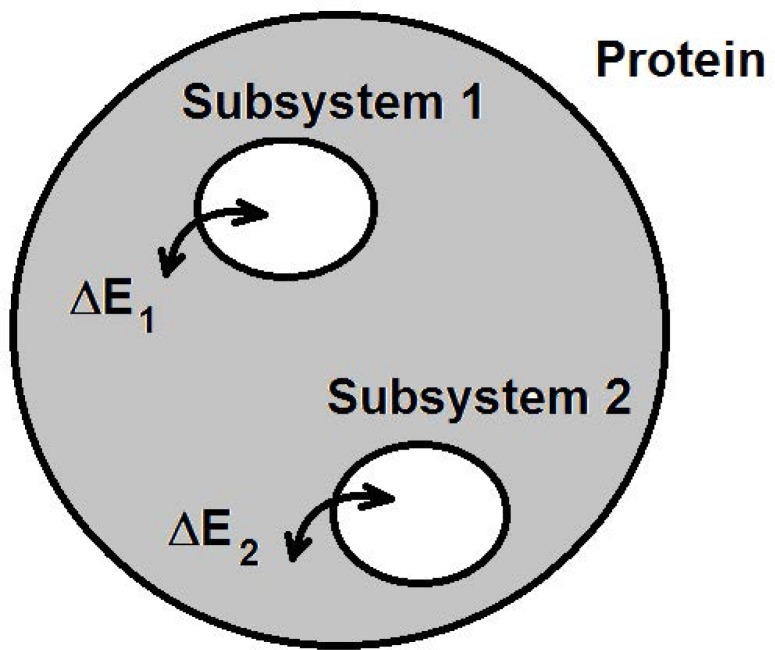
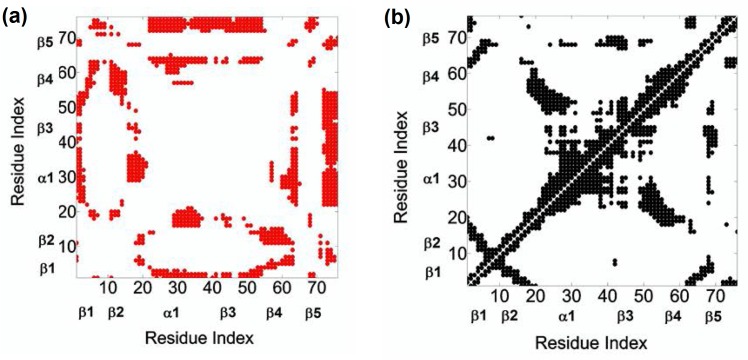
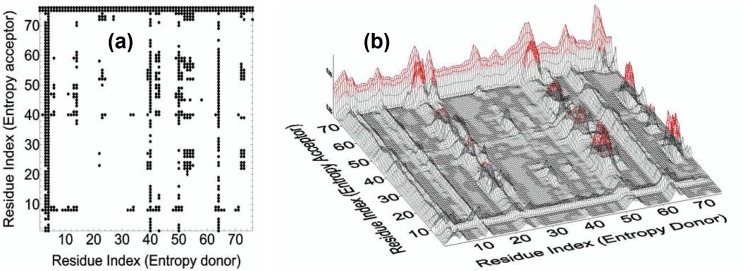
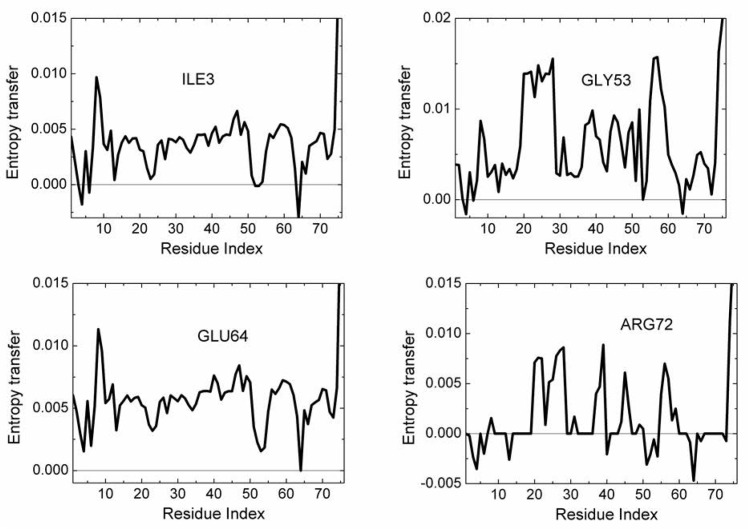
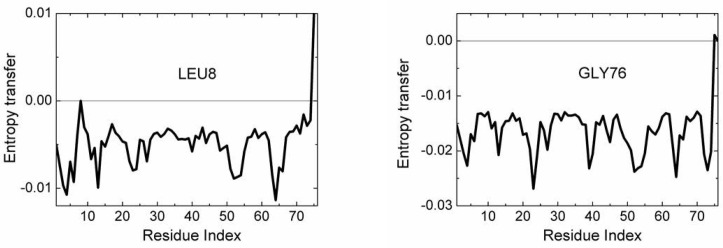
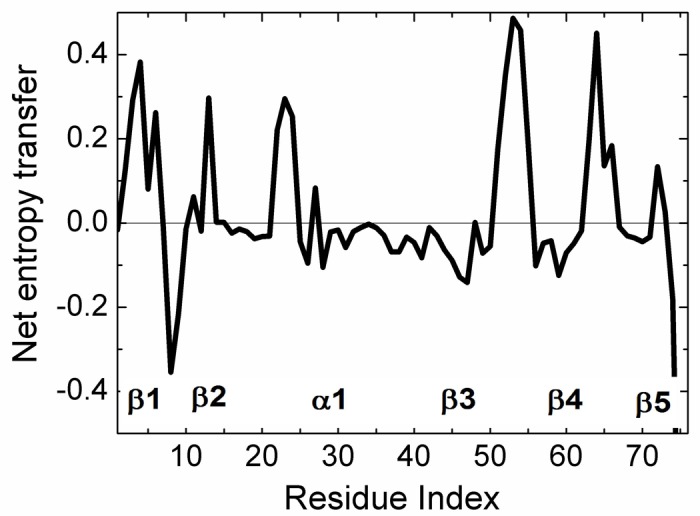
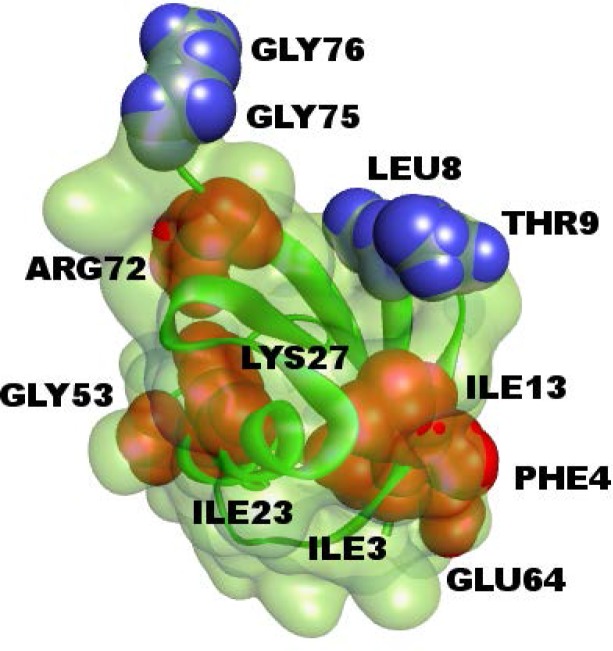
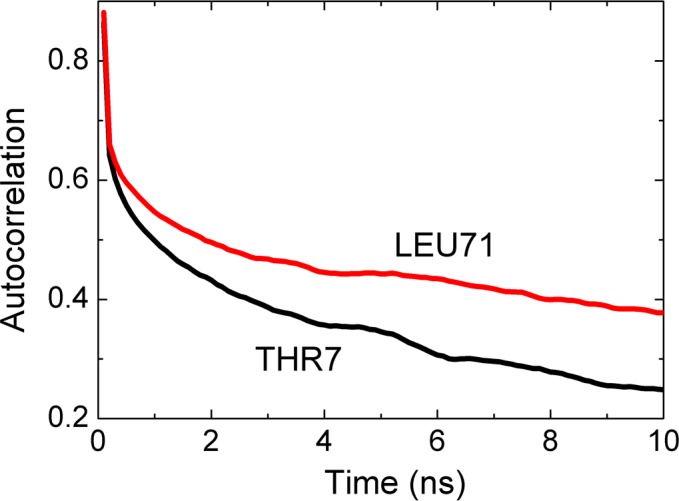
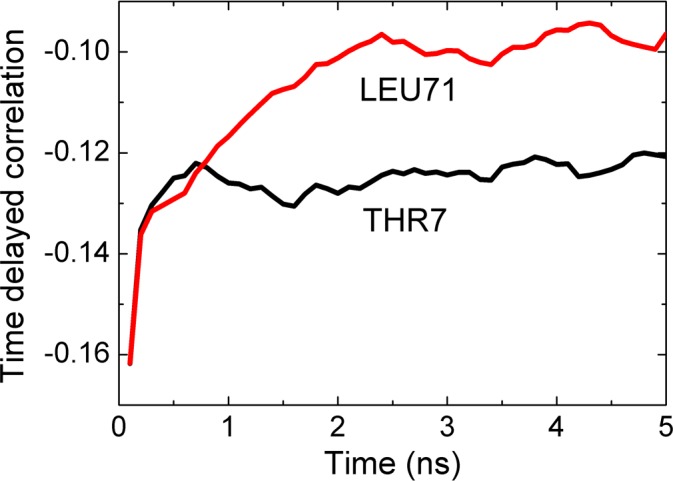
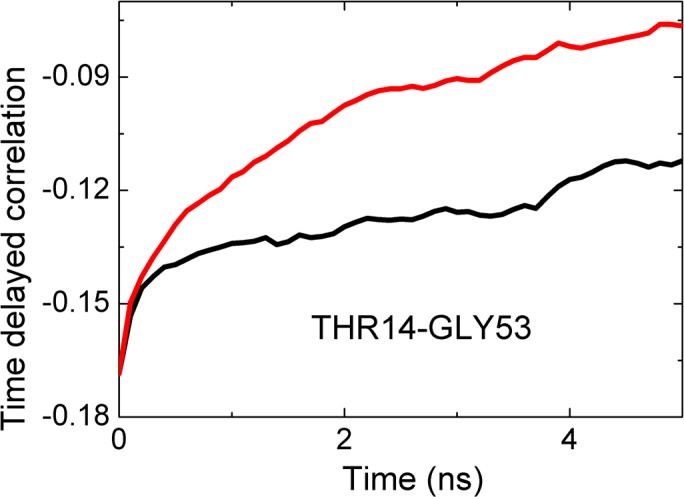
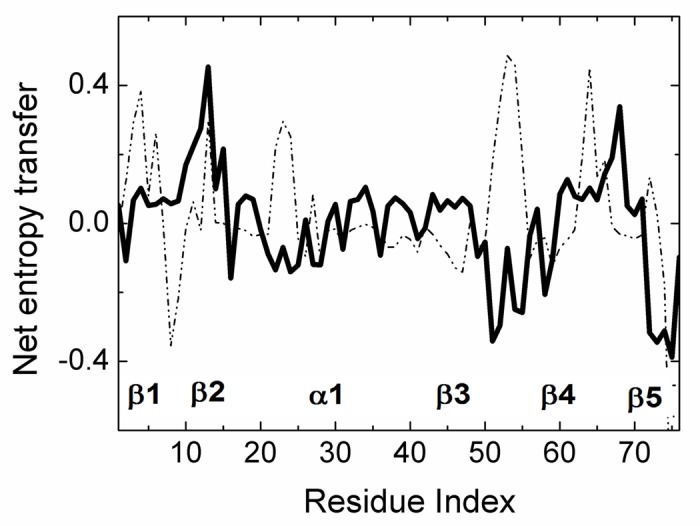
It has recently been proposed by Gunasakaran et al. that allostery may be an intrinsic property of all proteins. Here, we develop a computational method that can determine and quantify allosteric activity in any given protein. Based on Schreiber's transfer entropy formulation, our approach leads to an information transfer landscape for the protein that shows the presence of entropy sinks and sources and explains how pairs of residues communicate with each other using entropy transfer. The model can identify the residues that drive the fluctuations of others. We apply the model to Ubiquitin, whose allosteric activity has not been emphasized until recently, and show that there are indeed systematic pathways of entropy and information transfer between residues that correlate well with the activities of the protein. We use 600 nanosecond molecular dynamics trajectories for Ubiquitin and its complex with human polymerase iota and evaluate entropy transfer between all pairs of residues of Ubiquitin and quantify the binding susceptibility changes upon complex formation. We explain the complex formation propensities of Ubiquitin in terms of entropy transfer. Important residues taking part in allosteric communication in Ubiquitin predicted by our approach are in agreement with results of NMR relaxation dispersion experiments. Finally, we show that time delayed correlation of fluctuations of two interacting residues possesses an intrinsic causality that tells which residue controls the interaction and which one is controlled. Our work shows that time delayed correlations, entropy transfer and causality are the required new concepts for explaining allosteric communication in proteins.
古纳萨卡兰等人最近提出,变构可能是所有蛋白质的一种内在属性。在此,我们开发了一种计算方法,该方法可以确定并量化任何给定蛋白质中的变构活性。基于施赖伯的转移熵公式,我们的方法得出了蛋白质的信息传递图谱,该图谱显示了熵阱和熵源的存在,并解释了残基对如何利用熵转移相互通信。该模型可以识别驱动其他残基波动的残基。我们将该模型应用于泛素,其变构活性直到最近才受到重视,并表明在残基之间确实存在与蛋白质活性密切相关的系统熵和信息传递途径。我们使用泛素及其与人聚合酶ι复合物的600纳秒分子动力学轨迹,评估泛素所有残基对之间的熵转移,并量化复合物形成时结合敏感性的变化。我们用熵转移来解释泛素的复合物形成倾向。我们的方法预测的参与泛素变构通信的重要残基与核磁共振弛豫分散实验结果一致。最后,我们表明两个相互作用残基波动的时间延迟相关性具有内在因果关系,它能表明哪个残基控制相互作用,哪个残基被控制。我们的工作表明,时间延迟相关性、熵转移和因果关系是解释蛋白质变构通信所需的新概念。