Doddabelavangala Mruthyunjaya Mahesh, Chapla Aaron, Hesarghatta Shyamasunder Asha, Varghese Deny, Varshney Manika, Paul Johan, Inbakumari Mercy, Christina Flory, Varghese Ron Thomas, Kuruvilla Kurien Anil, V Paul Thomas, Jose Ruby, Regi Annie, Lionel Jessie, Jeyaseelan L, Mathew Jiji, Thomas Nihal
Department of Endocrinology, Diabetes & Metabolism, Christian Medical College, Vellore, India.
Department of Neonatology, Christian Medical College, Vellore, India.
PLoS One. 2017 Jan 17;12(1):e0168656. doi: 10.1371/journal.pone.0168656. eCollection 2017.
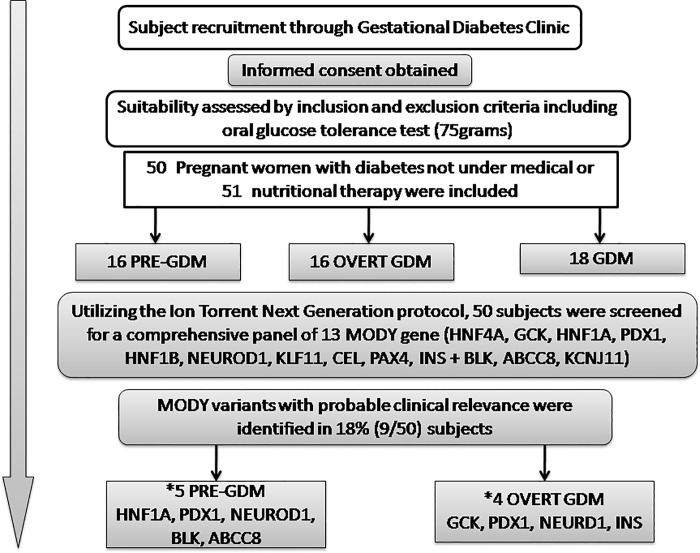
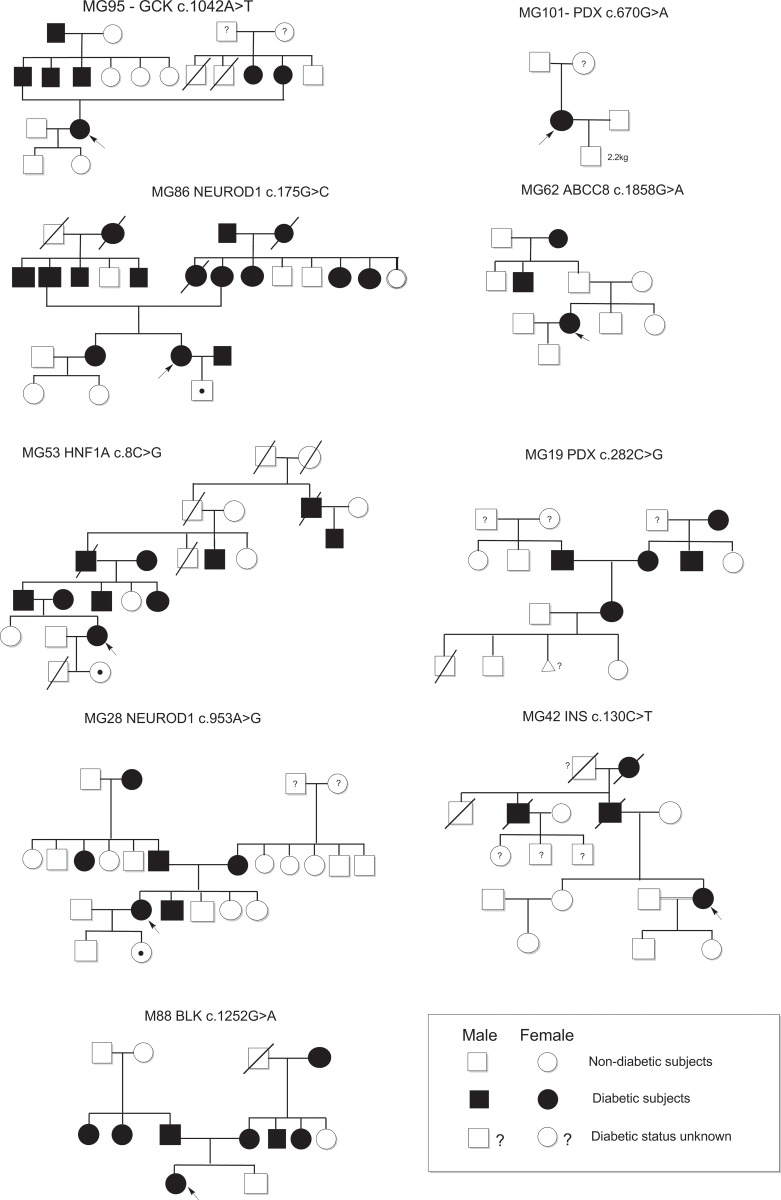
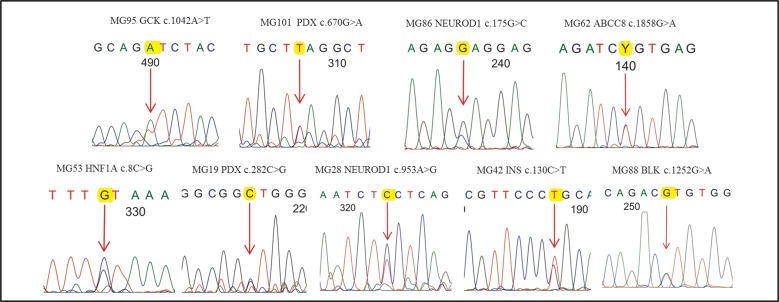
Pregnant women with diabetes may have underlying beta cell dysfunction due to mutations/rare variants in genes associated with Maturity Onset Diabetes of the Young (MODY). MODY gene screening would reveal those women genetically predisposed and previously unrecognized with a monogenic form of diabetes for further clinical management, family screening and genetic counselling. However, there are minimal data available on MODY gene variants in pregnant women with diabetes from India. In this study, utilizing the Next generation sequencing (NGS) based protocol fifty subjects were screened for variants in a panel of thirteen MODY genes. Of these subjects 18% (9/50) were positive for definite or likely pathogenic or uncertain MODY variants. The majority of these variants was identified in subjects with autosomal dominant family history, of whom five were in women with pre-GDM and four with overt-GDM. The identified variants included one patient with HNF1A Ser3Cys, two PDX1 Glu224Lys, His94Gln, two NEUROD1 Glu59Gln, Phe318Ser, one INS Gly44Arg, one GCK, one ABCC8 Arg620Cys and one BLK Val418Met variants. In addition, three of the seven offspring screened were positive for the identified variant. These identified variants were further confirmed by Sanger sequencing. In conclusion, these findings in pregnant women with diabetes, imply that a proportion of GDM patients with autosomal dominant family history may have MODY. Further NGS based comprehensive studies with larger samples are required to confirm these finding.
患有糖尿病的孕妇可能由于与青年发病型糖尿病(MODY)相关基因的突变/罕见变异而存在潜在的β细胞功能障碍。MODY基因筛查将揭示那些具有单基因糖尿病遗传易感性且先前未被识别的女性,以便进行进一步的临床管理、家庭筛查和遗传咨询。然而,关于印度患有糖尿病的孕妇中MODY基因变异的数据极少。在本研究中,利用基于下一代测序(NGS)的方案,对50名受试者进行了一组13个MODY基因变异的筛查。在这些受试者中,18%(9/50)的人存在明确或可能致病或不确定的MODY变异。这些变异大多数在具有常染色体显性家族史的受试者中被发现,其中5例在妊娠糖尿病前期(pre-GDM)的女性中,4例在显性妊娠糖尿病(overt-GDM)的女性中。所鉴定的变异包括1例携带HNF1A Ser3Cys变异的患者、2例携带PDX1 Glu224Lys和His94Gln变异的患者、2例携带NEUROD1 Glu59Gln和Phe318Ser变异的患者、1例携带INS Gly44Arg变异的患者、1例携带GCK变异的患者、1例携带ABCC8 Arg620Cys变异的患者以及1例携带BLK Val418Met变异的患者。此外,在筛查的7名后代中,有3名携带所鉴定的变异呈阳性。这些鉴定出的变异通过桑格测序进一步得到证实。总之,这些在患有糖尿病的孕妇中的发现表明,一部分具有常染色体显性家族史的妊娠糖尿病患者可能患有MODY。需要进一步进行基于NGS的更大样本的综合研究来证实这些发现。