Rognoni Carla, Tarricone Rosanna
Centre for Research on Health and Social Care Management (CERGAS), Bocconi University, Milan, Italy.
Department of Policy Analysis and Public Management, Bocconi University, Milan, Italy.
BMJ Open. 2017 Jan 17;7(1):e012360. doi: 10.1136/bmjopen-2016-012360.
This study presents a cost-effectiveness analysis comparing hydrophilic coated to uncoated catheters for patients performing urinary intermittent catheterisation. A national budget impact analysis is also included to evaluate the impact of intermittent catheterisation for management of bladder dysfunctions over a period of 5 years.
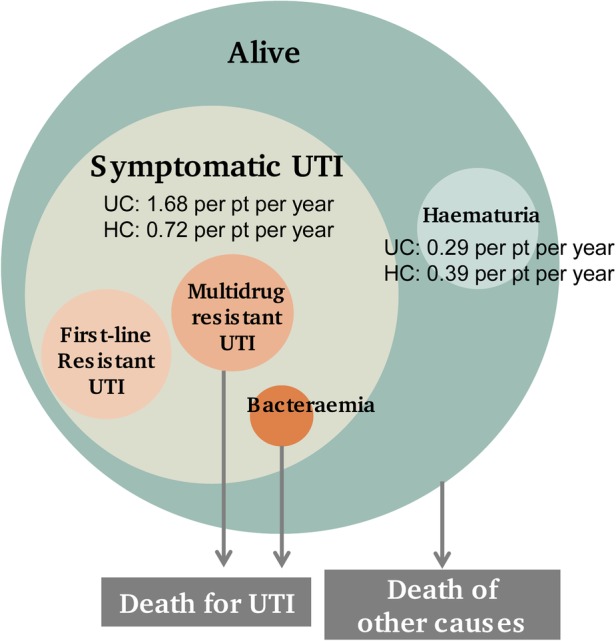
A Markov model (lifetime horizon, 1 year cycle length) was developed to project health outcomes (life years and quality-adjusted life years) and economic consequences related to patients using hydrophilic coated or uncoated catheters. The model was populated with catheter-related clinical efficacy data retrieved from randomised controlled trials and quality-of-life data (utility weights) from the literature. Cost data (EUR, 2015) were estimated on the basis of healthcare resource consumption derived from an e-survey addressed to key opinion leaders in the field.
Italian Healthcare Service perspective.
Patients with spinal cord injury performing intermittent urinary catheterisation in the home setting.
Incremental cost-effectiveness and cost-utility ratios (ICER and ICUR) of hydrophilic coated versus uncoated catheters and associated healthcare budget impact.
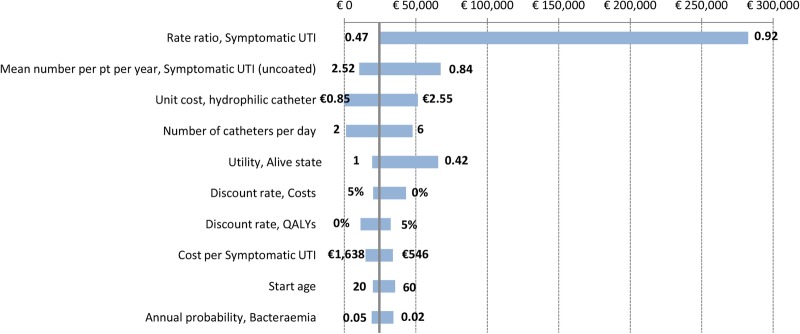
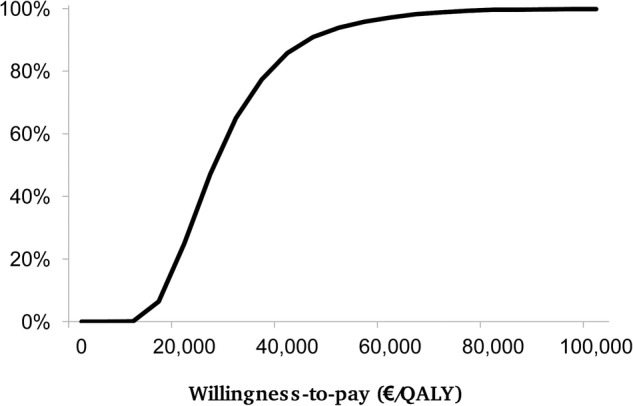
The base-case ICER and ICUR associated with hydrophilic coated catheters were €20 761 and €24 405, respectively. This implies that hydrophilic coated catheters are likely to be cost-effective in comparison to uncoated ones, as proposed Italian threshold values range between €25 000 and €66 400. Considering a market share at year 5 of 89% hydrophilic catheters and 11% uncoated catheters, the additional cost for Italy is approximately €12 million in the next 5 years (current market share scenario for year 0: 80% hydrophilic catheters and 20% uncoated catheters).
Considered over a lifetime, hydrophilic coated catheters are potentially a cost-effective choice in comparison to uncoated ones. These findings can assist policymakers in evaluating intermittent catheterisation in patients with spinal cord injury.
本研究进行了一项成本效益分析,比较亲水涂层导管与未涂层导管在进行间歇性导尿的患者中的应用。还纳入了一项国家预算影响分析,以评估间歇性导尿在5年期间对膀胱功能障碍管理的影响。
开发了一个马尔可夫模型(终身视角,1年周期长度),以预测使用亲水涂层或未涂层导管的患者的健康结果(生命年和质量调整生命年)以及经济后果。该模型填充了从随机对照试验中检索到的与导管相关的临床疗效数据以及文献中的生活质量数据(效用权重)。成本数据(2015年欧元)是根据针对该领域关键意见领袖的电子调查得出的医疗资源消耗估算的。
意大利医疗服务视角。
在家中进行间歇性导尿的脊髓损伤患者。
亲水涂层导管与未涂层导管的增量成本效益和成本效用比(ICER和ICUR)以及相关的医疗预算影响。
与亲水涂层导管相关的基础案例ICER和ICUR分别为20761欧元和24405欧元。这意味着与未涂层导管相比,亲水涂层导管可能具有成本效益,因为意大利提议的阈值范围在25000欧元至66400欧元之间。考虑到第5年亲水导管的市场份额为89%,未涂层导管为11%,未来5年意大利的额外成本约为1200万欧元(第0年当前市场份额情况:亲水导管80%,未涂层导管20%)。
从终身角度考虑,与未涂层导管相比,亲水涂层导管可能是一种具有成本效益的选择。这些发现可协助政策制定者评估脊髓损伤患者的间歇性导尿情况。