Chughtai Bilal, Rojanasarot Sirikan, Neeser Kurt, Gultyaev Dmitry, Amorosi Stacey L, Shore Neal D
Weill Cornell Medicine, New York, NY, USA.
Boston Scientific, Marlborough, MA, USA.
J Health Econ Outcomes Res. 2021 May 6;8(1):42-50. doi: 10.36469/jheor.2021.22256.
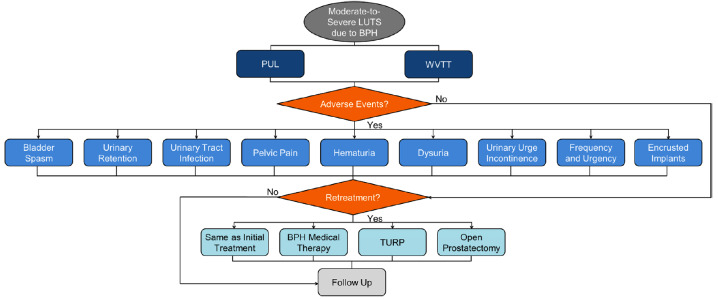
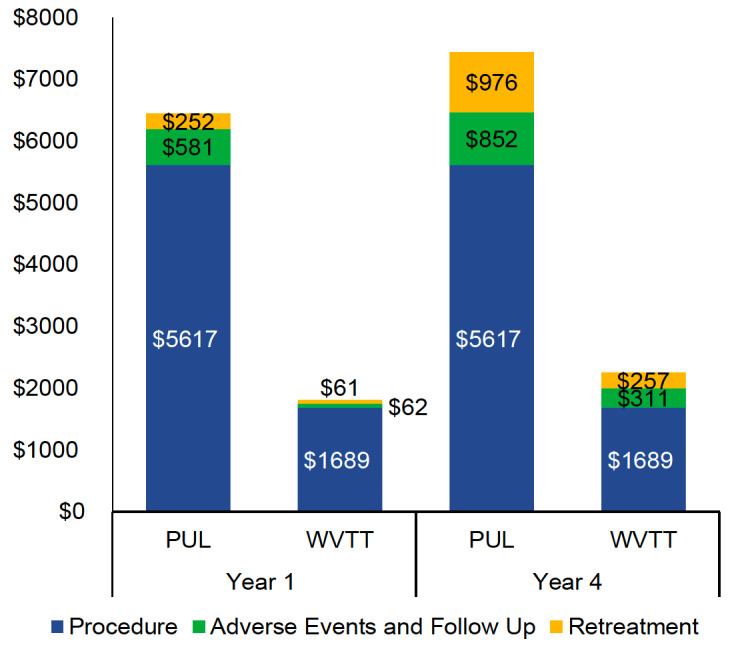
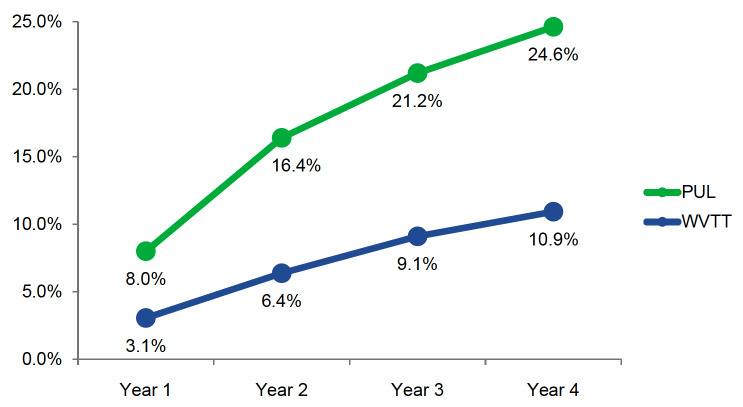
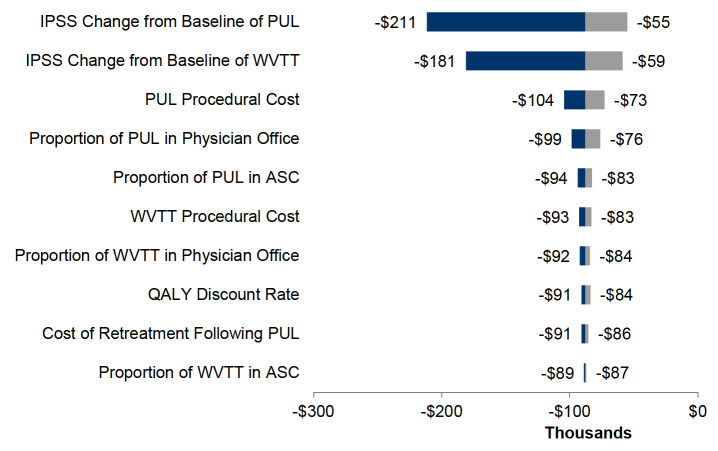
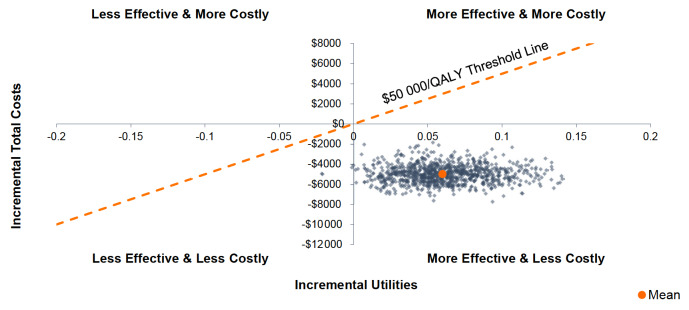
Benign prostatic hyperplasia (BPH) is one of the most prevalent and costly chronic conditions among middle-aged and elderly men. Prostatic urethral lift (PUL) and convective water vapor thermal therapy (WVTT) are emerging minimally invasive surgical treatments as an alternative to traditional treatment options for men with moderate-to-severe BPH. This study evaluated the cost-effectiveness and budget impact of PUL and WVTT for men with BPH using long-term clinical outcomes. The cost-effectiveness and budget impact models were developed from a US Medicare perspective over a 4-year time horizon. The models were populated with males with a mean age of 63 and an average International Prostate Symptom Score (IPSS) of 22. Clinical inputs were extracted from the LIFT and Rezum II randomized controlled trials at 4 years. Utility values were assigned using IPSS and BPH severity levels. Procedural, adverse event, retreatment, follow-up, and medication costs were based on 2019 Medicare payment rates and Medicare Part D drug spending. One-way and probabilistic sensitivity analyses (PSAs) were performed. At 4 years, PUL was associated with greater retreatment rates (24.6% vs 10.9%), lower quality-adjusted life-years (QALYs) (3.490 vs 3.548) and higher total costs (US$7393 vs US$2233) compared with WVTT, making WVTT the more effective and less costly treatment strategy. The 70% total cost difference of PUL and WVTT was predominantly driven by higher PUL procedural (US$5617 vs US$1689) and retreatment (US$976 vs US$257) costs. The PSA demonstrated that relative to PUL, WVTT yielded higher QALYs and lower costs 99% and 100% of the time, respectively. Compared to PUL, WVTT was a cost-effective and cost-saving treatment of moderate-to-severe BPH. These findings provide evidence for clinicians, payers, and health policy makers to help further define the role of minimally invasive surgical treatments for BPH.
良性前列腺增生(BPH)是中老年男性中最常见且成本高昂的慢性病之一。前列腺尿道悬吊术(PUL)和对流水蒸气热疗法(WVTT)作为中重度BPH男性传统治疗方案的替代方案,正成为新兴的微创手术治疗方法。本研究利用长期临床结果评估了PUL和WVTT治疗BPH男性的成本效益和预算影响。成本效益和预算影响模型是从美国医疗保险的角度在4年时间范围内建立的。模型中的男性平均年龄为63岁,平均国际前列腺症状评分(IPSS)为22分。临床数据来自LIFT和Rezum II随机对照试验4年时的数据。效用值根据IPSS和BPH严重程度分级确定。手术、不良事件、再次治疗、随访和药物成本基于2019年医疗保险支付率和医疗保险D部分的药品支出。进行了单因素和概率敏感性分析(PSA)。4年时,与WVTT相比,PUL的再次治疗率更高(24.6%对10.9%),质量调整生命年(QALY)更低(3.490对3.548),总成本更高(7393美元对2233美元),这使得WVTT成为更有效且成本更低的治疗策略。PUL和WVTT总成本70%的差异主要是由PUL更高的手术成本(5617美元对1689美元)和再次治疗成本(976美元对257美元)导致的。PSA表明,相对于PUL,WVTT分别在99%和100%的时间内产生更高的QALY和更低的成本。与PUL相比,WVTT是治疗中重度BPH的一种具有成本效益且节省成本的治疗方法。这些发现为临床医生、支付方和卫生政策制定者提供了证据,有助于进一步明确微创手术治疗BPH的作用。