Tunjungputri Rahajeng N, Mobegi Fredrick M, Cremers Amelieke J, van der Gaast-de Jongh Christa E, Ferwerda Gerben, Meis Jacques F, Roeleveld Nel, Bentley Stephen D, Pastura Alexander S, van Hijum Sacha A F T, van der Ven Andre J, de Mast Quirijn, Zomer Aldert, de Jonge Marien I
Department of Internal Medicine, Radboud Institute for Molecular Life Sciences, Radboud University Medical Center, Nijmegen, The Netherlands.
Center for Tropical and Infectious Diseases (CENTRID), Faculty of Medicine, Diponegoro University, and Dr. Kariadi Hospital, Semarang, Indonesia.
mBio. 2017 Jan 17;8(1):e01984-16. doi: 10.1128/mBio.01984-16.
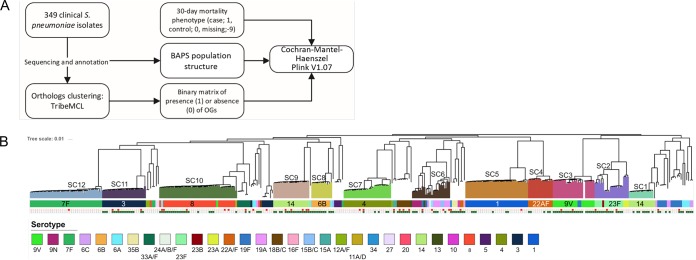
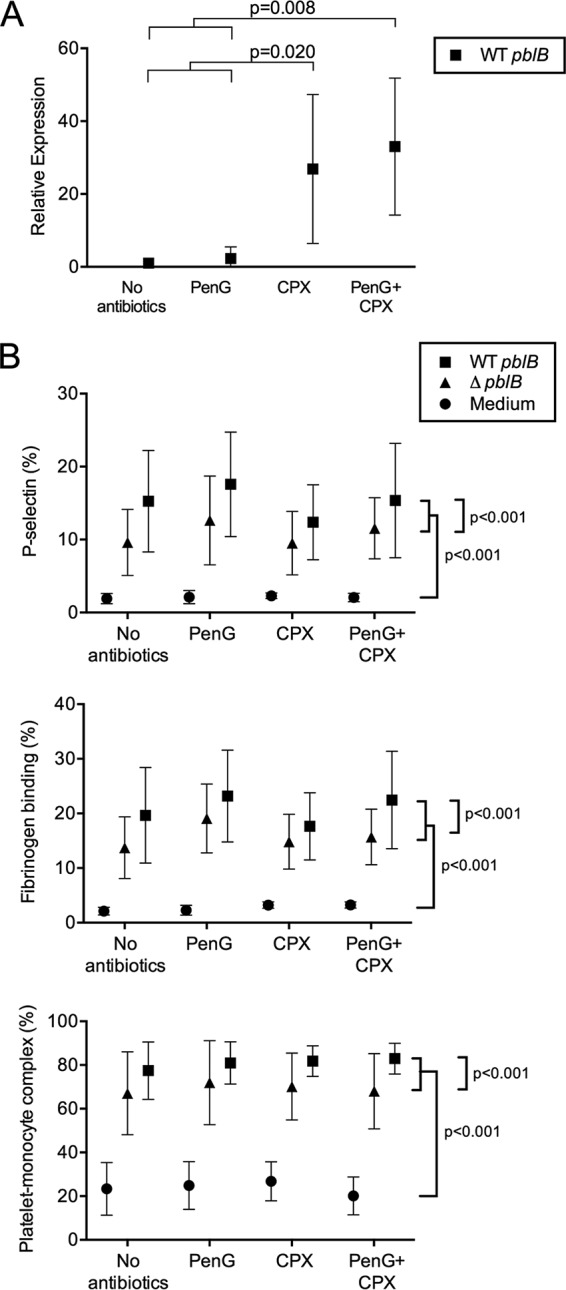
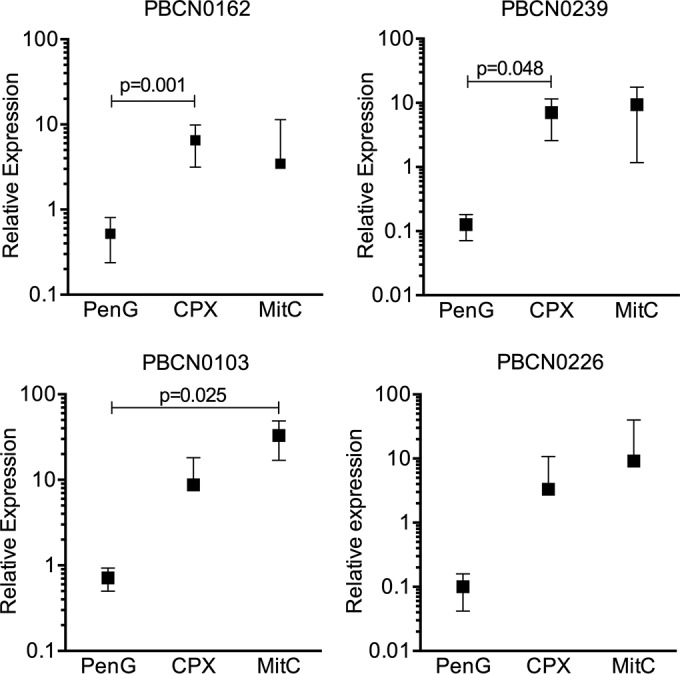
To improve our understanding about the severity of invasive pneumococcal disease (IPD), we investigated the association between the genotype of Streptococcus pneumoniae and disease outcomes for 349 bacteremic patients. A pneumococcal genome-wide association study (GWAS) demonstrated a strong correlation between 30-day mortality and the presence of the phage-derived gene pblB, encoding a platelet-binding protein whose effects on platelet activation were previously unknown. Platelets are increasingly recognized as key players of the innate immune system, and in sepsis, excessive platelet activation contributes to microvascular obstruction, tissue hypoperfusion, and finally multiorgan failure, leading to mortality. Our in vitro studies revealed that pblB expression was induced by fluoroquinolones but not by the beta-lactam antibiotic penicillin G. Subsequently, we determined pblB induction and platelet activation by incubating whole blood with the wild type or a pblB knockout mutant in the presence or absence of antibiotics commonly administered to our patient cohort. pblB-dependent enhancement of platelet activation, as measured by increased expression of the α-granule protein P-selectin, the binding of fibrinogen to the activated αIIbβ3 receptor, and the formation of platelet-monocyte complex occurred irrespective of antibiotic exposure. In conclusion, the presence of pblB on the pneumococcal chromosome potentially leads to increased mortality in patients with an invasive S. pneumoniae infection, which may be explained by enhanced platelet activation. This study highlights the clinical utility of a bacterial GWAS, followed by functional characterization, to identify bacterial factors involved in disease severity.
The exact mechanisms causing mortality in invasive pneumococcal disease (IPD) patients are not completely understood. We examined 349 patients with IPD and found in a bacterial genome-wide association study (GWAS) that the presence of the phage-derived gene pblB was associated with mortality in the first 30 days after hospitalization. Although pblB has been extensively studied in Streptococcus mitis, its consequence for the interaction between platelets and Streptococcus pneumoniae is largely unknown. Platelets are important in immunity and inflammation, and excessive platelet activation contributes to microvascular obstruction and multiorgan failure, leading to mortality. We therefore developed this study to assess whether the expression of pblB might increase the risk of death for IPD patients through its effect on enhanced platelet activation. This study also shows the value of integrating extensive bacterial genomics and clinical data in predicting and understanding pathogen virulence, which in turn will help to improve prognosis and therapy.
为了加深我们对侵袭性肺炎球菌病(IPD)严重程度的理解,我们调查了349例菌血症患者肺炎链球菌基因型与疾病转归之间的关联。一项肺炎球菌全基因组关联研究(GWAS)表明,30天死亡率与噬菌体衍生基因pblB的存在密切相关,该基因编码一种血小板结合蛋白,其对血小板激活的影响此前未知。血小板越来越被认为是先天性免疫系统的关键参与者,在脓毒症中,过度的血小板激活会导致微血管阻塞、组织灌注不足,最终导致多器官功能衰竭,进而导致死亡。我们的体外研究表明,氟喹诺酮类药物可诱导pblB表达,但β-内酰胺类抗生素青霉素G则不能。随后,我们通过在有或没有通常用于我们患者队列的抗生素存在的情况下,将全血与野生型或pblB基因敲除突变体孵育,来确定pblB诱导和血小板激活情况。无论是否接触抗生素,通过α颗粒蛋白P-选择素表达增加、纤维蛋白原与活化的αIIbβ3受体结合以及血小板-单核细胞复合物形成来衡量,pblB均可增强血小板激活。总之,肺炎球菌染色体上pblB的存在可能导致侵袭性肺炎链球菌感染患者死亡率增加,这可能是由于血小板激活增强所致。本研究强调了细菌GWAS随后进行功能表征以识别参与疾病严重程度的细菌因素的临床实用性。
侵袭性肺炎球菌病(IPD)患者死亡的确切机制尚未完全明了。我们检查了349例IPD患者,并在一项细菌全基因组关联研究(GWAS)中发现,噬菌体衍生基因pblB的存在与住院后前30天的死亡率相关。尽管pblB已在缓症链球菌中得到广泛研究,但其对血小板与肺炎链球菌之间相互作用的影响在很大程度上尚不清楚。血小板在免疫和炎症中很重要,过度的血小板激活会导致微血管阻塞和多器官功能衰竭,进而导致死亡。因此,我们开展了本研究,以评估pblB的表达是否可能通过增强血小板激活而增加IPD患者的死亡风险。本研究还显示了整合广泛的细菌基因组学和临床数据在预测和理解病原体毒力方面的价值,这反过来将有助于改善预后和治疗。