Department of Microbiology and Immunology, University of Mississippi Medical Center, Jackson, Mississippi, USA.
School of Animal and Comparative Sciences, Bio5 Institute, University of Arizona, Tucson, Arizona, USA.
mBio. 2018 Jan 16;9(1):e02097-17. doi: 10.1128/mBio.02097-17.
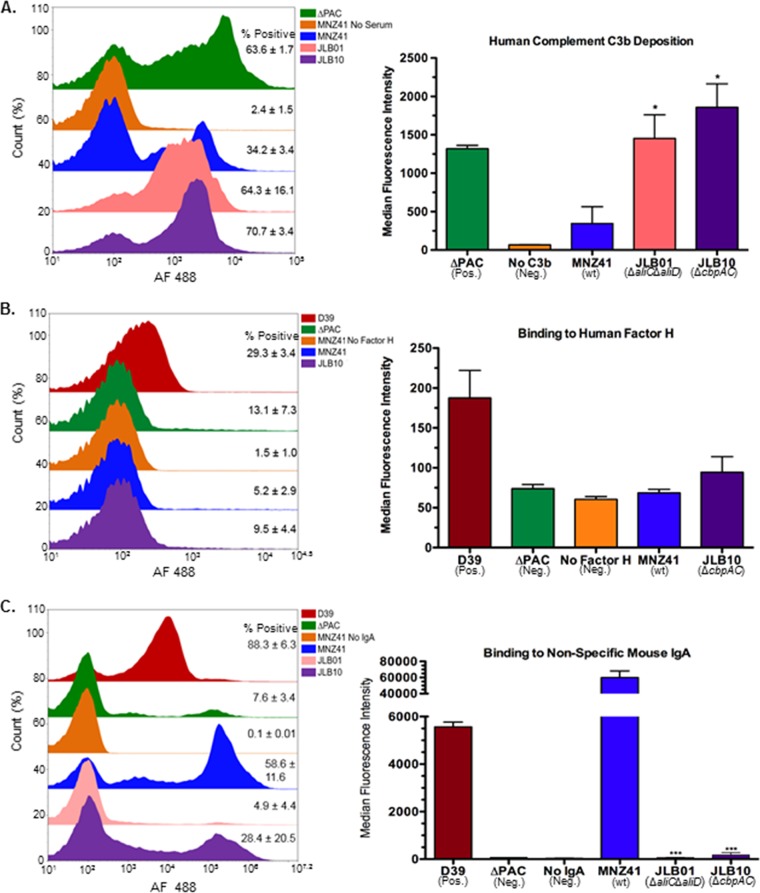
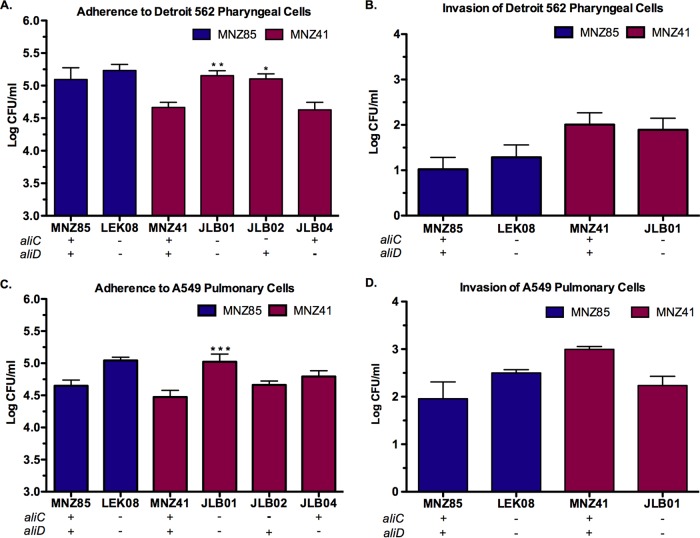
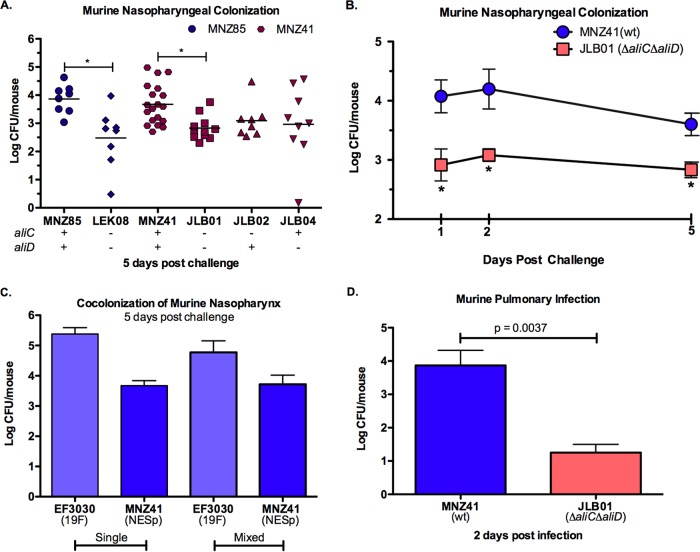
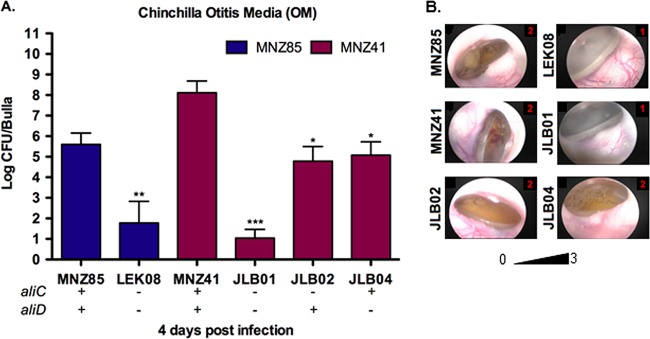
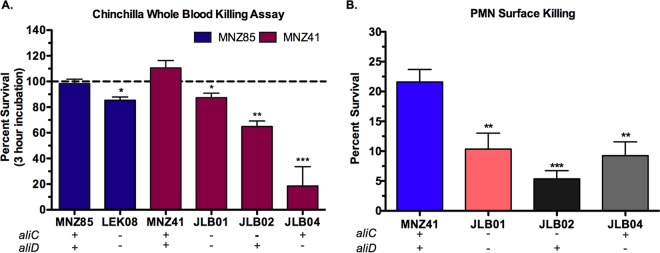
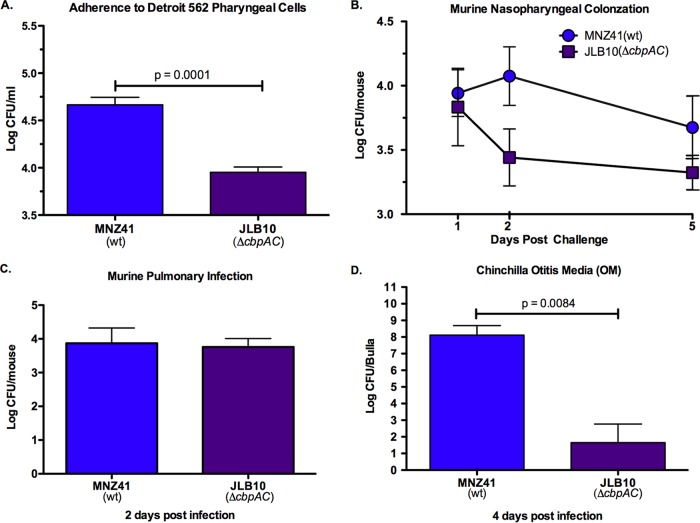
Nonencapsulated (NESp) is an emerging human pathogen that colonizes the nasopharynx and is associated with noninvasive diseases such as otitis media (OM), conjunctivitis, and nonbacteremic pneumonia. Since capsule expression was previously thought to be necessary for establishment of invasive pneumococcal disease (IPD), serotype-specific polysaccharide capsules are targeted by currently licensed pneumococcal vaccines. Yet, NESp expressing oligopeptide binding proteins AliC and AliD have been isolated during IPD. Thus, we hypothesize AliC and AliD are major NESp virulence determinants that facilitate persistence and development of IPD. Our study reveals that NESp expressing AliC and AliD have intensified virulence compared to isogenic mutants. Specifically, we demonstrate AliC and AliD enhance murine nasopharyngeal colonization and pulmonary infection and are required for OM in a chinchilla model. Furthermore, AliC and AliD increase pneumococcal survival in chinchilla whole blood and aid in resistance to killing by human leukocytes. Comparative proteome analysis revealed significant alterations in protein levels when AliC and AliD were absent. Virulence-associated proteins, including a pneumococcal surface protein C variant (CbpAC), were significantly downregulated, while starvation response indicators were upregulated in the double mutant relative to wild-type levels. We also reveal that differentially expressed CbpAC was essential for NESp adherence to epithelial cells, virulence during OM, reduction of C3b deposition on the NESp surface, and binding to nonspecific IgA. Altogether, the rise in NESp prevalence urges the need to understand how NESp establishes disease and persists in a host. This study highlights the roles of AliC, AliD, and CbpAC in the pathogenesis of NESp. Despite the effective, widespread use of licensed pneumococcal vaccines over many decades, pneumococcal infections remain a worldwide burden resulting in high morbidity and mortality. NESp subpopulations are rapidly rising in the wake of capsule-targeted vaccine strategies, yet there is very little knowledge on NESp pathogenic potential and virulence mechanisms. Although NESp lacks a protective capsule, NESp lineages expressing AliC and AliD have been associated with systemic infections. Furthermore, higher antibiotic resistance rates and transformation efficiencies associated with emerging NESp threaten treatment strategies needed to control pneumococcal infections and transmission. Elucidating how NESp survives within a host and establishes disease is necessary for development of broadened pneumococcal prevention methods. Our study identifies virulence determinants and host survival mechanisms employed by NESp with a high pathogenic potential. Moreover, our study also identifies virulence determinants shared by NESp and encapsulated strains that may serve as broad prevention and therapeutic targets.
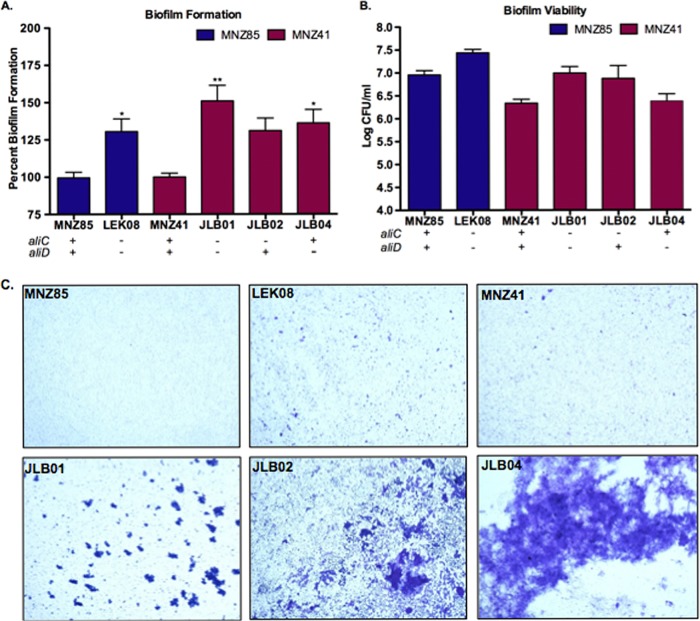
无被膜 (NESp) 是一种新兴的人类病原体,定植于鼻咽部,与非侵袭性疾病如中耳炎 (OM)、结膜炎和非菌血症性肺炎有关。由于以前认为荚膜表达对于建立侵袭性肺炎球菌病 (IPD) 是必要的,因此目前已获得许可的肺炎球菌疫苗针对的是血清型特异性多糖荚膜。然而,在 IPD 期间已经分离出表达寡肽结合蛋白 AliC 和 AliD 的 NESp。因此,我们假设 AliC 和 AliD 是 NESp 的主要毒力决定因素,有助于 IPD 的持续存在和发展。我们的研究表明,与异源突变体相比,表达 AliC 和 AliD 的 NESp 的毒力增强。具体而言,我们证明 AliC 和 AliD 增强了小鼠鼻咽部定植和肺部感染,并在豚鼠模型中引起 OM。此外,AliC 和 AliD 增加了肺炎球菌在豚鼠全血中的存活能力,并有助于抵抗人白细胞的杀伤。比较蛋白质组分析显示,当 AliC 和 AliD 缺失时,蛋白质水平发生显著变化。与毒力相关的蛋白质,包括肺炎球菌表面蛋白 C 变体(CbpAC),下调显著,而在双突变体中,饥饿反应指标相对于野生型水平上调。我们还揭示了差异表达的 CbpAC 对于 NESp 附着上皮细胞、OM 期间的毒力、减少 NESp 表面 C3b 沉积以及与非特异性 IgA 的结合至关重要。总之,NESp 患病率的上升促使我们需要了解 NESp 如何建立疾病并在宿主中持续存在。本研究强调了 AliC、AliD 和 CbpAC 在 NESp 发病机制中的作用。尽管数十年来广泛使用了有效的、广泛使用的许可肺炎球菌疫苗,但肺炎球菌感染仍然是全世界的负担,导致发病率和死亡率高。在针对荚膜的疫苗策略之后,NESp 亚群迅速增加,但对于 NESp 的致病潜力和毒力机制知之甚少。尽管 NESp 缺乏保护性荚膜,但已发现表达 AliC 和 AliD 的 NESp 谱系与全身感染有关。此外,与新兴 NESp 相关的更高抗生素耐药率和转化效率威胁着控制肺炎球菌感染和传播所需的治疗策略。阐明 NESp 如何在宿主内生存并建立疾病是开发广泛的肺炎球菌预防方法的必要条件。我们的研究确定了具有高致病性的 NESp 所采用的毒力决定因素和宿主生存机制。此外,我们的研究还确定了 NESp 和有荚膜菌株共有的毒力决定因素,这些因素可能成为广泛的预防和治疗靶点。