GuhaSarkar Dwijit, Neiswender James, Su Qin, Gao Guangping, Sena-Esteves Miguel
Horae Gene Therapy Center, University of Massachusetts Medical School, Worcester, MA, USA.
Department of Neurology, University of Massachusetts Medical School, Worcester, MA, USA.
Mol Oncol. 2017 Feb;11(2):180-193. doi: 10.1002/1878-0261.12020. Epub 2017 Jan 18.
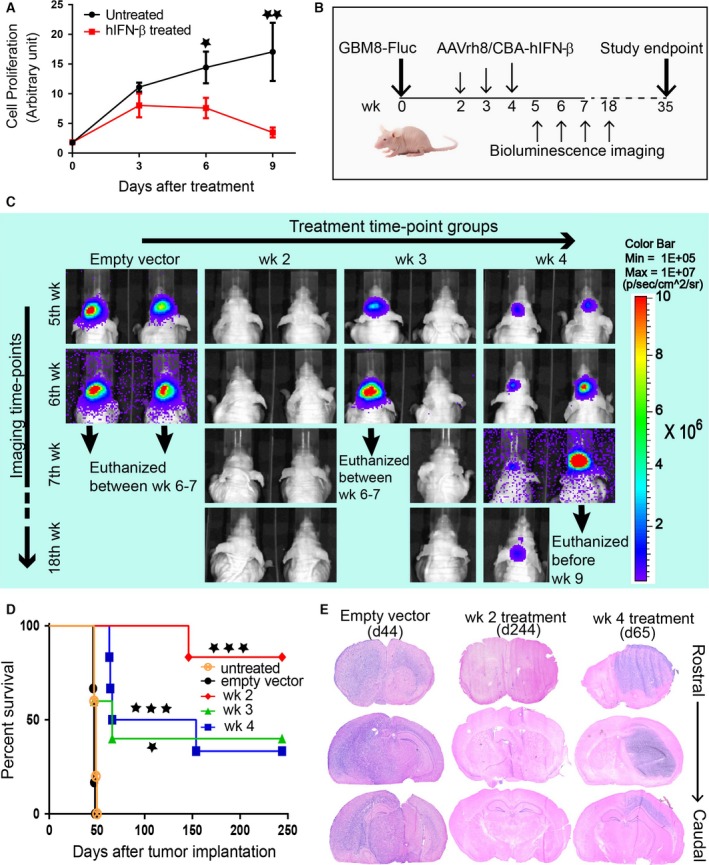
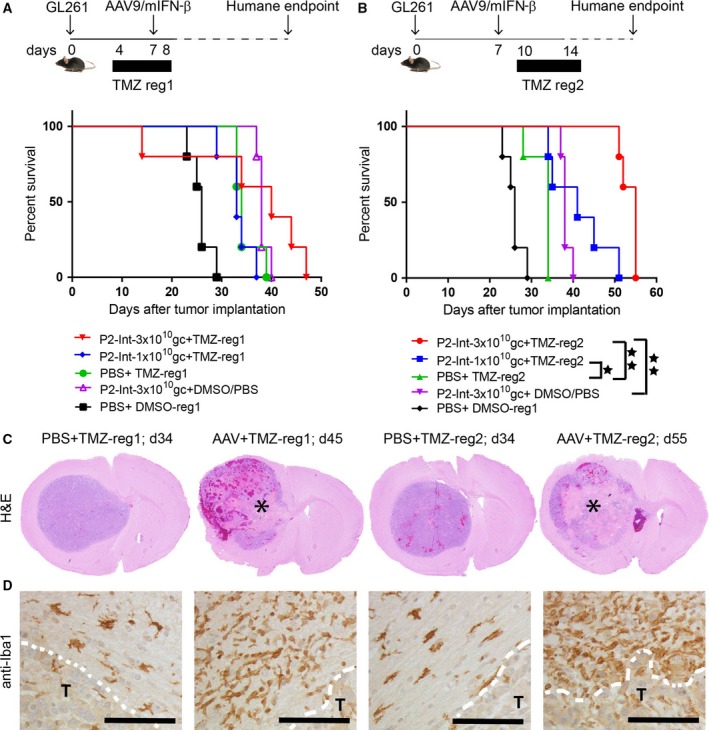
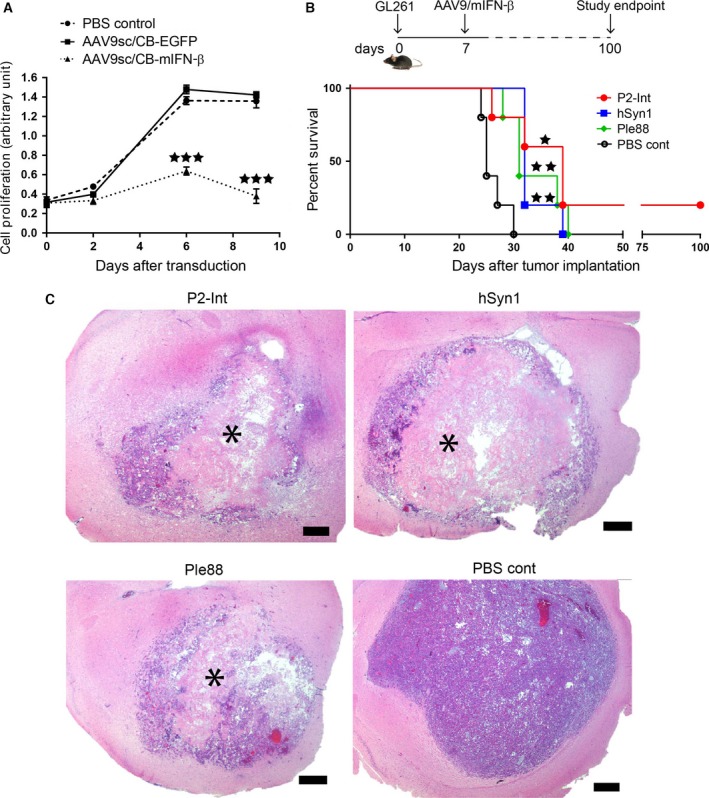
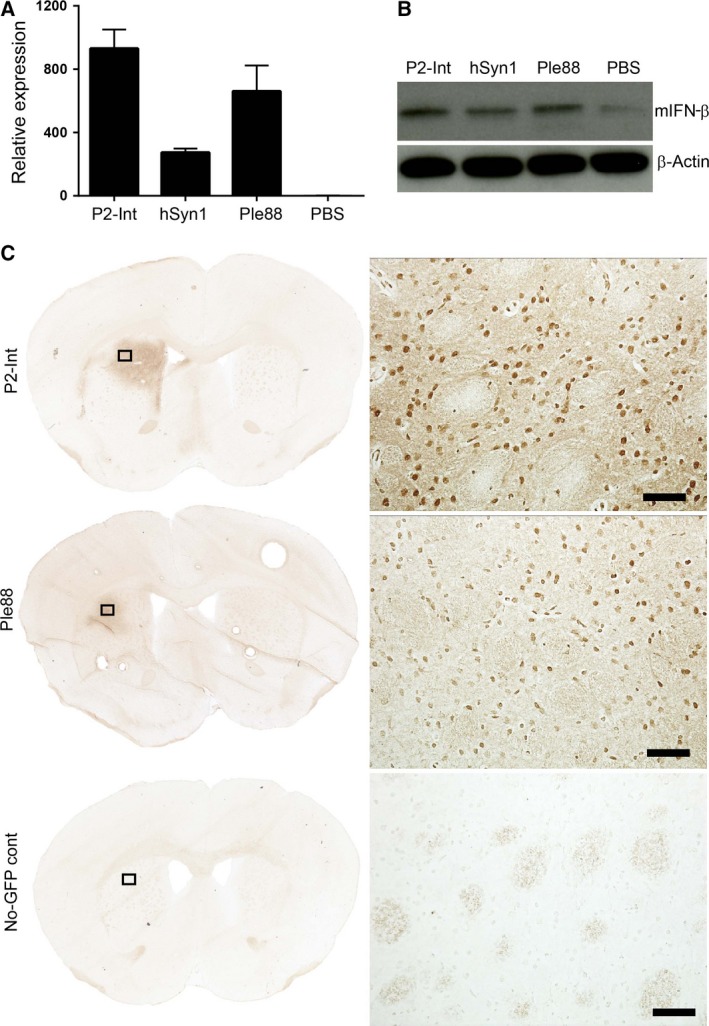
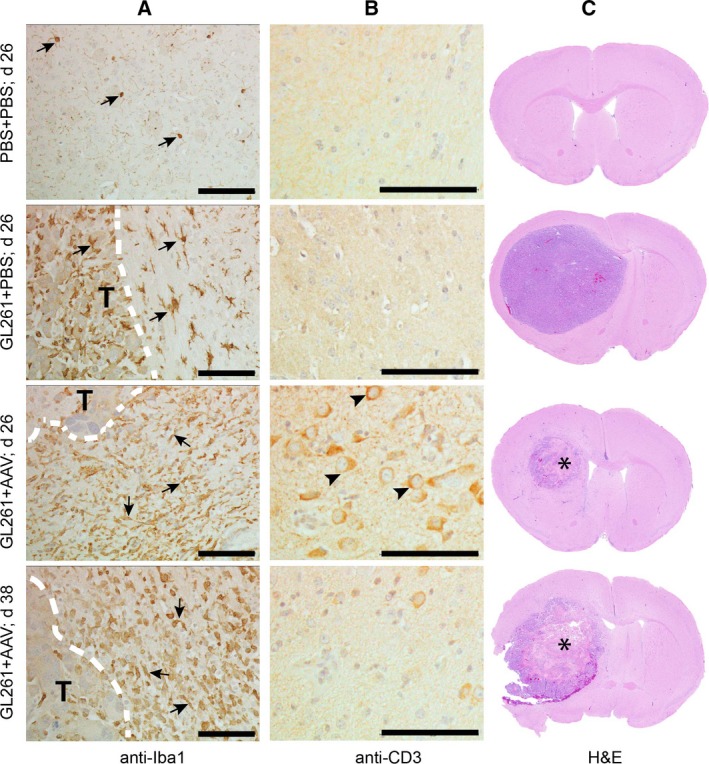
The highly invasive property of glioblastoma (GBM) cells and genetic heterogeneity are largely responsible for tumor recurrence after the current standard-of-care treatment and thus a direct cause of death. Previously, we have shown that intracranial interferon-beta (IFN-β) gene therapy by locally administered adeno-associated viral vectors (AAV) successfully treats noninvasive orthotopic glioblastoma models. Here, we extend these findings by testing this approach in invasive human GBM xenograft and syngeneic mouse models. First, we show that a single intracranial injection of AAV encoding human IFN-β eliminates invasive human GBM8 tumors and promotes long-term survival. Next, we screened five AAV-IFN-β vectors with different promoters to drive safe expression of mouse IFN-β in the brain in the context of syngeneic GL261 tumors. Two AAV-IFN-β vectors were excluded due to safety concerns, but therapeutic studies with the other three vectors showed extensive tumor cell death, activation of microglia surrounding the tumors, and a 56% increase in median survival of the animals treated with AAV/P2-Int-mIFN-β vector. We also assessed the therapeutic effect of combining AAV-IFN-β therapy with temozolomide (TMZ). As TMZ affects DNA replication, an event that is crucial for second-strand DNA synthesis of single-stranded AAV vectors before active transcription, we tested two TMZ treatment regimens. Treatment with TMZ prior to AAV-IFN-β abrogated any benefit from the latter, while the reverse order of treatment doubled the median survival compared to controls. These studies demonstrate the therapeutic potential of intracranial AAV-IFN-β therapy in a highly migratory GBM model as well as in a syngeneic mouse model and that combination with TMZ is likely to enhance its antitumor potency.
胶质母细胞瘤(GBM)细胞的高侵袭性和基因异质性在很大程度上是当前标准治疗后肿瘤复发的原因,因此也是直接的死亡原因。此前,我们已经表明,通过局部施用腺相关病毒载体(AAV)进行颅内干扰素-β(IFN-β)基因治疗可成功治疗非侵袭性原位胶质母细胞瘤模型。在此,我们通过在侵袭性人类GBM异种移植和同基因小鼠模型中测试该方法来扩展这些发现。首先,我们表明单次颅内注射编码人IFN-β的AAV可消除侵袭性人类GBM8肿瘤并促进长期存活。接下来,我们筛选了五种带有不同启动子的AAV-IFN-β载体,以在同基因GL261肿瘤的背景下驱动小鼠IFN-β在脑中的安全表达。由于安全问题,排除了两种AAV-IFN-β载体,但对其他三种载体的治疗研究显示肿瘤细胞广泛死亡、肿瘤周围小胶质细胞活化,并且用AAV/P2-Int-mIFN-β载体治疗的动物中位生存期增加了56%。我们还评估了将AAV-IFN-β治疗与替莫唑胺(TMZ)联合使用的治疗效果。由于TMZ影响DNA复制,这是单链AAV载体在活跃转录之前进行第二链DNA合成的关键事件,我们测试了两种TMZ治疗方案。在AAV-IFN-β之前用TMZ治疗消除了后者的任何益处,而相反的治疗顺序使中位生存期比对照增加了一倍。这些研究证明了颅内AAV-IFN-β治疗在高度迁移性GBM模型以及同基因小鼠模型中的治疗潜力,并且与TMZ联合使用可能会增强其抗肿瘤效力。