Li Wen-Yan, Chen Bing-Xian, Chen Zhong-Jian, Gao Yin-Tao, Chen Zhuang, Liu Jun
Argo-Biological Gene Research Center, Guangdong Academy of Agricultural Sciences, Guangzhou 510640, China.
Int J Mol Sci. 2017 Jan 13;18(1):110. doi: 10.3390/ijms18010110.
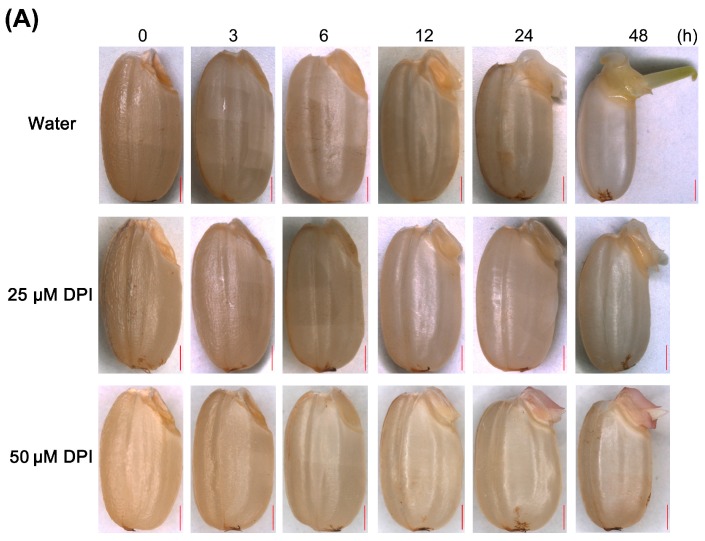
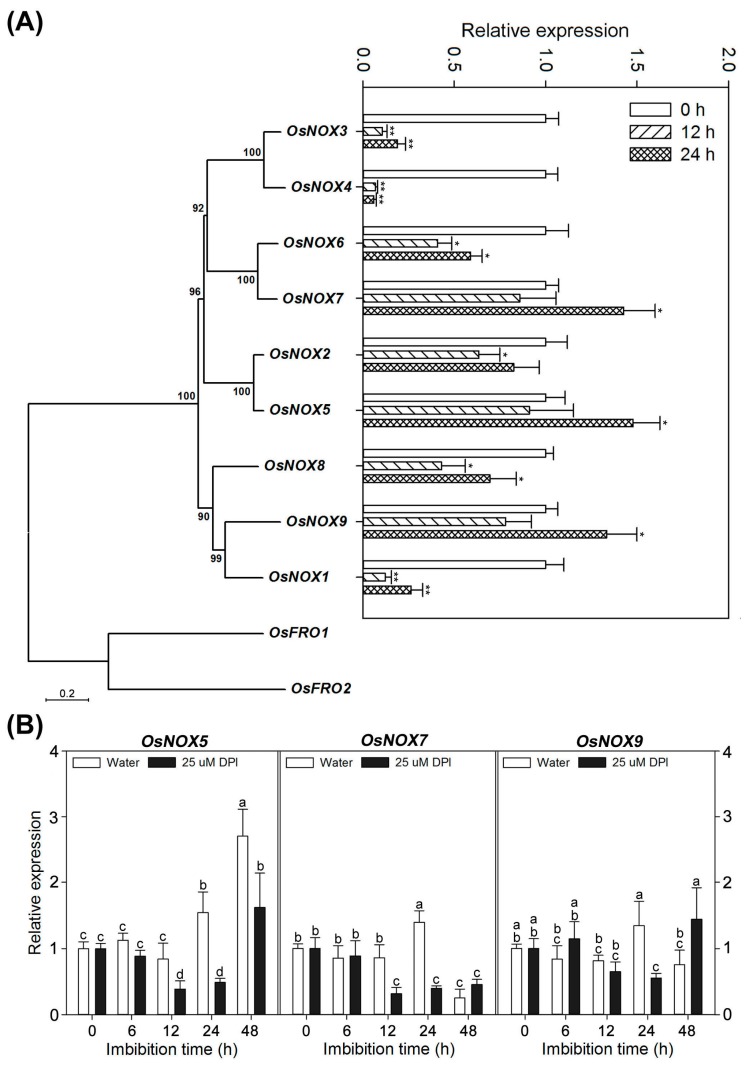
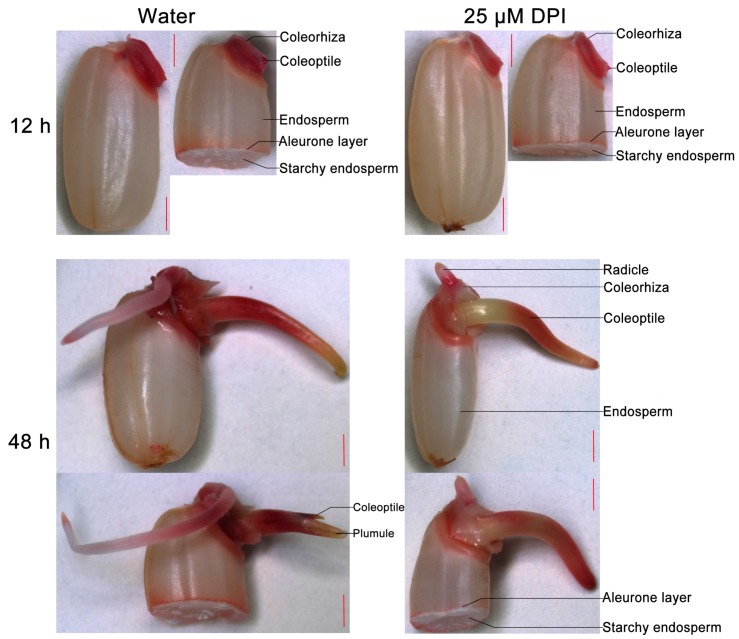
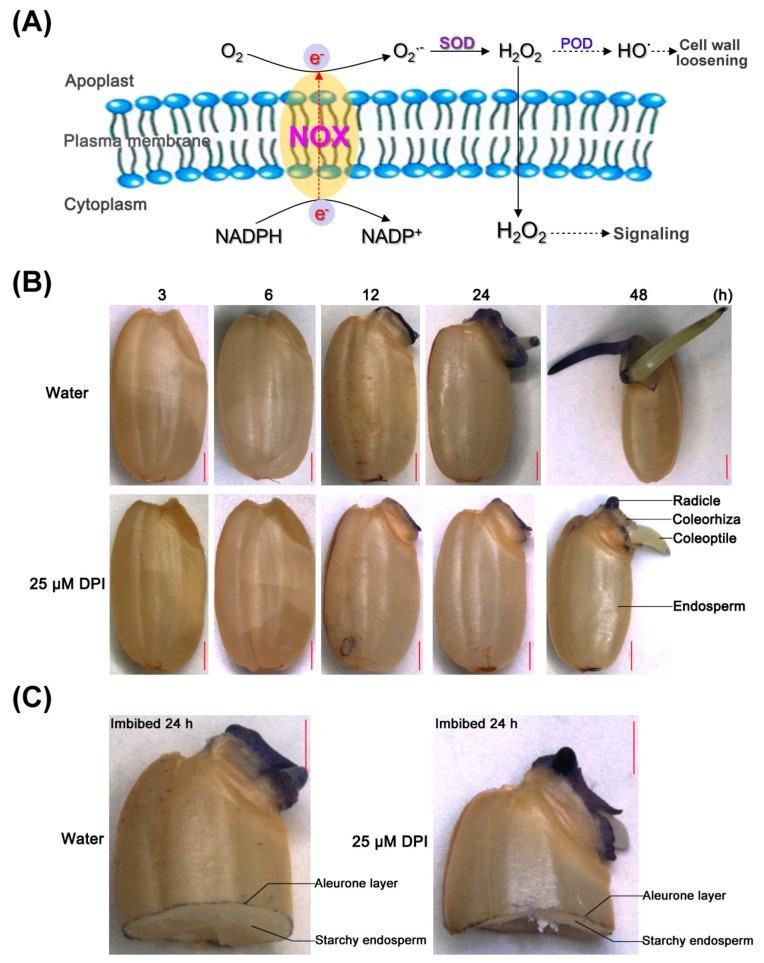
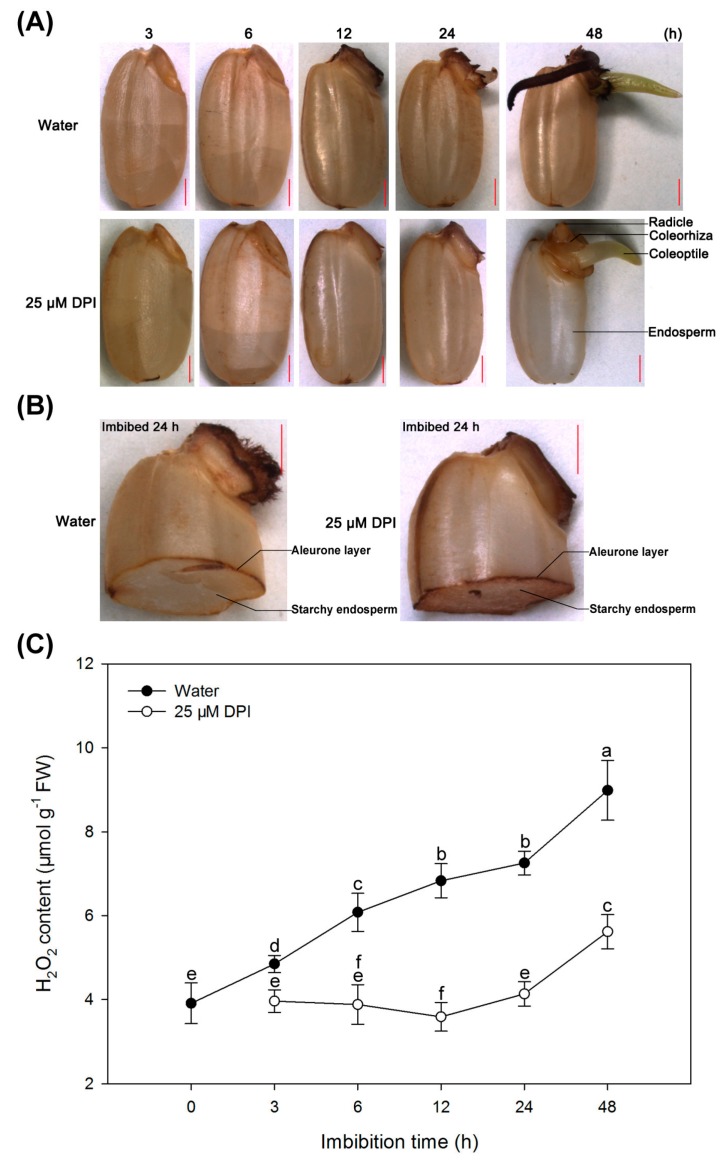
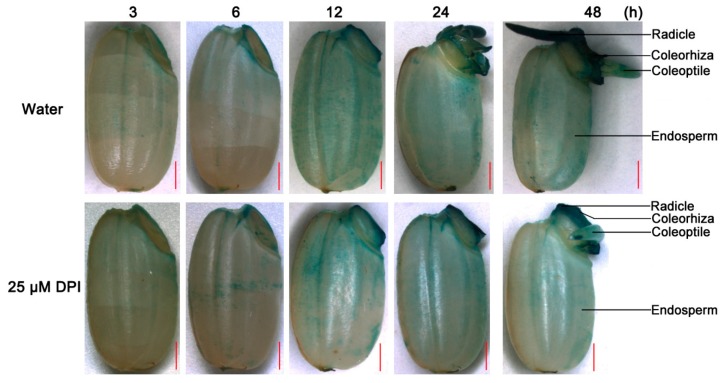
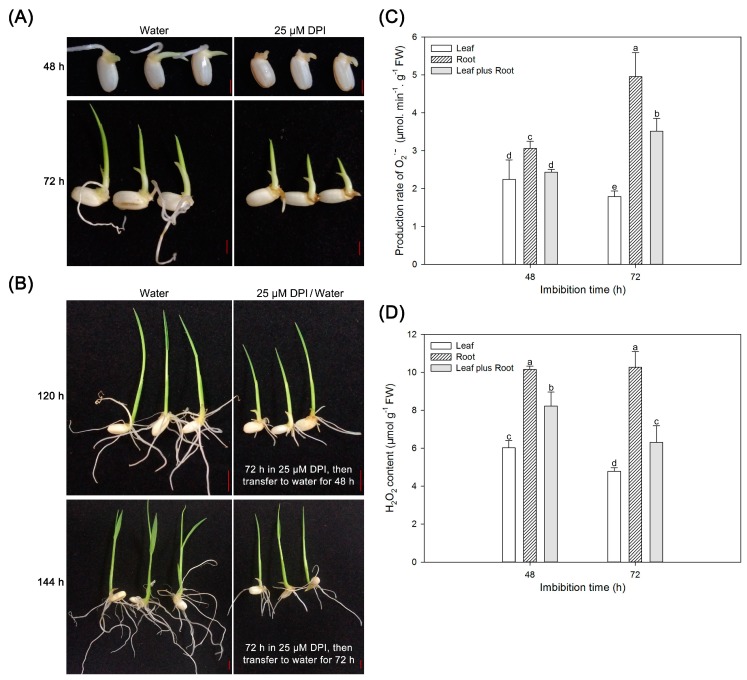
Seed germination is a complicated biological process that requires regulation through various enzymatic and non-enzymatic mechanisms. Although it has been recognized that reactive oxygen species (ROS) regulate radicle emergence and root elongation in a non-enzymatic manner during dicot seed germination, the role of ROS in monocot seed germination remains unknown. NADPH oxidases (NOXs) are the major ROS producers in plants; however, whether and how NOXs regulate rice seed germination through ROS generation remains unclear. Here, we report that diphenyleneiodinium (DPI), a specific NOX inhibitor, potently inhibited embryo and seedling growth-especially that of the radicle and of root elongation-in a dose-dependent manner. Notably, the DPI-mediated inhibition of radicle and root growth could be eliminated by transferring seedlings from DPI to water. Furthermore, ROS production/accumulation during rice seed germination was quantified via histochemistry. Superoxide radicals (O₂), hydrogen peroxide (H₂O₂) and hydroxyl radicals (OH) accumulated steadily in the coleorhiza, radicle and seedling root of germinating rice seeds. Expression profiles of the nine typical NOX genes were also investigated. According to quantitative PCR, , and were expressed relatively higher. When seeds were incubated in water, expression progressively increased in the embryo from 12 to 48 h, whereas and expressions increased from 12 to 24 h and decreased thereafter. As expected, DPI inhibits the expression at predetermined time points for each of these genes. Taken together, these results suggest that ROS produced by NOXs are involved in radicle and root elongation during rice seed germination, and , and could play crucial roles in rice seed germination. These findings will facilitate further studies of the roles of ROS generated by NOXs during seed germination and seedling establishment and also provide valuable information for the regulation of NOX family gene expression in germinating seeds of monocot cereals.
种子萌发是一个复杂的生物学过程,需要通过各种酶促和非酶促机制进行调控。尽管人们已经认识到,在双子叶植物种子萌发过程中,活性氧(ROS)以非酶促方式调节胚根突出和根伸长,但ROS在单子叶植物种子萌发中的作用仍然未知。NADPH氧化酶(NOXs)是植物中主要的ROS产生者;然而,NOXs是否以及如何通过ROS生成来调节水稻种子萌发仍不清楚。在这里,我们报告说,二苯基碘鎓(DPI),一种特异性NOX抑制剂,以剂量依赖的方式强烈抑制胚和幼苗的生长,尤其是胚根和根伸长。值得注意的是,通过将幼苗从DPI转移到水中,可以消除DPI介导的对胚根和根生长的抑制。此外,通过组织化学对水稻种子萌发过程中的ROS产生/积累进行了定量。超氧阴离子(O₂)、过氧化氢(H₂O₂)和羟基自由基(OH)在发芽水稻种子的胚根鞘、胚根和幼苗根中稳定积累。还研究了九个典型NOX基因的表达谱。根据定量PCR, 、 和 表达相对较高。当种子在水中培养时, 表达在胚中从12小时到48小时逐渐增加,而 和 表达从12小时到24小时增加,此后下降。正如预期的那样,DPI在这些基因的每个预定时间点抑制表达。综上所述,这些结果表明,NOXs产生的ROS参与了水稻种子萌发过程中的胚根和根伸长,并且 、 和 可能在水稻种子萌发中起关键作用。这些发现将有助于进一步研究NOXs产生的ROS在种子萌发和幼苗建立过程中的作用,也为单子叶谷类作物发芽种子中NOX家族基因表达的调控提供有价值的信息。