Cadamuro Massimiliano, Brivio Simone, Spirli Carlo, Joplin Ruth E, Strazzabosco Mario, Fabris Luca
School of Medicine and Surgery, University of Milan-Bicocca, 20900 MB Monza, Italy.
International Center for Digestive Health (ICDH), University of Milan-Bicocca, 20900 MB Monza, Italy.
Int J Mol Sci. 2017 Jan 13;18(1):149. doi: 10.3390/ijms18010149.
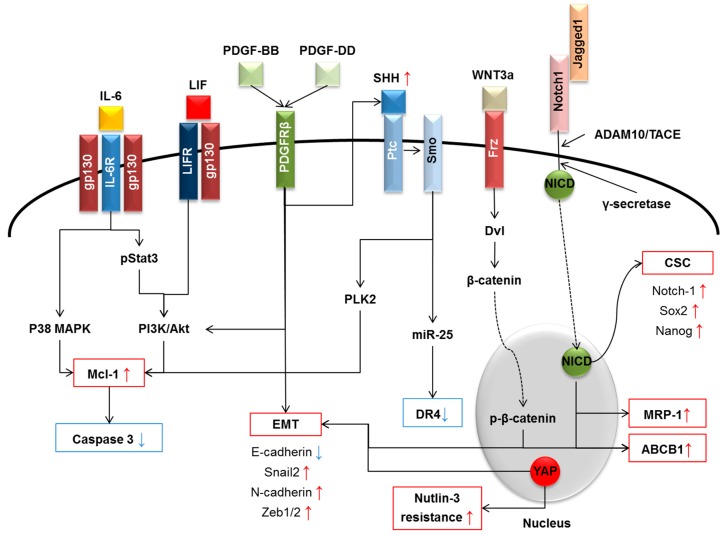
Resistance to conventional chemotherapeutic agents, a typical feature of cholangiocarcinoma, prevents the efficacy of the therapeutic arsenal usually used to combat malignancy in humans. Mechanisms of chemoresistance by neoplastic cholangiocytes include evasion of drug-induced apoptosis mediated by autocrine and paracrine cues released in the tumor microenvironment. Here, recent evidence regarding molecular mechanisms of chemoresistance is reviewed, as well as associations between well-developed chemoresistance and activation of the cancer stem cell compartment. It is concluded that improved understanding of the complex interplay between apoptosis signaling and the promotion of cell survival represent potentially productive areas for active investigation, with the ultimate aim of encouraging future studies to unveil new, effective strategies able to overcome current limitations on treatment.
对传统化疗药物耐药是胆管癌的一个典型特征,这使得通常用于对抗人类恶性肿瘤的治疗手段失效。肿瘤性胆管细胞的化疗耐药机制包括逃避由肿瘤微环境中释放的自分泌和旁分泌信号介导的药物诱导凋亡。本文综述了关于化疗耐药分子机制的最新证据,以及成熟的化疗耐药与癌症干细胞区室激活之间的关联。得出的结论是,更好地理解凋亡信号与细胞存活促进之间的复杂相互作用,是可能富有成效的积极研究领域,最终目的是鼓励未来研究揭示能够克服当前治疗局限性的新的有效策略。