Ridiandries Anisyah, Bursill Christina, Tan Joanne
Heart Research Institute, 7 Eliza Street, Newtown, Sydney 2042, NSW, Australia.
Sydney Medical School, University of Sydney, Camperdown, Sydney 2050, NSW, Australia.
Int J Mol Sci. 2017 Jan 13;18(1):155. doi: 10.3390/ijms18010155.
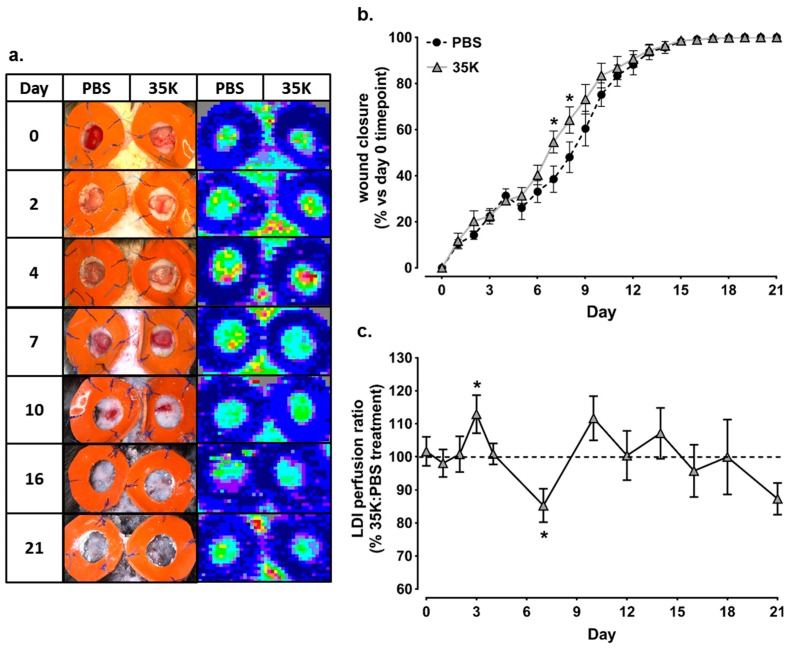
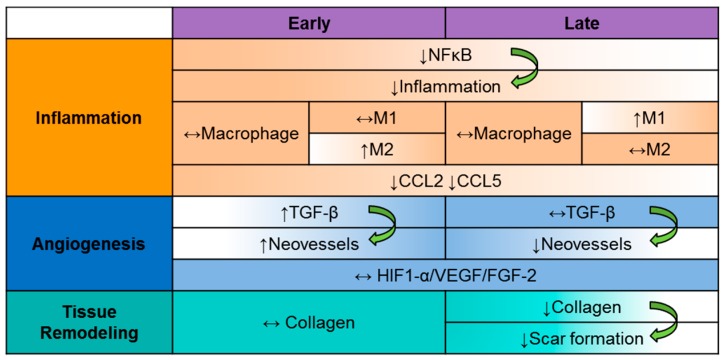
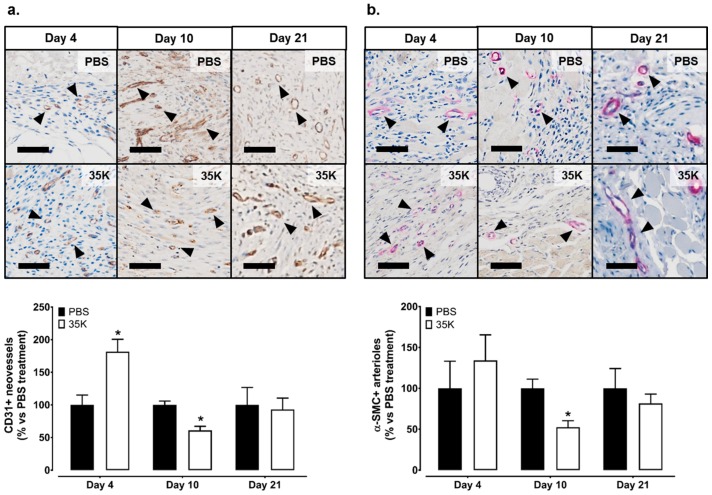
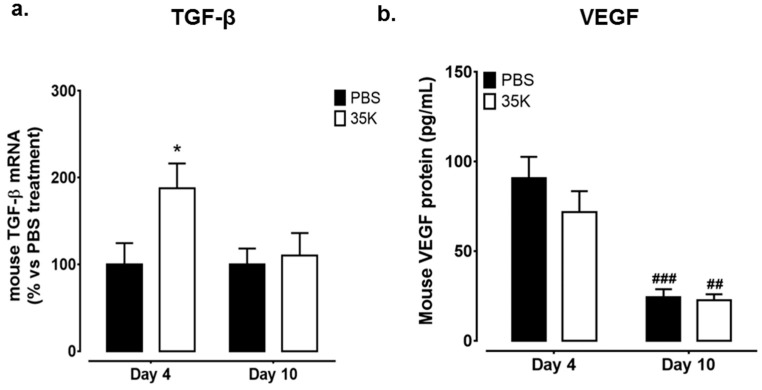
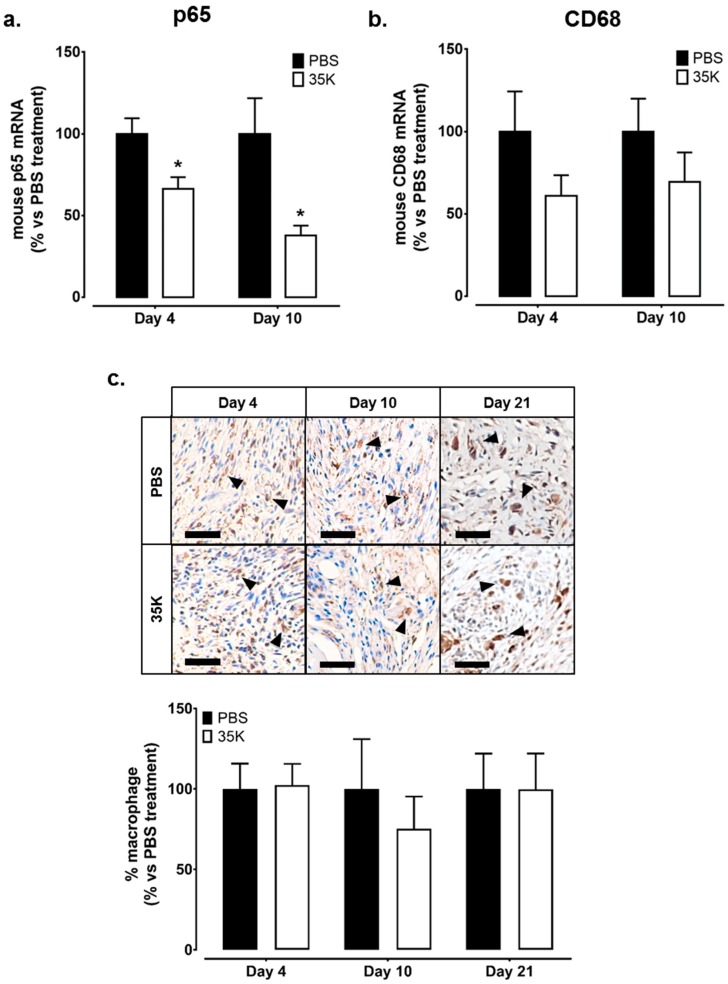
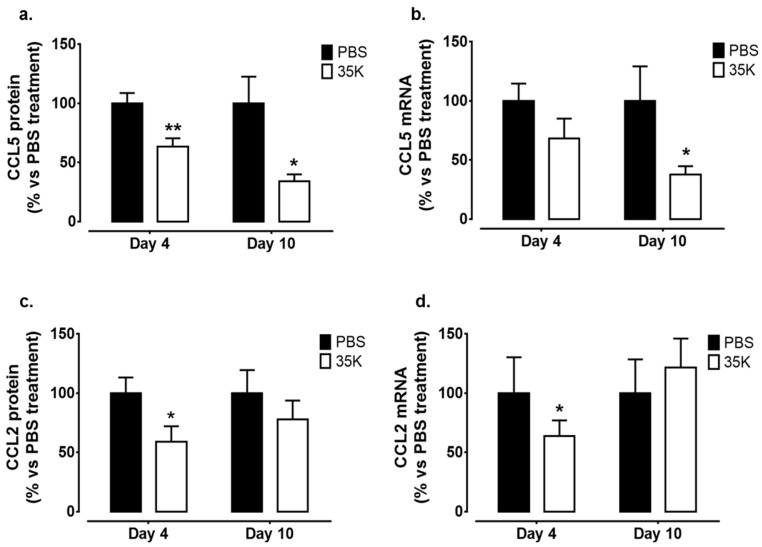
Angiogenesis is involved in the inflammation and proliferation stages of wound healing, to bring inflammatory cells to the wound and provide a microvascular network to maintain new tissue formation. An excess of inflammation, however, leads to prolonged wound healing and scar formation, often resulting in unfavourable outcomes such as amputation. CC-chemokines play key roles in the promotion of inflammation and inflammatory-driven angiogenesis. Therefore, inhibition of the CC-chemokine class may improve wound healing. We aimed to determine if the broad-spectrum CC-chemokine inhibitor "35K" could accelerate wound healing in vivo in mice. In a murine wound healing model, 35K protein or phosphate buffered saline (PBS, control) were added topically daily to wounds. Cohorts of mice were assessed in the early stages (four days post-wounding) and in the later stages of wound repair (10 and 21 days post-wounding). Topical application of the 35K protein inhibited CC-chemokine expression (CCL5, CCL2) in wounds and caused enhanced blood flow recovery and wound closure in early-mid stage wounds. In addition, 35K promoted neovascularisation in the early stages of wound repair. Furthermore, 35K treated wounds had significantly lower expression of the p65 subunit of NF-κB, a key inflammatory transcription factor, and augmented wound expression of the pro-angiogenic and pro-repair cytokine TGF-β. These findings show that broad-spectrum CC-chemokine inhibition may be beneficial for the promotion of wound healing.
血管生成参与伤口愈合的炎症和增殖阶段,将炎症细胞带到伤口并提供微血管网络以维持新组织形成。然而,过度炎症会导致伤口愈合延长和瘢痕形成,常常导致诸如截肢等不良后果。CC趋化因子在促进炎症和炎症驱动的血管生成中起关键作用。因此,抑制CC趋化因子类可能改善伤口愈合。我们旨在确定广谱CC趋化因子抑制剂“35K”是否能在小鼠体内加速伤口愈合。在小鼠伤口愈合模型中,每天将35K蛋白或磷酸盐缓冲盐水(PBS,对照)局部应用于伤口。在伤口修复的早期阶段(受伤后四天)和后期阶段(受伤后10天和21天)对小鼠群体进行评估。局部应用35K蛋白可抑制伤口中CC趋化因子表达(CCL5、CCL2),并在伤口修复的早中期促进血流恢复和伤口闭合。此外,35K在伤口修复早期促进新血管形成。此外,经35K处理的伤口中关键炎症转录因子NF-κB的p65亚基表达显著降低,且伤口中促血管生成和促修复细胞因子TGF-β的表达增加。这些发现表明,广谱CC趋化因子抑制可能有利于促进伤口愈合。