Chen Xi, Shao Qianqian, Hao Shengnan, Zhao Zhonghua, Wang Yang, Guo Xiaofan, He Ying, Gao Wenjuan, Mao Haiting
Institute of Basic Medicial Sciences, Qi Lu Hospital, Shandong University, Jinan, Shandong Province, 250012, P.R.China.
Department of Neurosurgery, Qi Lu Hospital, Shandong University, Jinan, Shandong Province, 250012, P.R.China.
Oncotarget. 2017 Feb 21;8(8):13703-13715. doi: 10.18632/oncotarget.14626.
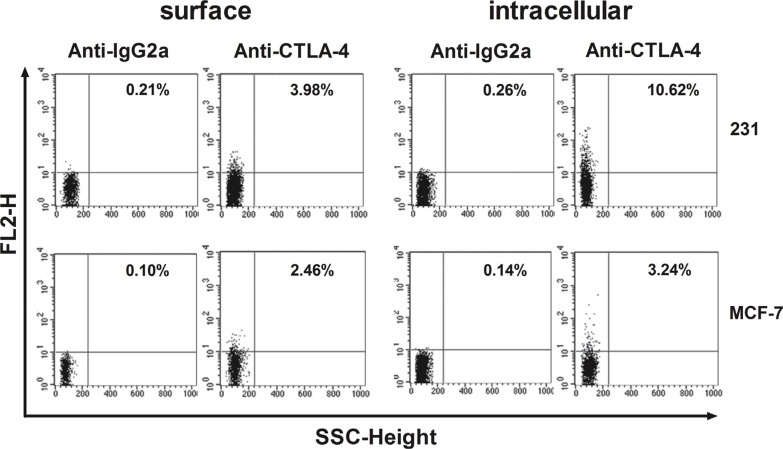
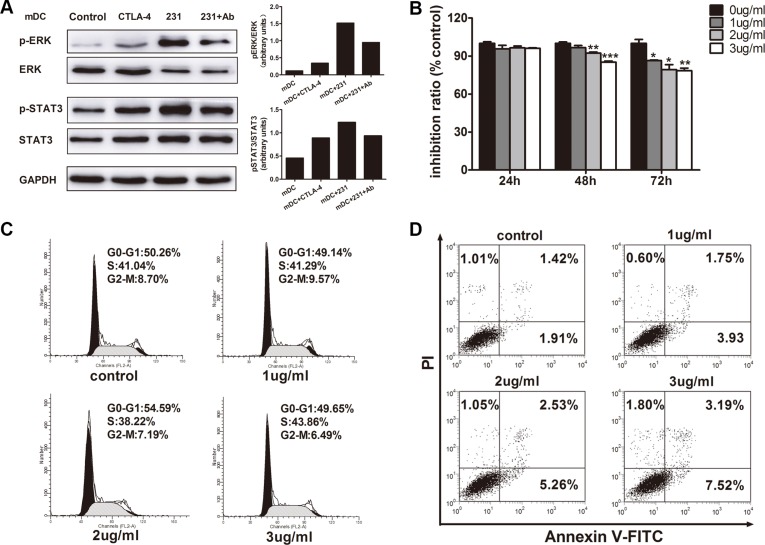
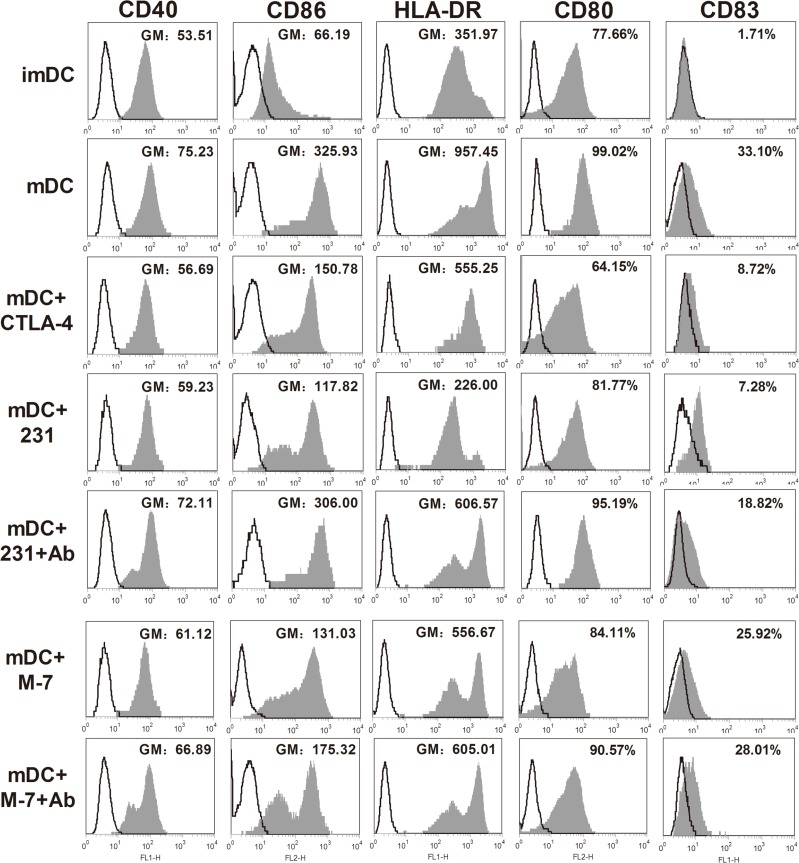
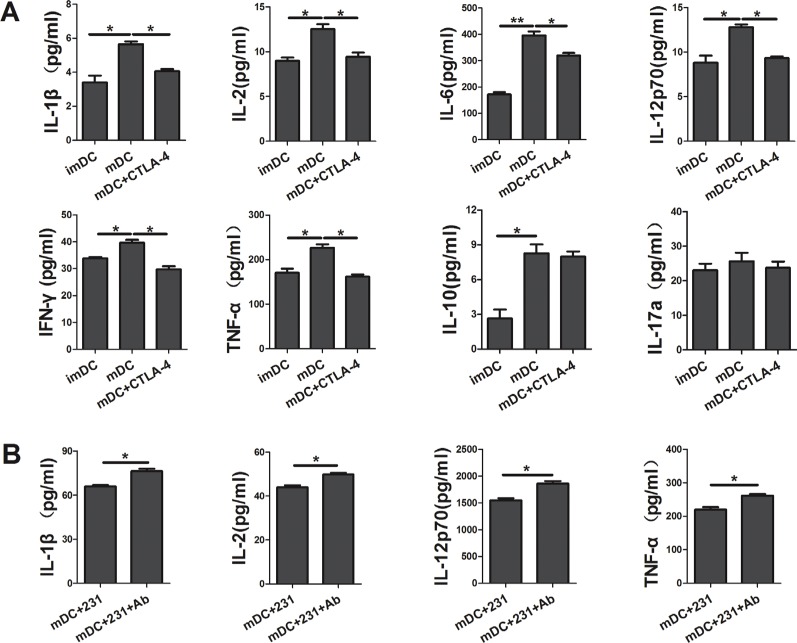
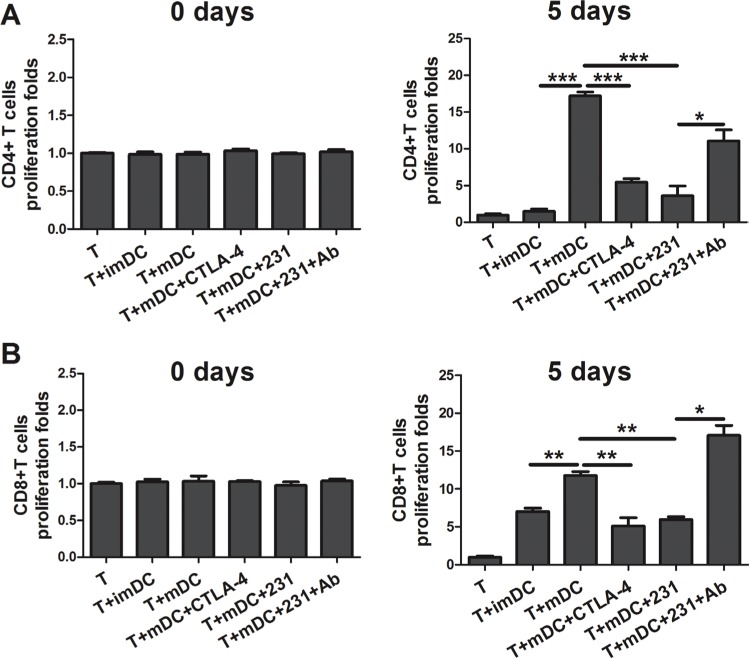
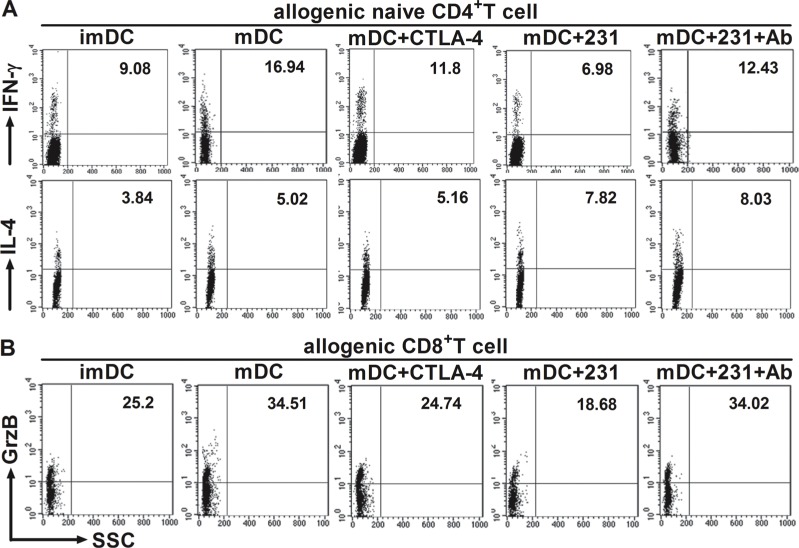
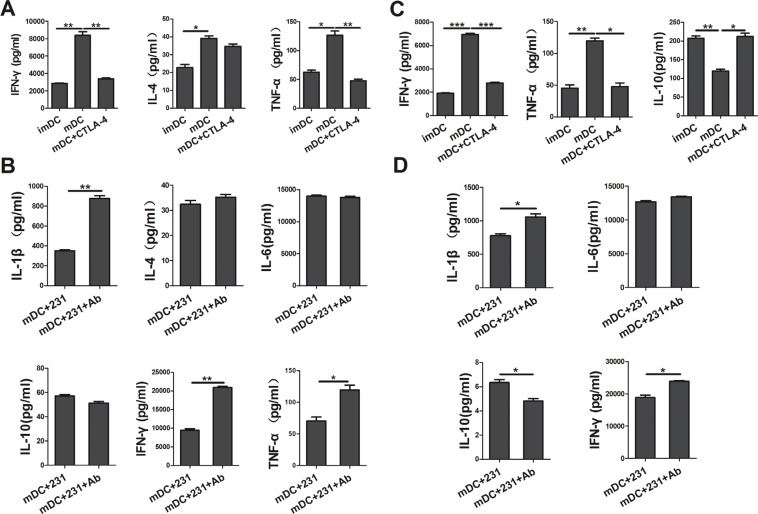
Cytotoxic T lymphocyte-associated antigen 4 (CTLA-4), a potent immunoregulatory molecule, can down-regulate T-cell activation and inhibit anti-tumor immune response. This study showed that LPS-stimulated human dendritic cells (DCs) decreased the expression of HLA-DR, CD83 and costimulatory molecules (CD40, CD80 and CD86) following coculturing with CTLA-4+ breast cancer cells. Moreover, the suppressed DCs further inhibited proliferation of allogeneic CD4+/CD8+ T-cells, differentiation of Th1 and function of cytotoxic lymphocytes (CTLs). However, CTLA-4 blockade in breast cancer cells could recover DC maturation and cytokine production, elevate antigen-presenting function of DCs, reverse Th1/CTLs response and cytokine secretion. Subsequent study demonstrated that the activation of extracellular-signal regulated kinase and signal transducer and activator of transcription 3 of DCs caused by CTLA-4+ breast cancer cells were the predominant mechanism of DC suppression. In addition, CTLA-4 blockade treatment also directly inhibited proliferation and induced apoptosis of CTLA-4+ breast cancer cells. Collectively, CTLA-4 was expressed and functional on human breast cancer cells through influencing maturation and function of DCs in vitro, and CTLA-4 blockage not only recovered the antigen-presenting function of DCs and T-cells activation but also suppressed the biological activity of breast cancer cells themselves. This study highlights the clinical application of CTLA-4 blockade therapy in breast cancer.
细胞毒性T淋巴细胞相关抗原4(CTLA-4)是一种强大的免疫调节分子,可下调T细胞活化并抑制抗肿瘤免疫反应。本研究表明,脂多糖刺激的人树突状细胞(DC)与CTLA-4阳性乳腺癌细胞共培养后,HLA-DR、CD83和共刺激分子(CD40、CD80和CD86)的表达降低。此外,受抑制的DC进一步抑制同种异体CD4+/CD8+T细胞的增殖、Th1分化和细胞毒性淋巴细胞(CTL)的功能。然而,阻断乳腺癌细胞中的CTLA-4可恢复DC成熟和细胞因子产生,提高DC的抗原呈递功能,逆转Th1/CTL反应和细胞因子分泌。随后的研究表明,CTLA-4阳性乳腺癌细胞引起的DC细胞外信号调节激酶和信号转导子及转录激活子3的激活是DC抑制的主要机制。此外,CTLA-4阻断治疗还直接抑制CTLA-4阳性乳腺癌细胞的增殖并诱导其凋亡。总体而言,CTLA-4在人乳腺癌细胞上表达并发挥作用,通过影响体外DC的成熟和功能,而CTLA-4阻断不仅恢复DC的抗原呈递功能和T细胞活化,还抑制乳腺癌细胞自身的生物学活性。本研究突出了CTLA-4阻断疗法在乳腺癌中的临床应用。