Momcilovic Milica, Bailey Sean T, Lee Jason T, Fishbein Michael C, Magyar Clara, Braas Daniel, Graeber Thomas, Jackson Nicholas J, Czernin Johannes, Emberley Ethan, Gross Matthew, Janes Julie, Mackinnon Andy, Pan Alison, Rodriguez Mirna, Works Melissa, Zhang Winter, Parlati Francesco, Demo Susan, Garon Edward, Krysan Kostyantyn, Walser Tonya C, Dubinett Steven M, Sadeghi Saman, Christofk Heather R, Shackelford David B
Department of Pulmonary and Critical Care Medicine, David Geffen School of Medicine, University of California, Los Angeles, Los Angeles, CA 90095, USA.
Department of Molecular and Medical Pharmacology, David Geffen School of Medicine, University of California, Los Angeles, Los Angeles, CA 90095, USA.
Cell Rep. 2017 Jan 17;18(3):601-610. doi: 10.1016/j.celrep.2016.12.061.
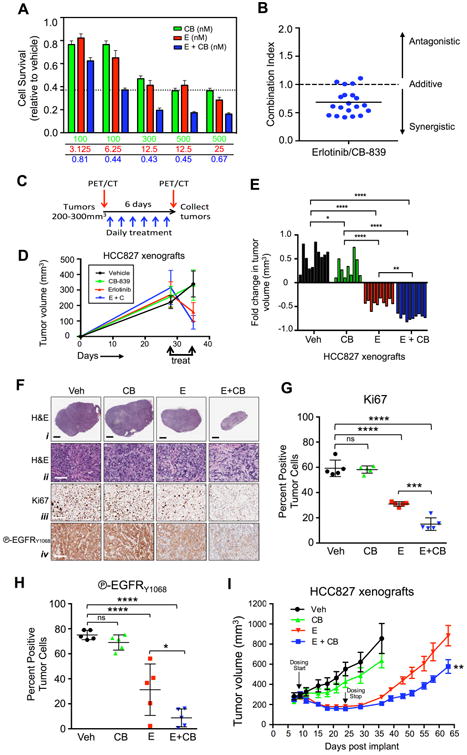
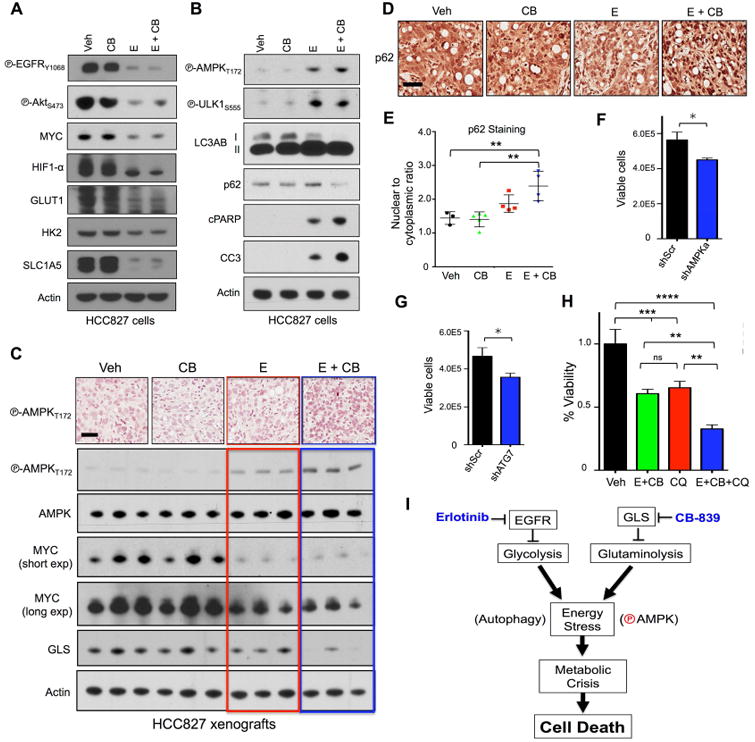
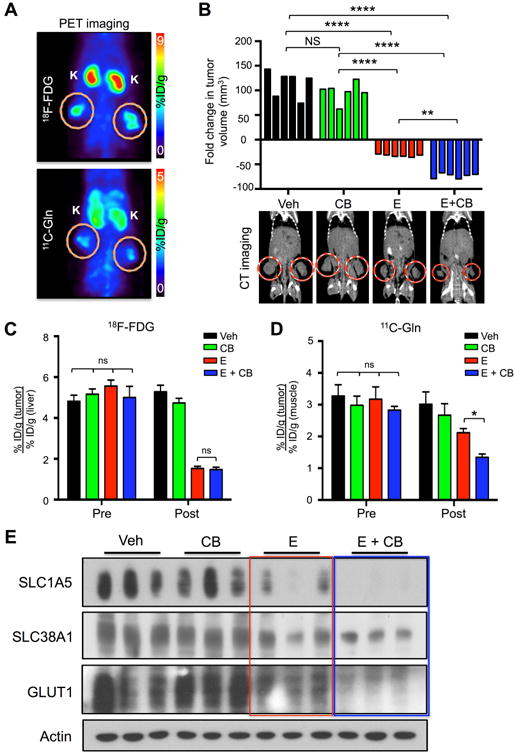
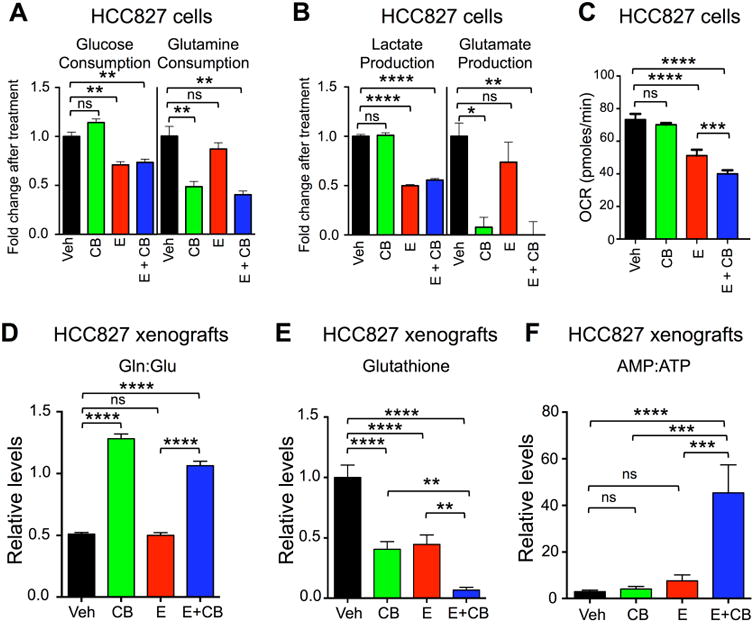
Cancer cells exhibit increased use of nutrients, including glucose and glutamine, to support the bioenergetic and biosynthetic demands of proliferation. We tested the small-molecule inhibitor of glutaminase CB-839 in combination with erlotinib on epidermal growth factor receptor (EGFR) mutant non-small cell lung cancer (NSCLC) as a therapeutic strategy to simultaneously impair cancer glucose and glutamine utilization and thereby suppress tumor growth. Here, we show that CB-839 cooperates with erlotinib to drive energetic stress and activate the AMP-activated protein kinase (AMPK) pathway in EGFR (del19) lung tumors. Tumor cells undergo metabolic crisis and cell death, resulting in rapid tumor regression in vivo in mouse NSCLC xenografts. Consistently, positron emission tomography (PET) imaging with F-fluoro-2-deoxyglucose (F-FDG) and C-glutamine (C-Gln) of xenografts indicated reduced glucose and glutamine uptake in tumors following treatment with CB-839 + erlotinib. Therefore, PET imaging with F-FDG and C-Gln tracers can be used to non-invasively measure metabolic response to CB-839 and erlotinib combination therapy.
癌细胞对包括葡萄糖和谷氨酰胺在内的营养物质的利用增加,以满足增殖过程中生物能量和生物合成的需求。我们测试了谷氨酰胺酶小分子抑制剂CB-839与厄洛替尼联合用于表皮生长因子受体(EGFR)突变的非小细胞肺癌(NSCLC),作为一种同时损害癌症葡萄糖和谷氨酰胺利用从而抑制肿瘤生长的治疗策略。在此,我们表明CB-839与厄洛替尼协同作用,在EGFR(del19)肺肿瘤中引发能量应激并激活AMP激活的蛋白激酶(AMPK)途径。肿瘤细胞经历代谢危机和细胞死亡,导致小鼠NSCLC异种移植瘤在体内迅速消退。同样,对异种移植瘤进行的F-氟-2-脱氧葡萄糖(F-FDG)和C-谷氨酰胺(C-Gln)正电子发射断层扫描(PET)成像显示,用CB-839 + 厄洛替尼治疗后,肿瘤中的葡萄糖和谷氨酰胺摄取减少。因此,使用F-FDG和C-Gln示踪剂的PET成像可用于无创测量对CB-839和厄洛替尼联合治疗的代谢反应。