College of Horticulture, Northwest A&F University, Taicheng Road 3, Yangling 712100, Shaanxi, P.R. China.
Sci Rep. 2017 Jan 19;7:40858. doi: 10.1038/srep40858.
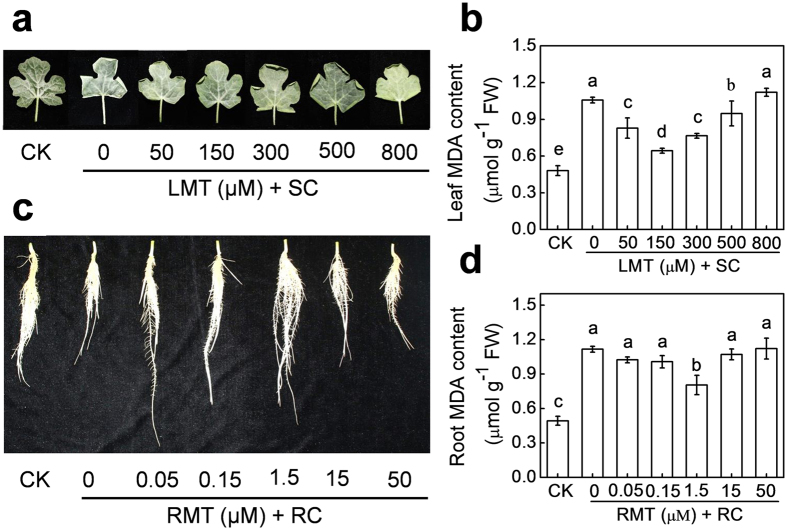
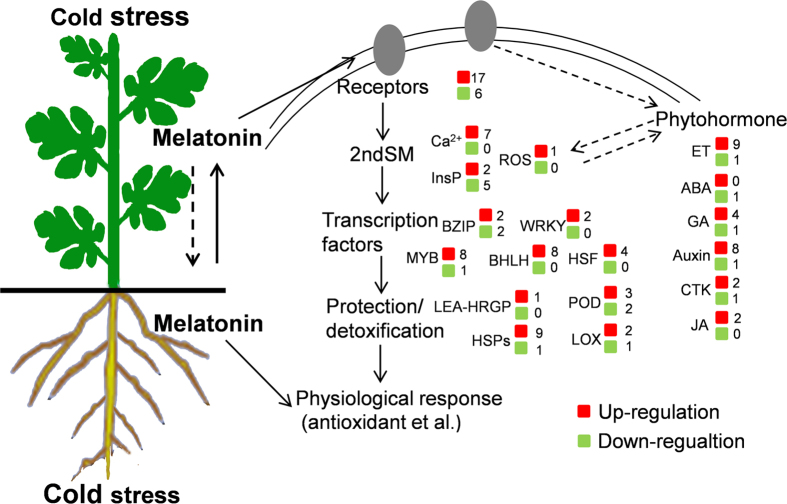
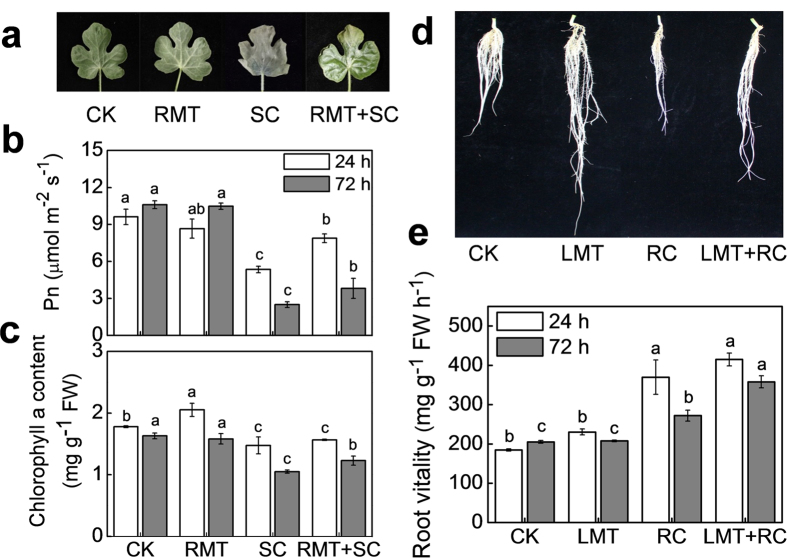
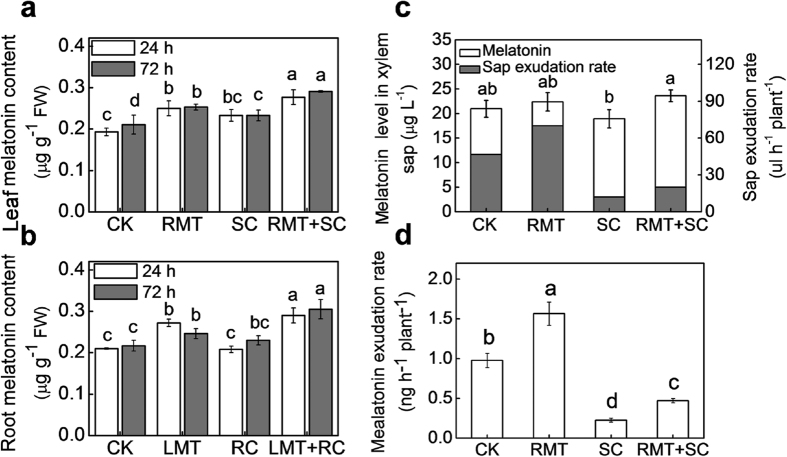
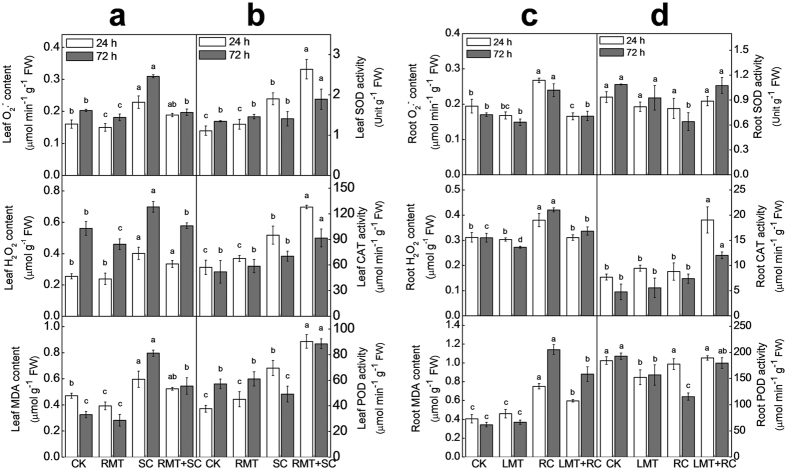
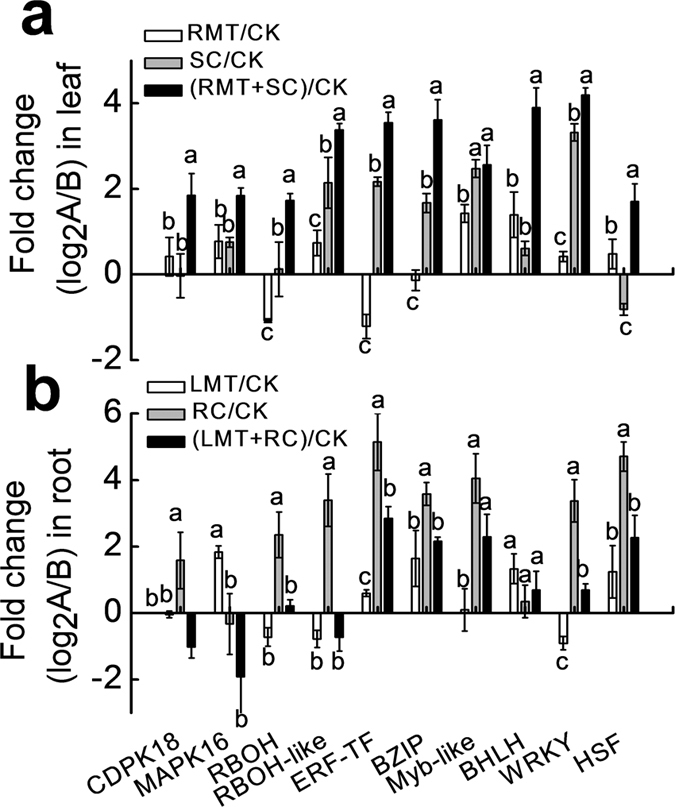
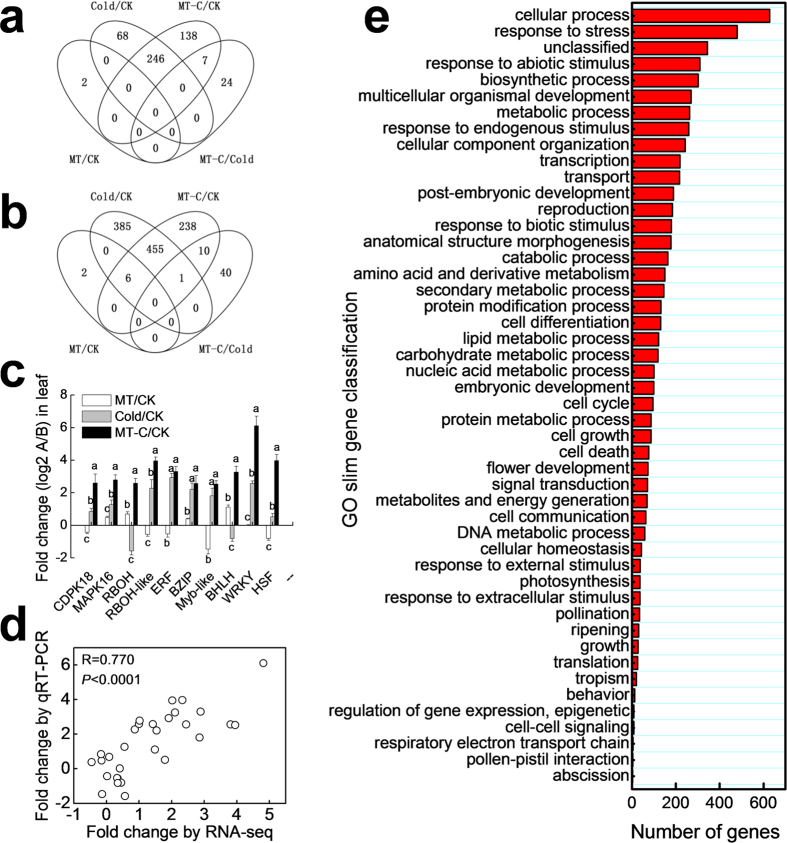
Melatonin is a ubiquitous chemical substance that regulates plant growth and responses to stress. Several recent studies show that exogenous melatonin confers cold tolerance to plants; however, the underlying mechanisms remain largely unknown. Here, we report that melatonin application at optimal dose, either on the leaves or the roots, not only induced cold stress tolerance in the site of application, but also systemically induced cold tolerance in untreated distant parts. Foliar or rhizospheric treatment with melatonin increased the melatonin levels in untreated roots or leaves, respectively, under both normal and cold stress conditions, whereas rhizospheric melatonin treatment increased the melatonin exudation rates from the xylem. An increased accumulation of melatonin accompanied with an induction in antioxidant enzyme activity in distant untreated tissues alleviated cold-induced oxidative stress. In addition, RNA-seq analysis revealed that an abundance of cold defense-related genes involved in signal sensing and transduction, transcriptional regulation, protection and detoxification, and hormone signaling might mediate melatonin-induced cold tolerance. Taken together, our results suggest that melatonin can induce cold tolerance via long distance signaling, and such induction is associated with an enhanced antioxidant capacity and optimized defense gene expression. Such a mechanism can be greatly exploited to benefit the agricultural production.
褪黑素是一种普遍存在的化学物质,它调节植物的生长和对胁迫的反应。最近的几项研究表明,外源性褪黑素赋予植物耐寒性;然而,其潜在机制在很大程度上仍不清楚。在这里,我们报告说,在最佳剂量下,无论是在叶片上还是在根部施加褪黑素,不仅能诱导应用部位的冷胁迫耐受,而且还能在未处理的远部位系统地诱导冷胁迫耐受。在正常和冷胁迫条件下,叶面或根际处理褪黑素分别增加了未处理根或叶中的褪黑素水平,而根际褪黑素处理增加了木质部中褪黑素的分泌速率。在未处理的远部位组织中,褪黑素的积累增加伴随着抗氧化酶活性的诱导,从而减轻了冷诱导的氧化应激。此外,RNA-seq 分析表明,大量与信号感应和转导、转录调控、保护和解毒以及激素信号有关的冷防御相关基因可能介导褪黑素诱导的耐寒性。总之,我们的结果表明,褪黑素可以通过长距离信号诱导耐寒性,这种诱导与增强的抗氧化能力和优化的防御基因表达有关。这种机制可以被极大地利用来造福农业生产。