Key Laboratory of Tea Quality and Safety Control, Ministry of Agriculture, Tea Research Institute, Chinese Academy of Agricultural Sciences, 9 Meiling Road, Hangzhou 310008, China.
Department of Biology, Tufts University, Medford, MA 02155, USA.
Molecules. 2018 Jan 15;23(1):165. doi: 10.3390/molecules23010165.
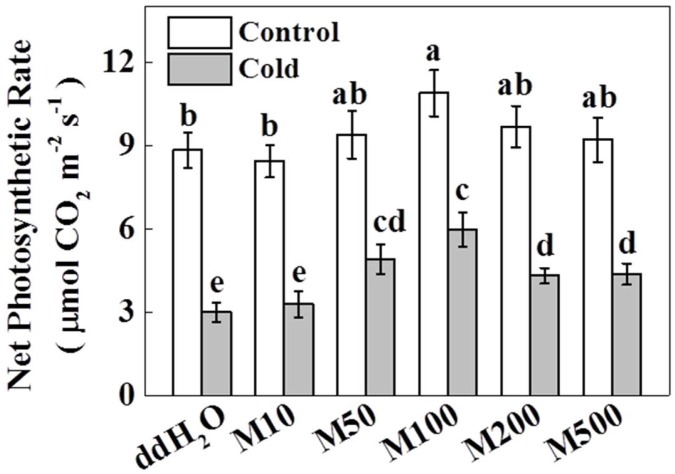
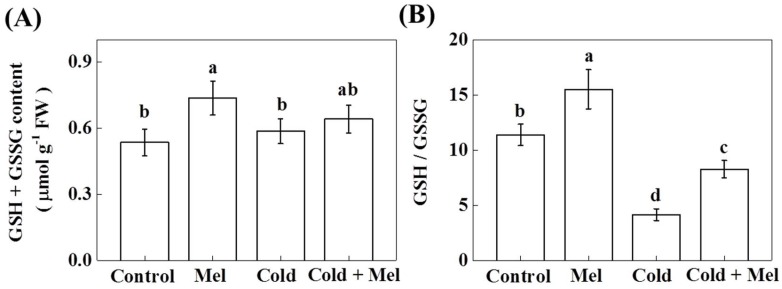
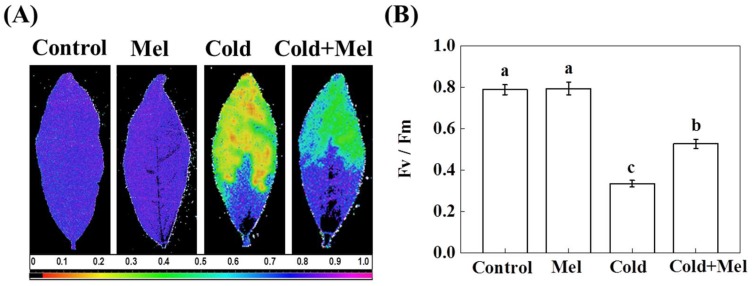
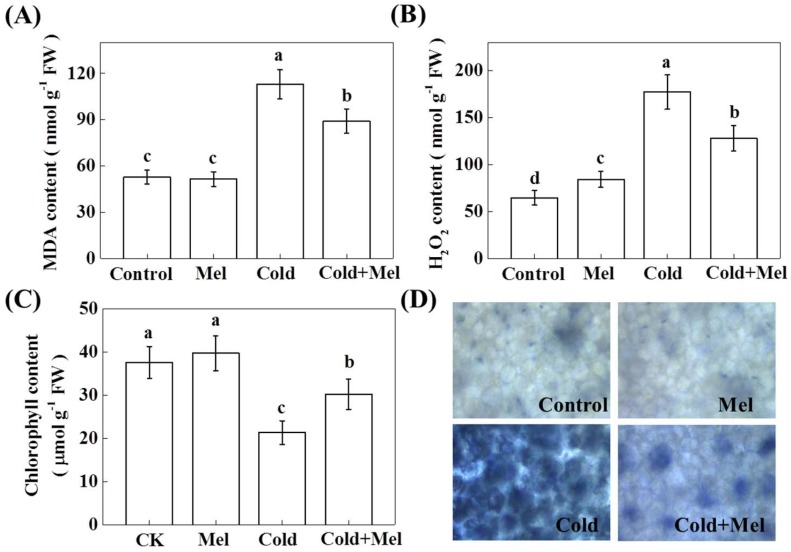
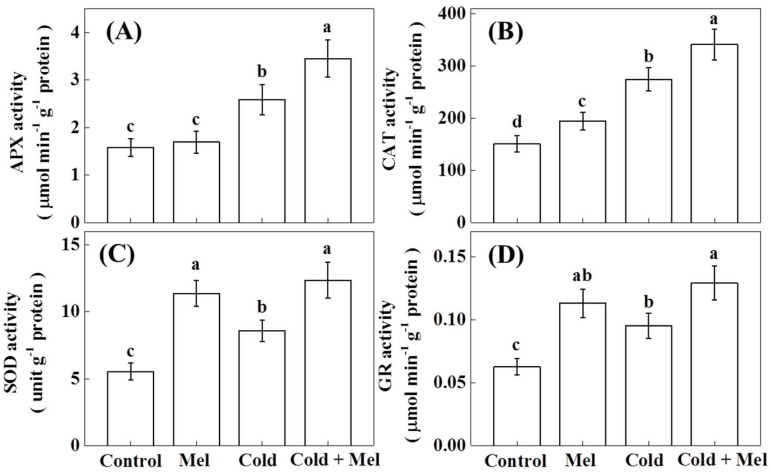
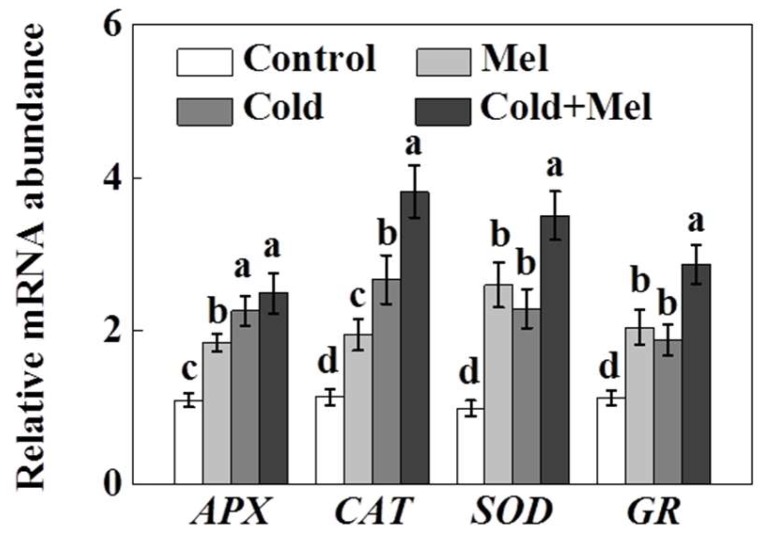
The unprecedented early spring frost that appears as a cold stress adversely affects growth and productivity in tea ( L.); therefore, it is indispensable to develop approaches to improve the cold tolerance of tea. Here, we investigated the effect of pretreatment with exogenous melatonin on the net photosynthetic rate, the maximum photochemical efficiency of PSII, chlorophyll content, lipid peroxidation, reactive oxygen species (ROS) accumulation, antioxidant potential, and redox homeostasis in leaves of tea plants following cold stress. Our results revealed that cold treatment induced oxidative stress by increasing ROS accumulation, which in turn affected the photosynthetic process in tea leaves. However, treatment with melatonin mitigated cold-induced reductions in photosynthetic capacity by reducing oxidative stress through enhanced antioxidant potential and redox homeostasis. This study provides strong evidence that melatonin could alleviate cold-induced adverse effects in tea plants.
早春早霜这种反常的寒冷胁迫会对茶树的生长和产量产生不利影响;因此,开发提高茶树耐寒性的方法是必不可少的。在这里,我们研究了外源褪黑素预处理对茶树叶片遭受冷胁迫后净光合速率、PSII 最大光化学效率、叶绿素含量、脂质过氧化、活性氧(ROS)积累、抗氧化能力和氧化还原平衡的影响。结果表明,冷胁迫通过增加 ROS 积累诱导了氧化应激,进而影响了茶树叶片的光合作用过程。然而,褪黑素处理通过增强抗氧化能力和氧化还原平衡来减轻冷胁迫引起的光合能力下降,从而减轻冷胁迫诱导的氧化应激。这项研究提供了有力的证据,证明褪黑素可以缓解茶树的冷胁迫不良影响。