Medina-Colorado Audrie A, Osorio Elvia Y, Saldarriaga Omar A, Travi Bruno L, Kong Fanping, Spratt Heidi, Soong Lynn, Melby Peter C
Department of Microbiology and Immunology, University of Texas Medical Branch, Galveston, Texas, United States of America.
Department of Internal Medicine, University of Texas Medical Branch, Galveston, Texas, United States of America.
PLoS One. 2017 Jan 19;12(1):e0169496. doi: 10.1371/journal.pone.0169496. eCollection 2017.
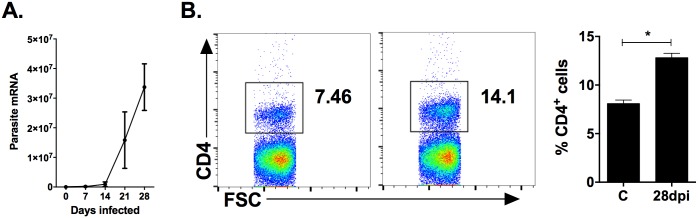
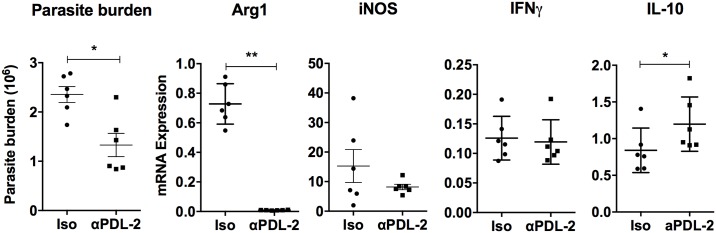
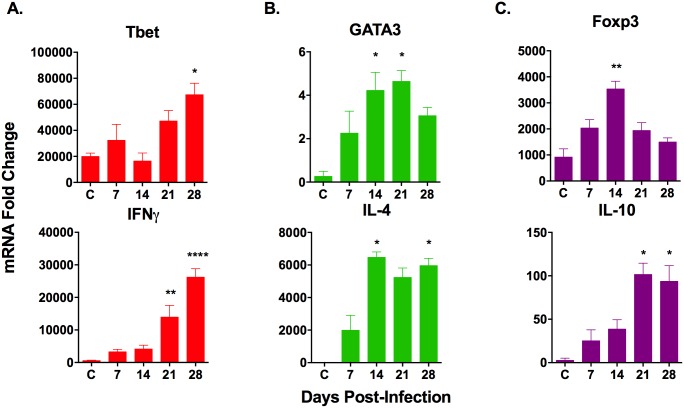
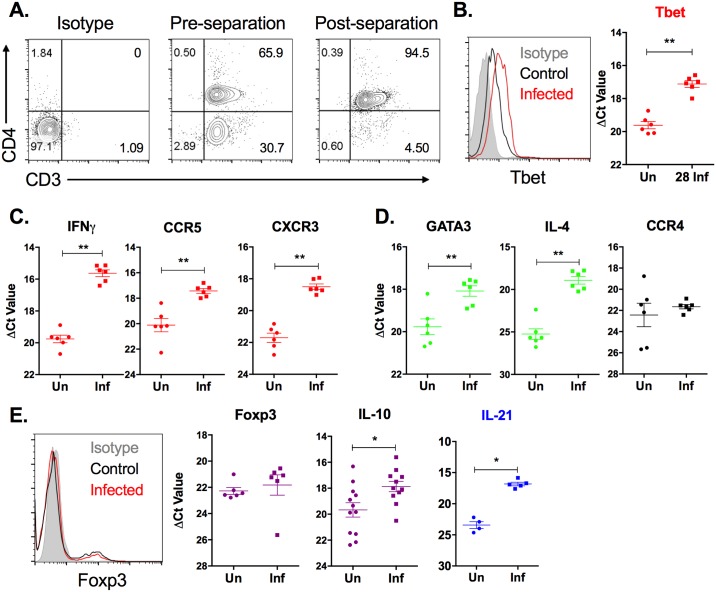
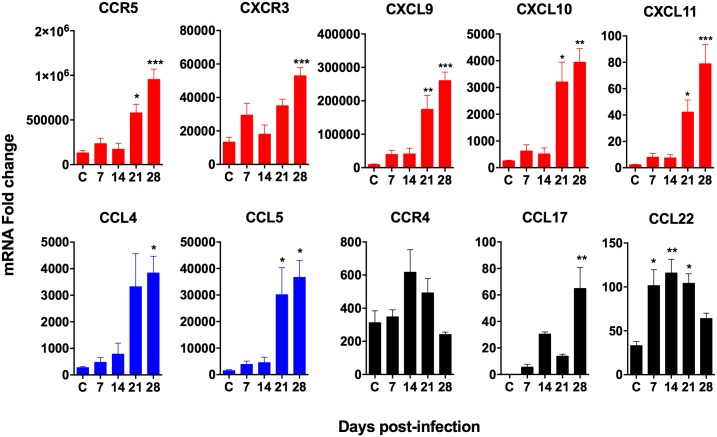
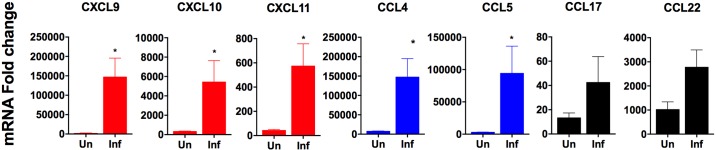
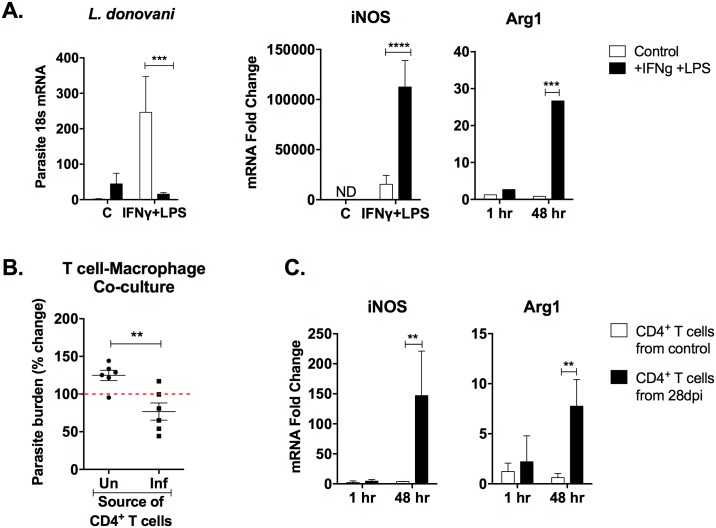
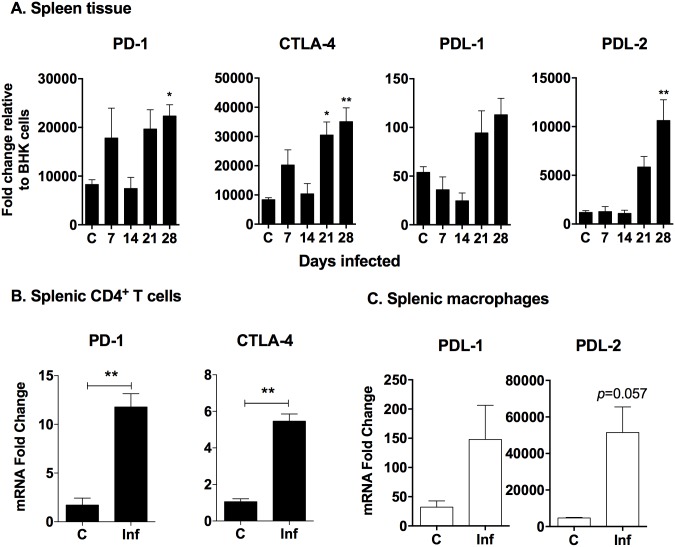
Visceral leishmaniasis (VL), caused by infection with the intracellular protozoan Leishmania donovani, is a chronic progressive disease with a relentlessly increasing parasite burden in the spleen, liver and bone marrow. The disease is characterized by fever, splenomegaly, cachexia, and pancytopenia, and progresses to death if not treated. Control of Leishmania infection is mediated by Th1 (IFNγ-producing) CD4+ T cells, which activate macrophages to produce nitric oxide and kill intracellular parasites. However, despite expansion of CD4+ T cells and increased IFNγ expression in the spleen, humans with active VL do not control the infection. We used an experimental model of chronic progressive VL in hamsters, which mimics clinical and pathological features seen in humans, to better understand the mechanisms that lead to progressive disease. Transcriptional profiling of the spleen during chronic infection revealed expression of markers of both T cell activation and inhibition. CD4+ T cells isolated from the spleen during chronic progressive VL showed mixed expression of Th1 and Th2 cytokines and chemokines, and were marginally effective in controlling infection in an ex vivo T cell-macrophage co-culture system. Splenic CD4+ T cells and macrophages from hamsters with VL showed increased expression of inhibitory receptors and their ligands, respectively. Blockade of the inhibitory receptor PD-L2 led to a significant decrease in parasite burden, revealing a pathogenic role for the PD-1 pathway in chronic VL. PD-L2 blockade was associated with a dramatic reduction in expression of host arginase 1, but no change in IFNγ and inducible nitric oxide synthase. Thus, the expression of counter-regulatory molecules on splenic CD4+ T cells and macrophages promotes a more permissive macrophage phenotype and attenuates intracellular parasite control in chronic progressive VL. Host-directed adjunctive therapy targeting the PD-1 regulatory pathway may be efficacious for VL.
内脏利什曼病(VL)由细胞内原生动物杜氏利什曼原虫感染引起,是一种慢性进行性疾病,脾脏、肝脏和骨髓中的寄生虫负担会持续增加。该疾病的特征为发热、脾肿大、恶病质和全血细胞减少,若不治疗会发展至死亡。利什曼原虫感染的控制由Th1(产生IFNγ的)CD4⁺ T细胞介导,这些细胞激活巨噬细胞产生一氧化氮并杀死细胞内寄生虫。然而,尽管CD4⁺ T细胞扩增且脾脏中IFNγ表达增加,但活动性VL患者仍无法控制感染。我们使用了一种在仓鼠中建立的慢性进行性VL实验模型,该模型模拟了人类的临床和病理特征,以更好地理解导致疾病进展的机制。慢性感染期间脾脏的转录谱分析揭示了T细胞激活和抑制标志物的表达。从慢性进行性VL期间的脾脏中分离出的CD4⁺ T细胞显示Th1和Th2细胞因子及趋化因子混合表达,并在体外T细胞 - 巨噬细胞共培养系统中控制感染的效果不佳。VL仓鼠的脾脏CD4⁺ T细胞和巨噬细胞分别显示抑制性受体及其配体的表达增加。阻断抑制性受体PD - L2导致寄生虫负担显著降低,揭示了PD - 1途径在慢性VL中的致病作用。PD - L2阻断与宿主精氨酸酶1的表达显著降低相关,但IFNγ和诱导型一氧化氮合酶无变化。因此,脾脏CD4⁺ T细胞和巨噬细胞上反调节分子的表达促进了巨噬细胞更易感染的表型,并减弱了慢性进行性VL中细胞内寄生虫控制能力。针对PD - 1调节途径的宿主导向辅助疗法可能对VL有效。