Osorio E Yaneth, Travi Bruno L, da Cruz Alda M, Saldarriaga Omar A, Medina Audrie A, Melby Peter C
Department of Internal Medicine, University of Texas Medical Branch, Galveston, Texas, United States of America; Laboratório Interdisciplinar de Pesquisas Médicas (LIPMED), Instituto Oswaldo Cruz-FIOCRUZ, Rio de Janeiro, Brazil.
Department of Internal Medicine, University of Texas Medical Branch, Galveston, Texas, United States of America; Department of Microbiology and Immunology, University of Texas Medical Branch, Galveston, Texas, United States of America.
PLoS Pathog. 2014 Jun 26;10(6):e1004165. doi: 10.1371/journal.ppat.1004165. eCollection 2014 Jun.
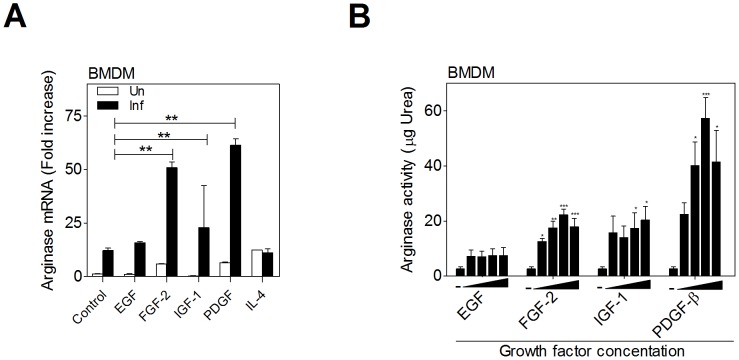
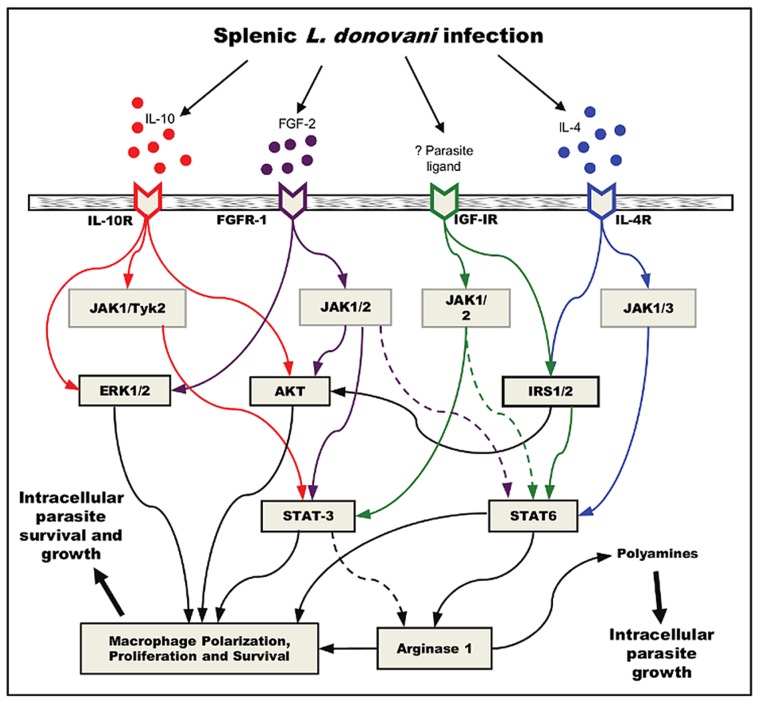
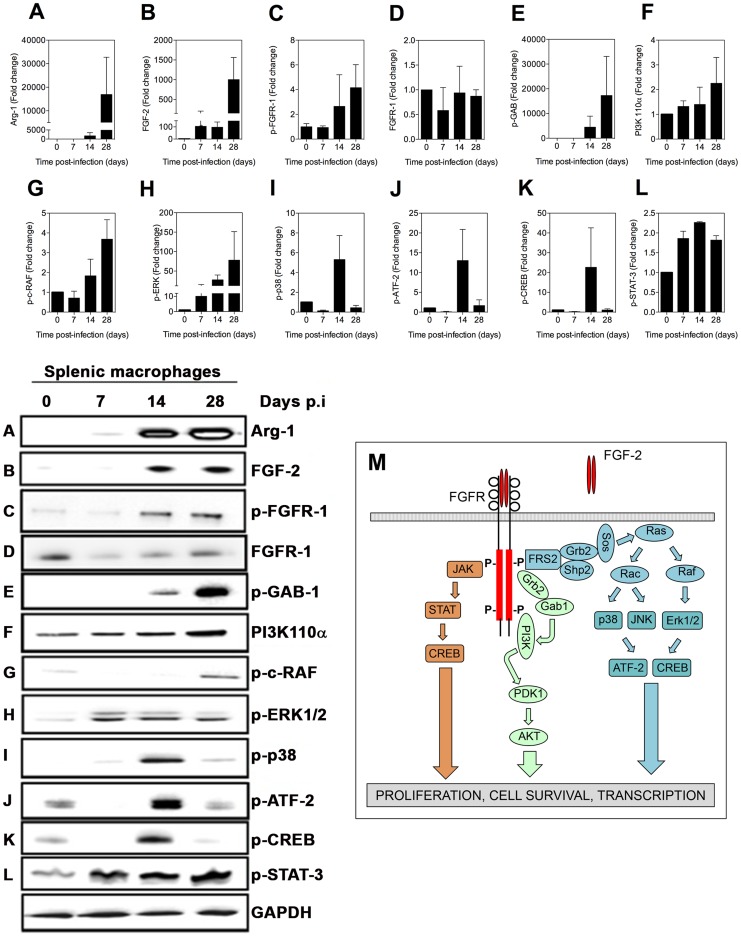
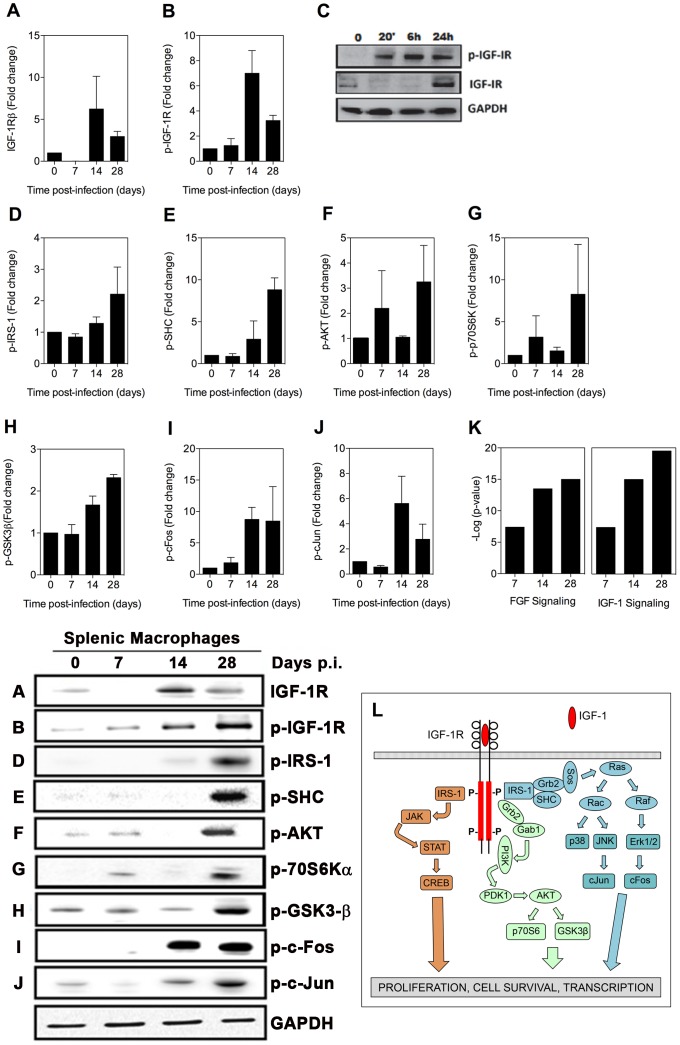
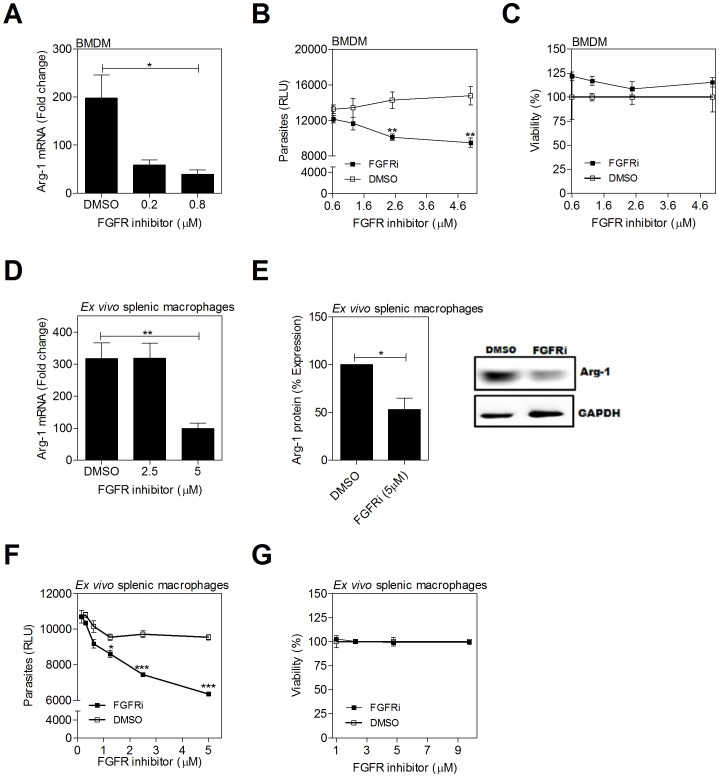
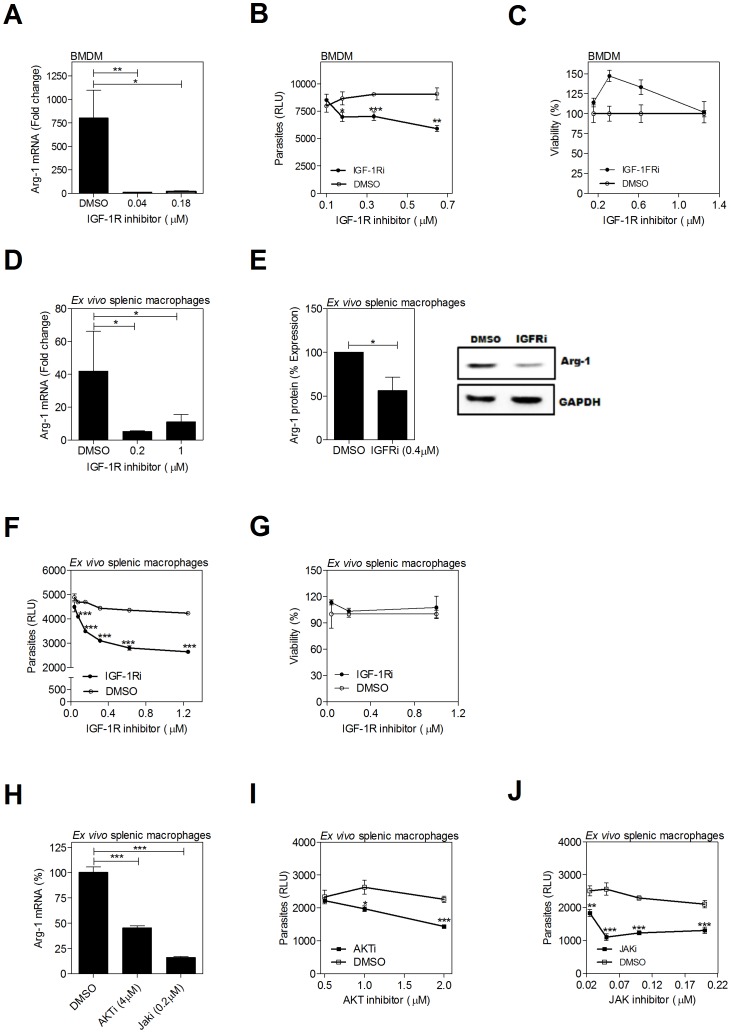
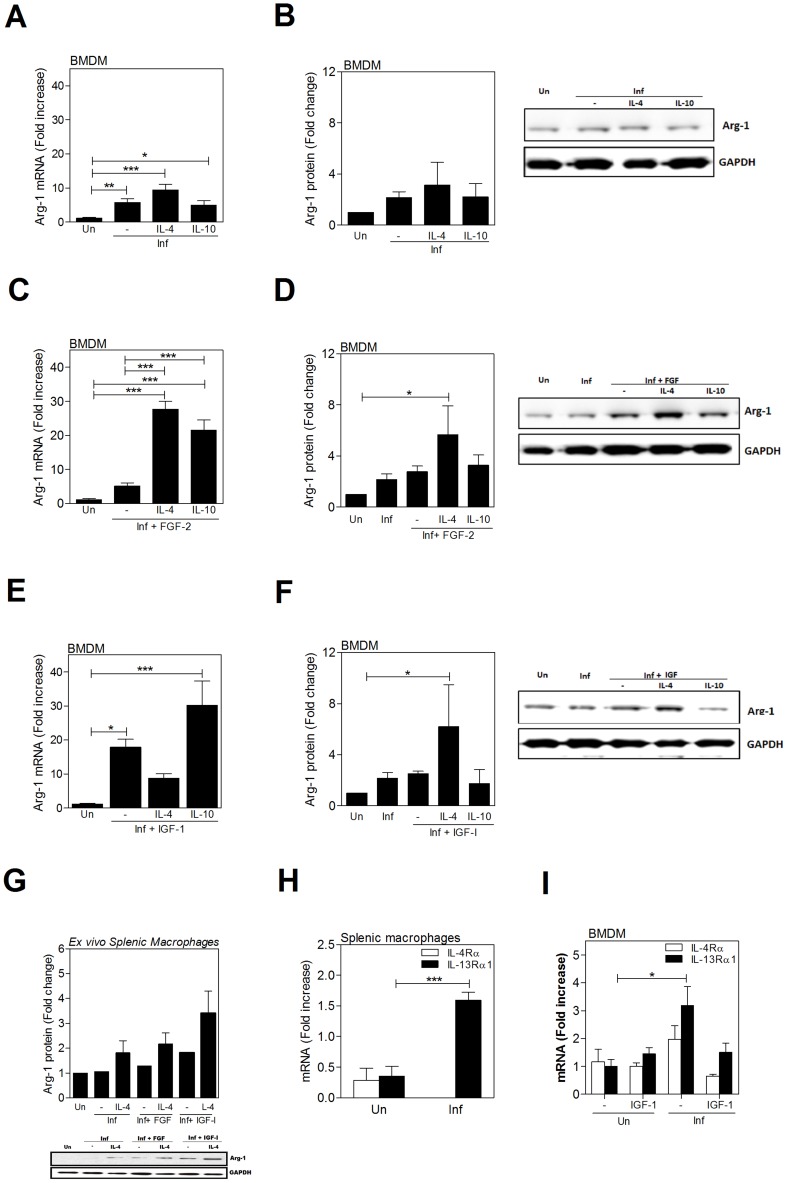
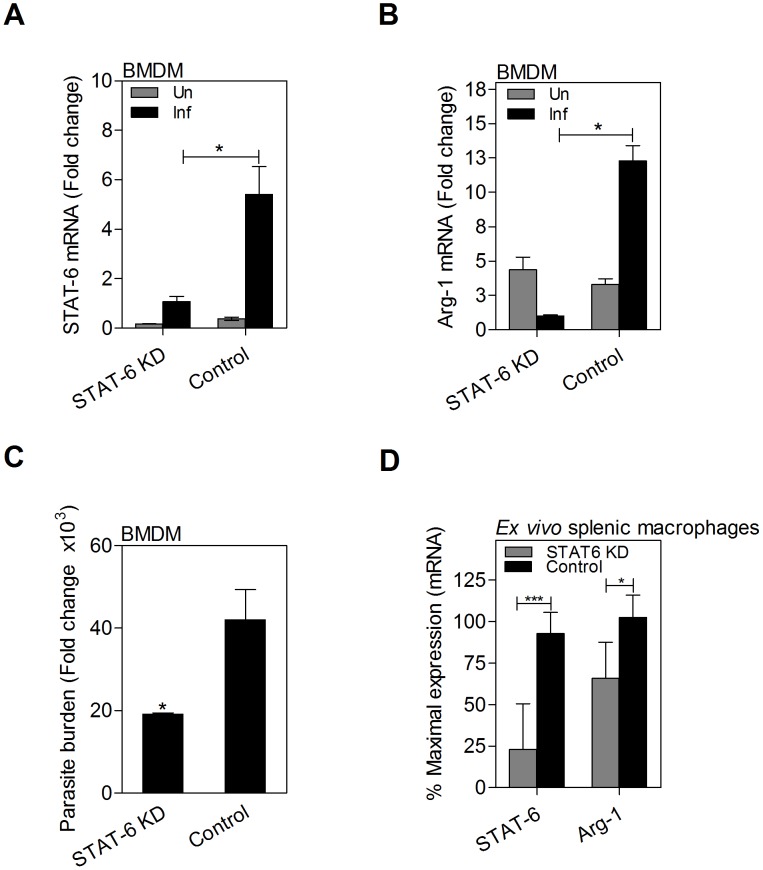
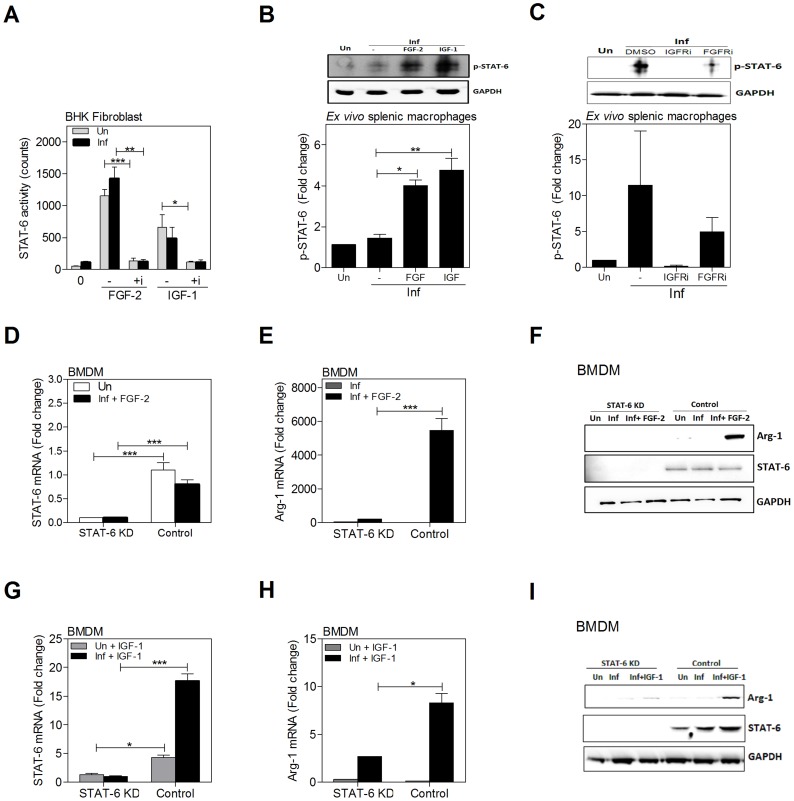
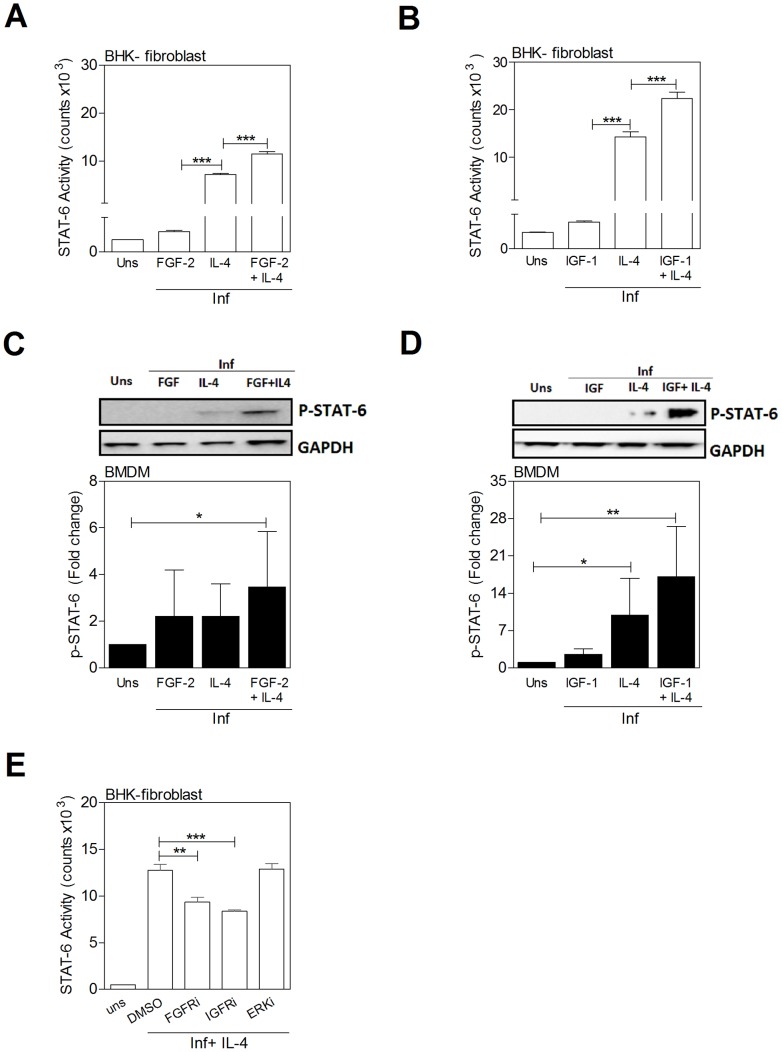
Host arginase 1 (arg1) expression is a significant contributor to the pathogenesis of progressive visceral leishmaniasis (VL), a neglected tropical disease caused by the intracellular protozoan Leishmania donovani. Previously we found that parasite-induced arg1 expression in macrophages was dependent on STAT6 activation. Arg1 expression was amplified by, but did not require, IL-4, and required de novo synthesis of unknown protein(s). To further explore the mechanisms involved in arg1 regulation in VL, we screened a panel of kinase inhibitors and found that inhibitors of growth factor signaling reduced arg1 expression in splenic macrophages from hamsters with VL. Analysis of growth factors and their signaling pathways revealed that the Fibroblast Growth Factor Receptor 1 (FGFR-1) and Insulin-like Growth Factor 1 Receptor (IGF-1R) and a number of downstream signaling proteins were activated in splenic macrophages isolated from hamsters infected with L. donovani. Recombinant FGF-2 and IGF-1 increased the expression of arg1 in L. donovani infected hamster macrophages, and this induction was augmented by IL-4. Inhibition of FGFR-1 and IGF-1R decreased arg1 expression and restricted L. donovani replication in both in vitro and ex vivo models of infection. Inhibition of the downstream signaling molecules JAK and AKT also reduced the expression of arg1 in infected macrophages. STAT6 was activated in infected macrophages exposed to either FGF-2 or IGF-1, and STAT6 was critical to the FGFR-1- and IGF-1R-mediated expression of arg1. The converse was also true as inhibition of FGFR-1 and IGF-1R reduced the activation of STAT6 in infected macrophages. Collectively, these data indicate that the FGFR/IGF-1R and IL-4 signaling pathways converge at STAT6 to promote pathologic arg1 expression and intracellular parasite survival in VL. Targeted interruption of these pathological processes offers an approach to restrain this relentlessly progressive disease.
宿主精氨酸酶1(arg1)的表达是进行性内脏利什曼病(VL)发病机制的重要因素,VL是一种由细胞内原生动物杜氏利什曼原虫引起的被忽视的热带疾病。此前我们发现,寄生虫诱导巨噬细胞中arg1的表达依赖于STAT6的激活。Arg1的表达可被IL-4放大,但并非必需,且需要从头合成未知蛋白质。为了进一步探究VL中arg1调控的相关机制,我们筛选了一组激酶抑制剂,发现生长因子信号通路抑制剂可降低VL仓鼠脾巨噬细胞中arg1的表达。对生长因子及其信号通路的分析表明,在从感染杜氏利什曼原虫的仓鼠分离出的脾巨噬细胞中,成纤维细胞生长因子受体1(FGFR-1)和胰岛素样生长因子1受体(IGF-1R)以及一些下游信号蛋白被激活。重组FGF-2和IGF-1可增加感染杜氏利什曼原虫的仓鼠巨噬细胞中arg1的表达,且IL-4可增强这种诱导作用。在体外和体内感染模型中,抑制FGFR-1和IGF-1R可降低arg1的表达并限制杜氏利什曼原虫的复制。抑制下游信号分子JAK和AKT也可降低感染巨噬细胞中arg1的表达。在暴露于FGF-2或IGF-1的感染巨噬细胞中,STAT6被激活,且STAT6对FGFR-1和IGF-1R介导的arg1表达至关重要。反之亦然,因为抑制FGFR-1和IGF-1R可降低感染巨噬细胞中STAT6的激活。总体而言,这些数据表明,FGFR/IGF-1R和IL-4信号通路在STAT6处汇聚,以促进VL中病理性arg1的表达和细胞内寄生虫的存活。对这些病理过程的靶向阻断为控制这种持续进展的疾病提供了一种方法。