Li Shao-Jun, Sun Shi-Jie, Gao Jie, Sun Fu-Bo
Department of Hepatobiliary and Pancreatic Surgery, The Affiliated Yantai Yuhuangding Hospital of Qingdao University, Yantai, Shandong 264000, P.R. China.
Oncol Lett. 2016 Dec;12(6):5059-5067. doi: 10.3892/ol.2016.5367. Epub 2016 Nov 8.
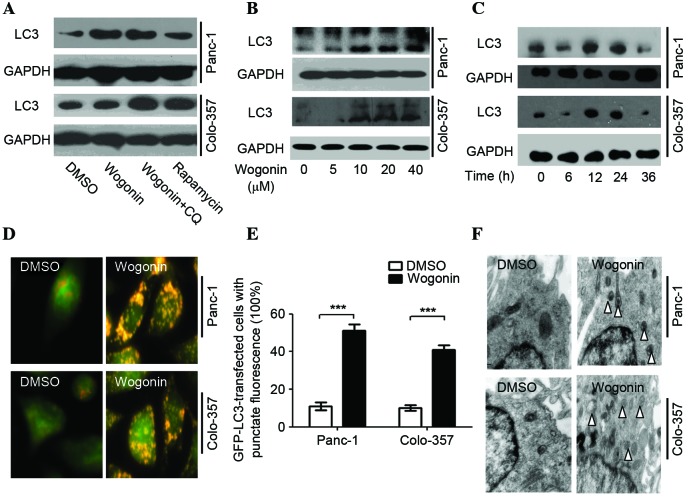
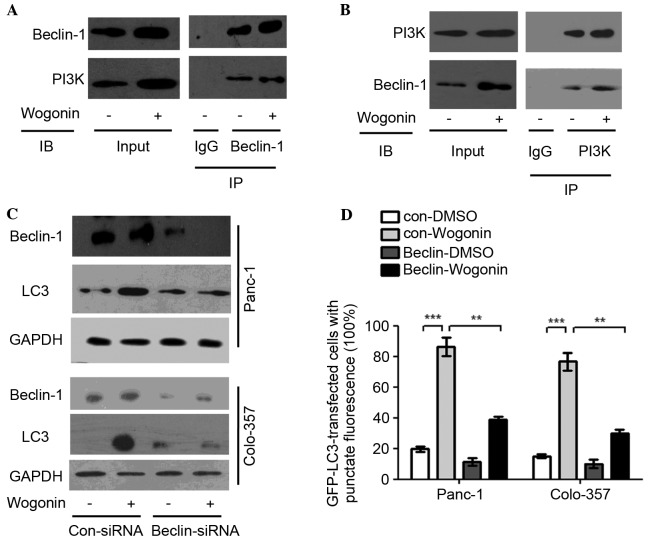
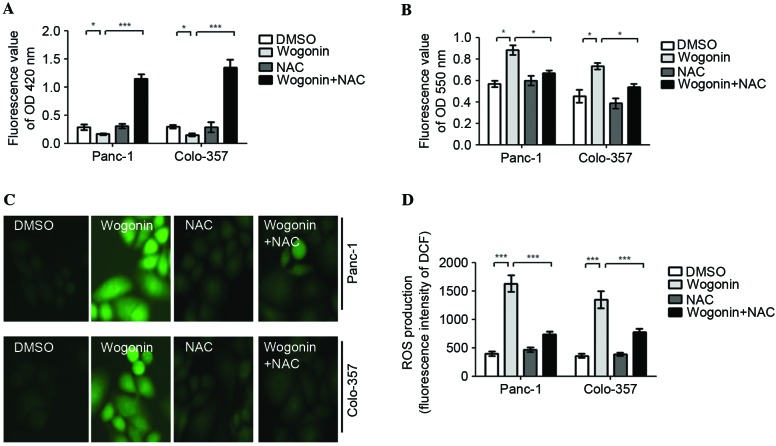
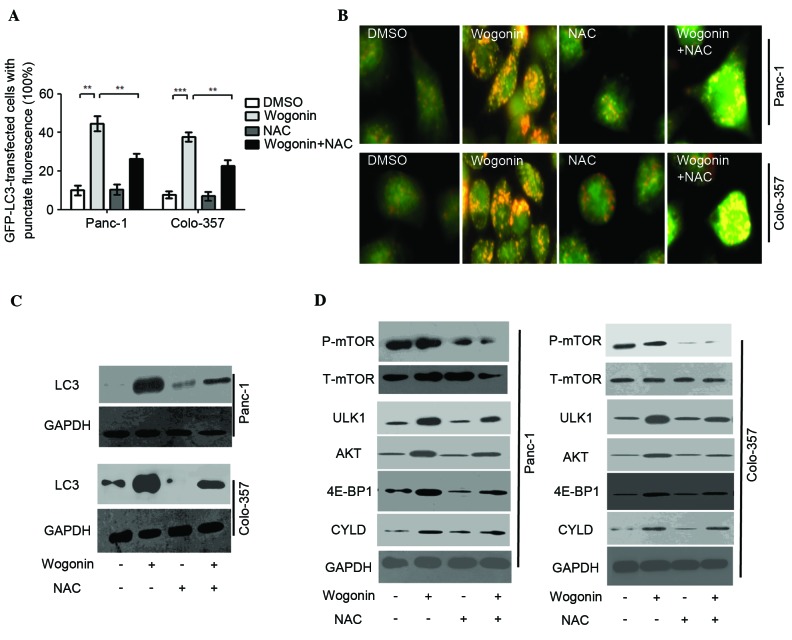
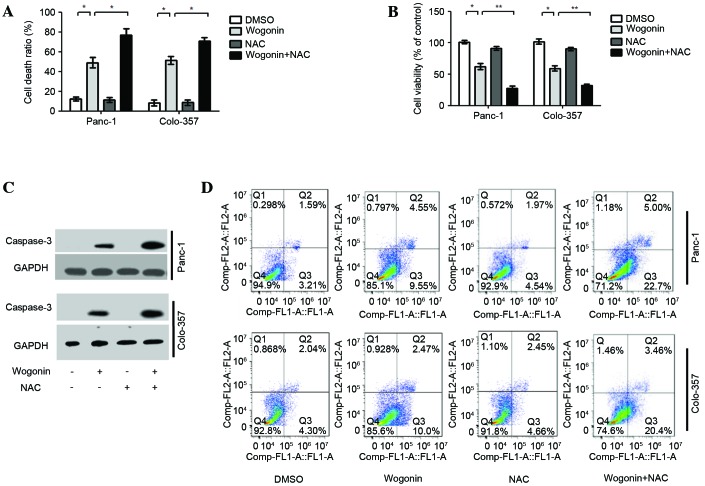
Wogonin is considered to be an inhibitor of myeloid cell leukemia 1 and B-cell lymphoma 2, and a potential antitumor drug due to its ability to induce apoptosis in certain cancer cells; however, few previous studies have reported on wogonin-induced autophagy. The aim of the present study was to investigate the influence of wogonin on autophagy in human pancreatic cancer cells (HPCCs), elucidate its mechanism, and identify strategies to increase its effectiveness as an anti-cancer treatment. HPCCs were treated with wogonin and autophagy was detected in the cells. The mechanism of wogonin-related autophagy was investigated, and the antioxidant N-acetyl-L-cysteine (NAC) was used to assess the role of reactive oxygen species (ROS) in wogonin-related autophagy. The results demonstrated that wogonin may induce autophagy by activating the Beclin-1/phosphatidylinositol-3-kinase and ROS pathways in HPCCs, and may enhance ROS generation, followed by the activation of the AKT/ULK1/4E-BP1/CYLD pathway and inhibition of the mammalian target of rapamycin signaling pathway. The incubation of HPCCs with wogonin and the antioxidant NAC, revealed that the effects of wogonin-enhanced ROS generation on autophagy-related molecules were inhibited, contributing to the inhibition of autophagy and increasing the cell death ratio through apoptosis activation in HPCCs. These studies suggest that autophagy activation, via the ROS pathway, by the antitumor drug wogonin in HPCCs may partially reduce the antitumor effects of the drug, and that the antioxidant NAC may enhance the antitumor effectiveness of wogonin via the inhibition of ROS-enhanced autophagy and the subsequent promotion of apoptosis. Therefore, the present research suggests that wogonin combined with NAC may be a novel combination therapy for clinical pancreatic cancer therapy trials.
汉黄芩素被认为是髓样细胞白血病1和B细胞淋巴瘤2的抑制剂,因其能够诱导某些癌细胞凋亡而成为一种潜在的抗肿瘤药物;然而,此前很少有研究报道汉黄芩素诱导的自噬。本研究的目的是探讨汉黄芩素对人胰腺癌细胞(HPCCs)自噬的影响,阐明其机制,并确定提高其作为抗癌治疗药物有效性的策略。用汉黄芩素处理HPCCs,并检测细胞中的自噬情况。研究了汉黄芩素相关自噬的机制,并使用抗氧化剂N-乙酰-L-半胱氨酸(NAC)来评估活性氧(ROS)在汉黄芩素相关自噬中的作用。结果表明,汉黄芩素可能通过激活HPCCs中的Beclin-1/磷脂酰肌醇-3-激酶和ROS途径诱导自噬,并可能增强ROS的产生,随后激活AKT/ULK1/4E-BP1/CYLD途径并抑制雷帕霉素哺乳动物靶标信号通路。用汉黄芩素和抗氧化剂NAC孵育HPCCs,结果显示汉黄芩素增强ROS产生对自噬相关分子的影响受到抑制,这有助于抑制自噬并通过激活HPCCs中的凋亡增加细胞死亡率。这些研究表明,抗肿瘤药物汉黄芩素通过ROS途径激活HPCCs中的自噬可能会部分降低该药物的抗肿瘤作用,而抗氧化剂NAC可能通过抑制ROS增强的自噬并随后促进凋亡来增强汉黄芩素的抗肿瘤有效性。因此,本研究表明汉黄芩素与NAC联合使用可能是临床胰腺癌治疗试验的一种新型联合治疗方法。