Palacios Jorge, Lee Geraldine A, Duaso Maria, Clifton Abigail, Norman Ian J, Richards Derek, Barley Elizabeth Alexandra
Jorge Palacios, MD, MSc PhD Student, Florence Nightingale Faculty of Nursing & Midwifery, King's College London, London, UK. Geraldine A. Lee, PhD Senior Lecturer, Florence Nightingale Faculty of Nursing & Midwifery, King's College London, London, UK. Maria Duaso, PhD Lecturer, Florence Nightingale Faculty of Nursing & Midwifery, King's College London, London, UK. Abigail Clifton, BSc Research Assistant, Florence Nightingale Faculty of Nursing & Midwifery, King's College London, London, UK. Ian J. Norman, PhD Executive Dean, Florence Nightingale Faculty of Nursing & Midwifery, King's College London, London, UK. Derek Richards, PhD Director of Clinical Research and Innovation, Silvercloud Health, and School of Psychology, Trinity College Dublin, Ireland. Elizabeth Alexandra Barley, PhD, CPsychol Professor in Health and Wellbeing, College of Nursing, Midwifery and Healthcare, University of West London, UK.
J Cardiovasc Nurs. 2017 Jul/Aug;32(4):E9-E23. doi: 10.1097/JCN.0000000000000392.
Coronary heart disease (CHD) is associated with significant morbidity and mortality, including mental health comorbidity, which is associated with poor outcomes. Self-management is key, but there is limited access to self-management support. Internet-delivered interventions may increase access.
The aim of this study was to conduct a systematic review to (1) determine the effectiveness of Internet-delivered CHD self-management support for improving CHD, mood, and self-management related outcomes and (2) identify and describe essential components for effectiveness.
Randomized controlled trials that met prespecified eligibility criteria were identified using a systematic search of 3 healthcare databases (Medline, PsychINFO, and Embase).
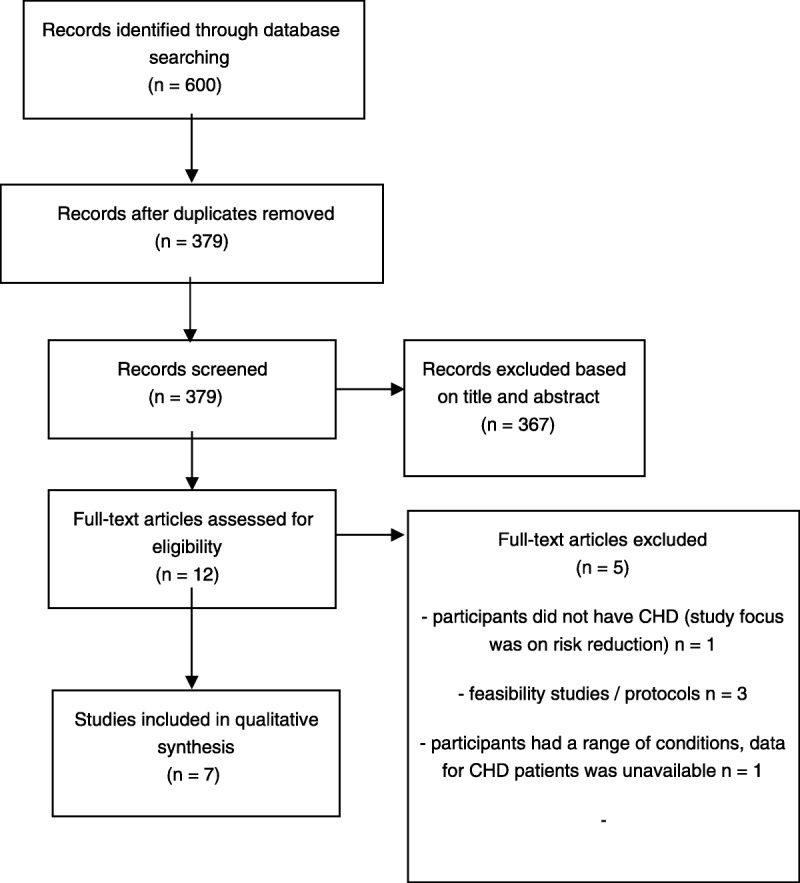
Seven trials, which included 1321 CHD patients, were eligible for inclusion. There was considerable heterogeneity between studies in terms of the intervention content, outcomes measured, and study quality. All 7 of the studies reported significant positive between-group effects, in particular for lifestyle-related outcomes. Personalization of interventions and provision of support to promote engagement may be associated with improved outcomes, although more data are required to confirm this. The theoretical basis of interventions was poorly developed though evidence-based behavior change interventions were used.
More well-designed randomized controlled trials are needed. These should also explore how interventions work and how to improve participant retention and satisfaction and examine the role of personalization and support within interventions.
冠心病(CHD)与严重的发病率和死亡率相关,包括心理健康合并症,而心理健康合并症与不良预后相关。自我管理是关键,但自我管理支持的获取渠道有限。基于互联网的干预措施可能会增加获取途径。
本研究的目的是进行一项系统评价,以(1)确定基于互联网的冠心病自我管理支持对改善冠心病、情绪和自我管理相关结局的有效性,以及(2)识别并描述有效性的关键组成部分。
通过对3个医疗保健数据库(Medline、PsychINFO和Embase)进行系统检索,确定符合预先设定的纳入标准的随机对照试验。
7项试验符合纳入标准,共纳入1321例冠心病患者。各研究在干预内容、测量结局和研究质量方面存在很大异质性。所有7项研究均报告了显著的组间积极效应,尤其是与生活方式相关的结局。干预的个性化以及提供促进参与的支持可能与更好的结局相关,不过还需要更多数据来证实这一点。尽管使用了基于证据的行为改变干预措施,但干预的理论基础发展不足。
需要更多设计良好的随机对照试验。这些试验还应探索干预措施的作用机制、如何提高参与者的留存率和满意度,并研究个性化和支持在干预措施中的作用。