Domenis Rossana, Cesselli Daniela, Toffoletto Barbara, Bourkoula Evgenia, Caponnetto Federica, Manini Ivana, Beltrami Antonio Paolo, Ius Tamara, Skrap Miran, Di Loreto Carla, Gri Giorgia
Department of Medical and Biological Sciences, University of Udine, Udine, Italy.
Department of Neurosurgery, University Hospital of Udine, Udine, Italy.
PLoS One. 2017 Jan 20;12(1):e0169932. doi: 10.1371/journal.pone.0169932. eCollection 2017.
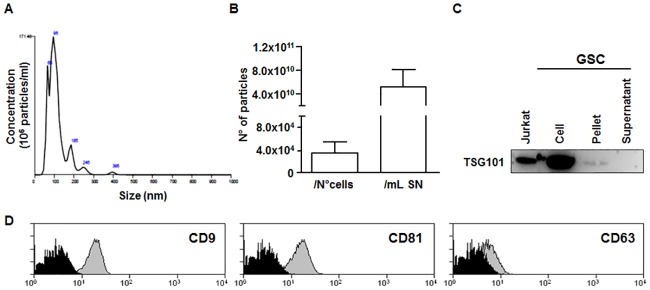
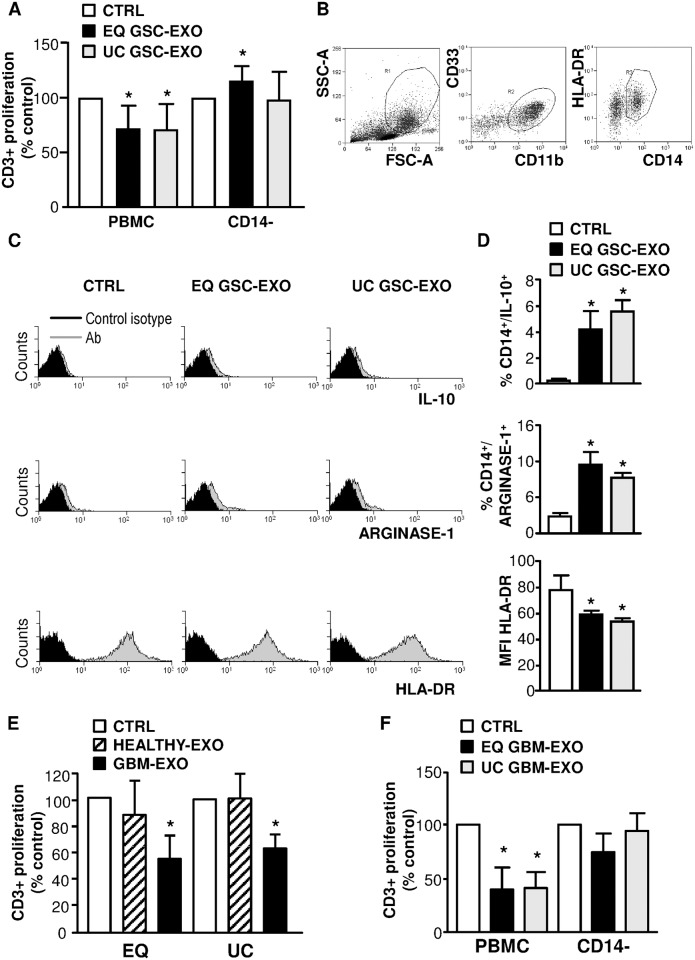
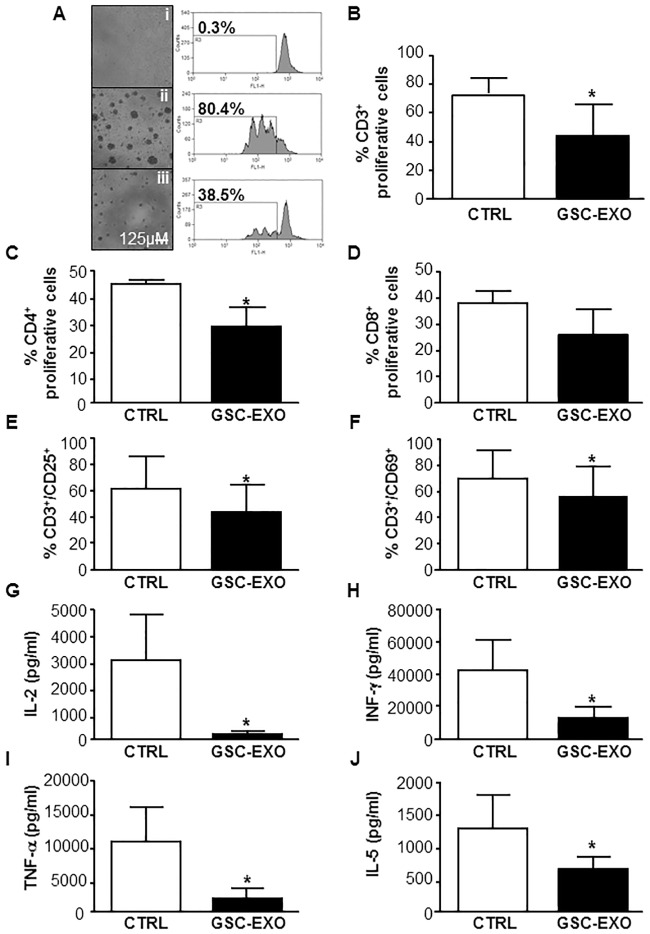
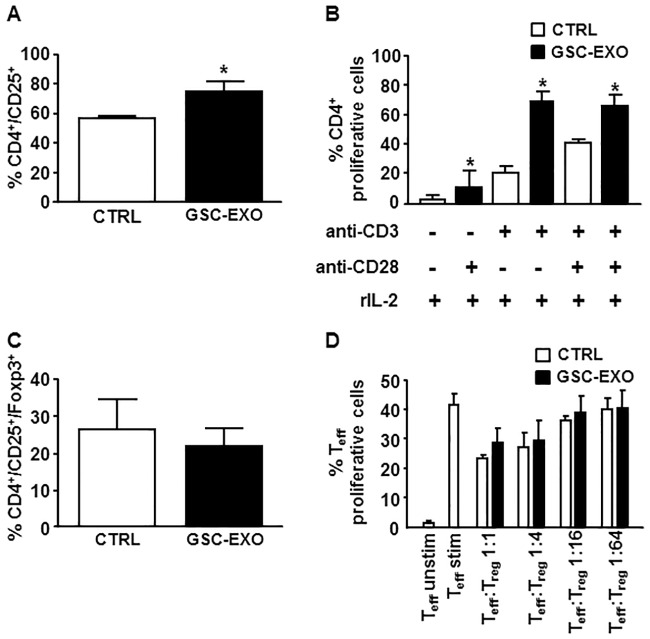
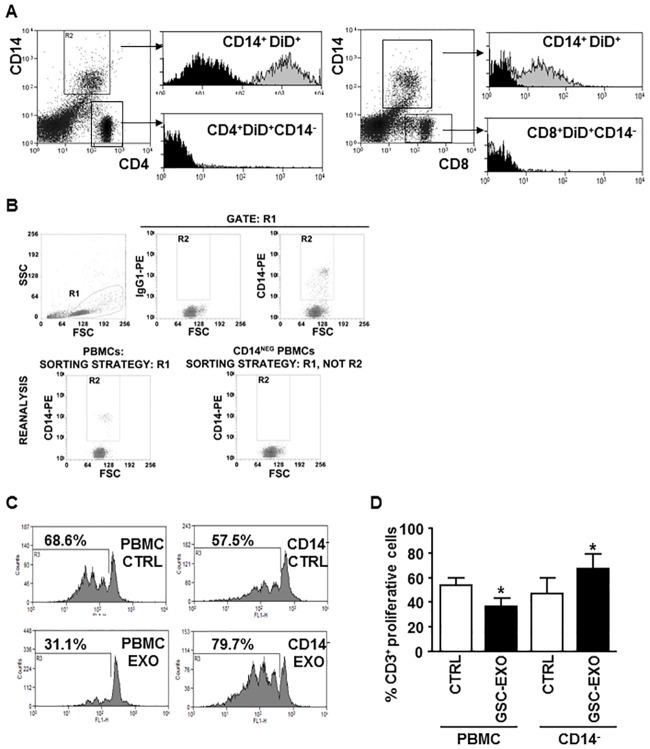
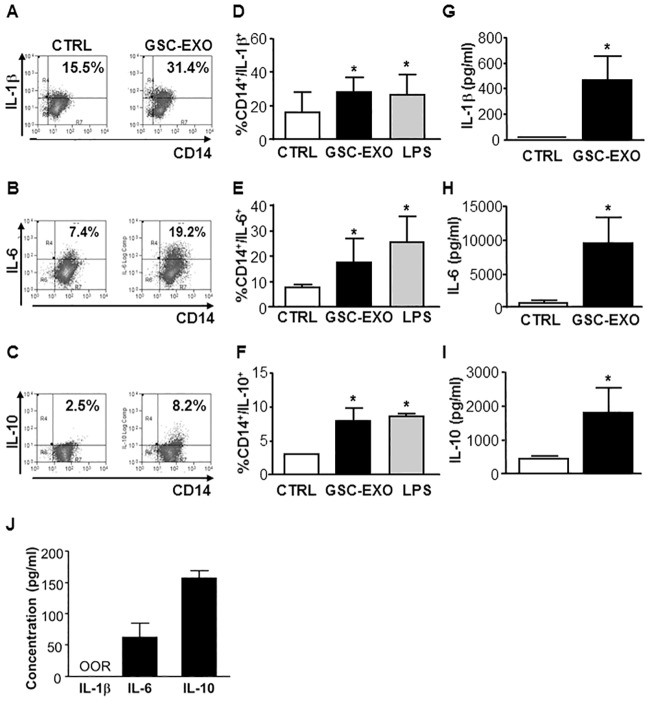
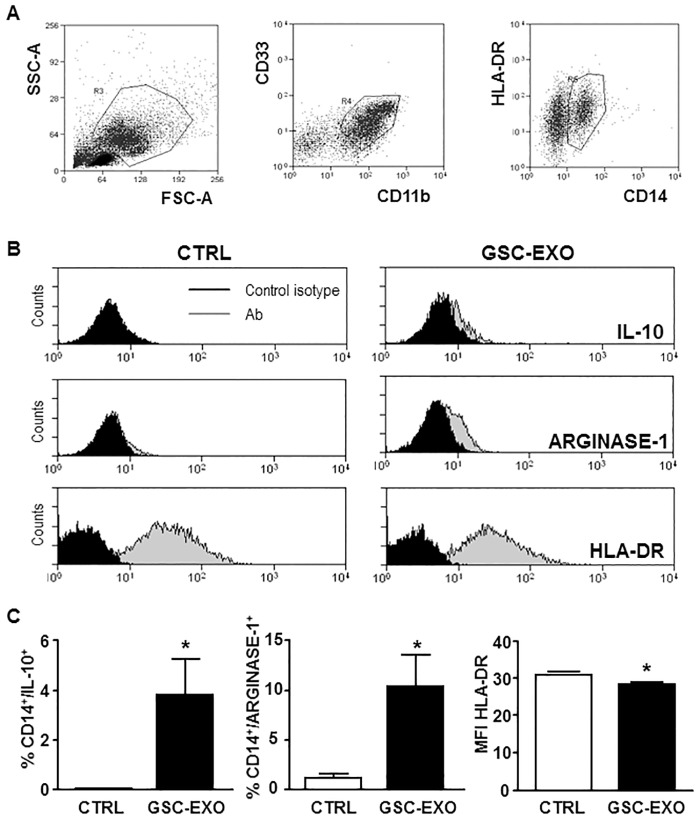
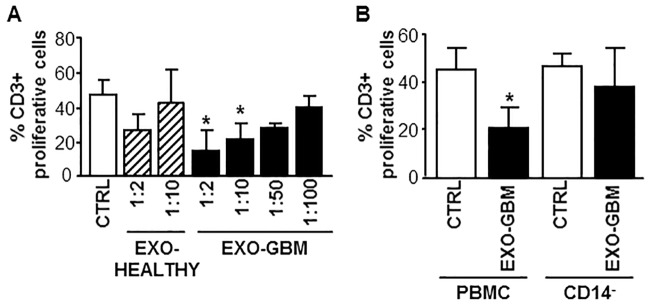
A major contributing factor to glioma development and progression is its ability to evade the immune system. Nano-meter sized vesicles, exosomes, secreted by glioma-stem cells (GSC) can act as mediators of intercellular communication to promote tumor immune escape. Here, we investigated the immunomodulatory properties of GCS-derived exosomes on different peripheral immune cell populations. Healthy donor peripheral blood mononuclear cells (PBMCs) stimulated with anti-CD3, anti-CD28 and IL-2, were treated with GSC-derived exosomes. Phenotypic characterization, cell proliferation, Th1/Th2 cytokine secretion and intracellular cytokine production were analysed by distinguishing among effector T cells, regulatory T cells and monocytes. In unfractionated PBMCs, GSC-derived exosomes inhibited T cell activation (CD25 and CD69 expression), proliferation and Th1 cytokine production, and did not affect cell viability or regulatory T-cell suppression ability. Furthermore, exosomes were able to enhance proliferation of purified CD4+ T cells. In PBMCs culture, glioma-derived exosomes directly promoted IL-10 and arginase-1 production and downregulation of HLA-DR by unstimulated CD14+ monocytic cells, that displayed an immunophenotype resembling that of monocytic myeloid-derived suppressor cells (Mo-MDSCs). Importantly, the removal of CD14+ monocytic cell fraction from PBMCs restored T-cell proliferation. The same results were observed with exosomes purified from plasma of glioblastoma patients. Our results indicate that glioma-derived exosomes suppress T-cell immune response by acting on monocyte maturation rather than on direct interaction with T cells. Selective targeting of Mo-MDSC to treat glioma should be considered with regard to how immune cells allow the acquirement of effector functions and therefore counteracting tumor progression.
胶质瘤发生和进展的一个主要促成因素是其逃避免疫系统的能力。胶质瘤干细胞(GSC)分泌的纳米级囊泡外泌体可作为细胞间通讯的介质,促进肿瘤免疫逃逸。在此,我们研究了GSC来源的外泌体对不同外周免疫细胞群体的免疫调节特性。用抗CD3、抗CD28和IL-2刺激的健康供体外周血单核细胞(PBMC),用GSC来源的外泌体处理。通过区分效应T细胞、调节性T细胞和单核细胞,分析其表型特征、细胞增殖、Th1/Th2细胞因子分泌和细胞内细胞因子产生。在未分离的PBMC中,GSC来源的外泌体抑制T细胞活化(CD25和CD69表达)、增殖和Th1细胞因子产生,且不影响细胞活力或调节性T细胞的抑制能力。此外,外泌体能够增强纯化的CD4+T细胞的增殖。在PBMC培养中,胶质瘤来源的外泌体直接促进未刺激的CD14+单核细胞产生IL-10和精氨酸酶-1,并下调HLA-DR,这些细胞表现出类似于单核细胞来源的髓系抑制细胞(Mo-MDSC)的免疫表型。重要的是,从PBMC中去除CD14+单核细胞部分可恢复T细胞增殖。从胶质母细胞瘤患者血浆中纯化的外泌体也观察到相同结果。我们的结果表明,胶质瘤来源的外泌体通过作用于单核细胞成熟而非与T细胞直接相互作用来抑制T细胞免疫反应。在考虑免疫细胞如何获得效应功能从而对抗肿瘤进展方面,应考虑选择性靶向Mo-MDSC来治疗胶质瘤。