Chesdachai Supavit, Zughaier Susu M, Hao Li, Kempker Russell R, Blumberg Henry M, Ziegler Thomas R, Tangpricha Vin
J Clin Transl Endocrinol. 2016 Dec;6:23-29. doi: 10.1016/j.jcte.2016.08.005.
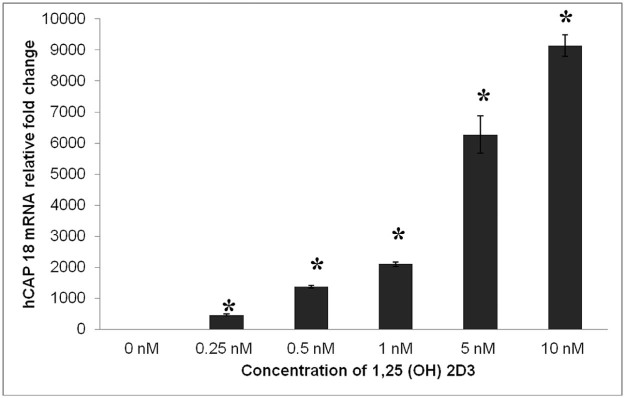
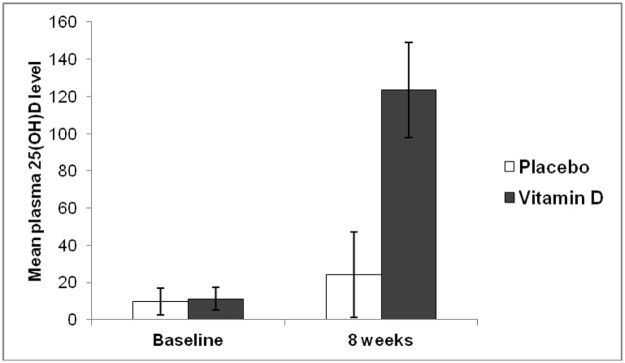
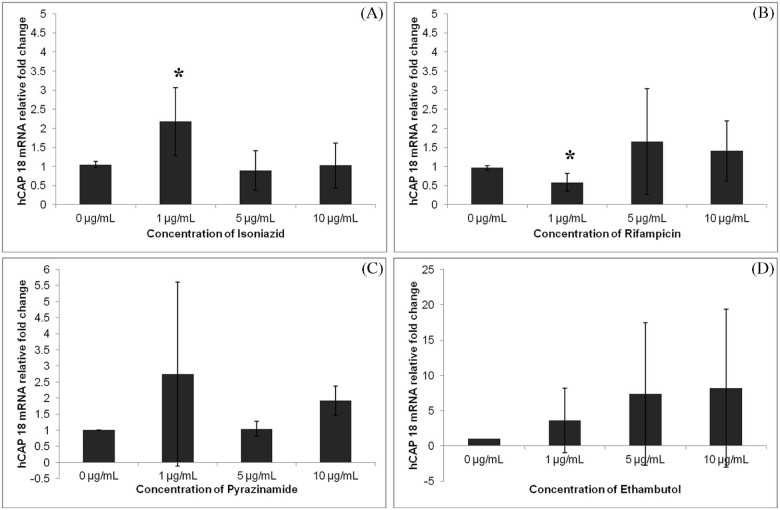
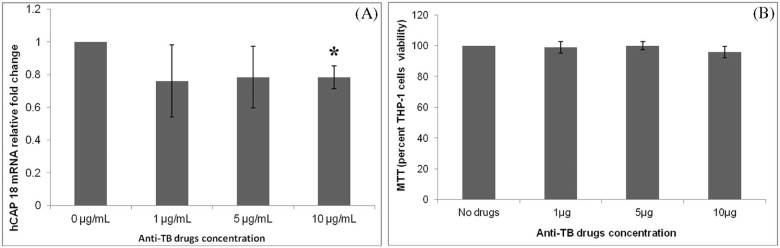
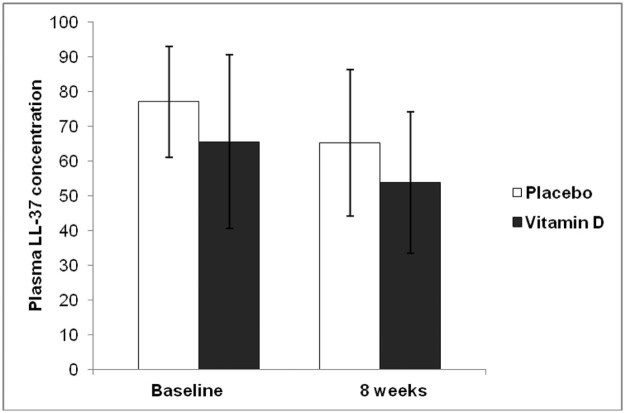
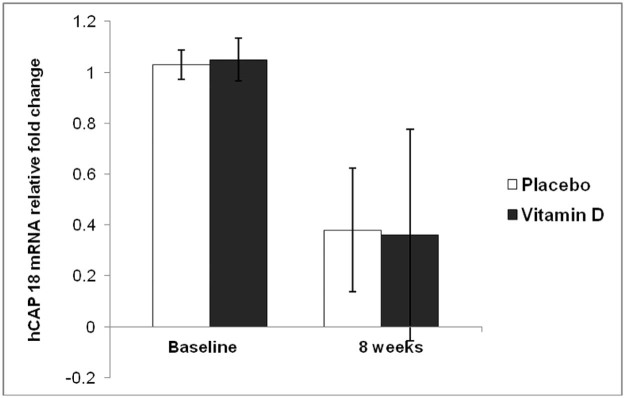
Tuberculosis (TB) is a major global health problem. Patients with TB have a high rate of vitamin D deficiency, both at diagnosis and during the course of treatment with anti-tuberculosis drugs. Although data on the efficacy of vitamin D supplementation on clearance is uncertain from randomized controlled trials (RCTs), vitamin D enhances the expression of the anti-microbial peptide human cathelicidin (hCAP18) in cultured macrophages One possible explanation for the mixed (primarily negative) results of RCTs examining vitamin D treatment in TB infection is that anti-TB drugs given to enrolled subjects may impact actions of vitamin D to enhance cathelicidin in macrophages. To address this hypothesis, human macrophage-like monocytic (THP-1) cells were treated with varying doses of first-line anti-tuberculosis drugs in the presence of the active form of vitamin D, 1N1,25-dihydroxyvitamin D (1,25(OH)D). The expression of hCAP18 was determined by quantitative reverse transcriptase polymerase chain reaction (qRT-PCR). 1,25(OH)D strongly induced expression of hCAP18 mRNA in THP-1 cells (fold-change from control). The combination of the standard 4-drug TB therapy (isoniazid, rifampicin, pyrazinamide and ethambutol) in the cultured THP-1 cells demonstrated a significant decrease of hCAP18 mRNA at the dosage of 10 ug/mL. In 31 subjects with newly diagnosed drug-sensitive TB randomized to either high-dose vitamin D (1.2 million IU over 8 weeks, n=13) versus placebo (n=18), there was no change from baseline to week 8 in hCAP18 mRNA levels in peripheral blood mononuclear cells or in plasma concentrations of LL-37, the protein product of hCAP18.These data suggest that first-line anti-TB drugs may alter the vitamin D-dependent increase in hCAP18 and LL-37 human macrophages.
结核病是一个重大的全球健康问题。结核病患者在诊断时以及使用抗结核药物治疗过程中维生素D缺乏率都很高。尽管随机对照试验(RCT)关于补充维生素D对清除率疗效的数据尚不确定,但维生素D可增强培养的巨噬细胞中抗菌肽人组织蛋白酶抑制剂18(hCAP18)的表达。RCT检验维生素D治疗结核病感染的结果喜忧参半(主要为阴性),一个可能的解释是,给予入组受试者的抗结核药物可能会影响维生素D增强巨噬细胞中组织蛋白酶抑制剂的作用。为验证这一假设,在活性形式的维生素D即1,25 - 二羟基维生素D(1,25(OH)D)存在的情况下,用不同剂量的一线抗结核药物处理人巨噬细胞样单核细胞(THP - 1)。通过定量逆转录聚合酶链反应(qRT - PCR)测定hCAP18的表达。1,25(OH)D强烈诱导THP - 1细胞中hCAP18 mRNA的表达(相对于对照的倍数变化)。在培养的THP - 1细胞中,标准的四联抗结核疗法(异烟肼、利福平、吡嗪酰胺和乙胺丁醇)组合在10μg/mL剂量时显示hCAP18 mRNA显著下降。在31例新诊断的药物敏感结核病患者中,随机分为高剂量维生素D组(8周内120万国际单位,n = 13)和安慰剂组(n = 18),外周血单核细胞中hCAP18 mRNA水平或hCAP18的蛋白产物LL - 37的血浆浓度从基线到第8周均无变化。这些数据表明,一线抗结核药物可能会改变维生素D依赖性的hCAP18和LL - 37在人巨噬细胞中的增加。